
.png?width=20&height=24&name=Vector%20(15).png) For Leaders
For Leaders For Workers
.png?width=24&height=23&name=Vector%20(16).png) Partners
PartnersYou’re Not Burned Out. You’re Overloaded.
WorkReady Podcast Episode 35
-
Speakers
Justin Azbill, Ph.D. | Mission Mindset™
Dr. Kevin Rindal | Vimocity
Resources:-
How to Protect Your Crew's Mental Health- A Guide for Safety and Field Leaders
-
WorkReady Podcast- The Science Behind Longevity in the Trades
-
View The Transcript
When you finally had all that data in front of you, what was the number that stopped you cold in your tracks? The 73% of people who said they didn't trust who was leading them. What we're seeing in the data and in the field is that performance isn't just about skill anymore.
You add all of the different things that's going on in your life, the 14 mindset, right? At some point you're gonna max out.
I was always taught to take care of everybody else first. I was wrong.
My guest is Justin Azbill. If you listened to my previous interview with Justin, you know his story, and today we're gonna pick up where we left off. Justin, welcome to the WorkReady Podcast.
Thanks for having me back, man. I'm excited, Kevin. This is awesome.
Man, I'm thrilled. And you've been on this show before, Justin, and the audience came back for more. So before we get into the research, what are they gonna walk away from this conversation that they did not have before? I would hope that you know, they'd walk away with a little bit more clarity. Because right now a lot of leaders are feeling something's off out in the industry. They can't quite name it.
With my opinion, what we're seeing in the data and in the field is that performance isn't just about skill anymore. It's about capacity. Um, and when you start understanding what's actually draining the capacity, you realize a lot of it, um, that we've-- what we've been calling performance issues are actually human issues, um, that were never addressed.
So the real question becomes what changes when you start leading with that understanding? And one thing that I really appreciate about your research, you sent me your dissertation, and so I had a chance to read through that, is you're actually bringing data to, like, the observation that we had. We, we see stuff going on, and we're like, "Man, something's not right here."
But then you're actually able to quantify that. So you surveyed 3,100 people in the trades, and when you finally had all that data in front of you, what was the number that stopped you cold in your tracks? Wow, that's a great question. Um, man, I, I would have to say 73% of people who said they didn't trust, uh, who was leading them.
them Uh, you know, that really, that really grabbed me hard. Uh, I've been in the industry and being in a, a leader, you know, I was like, "Wow, I wonder how many people didn't trust me." Um, you know, and, and what's important about that is it's, it's not rooted in intent. It's rooted in experience. Um, so what we're really seeing is not about a character problem.
It's about preparation problem, you know? So that, that was what grabbed me. And I think to that point, uh, there was one other stat that really stood out to me is that 93%, uh, did not have any training, and these, these are people that are leading other people. So again, it's, it's not bad intent that people don't, uh, respect their leaders or that they, uh, don't trust them.
It's just that we aren't preparing the people who are leading others to be capable. Is that what you took away from this? Yeah. You know, y-y-you hit that 100%, and, you know, and when you look at it that way, it, it shifts the conversation from blame to responsibility, right? Um, in my opinion. And, uh, you know, the, the industry's, is rapidly evolving and changing drastically.
You know, it's moving a million miles per hour. So when you, when you really look at it that way, yeah, I feel the same way. Do you think, uh, from an industry perspective, the reason why we're maybe not paying attention to some of these factors is because of the metrics that we measure? So we oftentimes think about, like, output, hours, production, the amount of rework that we have to do.
So we're setting the whole system up to, to look at those numbers, uh, from a production standpoint, but it doesn't necessarily capture the capacity of the human. In the construction industry, we reward endurance and taking on as much as possible and, you know, doesn't matter how you feel, it's like what you get done and, you know, if you're ahead of schedule, stuff like that, that's what you get rewarded for more.
And unfortunately, that sucks the life out of everybody that helps you get there, right? So then you get burnout, and then you get high turnover. So to answer your question, I, I, I just think that, uh, you're seeing a-- I see-- we're seeing a lot of organizational s- change, uh, because they're not, they're not, um, rewarding just performance anymore.
They're really looking at output, um, in a smart way, meaning if you are elevating the next level behind you and at the same time maintaining, uh, capacity. And what, what I mean is not just schedule or performance, you're also seeing, um, authentic leadership, meaning y- you're, you're seeing people come in and saying, "Hey, here's my expectations.
Can you meet it?" And then you're seeing new leaders say, "Hey, boss, I really want to, but I don't think it's ideal because I have boundaries that I wanna maintain." And it's, you know, I think you're seeing a lot more of that, especially from millennials. Uh, and it's not being embraced a lot by even my generation or above because it's not how we were brought up, right?
So, um, it, it, it all depends on do, do you want to succeed? And, and you're seeing a lot of, uh, leaders starting to realize that the human aspects are a big play into, um, culture as well as, um, success And along those lines, I've heard you talk a lot about mindset capacity. Can you describe what mindset capacity is and how it re-relates to that situation that you just described?
I don't wanna geek out on everybody 'cause I'll lose everybody, right? But, um, it's, it's kind of a formulation, right? So, um, you know, when you-- when I think of mindset capacity, it's like, how much can you... S-so, like, if you have, like, 27 different items that you have to do, if you're thinking about one, uh, uh, 27 different items that you have to think about at one time, at some point you're gonna top out, like, what you can think about.
So when I think of the equation, right? So I always tell, especially, like, the Gen Y people, like, my brain is like a first generation iPhone. They-- You remember those. I think you could only have, like, five gigabits of storage on them, right? Um, so if you overload it with, you know, 60 gigabits of photos, what happens?
It shuts down, right? So, um, e-everybody carries a lot of different things going on in their life, and then they have the different functions of work going on that they're thinking about. Um, you know, the most commonly type of used intelligence, uh, in the construction industry is called contextual intelligence.
It's something I learned a lot about at Harvard Business School. It's five different types of, uh, processes going on at the same time. So you really think about that, that means a person in the industry is constantly thinking of five things at the same time. So you got all that going on at one time, and then that interacts with your emotions, the output of your emotions, right?
'Cause typically your emotions is, is the brain's frontal lobe, you know, it's survival mode, right? It's like when you start feeling too much going on at one time, you get in survival mode, and you react inappropriately, right? So then you, you add all of the different things that's going on in your life, like the 14 mindset risks, right?
So y- at some point you're gonna max out, and the more you max out, the lower your performance is because you can't think about what you're doing. I mean, is that, does that make sense? Yeah, absolutely. And as you're describing that, I'm thinking about, you know, right now most crews out there, there's more work to do in a day than they possibly can achieve.
And so they're always being pushed, and they always have this, you know, this stress hanging over their head of we- we've got to focus on production, we've got to focus on output. And yet, if I'm running a crew or maybe even just doing some self-reflection, what are the things that I can pay attention to to evaluate the mindset capacity of my team or myself to realize that, you know, there may be, uh, an incongruence between my mindset capacity and our physical capacity and our ability to keep up because those are two separate things.
So when you have multiple risks, they're coming on top of each other, right? So I call it stacked risks, right? So I think that when you start seeing the outer layers of behaviors, you start to notice that. So like people are more irritable, um, you see them having a little bit less conversations than normal.
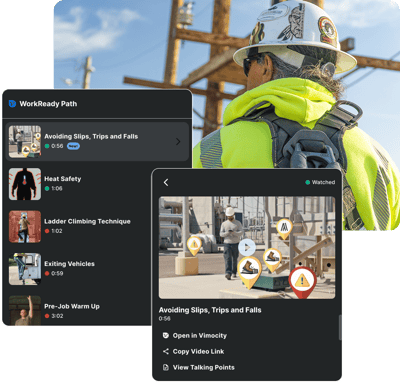
They might even be eating less, uh, showing up late, um, or needing to leave early because they got stuff going on at home. And, you know, it's, it's real important to just recognize that. As a safety leader, you have more risks to cover than hours in the day. That's where Vamosi comes in. We give you one platform to scale your impact, delivering expert-curated safety campaigns on everything from slips, trips and falls to heat stress and soft tissue injury prevention.
You'll reach every crew through the channels they already use while gaining data insights to guide smarter prevention. With Vamosi, you can boost awareness, prevent serious incidents and keep your workforce ready for the job. Scan the QR code or visit Vamosi.com to learn how leading utilities are cutting injuries by 50%.
You've talked about the 14 mindset risks, and I know that's a lot of information here, but can you walk us through those 14 and maybe just give us the list to start out with, and then we can focus on a couple of those and dive a little bit deeper and think about how somebody might be able to identify those 14 in themselves or in someone else on their crew?
Um, so first and foremost, mindset capacity. Um, that's typically what starts things going, especially in a work environment. That's what happened to me. Um, you have, uh, lack of leadership training, chronic pain, um, skill gaps, demographics, uh, stoicism or machoness, extreme pressure, sleep deprivation, financial instability, um, access to lethal means, isolation, and then vets in the workforce.
So I know that's a lot. Uh, it's-- ten of them are based on the book called The Joiner's Theory. It was written by a, a, a Harvard medical research professor. When I started doing research to educate myself, what I actually did is I started to do, like, an investigation in myself like I would a s- a safety incident.
Like I, I investigated what happened to me, which was over six months, and I wanted to learn more about how it happened to me, 'cause, like, I was completely puzzled. Like, it's kinda like a shame thing. I was shaming myself. I was trying to figure out like, "Well, how did I let this happen to me," right? So I'm real big into books and real big into educating myself about something, and I really got into it, and when I started reading this book, I was like, "Wow."
Those ten r- those ten, uh, the ten risks, original risks are called the underlying risks of suicide, and it was based on the construction industry. And, um, what I started to realize when I was looking at them is there's a lot more than that. Being a 30-year experienced person, and when I started my journey, um, into recovery and shadow work, I was 26 years in, right?
So I started to look at this, and I was like, "There's a lot more than this," right? And, and the-- one of the first things I added was mindset capacity. We are known in the industry... I know a lot of people. We have this, we have the motto, "Work smarter, not harder," right? And it's because we tend to w- take on a lot more than what we should.
Uh, and it's because the macho stoicism in our industry, it tells us, like, we're a better leader if we can take more on, and, uh, we put the persona on that we can handle more, right? I mean, to be honest, like, I think a lot of times when... What was interesting to me when I was looking at it, I started to try to take more on to prove my self-worth to myself and get validation from others, 'cause I wasn't-- I was struggling with a bo- a bunch of different things that I wasn't getting done, so I thought that if I could hide that more, which is skill gaps, and, and, and act like I could take more on, um, that I would look like I'm-- I got all my stuff together, right?
So, um So that, that was mindset capacity. That's how I started. But then what happened is that le- that led into communication, 'cause I started having really bad conversations with high-level people, meaning that they were calling and it, it was a com-combative phone call 'cause I was where the buck stopped.
And then what that did is my comm-communication led into extreme pressure, and then that led to financial instability, the threat of, um, and then I started to, to try to cover it all up, the stoicism, because I had skill gaps and lack of leadership training. Well, when I s-started to constantly keep worrying, I had chronic pain, um, and extreme pressure, and that was causing sleep deprivation.
The sleep deprivation was intense. I would maybe get two and a half... hour and a half to two and a half hours of restless sleep a night. And then, um, when I started this, really s-started suffering about a month, month and a half in, I started to isolate myself, uh, away from people who could tell I was suffering.
And then, uh, the demographic side was I, I started to just work as much as possible, which led to my 19, 20-hour days. Um, so then I started suffering so bad, I got to the point to where, um, you know, I, I thought about taking my life. I was really close to it, to... and I had access to lethal means. The other one that I, I don't, I don't know if I mentioned was vets in, vets in construction.
I'm a veteran, and, you know, we have a problem with adapting, but also we have a problem with people who disrespect us. Most veterans do. I don't wanna speak for everybody, but, uh, we tend to not like being disrespected 'cause of all the stuff we've been through and, you know, especially at a young age and stuff like that.
So, um, I know that's a lot, but that's kind of how, how it all worked for me, but that's the 14 mindset risks. And is that, again, essentially the joiner's theory of that they just start stacking on top of each other and, and it seems like it's almost like a snowball. You get one, and then it cr-- you know, leads you into another one of the risks, and then another risk piles up, and pretty soon you have- Yeah, it does
multiple risks. I wonder, too, you know, I, I've always focused more on the musculoskeletal aspect of, uh, injury prevention. Yeah. And, you know, you think about we've done surveys, and 80% of the workforce experiences pain. But then you start thinking about, you know, pain is just the body's warning system saying that there's something wrong.
Uh, but oftentimes people, you know, don't have the financial means to not work, and so they just push through it. And oftentimes what we hear is that then that leads to, "Okay, what do I need to do to cope with it?" So that might be, you know, take alcohol, it might be opioids, it might be things to mask that pain so that they continue to work.
And that has this, a whole host of other side effects and leads us into more, uh, side, you know, more of these, uh, 14 risk factors. So again, how do you see that playing out? Is that, uh, also- Yeah. So I, I'd mentioned... I, I, I don't know why I missed substance misuse, and I think it's one of the reasons I've never had a, a, a addiction or anything to that nature.
But, uh, typically what happens when you, you start having layered, uh, mindset risks, that's the way people isolate themself is they do-- it leads them to, to substance misuse. Um, a lot of, like, especially a lot of veterans, they typically suffer from alcoholis- alcoholism after they get out is because that's their way of trying to forget about things, right?
So, um, uh, the same goes for trade professionals based on just my experience with, you know, colleagues. Um, they, they suffer from alcoholism or other things, right? So you, you mentioned ergonomics and muscle skeletal disorders. You know, that's a, that's a hot topic for me as well 'cause that's kind of an area I went to look at when I started seeing the data.
You know, the bus up, the speed data is we've, we've, we typically lose 11,000 plus trade or leadership professionals in industry annually to, um, substance misuse, right? So, um, as a certified ergonomics, when I started to do my research, I found that, uh, the leading cause-- And then this was based on a paper written by the Massachusetts Department of Labor.
Um, they found that the substance use disorder, the opiate crisis, the, the con- leading contributing factor was the muscle skeletal or ergonomic injuries, right? So, uh, the, the reason that happens is, or is happening is mainly due to the fact that the first thing that a healthcare professional will do is prescribe a, um, a painkiller for or a pain management, uh, method, uh, for someone when they go to see them, you know?
So I think that's important to recognize Well, and again, I think the, the reason why we're having this conversation is because we can identify the 14 mindset risks, but the data's actually, you know, really unfortunate because when you look at what the outcome is right now for every one person who dies on the job of a work-related injury, there are five people that commit suicide, and that number is even higher for, for substance abuse.
Um, I know you've been an outspoken person on this, but can you maybe e-elaborate on that? Because I think it's really important for us to have this conversation because whether we're recognizing, you know, those risks in us or other people, uh, we do have a responsibility as a brother's keeper to, to be mindful of these facts and, you know, that when somebody just says something offhand, there may, may be some seriousness to that.
Um, I, I've, I've been on jobs where this has unfortunately happened, and it, it shuts the job down for days. Um, let alone, like, um, the impact it d- has on the, the humans on the job, right? 'Cause they're, they're constantly thinking about, like, the conversation is like, "Man, I didn't even know," or, "Could I have done something?"
You know what I mean? I, I, I w- I think in our industry there's a lot of us who, like, genuinely care about one another, uh, but we're not the best about saying something about it or, or vocalizing it. So, uh, y- y- you know, I think that that's the side that, you know, we don't think about sometimes. Um, and it's important to recognize, like when people's behaviors change it's typically for a reason, right?
Like it doesn't necessarily mean something you have going on in front of you or you can see. Like I, I used for my keynote session, uh, called Growth Through Chaos, I, uh, I have a part of it where I have a picture of me in the six months that I struggled through my challenges, and I put them up in front of everybody like, "Can, can you see all the darkness I'm carrying You can't. You know what I mean? Like it's-- Like you don't know. You can't see it. You can't see what's inside a human being. So it's very important to recognize that those behaviors, once people have stacked risks, um, they may indicate something And, and just a simple conversation might change the outcome.
Justin, you've mentioned the term shadow work a couple times. Can you explain what that is? It's a therapeutic process of dealing with your inner shadows, meaning the things you don't want people to know about you or that you're carrying that have impacted you, or trauma that you, you, you don't deal with, right?
You compress it, right? So that's why I was saying I was... I, I'm a first generation iPhone, and I had, like, 500 gigabits stored inside of me 'cause I just wasn't dealing with anything. I was just stuffing it all in and not... and, and keep going, right? Um, shadow work is a, a pri- a process that I chose because, um, traditional counseling and stuff didn't work for me, meaning, um, you know, a lotta, a lotta times I felt like when I...
Uh, for one, I'm not the guy to take off work, so setting up an appointment, driving somewhere, that, that just isn't me. Uh, and I didn't feel like it was a good... worth the time. Plus, sometimes I was like, uh, I don't really need this, or I do need it, so I, I wasn't being honest with myself. So that just didn't work for me.
So I started shadow work. I was, I was introduced to it from, um, a friend of mine, Josh Rizzo, and, uh, a couple other veterans. And it's getting quiet with yourself. And then so I typically would work on myself every day doing, like, a one-hour power walk somewhere, listening to music, and what I, what I'd do is self-consciously, um, just get real quiet with myself and recognize that if, if I was feeling a certain way, like anxiety about something, you know, it was like the, the...
what's the reason that I'm feeling that, right? And then I would be really honest with myself and note it, and then I would think about it, like, "That's interesting," you know? Um, "What's the reason that I've gotten myself in this situation?" And then most often what I would find is that a lot of the anxiety or a lot of the things that I was carrying was self-induced, uh, and that I hadn't forgiven myself for mistakes I'd made 'cause I'm really hard.
I, I kick myself in the ass worse than anybody, right? Um, but it's a therapeutic process that you, you can deal with the inner demons inside of you, the shadows, uh, that you typically don't want to and you just kept moving forward, and you don't realize it's causing you mental trauma. It could be something somebody said to you, like, 10 years ago, and you don't realize that it's impacting you still today, and y- then you...
once you realize, you're like, for one, no one even knows about that except you. The person who said it to you probably doesn't even care and doesn't know that they, they impacted you, so why are you holding that? So you let go of it, right? And then two, um- I- i- in my opinion, it, it helps you let go of a lot of stuff y- that you're carrying, but it also teaches you, uh, confidence.
Teaches you how to, um, once you get through these processes to, to have intentional conversations about things that might be-- you might be carrying that you can't fix on your own, right? So a lot of it comes down, Kevin, to communication, um, or intentional convers- uh, conversations. Um, I find often, 'cause I do, I do a-- in my workshop, I do a, a process of teaching people how to recognize the emotional impact of their top five responsibilities, either, um, negatively or positively.
Um, and once you figure out why, a lot of times you figure it out, figure it out, it's because you are putting off having a conversation with someone, or you don't know how to have a conversation with someone about something, you have to strategically think it out. So, um, yeah, Shadow Works, it's a, it's a commitment to actually wanting to deal with the stuff you're carrying so you can live peacefully, uh, and not have to carry any of that stuff around anymore.
And, you know, I, I still have some stuff I'm unpacking, but man, I unpacked a- about six truckloads and, uh, you know, I live in peace now and, you know, it's, it's great, so. We opened this conversation with the stat that 71% of people didn't trust their leaders. A- and as I went through your paper, the thing that stood out to me is that it primarily wasn't a leadership failure, it was more of a conversation failure.
People didn't know how to talk to people, and that, that poor communication was then translated as a, a leadership failure. Like, what are some tips for improving that line of communication and, and the ability to, to connect with people in that way? Yeah, so fir- first, first and foremost, um, you gotta keep it grounded, right?
You gotta keep conversations very simple. Um, I use a format that I've been teaching, a-and the reason why is if you, if you... A-and I, I laugh about this sometimes, like who's-- whoever taught me how to have a professional conversation, you know? Like I, I've actually-- I have people pick on me. I do not sound like s- an academic or someone who's got a PhD because I've been constructionized, right?
It's what I tell people, but that's an excuse. Um, but I use a process to teach people, like just a simple process. It's called PPE, uh, purpose, people, expectations. Um, you know, my goal is, with this is to help people kinda have a structured approach, where, um, before any conversation, you want them to ask themself, "Okay, what is the purpose of this conversation?"
And you can even practice before you go have a conversation with someone that's gonna be maybe a difficult or conflictual conversation with, or just practice so you get used to it, right? So like I, I've been teaching a lot of individuals like be upfront and honest with it. "Hey, the purpose of my conversation is I have a issue with X, Y, and Z, and I need to come to some type of resolution.
Um, what's your opinion on that?" Right? So, uh, when you say, "What's your opinion on that?" That moves to the people part, right? 'Cause then you are seeking to understand their point of view, right? Um, and the more you can ask them or get out of them their opinion and their, uh, possible resolution and listen That's a w- big problem, in my opinion, in, uh, having conversations nowadays.
It's typically not conversations, it's people talking over each other. So like, w- you s- you have to stop and listen, and then, uh, that moves into expectations, right? So if you agree with what they say or you don't, you, you can say, "Hey, you know, I, I, I respect what you just said. However, I'd like to add X, Y, and Z.
What do you-- How do you feel about that?" And then you're going back to their... You're, you're seeking to understand what their opinion is of approval, right? So, um, once you come to an agreement or you guys, pe- the people get aligned, then you set the expectation, right? "So, hey, I just wanna make sure I, I clearly understand where we're going with this.
Here's what I have. Did I miss anything? I just wanna make sure c- we're clear." Or sometimes if you're a leader and you have to have a difficult conversation, that expectation at the end is like, say, "Hey, I, I'd, I'd really like to make sure that we're clear here. Can you repeat what our, our end result is gonna be here?"
So that they repeat it. My grandfather used to do it to me all the time. He'd say, "Hey, hey, son, rep-- what did I just say to you?" To make sure I was listening, right? So, um, it, it, it's just a basic format. Uh, does it work every single time? No. But it does most of the time. But it gives people a structured approach and then, and then they can tailor from it.
Like, um, most people come into a conversation without even planning or understanding the purpose of what they're having a conversation about because they're emotional, their survival mode is triggered, right? So, uh, take a few breaths. What's the purpose of the conversation? Moving to the people side, seek to understand and set expectation.
Um, that's, that's an approach I've been trying to pass on to people. It's, it's just simple. Um, I feel like if you make something too crazy and, you know, out of, uh, out of, uh, out of whack or it, it takes too much to accomplish, people just won't even touch it, right? So PPE. I love that. That's a great framework.
And Justin, you're most well known in the industry as a keynote speaker. I've heard you present, and you do a phenomenal job. Uh, but you also have developed these leadership and learning series. Uh, there's Mission Mindset. You've got the, like the Ally Code. Can you walk us through some of the different training modules that you have and how that's being deployed out in the industry?
Yeah. So, um, th-th-thanks for even mentioning that, Kevin. That's great. Um, s-so when, when I s- when I-- Ev-everything that I have created is focused on, uh, realistic and ideal, um, the ideal life of a trade professional and field leaders in the industry, right? So boots on the ground, um L-like, like my, my data's there, right?
Less than five percent of the industry gets leadership training, and almost nobody in the field gets it, right? It's all executives. So, um, they're the ones who are boots on the ground the most, and they're dealing with the humans, right? So they, they need this training more than anybody, um, and they don't get it.
So the Code series is a structured, uh, process for leadership training. It, it's systematical issues that are impacting people daily that they don't even realize, right? A lot of times people are being put in spots they're not readily availab- or they shouldn't be in, or they're not ready for it in leadership roles, and they're not taught how to communicate.
They're not taught how to lead others, and they're in survival mode. So when someone comes at you hot and heavy, you know, if you're s-smart enough to, to cool heads prevail, right? Is that you understand these systematical issues and you equate them upfront, uh, and try to have a professional conversation with them, you'll probably move up faster, right?
So, uh, that moves into the Mindset Code. Uh, I, I get people acquainted with who they are. Like, I talked about one of the processes I do, um, you know, using shadow work practices, right? And then once I... Once we do the shadow work practice and get them acquainted with, uh, how their job impacts them, I, I, I educate them on contextual intelligence and how it impacts their emotional intelligence.
Uh, and then we talk about PPE, and we practice having conversations within the group. Then we move into the Capacity Code. That, uh, mindset capacity performance, uh, model kicks in, in this, in that, in that segment. Uh,
most people equate capacity with the amount of hours they work versus the amount of risk, mindset risk they carry.
And we, we talk a lot about each one of these mindset risk in there. So that's a segment to helps them really get acquainted with the human behavior side of the business that th-they're not really used to 'cause generationally we've told to avoid it. Um, and then, um, once I do that, I move into the Ally Code.
It was something that was very successful in my recovery with shadow work, which was I recruit... You know, I ask them to recruit two allies, two people th-they can have conversations with and set up weekly gatherings, whether it's in person or Zoom or whatever, or it could be like, "Hey, I'm gonna call you every Thursday on my way home," and vice versa, whatever, um, a-and start having human conversations.
Uh, at the age of 30, we stop talking to other human beings. That's where it starts. And if you look at that, at the age of 30, you start having more responsibility. That's the average age someone buys a house, uh, or has children or gets married. Um, and plus they start getting You know, moving up the ladder.
So they take on so much responsibility that human connection stops, and neuroscience proves you need that, right? So, um, I ask them to recruit two allies and then as well as, uh, build out a contingency plan for maintaining mindset, which is setting boundaries. And once they do that, I, uh, challenge them to have a conversation with their direct lead or supervisor to say, "Hey, this is my best me if I'm operating in these circumstances.
Can we set these as some of the expectations you have for me, and can you help me maintain them? 'Cause I wanna be the best for this company and for myself as I possibly can, and if I have your support, it would mean a lot to me." So you have two opportunities there. You could man-manage up, right? You can teach them something, uh, but you can also set, set boundaries for yourself.
And then the other side is, um, I have these coins we give people, and they go on your, um, they go on your keychain. On the back is a clock that says eight minutes. It's something I learned at Harvard Business School as well. Uh, and that is, it only takes eight minutes to make someone feel better. It doesn't mean you have to fix their problems, just listen to them.
So that-- this coin is a, a commitment, an ally, uh, commitment, meaning that I'll always have eight minutes for you. Uh, the program combined is about... It's, it's interweaving leadership, safety, culture, and, um, mindset all combined. It's all research data and ex- you know, based on my experience, and, uh, I've made it, um, it's f- it's for the field, man.
So it meets them where they're at on their terms. So if that, if that makes it simple. Thank you for walking us through that. And Justin, I, I wanna double-click on the ally concept because it's not just someone that you just can call up to chat about the weather and the sports game and stuff like that.
That's having two people that you can call in. If you're struggling, you can, you can lay it out with them. They're gonna hold you accountable. They're gonna check in with you, and it's a two-way street. It's, it's not a one-way street. Can you explain that concept a little bit more? Maybe tell a personal story about how that impacted you.
Yeah. And how somebody could have a conversation with someone to say, "Hey, can you be my ally?" 'Cause I mean, it, it may feel a little bit awkward and to, like, have that type of conversation with someone. Yeah, so gr- gr- great question. Um, the-- so, so fir- first and foremost, I have a, I have experience with it because, you know,
Josh Rizzo, who's my ally, he, he answered the call.
We talked five hours, saved my life, besides my daughter, right? So, um, but he's also someone that if I call and say, "Hey, you know, this is kinda something I'm getting a little anxiety about. Can I share it with you?" And he's like, "Sure." And then I'll share the information with him, and he, he'll straight out say, "Azbo, I have the same problem.
This is what-- This is, uh, the same issue that I've been dealing with. This is how it's impacted me." And then we're sharing information, so then for one, okay, hey, I'm not the only idiot having these problems. So I feel a little better right there. You know, we both hold each other accountable. Uh, so, like, he n- he can tell if I'm struggling, and he'll say, "Hey, what's going on for real?"
And, you know, you get it off your chest, you always feel better. But if you have an ally and they know that you've been struggling for a couple weeks or months or something, and they've had conversation with you and told you they love you and they support you. I mean, I tell my, my allies, we, we tell each other we love each other.
I mean, we do. You know what I mean? It's okay to tell another human being that you care for them, right? So, um, but if you've been going through something I guarantee you're more likely, uh, to listen to your ally say, "Hey, let's call the E- we're gonna meet for lunch today, and we're gonna call the EAP together 'cause I wanna get you set up to see someone professionally 'cause, like, something's off.
I want you to get help, bro." More likely to call the EAP together with your ally than someone you don't know. Yeah, I love that, and I, I really like the visual too of having the ally coin on your keychain. It's just such a reminder that you have someone in your back pocket anytime, and if you're- Yeah ... ever in one of those situations, you're like, "I have two allies that are, are covering my back."
Justin, th- h- to follow along, uh, your personal story, I've heard you give it a few different times, and the thing that stands out to me is just the sleep deprivation that was accompanying that, and just realizing that oftentimes there are these other factors that are, are playing into that. Um, can you maybe expand on that?
But, um, a week and a half into that six-month campaign, um, is where I started s- uh, to suffer from, um... is when my sleep deprivation started. N- now, it wasn't like I wasn't sleeping, uh, you know, solid for a couple hours or whatever. It was, I, I was, um, I didn't realize it. Like, I would jolt u- myself awake 'cause I had forgotten something at work, and I'm really conscientious about tasks and checking them off.
So I'd wake up to writing in a book. Well, then, th- then after a while, I started realizing that when that would happen, I'd get mad about things, and then the madness would keep me awake all night, and I wouldn't get any sleep. Well, then it transitioned into, like, I was just mad all night, and I didn't sleep at all.
Like, I would just sit there restlessly, like, keep my eyes closed, maybe, like, doze off, and then I'd wake up mad, right? So, um, I would say looking at... 'Cause I mapped it all out. About three weeks in is when it w- when it started, like, uh, to where I wasn't sleeping, uh, almost a month. And then every month my emotional and, uh, depression got worse and worse.
And by the third month is when I started having suicidal ide- ideology. Um, I believe based on information like that's been passed on to me in talking with professionals that three months in, sleep de- sleep depri- deprivation and the suicidal ideology thoughts is linked, uh, based on... 'Cause, like, your body is just, it's maxed out.
Like you, you, you have to shut your brain down, right? I would've done anything to sleep, right? So, um, I, I believe that when you... A- and that's why I always share that information with you, 'cause I know it's something that intrigues you a lot, is that, um, all, every one of these workshops I do, sleep deprivation's number one.
And so, you know, I don't wanna say that's the leading cause of suicide in construction 'cause I have nothing to back that up data-wise or anything like that. But I definitely think, uh, from the cognitive load process, um, sleep deprivation definitely is a contributing factor to the other risks stacking on one another.
'Cause when you start suffering from depression, your brain starts playing tricks on you, and then it intensifies all the other things, right? So it, it goes into my model, you know what I mean? Like the capability versus mindset, and then if your mindset's on overload, your capability drops, right? So and then if your capability drops, then you s- that intensifies the, the way you feel about other things.
And then, you know, your, your capacity goes to zero, right? So, uh, that, that's kinda how I feel about that.
All right, Justin, I'd like to move to the next phase of the interview, which is focusing on some myth-busting. Myth number one is if you've made it this far in the trades without a breakdown, then you're built for it.
Um, th- for, for just my opinion, um, it, it, it just means you've hid it better, right? W- w- I, I, at some point you're gonna break. It just means you either carry it better or you hide it better or, um- You just haven't met your wall yet.
Myth number two, talking about mental health on a job site makes people soft Uh, totally false.
I do it all the time. I'm not soft. I, I tell people like, "Hey, I could've let this six months anchor me, and I could live in a, in a life of darkness and let it hold me back, or I broke the chains and I educated myself, and, uh, now I'm, I'm sharing more information with people than I thought I ever would," right?
And so I'm more confident about my abilities and where I am today than I ever have been in my entire life. Myth number three, if a company has low turnover, the leadership must be working. I don't wanna put everybody in the same bucket, but in my experience, it's often because someone is stuck. They can't change because of the money or they don't see that they have a better opportunity, uh, than where they're at there.
So a lot of people just deal with things how they are and try to get by. That's, that's why I tell everybody, I feel like most people in the industry, and it's based on my da- my data, uh, are in survival mode
Myth number four: Leadership is something you either have or you do not have
You know, um, a man I worked for at Kiewit many moons ago, name is Jimmy Claybourne, and he used to drive in my mind and everyone else's on the team that he would say, "There's 1 in 50 people are natural leaders. Everybody else has to be taught." And that based on the, the data, right, and what I've seen and what I'm doing, um, is that leaders need...
There's, there's a lot of people who seek to be leaders, but they need to have skillsets to d- to, to learn f- from. They need to be taught how to be a leader
Myth number five, you can grind your way through a capacity problem I mean, my models proves, proves otherwise, right? So, um, if you have a ton of capabilities going on and, um, you're, you're firing on all, all levels and things are great, that's good. But then when something happens, because it's not a matter of if it's when it's going to happen, right?
It's, um, it's only, it's only a matter of time until you hit your capacity and you're going to break down. I want to ask a few, uh, rapid fire questions. So quick answers for these. So the best piece of leadership advice you've ever received If you do not have your own mindset in order, you have no business managing other people's mindset.
I was always taught to take care of everybody else first. I was wrong. You gotta maintain yourself at a high regard so you can take care of everybody else. Justin, for the person, uh, listening to this conversation on their drive home, they've had a long day, and if they remember three things from this conversation, what should they be?
Um, if they could create a contingency plan with four things that they could do every single day, it's one hour. Like to schedule one hour, I call it mental currency, um, and, and spend some of that time in silence and get to know themself, I think they, they would feel a lot better about who they are if, um, if they start looking at the positives in their life, right?
The, the second thing I'd be is to, to learn more about the 14 mindset risk and how they're impacting you and your people. Um, I'm, um, I'm convinced that, you know, as an industry, we're focusing so heavily on performance because that's like, it's all, um, transactional. Um, but as you start focusing on mindset capacity and those 14 mindset risk and what your people are carrying, I think you'll be a lot more in tune with them, which means that if you're a good, good human, right, that you're having good communications with them, um, and trying to elevate them in a pro- productive way.
You know, those, those people typically will only go over the hill for the person if they really care or know about them, and the only way you're gonna get that is if you build trust with communication, right? So, um, man, this is a good one. The, the third, the third thing I'd want you to take away from this is that, um- Every day counts.
Every day counts. And, um, you know, I listen to some stuff by monks, and I don't th- you know, some people think that's weird, but one always told me, uh, one that al- thing that always jumps out at me is, is, uh, yesterday is yesterday, and tomorrow is tomorrow. Today is today. Live in today, right? So, uh, don't get caught up in worrying about tomorrow and yesterday so much that you're not living in today.
That would be one thing I'd like to leave. That's fantastic. Uh, Justin, where can people learn more about the different series that you have to offer, uh, and where can people connect with you online? Uh, my LinkedIn. Um, obviously, you, you can shoot me a message. It's real easy. Um, I, I'm on there a lot, so if you shoot me a message and just say, "Hey, I'd like to communicate and learn more about this," I'll reach out to you pretty quickly.
I do have a website. It's, uh, mission/mindsetus.org. Uh, all of my information's on there, all the, some of the different, um, programs that I write on there are on there. And then, um, h- hey, you can go to Vomasty and learn all about me. I'm, uh... I do have a, a, a Mindset Capacity series with you guys, and we just launched it this month, and I know we're building out some other stuff for leadership, so I, I'm really excited about that.
But, uh, that's the best place to, to, to reach out to me. Justin, I just so appreciate, uh, your friendship, your partnership. Uh, I've learned so much. Uh, these whole... these concepts about mindset capacity and understanding, you know, how to evaluate ourselves and evaluate other people on our team and, and figure out how we can support each other.
So, thank you so much for taking the time. Round two on the Work Ready Podcast. Uh, first guest to, uh, come back on- That's cool ... so really appreciate you taking the time. And, uh, yeah, we look forward to hopefully round three at some point. Yeah, Kevin, thank, thanks for having me, you know. And just one last thing I tell people is if you, if you handle the leadership mindset stuff with your people up front, the productivity stuff will make its way to happen without any issue.
So, like, that, that's all... Everybody always worries about that. It's like, "Oh, if I'm doing all this, then I'm di- then I'm keeping my eye off pr- productivity." That'll all li- fall in line if you're taking care of your people. So- Focus on- ... appreciate you guys having me. Grateful for being the first two-timer, man.
I'm gonna have to get a trophy or something, put it back here, right? So. Absolutely. Well, if you haven't subscribed to the Work Ready Podcast, uh, make sure to do so on either YouTube, Apple Podcast, or Spotify. Uh, that just will make sure that you get, uh, the next episode direct into your feed, so we release these every Tuesday.
And until next time, take care of yourself, take care of your people, and stay work ready.
Discover how Vimocity can help keep your crews WorkReady.
One comprehensive platform to help safety and operational leaders prevent more injuries and incidents.