
.png?width=20&height=24&name=Vector%20(15).png) For Leaders
For Leaders For Workers
.png?width=24&height=23&name=Vector%20(16).png) Partners
PartnersYour Body Is Your 401k: Injury Prevention For Working Athletes
WorkReady Podcast Episode 31
-
Speakers
-
View The Transcript
The most common injury in your industry doesn't happen on any given day. It was building for months, sometimes years before it actually turned into an injury. You don't get stronger during the day when you're getting the work done, right? The muscles are healing, repairing, and actually getting stronger overnight.
Sarah Miranda went from EXOS, one of the premier performance organizations in the world to Quanta Services, one of the largest construction contractors in North America. She knows the research, she knows the workforce, and she knows what actually works. What you do and the habits that you set in those first 18 months of work, they are gonna determine what the rest of your life looks like.
This is the WorkReady Podcast.
So one thing that I've really appreciated about getting to know you is you work in literally one of the largest organizations, uh, from a construction perspective in the United States, like, what is it, 60,000 workers? And you're, you're basically leading the charge when it comes to keeping the workforce healthy.
And you have that background working with EXOS, which is like a premier sports and performance, uh, background. You have your degree in exercise science. How do you see the workforce as workforce athletes? Yeah. I almost don't know ... The, the good thing is I almost don't know any other way of, of looking at, you know, our crews in the field.
Um, edu- educationally, we learn to look at athlete, athletes in different sports and to study their movements, what muscles are being activated, you know, what makes sense for them to stretch, what makes sense for them to strengthen, um, to really build a strong frame to prevent an injury and perform at a high level.
So it really is a natural way of, of thinking, right? So you're watching someone climb a pole or dig, um, or use some heavy equipment. They're holding themselves up in a weird position, uh, for a very long period of time. And it's like, okay, what muscles are they overusing? What muscles are not being activated?
How can we put together and prescribe some exercises to balance that out? Strengthen those muscles, put together some dynamic stretches, um, and make it easy so that they wanna do it, that they're open-minded, you know, to doing it. So I think the thought process is just kind of natural. It is sports medicine.
It's the same body, you know? It's just not, uh, on a NFL football field or a soccer field. Um, you know, they are in the field putting our power on and climbing poles and, uh, the demands look a little bit different, but the body works the same. Yeah. And I think what I just continue to, to reflect on is that, you know, you go to EXOS and they've got protein shakes for you after your workout.
They've got all the recovery tools that are there, but, you know, the average worker's putting in 12 plus hours every single day of physical work. Uh, that's a lot longer than an athlete working out in a gym, uh, experiences or trains, uh, on a day in and day out basis. What are some of the things that you are, have found to be practical that workforce athletes can do to help aid their recovery so that they can show up the next day not broken down?
Yeah. I mean, we try to make it as ... So the thing that XOS does well in some of these elite programs, um, with their athletes and their teams is they kind of take the thinking out of it. They automate it, right? You do, you go in and someone leads you through, uh, a proper warmup. Um, you've got a trainer on the sidelines that you've got some aches and pains.
Um, they feed you the right amount of macros, you know, proteins, fats, carbohydrates to properly recover and get everything that you need. Um, so it's a well-oiled machine. The athlete comes in, they don't even have to think. I mean, uh, like the, the women, the women and men in the field really have to take ownership on their own a lot more than these pro athletes do.
Um, but there are a lot of things that we can do and kind of automate, right? It, uh, morning routine that would make a lot of sense. Am I gonna wake up, you know, make sure there's a bottle of water right there? You just get that cap off, drink that bottle of water first thing in the morning, work on your hydration, make sure you get breakfast that's healthy, right?
A good protein with all your amino acids in it. Some kind of, you know, think eggs, toast, something like that, uh, that's gonna give you energy to carry through the day. You know, when you get to the job site, you know, before you start working, make sure body temperature's up, uh, and then you do just these simple four or five minutes of stretches, and that's our morning routine, right?
Can we break it into three simple things that are very doable? And then we kind of break down the day just like that. What does lunchtime look like with these micro breaks? Uh, are we gonna foam roll these muscles that are getting, you know, overused, forearms, biceps, shoulders? Um, if you see a quarterback, you know, after halftime, they took a 15, 20 minute break.
They absolutely are throwing. They're warming up their arm before they get back out there. Um, we've gotta do that same thing. Uh, healthy snacks throughout the day to help keep you powered, keep your muscles healthy, obviously hydration. Um, so we kinda break it down. We make it very easy and consumable throughout the day.
And then maybe the most important thing is, uh, the nighttime routine, right? A few things that, that they can do. And again, get hydrated, throw some electrolytes into a bottle of water, low sugar electrolytes, uh, if we can. Uh, get some healthy protein in there with the amino acids that they need to rebuild everything that we've worn, you know, worn down throughout the day.
Uh, if you can, get a little bit of heat, whether it's like a hot shower, uh, heating pad, something like that, just five minutes maybe, uh, and then maybe some static stretching would be appropriate then. Um, so I said it pretty detailed then, but we, we put together some acronyms and some easier ways to kind of remember some of this and, you know, hope that if they can implement just a couple of these and they haven't been before, you know, that's a win for us.
Absolutely. That was such a well laid out plan. Uh, we definitely need to map that out because, you know, it, it's the cumulative effect of small behaviors that end up, uh, creating like the big impact. So let's start out at the start of the day. I think that, you know, like you said, you gave the analogy of the quarterback who's warming up, uh, before they go out there or maybe they take a, a break at halftime and then they're going back out on the field and they warm back up again.
How do you get buy-in from the crews? Uh, uh, you know, it's, I think it's, it's the million dollar question here is how do you get crews to actually participate in the activities that we know are actually gonna help them? Yeah. Have you found using those sport- sports analogies to be helpful in, in trying to get that buy-in?
Yeah, absolutely. I think for the short-term buy-in, like day of buy-in, you give them the why. We usually, before I start working with a new kind of cohort, um, we always put some education in there beforehand and I teach them the way that kind of I was taught. We start looking at some of these athletes and what their regimen looks like and it's like, "Okay, how can we take that and implement it?
And I think they have enough respect for some of these top athletes that it's like, "Oh, that does make sense." And then if I show some video or some photos of how they will move in the field, whether they're putting together, um, you know, like I said, poles or they're working on some kind of, you know, whatever the job is.
We like to, to show them video just like you'd watch video for an athlete and go, "Okay, what muscles are we using?" And, and they know, they feel it every day. Um, and then it's like, okay, this is why this makes sense. Uh, we run them through a, you know, stretch and flex with coaching cues. This is where you should feel it.
This is the speed it should go. Um, so usually that's all day one and they're somewhat interested. Usually I'll spend a couple of days with them, day two, uh, we'll meet out in the field. They've gone through the stretch and flex, so we'll do it again. Um, and the participations actually tends to be pretty good.
Uh, usually by day three, I'll have someone else lead it that feels like, "Hey, I, I feel pretty good about leading it. They're passionate about it. " Um, so someone that's hungry to do it and we get any kind of feedback that they need. And then by day four, I think I get some feedback, like, like if you don't do it, if the crew didn't go do it, it's like, "Hey, why aren't we doing this?
They kind of tend ... Once you get them used to it, they'll ask, you know, "Why aren't we doing this anymore if they aren't, um, doing it? " So that's been kind of my, um, experience. But again, it doesn't happen overnight. It's several pieces. It's e- educating them, um, the sports analogies, build that buy-in, and then they're gonna actually feel it and feel confident with what they're doing, right?
It's not, um, it's funny, a few times I've gone out on a site and it's like, yeah, we already do a stretch and flex and I go and I look and they're holding, you know, touch your toes or they're, you know, it's a static stretch. It's what we did in PE, uh, like when I was in elementary, you know, so it's like, yeah, they're trying, they're out there doing the best they can with the knowledge that they have.
Um, but I think that helps with the buy-in, having the confidence and the understanding why it's so important and then going, "Hey, I kinda like it. It's not too bad." Uh, they'll carry on with it, so ... And so the people who are listening to this episode, they're probably the people who are some of those leaders who you're talking about, like they're wanting to take the initiative.
What are some tips that you have for them to encourage their teammates and, you know, maybe even some tips on cues that they can give when they're leading a stretch and flex program or a daily warmup so that they can be successful in that because it is a little bit intimidating to get in front of your peers and, and to lead them in that stretch.
Yeah. And you know what's interesting? I, I actually, I've gotten a few emails and it's like, uh, they're a bit vulnerable. This isn't the case all the time, but, you know, some of these guys in the field, it's like, "What if I feel like I can't actually do that stretch and I feel a little awkward out there, I can't accomplish it.
Um, you know, so teaching them that there are some modifications that we can do, um, because that is the case. I think a lot of the time it's a little uncomfortable or it feels cheesy or it's like, "Uh-uh, what are we doing?" Um, but again, I think you can't, you can't just go in there and say, "Hey, today we're gonna do a stretch and flex and follow it.
But you've gotta have those coaching cues. You've gotta explain the importance of a dynamic warmup beforehand. Um, and again, usually it's ... I, I have a couple clips of like Patrick Mahomes. Um, he does an awesome mobility warmup and how important it is and it's kinda hard to, you know, his results, they speak for themselves.
Um, so, and we don't do anything like what Patrick Mahomes is doing. It's just like a very basic, you know, uh, doable stretching routine, um, with some mobility. So I think getting the confidence for, for anyone who's going and trying to implement something like this in the field, make sure you go through it plenty of times, make sure you know what you're coaching, the pace, um, of things, you know, don't push too hard.
If it feels like uncomfortable, uh, stop, you know, it may not be a motion that your body's ready to do and you can actually cause injury, um, if you're not smart about it. So, um, I think having the confidence and knowledge as a leader, um, to put this into play, uh, is super important. As a safety leader, you have more risks to cover than hours in the day.
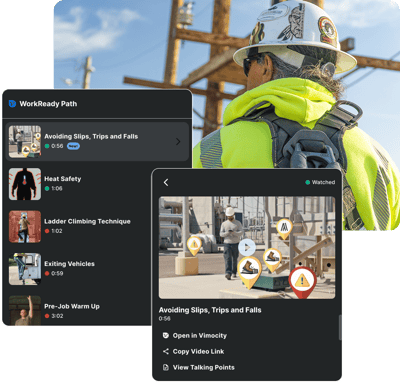
That's where Vemosity comes in. We give you one platform to scale your impact, delivering expert curated safety campaigns on everything from slips, trips and falls, to heat stress and soft tissue in your prevention. You'll reach every crew through the channels that they already use while gaining data insights to guide smarter prevention.
With Vemosi, you can boost awareness, prevent serious incidents, and keep your workforce ready for the job. Scan the QR code or visit vimasi.com to learn how leading utilities are cutting injuries by 50%.
How important have you found, uh, articulating the bigger why, uh, to the people who are participating in terms of maybe the benefits of doing that activity and how it relates to life outside of work? Yeah. I mean, the bigger why. I mean, uh, I think for, for our crews in the field, maybe there's nothing more important for the foundation of their health than a good stretch and flex and recovery pro- program.
And, um, the why is this is their careers. They are relying on their body, um, to make a living. And not only that, when you're done with this career, uh, when you have kids, grandkids, you know, if that's the case, um, you wanna be able to have the physical ability to enjoy life at that point, you know, through all of our years, right?
So, um, this, although this is gonna help us short term in the field, um, feel better every day, I mean, really, uh, it's exponential. You're gonna feel so much better at 55, at 65 having done some mobility. Uh, you know, it's, it's not weird nowadays to have a, a 65 year old who's competing and, and, you know, sporting events and who can kick like a 35 year old's butt, you know, because they have taken care of themselves and gotten themselves to that point, and it's just their behavior.
It's how they've lived their life. So, um, the big why is life, right? Enjoy it, get yourself healthy to enjoy everything you've worked hard for. Um, I think that resonate ... I mean, I don't work in the field, but I want that for myself. I want that for my family. So, um, I think that's important. Absolutely. I always tell people that pretty much everything in life is enhanced by the ability to move while and not be in pain.
I mean, I can't think of any activity that is better if I'm in pain. And so being able to, to take that preventative approach, it just enhances every aspect of life. And for people who like to hunt, fish, travel, you know, spend time with their family, all that is enhanced by those small, like ... I think of it like a 401 like you're putting away little bits of, uh, you know, deposits, uh, over the course of your career so that when you get to the end of your career, you know, you have a retirement, which is movement health in my mind.
Absolutely. I like that, the 401k. Absolutely. So one of the things that I've experienced is that incorporating like a stretch and flex into the start of the day, there needs to be a little bit of thought process to it and consistency. And, uh, oftentimes it's a time, a location, and a leader I've found are like three most important things.
How have you found, like, best practices in terms of crews being able to implement a consistent warmup at the start of the day? Yeah, absolutely. There, there has to be a dedicated leader in it. I mean, I think it, it can switch, um, from day to day, um, but absolutely. You've got someone who's taking ... First off, it's a part of your scheduled workday, right?
Stretch and flex is in there. Usually our best practice, we put it in right before, um, any toolbox talk or any of the important safety talk. Um, and again, what we found is when you wake people up through movements, uh, you know, their muscles are talking to their bones, talking to their joints, talking to the brain, everything's waking up, um, and actually cognition's a little bit better.
So it's an advantage, you know, from a safety point too, right? If, if I wake my body and brain up, and then I get into my toolbox talk for the day, m- more of that sticks. So usually that's one of our best practices. You get out there, you get everyone a little bit of water, um, and you go really right into that stretch and flex, um, before the toolbox talk.
I love that. And one of the things that I always hear from people too is like, it's great to do the stretch and flex for the warmup at the yard at the start of the day, and then you jump in your truck, you drive an hour to a job site, and now everything's shut down again. And now you're in front of a customer's home and you feel kind of awkward about getting out of your vehicle and doing something, uh, you know, at the job site.
But again, to your analogy of, uh, Patrick Mahomes, he's gonna come out there and he's gonna throw a few balls before he gets back out on the field after halftime. So what, what should people do to just, you know, quickly prep for that work that they're about ready to, to do after, you know, being sedentary for a little bit?
Yeah, no, it, it may be a little bit awkward being somewhere, but I think it, it doesn't have to be a full in- depth routine. Uh, it may be a little bit more job specific, um, two or three stretches that are gonna prep your body for the movement, um, that you're about to do, uh, is super important, right? It, it, your body is cold.
So you, you wanna make sure that you warm it up and you still have to get a little bit, uh, over that movement in, in some of the stretching in. Well, okay. So you, you talked about hydration as being key. Explain a little bit more about why that's so critical for the workforce, uh, staying on top of their hydration.
Yeah, so hydration, so important all year round to be hydrated. Um, I'm in Texas. We have crews all across the US, uh, a couple different countries, but the summers are brutal, right? You lose water super fast, um, but it's not only water that they're losing, right? They're losing, uh, the important electrolytes, you're sweating some of that stuff out.
So although what our kind of rule of thumb is, um, every two bottles of water, you need to mix in some kind of electrolyte and we have some recommended brands, um, that we have out with the crews and try to kind of get them hydrated in a very smart way, right? So that's the stuff that their, their muscles need to recover, those electrolytes.
Um, we have people who get in trouble with heat stress every year. Uh, even pushing it and teaching it, I mean, it's brutal out there. Uh, so it's, the messaging just can't be enough. You, you gotta be out there and recommend foods that are, you know, high in water content, um, fruits, uh, watermelon, apples, you know, and, and, uh, make the crews aware of foods that do dehydrate you.
Um, never fun to hear it, but the alcohol the night before, uh, is gonna dehydrate you and it, it's a little difficult to then go that morning and go, "Well, I'm gonna chug some, some water and some sort of electrolyte and I'll just bounce right back." Actually, the, the human body doesn't really work that way.
It starts, uh, you know, sometimes 24, 48 hours before. Um, and even some of the super, you know, the foods and caffeine and energy drinks that kinda will dehydrate you, a lot of these crews, they don't realize that. So just letting them know, you know, if you're gonna drink that, be, be smart about it at least.
Make sure you're putting water in there, um, and aware of what your body's, what's happening to your body, so ... You mentioned a couple key times as well that people may not think as much about, but towards the end of the day, so it's filling the tank before your next day, and then it's first thing in the morning, why are those two points, uh, critical?
Yeah. I mean, so at night, w- when we're sleeping, that's when your body's doing the majority of it's recovering, right? You're, you're, you don't get stronger during the day when you're getting the work done, right? Uh, the muscles are healing, repairing, and actually getting stronger overnight, so they've gotta be hydrated to do that the right way.
Um, you've gotta have your protein that hopefully you had, you know, at dinner, uh, and you've gotta be hydrated, and that's gonna help you recover for the next day. And it's, it's a grind. Um, you know, 10, 12 hours of work, uh, you get a little bit of downtime, hopefully you're sleeping your, your seven to nine hours, and then you've gotta turn around and do it again.
So, you know, without being hydrated, you're much more likely to be injured, um, and the fatigue sets in a lot quicker. So just super important for all kinds of reasons. I think that's such a good point because it's 2% dehydration, uh, exponentially increases your risk of a soft tissue injury, something we don't think about.
So that's essentially about 32 ounces for most people, but most people could sweat 32 ounces in, you know, a Texas environment in 30 to 45 minutes. And so it's pretty easy to get behind the eight ball, and now your body's actually more vulnerable to those injuries. Have you seen that correlation of, like, maybe the warmer regions, um, having higher risks of sprains and strains?
Yeah. Every year, the, uh, like I said, heat stress, um, we see strains, sprains. Uh, those numbers go up in those hot months, you know, in, in our, like, Arizona states and, uh, Texas, you know, all these. It's just, it's tough. And, and we do see it. And, um, so yeah, that hydration is key. And you also mentioned energy drinks.
That's something that almost every, uh, utility worker, construction worker feels like that's, like, the go- to. So what are the pros and cons about energy drinks and what are some alternatives that you recommend? Yeah. I mean, the pros, right? They're fine. I mean, I, sometimes I speak on this and I'm on stage at, like, an all hands meeting or something.
And I, if, if those guys could boom me on the energy drinks, I think they would. Um, but yeah, I mean, it, it, they've got caffeine in them, right? So you're definitely, um, feeling a little bit of that energy spike. Most of them are higher in sugar, um, so you're getting a bit of an energy spike temporarily there.
Um, so maybe those are the, the pros, they taste good. Turn your tongue fun c- colors. I don't know, those three pros there. Um- But I mean, yeah, most of them, they're, they're high in sugar, so as soon as you come down from that sugar high, you're feeling a little bit worse, uh, than you were before. And then sugar just does all kinds of other things.
Um, it actually affects the way that you recover, um, the muscles that we build, right? So things can affect hydration. Um, so too much sugar is just, you, we always wanna be thinking about it. Um, and then the energy drinks, I mean, they get your heart rate going super high and you add in the heat of the summer to that and heat stress goes up.
Um, you can ... At, at the worst end of it, you can have kind of like some heart attacks and some things like that. Um, and the energy drinks can be a trigger for that. So we, we like to teach them, you know, it's actually, you know, it's maybe a myth that coffee, um, you know, like I always used to hear, "I'm trying to quit coffee.
I'm trying to take the coffee out of my diet." And what we know is, like, that's how the majority of Americans actually get their antioxidants is through coffee. There's a lot of healthy things in there. And if you keep the amounts correct and in a healthy range, uh, it's actually a lot of good properties in coffee.
So nothing wrong with a morning energy drink, just be aware of what you're putting in your body. There's a lot of the, the bad stuff in the, you know, energy drinks. So if you can keep it natural and go coffee, I do that. Um, if you're gonna do energy drinks, make sure you're doubling up on the water and aware of how you're feeling.
I think you bring up a good point about the energy drinks and the heat. So one of the friends of the podcast, Mark Polson, he's with, uh, wilderness athlete, working athlete, and he talks about energy drinks. And, you know, when you're constantly in this stimulated state, your adrenal glands, which are, help modulate, you know, stress and fight or flight, that whole response, they're just chronically being pounded and stimulated.
And so at a certain point, your adrenals actually s- you know, stop producing the amount of adrenaline and the, the hormones that keep you balanced at the right level. And so then when you do encounter a stressful situation like working in the heat, uh, your body just doesn't have the capability of being able to handle that stress in the same way- That's interesting.
And the other thing to, to kind of build on that, right? It's, um, if you're having energy drinks too late at night, I mean, really any caffeine, but, uh, the half life of it, you're not gonna sleep as well. Uh, you may skip out on some of the deep and REM sleep where the recovery happens. Um, so, so yeah, you've gotta be careful on the timing as well, whether it's coffee or energy drinks.
So you've mentioned a couple times protein. Why is protein so important f- from an athletic standpoint? Yeah, you've gotta ... So protein, you know, is, is the building blocks, you probably hear this, um, but it's the building blocks for our muscles, right? The amino acids in there, uh, and the protein, that's what's gonna do the recovery work after all that wear and tear.
Um, so we wanna get our body stronger, we wanna get ready for the task, and hopefully stronger than we have been before, um, so we can take on that same amount of volume or more and be successful with it, not have injuries. So basically, what's gonna make your, your muscles, which supports everything, uh, you need the protein there, uh, for recovery, so
And what are some of the recommendations that you give to crews, especially if they're planning working from home so that they can, you know, make sure that they have the right food with them when they're going to work? Yeah, and that's actually probably the most common question. It's like, okay, I've got some gas stations here, I might be able to, I might have a fridge in my room, you know, what are some meal options?
And we kinda, we can teach them, you know, what's a complete protein, something that has all the amino acids in it. Uh, usually if it's an animal protein, think chicken, turkey, beef, it's a complete protein. It has all your aminos in there, and that's good. However, those are hard to maybe pack in a lunch and it's gonna sit outside a couple hours before you eat it.
So some of the kind of combined protein ... I mean, you'd be shocked how, how good nutritionally a peanut butter sandwich can be, right, on, on some good toast that can be a complete protein. Um, but, you know, even just packing some fruit, uh, with some sort of, you know, cottage cheese, some things that don't go bad, how to do that, um, are good recommendations.
'Cause I think the, the biggest challenge is, like, I don't just have a healthy kitchen or restaurant here on site and I'm out here 10, 12 hours. What can I do? Yeah, those are some real challenges. What is your go- to protein like if you're, if I were to look at Sarah Miranda's lunchbox, what are, what are you, uh, packing to sustain yourself?
Yeah. If I'm able to cook and I have a kitchen, um, you know, I'll do some sort of fish, something to eat like some salmon, uh, with some veggies, uh, usually at night, uh, at lunch, I can do a wrap or a sandwich. I like, like a simple tuna wrap that you could kind of take with you. Um, I do travel some, so, you know, on the airplane, um, if I could keep the yogurt kind of cold somewhere, that'll be an easy go- to with protein.
Um, and then also like a, a peanut butter and banana or peanut butter sandwich, super classic. It's definitely in my lunchbox. There, you know, you go to a gas station and there are a million types of beef jerky. There are all these nuts. What are some sneaky things that people should watch out for if they were to flip the package over and actually look at the ingredients?
What, what should people, what should guide their decisions when they, uh, pick a product? Yeah. Uh, so yeah, you've got to have a, a little bit of, you've got to look at the nutrition label, you've got to look at the amount of sodium in there. I think that's, especially if we're going to be in the heat and things, you've got to know where you're at a little bit and monitor.
Um, but the macronutrients, your basics, right? Does this food have a decent amount of protein in it? Um, does it have some good carbohydrates that are going to help me kind of recover and, and energize me through the day and some healthy fats, right, that, you know, help my joints feel good, help me feel full.
Um, so knowing where you're at with your macronutrients, and there's all kinds of tools out there now. The classic that we still actually use here, um, at Quanta is MyFitnessPal. Yeah. They've evolved. You can take a picture of something, um, and it's going to give your macronutrients breakdown. Um, you can get the information for free.
It's going to give you some recommendations on, like, what your daily amount should be. So if you just do some simple math, uh, you may find that some of your favorite snacks, um, maybe aren't so good, or you might be shocked some of the stuff that, like, "Oh, that's actually better than I thought." What is the feedback that you've heard from frontline workers, uh, that have used that?
Listen, no one maybe is pumped up about having to calculate their macros and look at what they're eating and have an honest look at it, but I say, just do it for a week. This is gonna be a one week experiment. You're gonna start getting good about, like, I eat these maybe five, six foods at lunch almost every day.
There's a little rotation. I know what I can kinda get away with, um, and what I need to kinda get rid of. So it's honest Probably the best education at anyone. Track your macros, you know, get a good feel for what's out there. Give it a week. It's, it's pretty amazing. So let's talk about recovery now. So we're at the end of the day.
What are your go- to recommendations for recovery? Yeah. So, uh, for recovery end of the day, uh, you've been at a long day of work, 10, 12 hours. I'm beat up, I'm tired. Um, again, it's gonna be a little bit of a maybe more holistic approach than, than what we're thinking here. It, it is nutrition, right? So hopefully I'm gonna get my 25 to 40 grams of protein in.
Um, at dinnertime, I'm gonna continue hydrating. If I'm needing some electrolytes, I'll make sure that I'm getting that in. Um, and then what I think is really not thought about so much is the mental aspect of the recovery post-work, post-shift, right? Make sure you ... I mean, if you need just to shake off the day, take a walk, um, connect with someone from your family or friends, right, to get into a good positive head space.
Um, that kinda helps too. So I think there's a, a nutrition aspect post-shift. I think there's a hydration aspect. There's gotta be some kind of connection for mental health. Um, and then you also have to recover with some of that musculoskeletal. So the routine, uh, you wanna make sure we've, we've got heat.
We call it heat roll and sleep, right? And heat is, again, take a nice warm shower, make sure that your, your muscles get some time to relax. Uh, after that, you're gonna maybe do some sort of foam rolling, whether it's with, uh, like a lacrosse ball or a foam roller, something you can travel with. Um, really relax those overused muscles.
And again, this only, you only need about five minutes, some of the key muscles that you work that day. Um, we don't put it in there. We say heat, roll, and sleep, but along with roll, we, we do want some ... This is now when you can take advantage of some static stretching. So you can hold a stretch, really work on that range of motion.
The joints get a little bit healthier that way. So, um, foam roll the muscles, then stretch them, and then really you're betdy, you're ready, uh, to sleep well. So hopefully seven hours to nine hours of sleep. And that's kind of your perfect post-shift evening. That's a great summary. And again, I want to emphasize that recovery is when your body is repairing.
So we are exerting it all day long. We're breaking it down, but it's, it's the recovery that really is the most important aspect of, of that day in terms of us being able to, to show up the next day better and not broken down. Any other things that you would recommend just from like a, a supplement, creatine?
Like what are some things that you might do to help aid your recovery? Yeah, we get this question a lot too. I think, yeah, the, the science is out there on creatine. Um, and it has been for a long time. So I think there's some positive as far as recovery, uh, and, and what it does for the muscles. Creatine is an absolute, like, A plus.
Uh, not only that, the interesting thing that we've learned with creatine is how it affects your brain, right? It's, uh, it's amazing and they've got studies long term. So when you're retired, uh, you know, things like Alzheimer's and all kinds of dementia and it's just, it's been amazing. Creatine, I think we're still learning, you know, the amazing things it can do, but something everyone can benefit from, but specifically if you are, uh, in the field and the trades and you're beating up on your body, uh, you, I mean, you, you gotta have some creatine.
Um, so big believer in that. I think a multivitamin is, is a must. It's a good insurance policy. Uh, if you're missing any nutrients throughout the day, which most of us, we are. So taking a multi. And then for the joints, um, you know, if you can get some sort of omega-3 fish oil, something like that, uh, those would be kind of my three favorite supplements.
Give a quick plug for a conversation that I, I had with Dr. Rick Crider. He did a ton of research on creatine. I mean, his whole career has been focused on, uh, nutrition, strengthening, conditioning, but he's really kind of the godfather of creatine research. And one of the things that I think is really applicable to the frontline workers is that a study came out about two years ago that showed that if you're sleep deprived, having 10 grams of, uh, creatine can actually change your cognitive awareness and just your ability to be present, uh, better and make decisions.
And so again, maybe something during storm season when people are working those long hours to supplement with some creatine just so that they're a little bit sharper. Is that something that you've, uh, thought about at Quanta? Yeah, absolutely. So we've put some information out there and we've kind of shared some, some of the fun facts on, on creatine and absolutely, um, more to come with that.
Like I said, I think that's, it's such an interesting topic and, you know, for many years it was like we knew what it did for, for the muscles and physical recovery, but there's a whole other side to it. And yeah, that's, I mean, it can be of use, you know, you've, you're, you're out on storm and, um, or you, you had a big meeting, you didn't, you know, sleep well or just stuff, I mean, the creatine could come in and yeah, there are some stats, and I don't want to say it wrong, but it's like if you missed such percent of your sleep, the creatine will actually, it'll be as if you had your seven hours of sleep.
Uh, it's pretty amazing, so ... Definitely not a long-term strategy, but for those moments when you are sleep deprived and you just have to push through, I mean, it's, it could be a huge, uh, performance enhancement. Yeah. So pretty cool. Well, you touched briefly on the importance of the mental aspect and we, we talk often about like workforce readiness.
So the physical, which is all, everything that we just talked about, the hydration, nutrition sleep, uh, the recovery, but then there's that mental component of, of being ready and that's a huge part. And I know that Quanta recently just kicked off the Mason Construction, uh, program that's a, a big, uh, initiative that Quanta has regarding how to support the mental health of the workforce.
Can you tell us a little bit more about that? Yeah. So I think, um, you know, when you look at overall health and wellness of, of every one of our, and it's, you know, we're at 70,000 now, um, employees, what we found in construction, in the construction industry, you're five times more likely, you know, to die by suicide.
Um, you know, the stats on, you know, dying by suicide versus like, uh, uh, mistakes, something that happens on the work site, I mean, it's, it's crazy. Um, so I would encourage everyone to get out there and kind of educate themselves on all of that. Um, so what we really wanted to do, I think at Quanta, we, we saw the importance of it.
I mean, it can't be ignored anymore, but mental health is health. It's hard to have physical health. It's hard to care about protein if I'm not there mentally, uh, or my stretches or anything like that. So first and foremost, I think, um, back to the basics and, and giving our employees, giving our crews mental health tools, um, has been very important.
So yeah, so Quanta actually partnered with Matson Construction, which is out of Australia originally, and they made a huge turnaround, uh, in the country and, and they've done a really, you know, everything science backed and they've done a lot of really cool work there. So we kind of knew, um, you know, North America is not Australia, so let's put together a pilot program, use some of these fundamentals, partner with them, uh, learn some things, and hopefully make the whole industry a little bit better and healthier.
Um, so that is going on now. We're, we're a couple weeks into this pilot. Uh, I think we're already learning and it's at a good place. The mental aspect, it's hard to overlook it. It, it affects your recovery, it affects your, you know, your sleep, your finances. I mean, it touches everything. So make sure we have some tools to take care of each other in the field mentally.
So practically speaking, what does the program look like in this pilot phase? Yeah. So, um, we, what we tried to do was come up with a couple different geographic areas and different sectors in the industry. Um, we've actually partnered, um, with some project sites where it's union, non-union, you know, we, we tried to kind of look at all aspects of construction and trades and get a realistic look at it.
What's really different about this MATES program? It's not a check the box and we're done with the training. Um, there's actually field officers and people that come to your site and build long-term relationships with these crews. Um, and they're there to kind of monitor ... They, they give tools on how to be, you know, mentally healthy and things, but really they're there in case someone's not feeling right, uh, and they don't know exactly who to go to.
So they, they've built it into the field. They've built it into the trades, right? Th- those people are, are integrated into your work area, um, and then they can give you the support you need and actually point you in the right direction, um, for further support, right? So to have someone who's kind of an expert who can give you the right direction and will also come back and check on that person and go, "Hey, how's this going?
They think that's what's the difference maker in Australia, and we're hoping to see those, that same thing here, uh, in North America. And, you know, E- EAP is such a critical part of the equation, but the peer-to-peer support seems to be a real differentiating factor. What have, uh, the early wins and learnings been about implementing, you know, a peer-to-peer structure?
Yeah. Um, I mean, even now, doing some of the initial pilot work and educating the, the general awareness training, I mean, we have people that come out of there and go, "Hey, yeah, I need, I do need to talk to someone. I have been struggling with this. " Um, so there's actually been a lot of wins super early on in this.
And I think the peer-to-peer aspect, I mean, you know, Kevin, if you and I are peers and I'm working with you every day, I have the ability to know when Kevin's not in normal Kevin spirits and maybe hasn't been for a little while, and I've got the general awareness to approach you correctly and have the confidence to go, like, "I know he's not right, but, like, is it my place to ask Kevin?
Um, and am I gonna say it right? Am I gonna offend him?" So to say, "It's okay, you know, you're not gonna make anything any worse. This, you know, try approaching, you know, this way and have the confidence to do that. " Um, I think that's the difference with peer-to-peer. And my understanding is, again, Quanta took the initiative to bring mates to the United States with the hope to bring exposure to, you know, the whole continent so that it could be, continue to grow and support other companies.
And so, uh, yeah, thank you to Quanta. I mean, that's a huge step to even just bring this to the whole industry because it is an industry-wide problem and epidemic and something that needs to be solved. And so it's not just a quant issue. Some of the stats that you talked about from mental health, this is like the industry on a whole.
So definitely some important work to be done. So someone listening to this episode, what is one thing that they could take away from mates in terms of just a concept if maybe they're feeling like, "Man, I've stressed my life in this area. I don't know how to deal with it. " What's one easy takeaway? That it's okay to feel that way, right?
It's okay to feel stressed and overwhelmed. And at some point, you know, we all are going to. Um, the easy takeaway is really getting the, the resources out there and knowing who to go to, who to talk to so that, you know, you've got some, a partner in navigating whatever issue you're going through, Tim's going through.
Um, so I think just sharing the resources, all of us getting better and educated together and caring about each other, uh ... Sir, we've talked about a lot of topics here. We walked through soft tissue injuries, nutrition, hydration, recovery, the mental health aspect. If you were to speak to somebody who's in their first 18 months of their career, uh, in utilities construction, what's one piece of advice that you would give them, uh, that would hand- enhance their career over the long haul?
Uh, first 18 months, yeah, the newbie. I mean, it's, uh, again, take, take it, take it slow, soak it all in. Don't try to do too much. Um, although that's maybe like an ego thing we all want to, um, you know, don't move faster than what you're ready. Um,
what you do and the habits that you set in those first 18 months of work, um, they, they are gonna determine what the rest of your life looks like. Uh, your career, your post-career life, time with family and friends, right? It's, um, taking care of yourself, um, at every age. So I, I think that's important. If you can set those habits right from the beginning, I mean, again, to use your 401 um, kind of metaphor, you're investing in yourself down the line 20, 30 years.
Um, so it's worth it to do those things and, you know, implement doable small things. Don't try to maybe do it all at once. If I've got zero background on, you know, stretch and flex or proper nutrition or, you know, eating the right way, protein macros, there's so much that we touched on. You know, start with one or two things, make it easy, get very good at those one or two things, and let it grow kind of from there.
Um, nothing too much, n- not overwhelming, just one or two things. What would you say to the 45-year-old construction worker who's about halfway through their career? They're starting to feel a little bit beat up. They're probably fatigued because they have, you know, young kids, they're running all over the place, along with working 12 to 15 hours a day.
What advice would we, would you give to them if they were to just focus on one or two things? Yeah. I mean, s- I'll say that the human body's absolutely amazing, right? We've got studies now that's, um, 80-year-olds, whether you're in your 80s, you can still build muscle. You can still, um, get to healthy range of motion.
You can become faster, actually, quicker. You know, you can work on all of these things. So I think don't forget how amazing the human body is, and if you put in the effort, start doing one or two healthy habits, um, caring about your recovery, um, you absolutely can still make progress and, you know, get your career longevity going.
Um, so you're not hopeless at all. I mean, it's, there's still so much you can do at any age. And for the 60-year-old workforce athlete, she's been working, you know, for almost 40 years at the tail end of her career, and she is beat up, and she's like, "Man, what is, what is retirement gonna look like? Is this the way it's always gonna be?
Uh, what would you say to that person? Yeah. I mean, no, I, I, I mean, just making sure you've got some sort of mobility, uh, routine in your life, you know, and get the nutrition right. And again, you can live out those, you know, hopefully final 30 years, 40 years, uh, very well. Again, y- there's nothing that we can't reverse.
We see, um, you know, people at 65 get off medications and get healthier, uh, you know, after they've been implementing, you know, healthy habits into their life. So again, can be all positive. Sarah, thanks so much for being on the Work Ready Podcast. And I'd like to reinforce what you said throughout this interview.
The goal is not just to make it through tomorrow shift, it's to make it to retirement with a body that still works, one that can hunt, fish, chase grandkids, and do the things that matter. That doesn't happen by accident, it happens because of the small, consistent choices you make with your muscles and joints.
And if you wanna connect with Sarah outside of, uh, the Work Ready podcast, she does have, uh, an account on LinkedIn, so I'd recommend that you check her out there. And if this conversation changed how you think about the most common injuries in the industry, soft tissue injuries, and how you can invest in the 401 of your body, uh, make sure to spread this message.
And until next time, take care of yourself, take care of your people, and stay work ready.
Discover how Vimocity can help keep your crews WorkReady.
One comprehensive platform to help safety and operational leaders prevent more injuries and incidents.