
 For Leaders
 For Workers
 Partners
The Hidden Cost of High Alert
WorkReady Podcast Episode 55
-
Speakers
Chris Timmins | Preston's Pursuit
Dr. Kevin Rindal | Vimocity -
View The Transcript
In his two decades in law enforcement, Chris Timmins struggled to turn off the high alert mindset that came with the job. What he didn't realize was how much it was affecting his health, his relationships, and his family. After 23 years, something finally changed for him. Today, Chris shares what allowed him to be fully present for the people who matter most.
What he's learned could change how you show up for work and how you walk through the front door when you get home at the end of the day. This is the WorkReady Podcast.
So Chris, for the officer sitting in his patrol car right now or the firefighter about to start a shift, or honestly, the utility worker driving home who's never worn a badge, what are they gonna walk away from this conversation with that they did not already have? That they're not alone, and that they are in control more than they believe in their recovery and their success, not just while they're on their career, but after their career.
You talked about how injuries were something that you've experienced a little over the course of your career. How common is that in law enforcement for people to experience those soft tissue injuries?
Every day. Every day. You know even just sitting in that, that patrol car wearing that, all that gear, and then you're having to turn to the side while you're sitting in that driver's seat and try and type a, you know, sometimes 15-page report, it's not ergonomically set up, right?
It beats up the body. And then you're getting out, and you go from sitting to, uh, 110 miles an hour, and then you get back in the car, and you sit for another hour or you sit for another 30 minutes, or sometimes you don't sit at all. You- you just keep go, go, go. And you know, it's... We're- we're taught to be a warrior, right?
We're taught to be, uh... y- you never lose that fight. You're never gonna lose. It's just a wound. You know, we even get taught in the academy, if you get shot, that doesn't mean you give up. You keep fighting through it, and- and that carries on. So a lot of times we don't realize about the pains until, uh, later in our lives.
So I always said my body was writing checks that, uh, I thought were cashing at the time, but then as I got older, it kept coming back insufficient funds. Yeah. And, and not only physically does it wear on you, but even just, like, your nervous system. I mean, you're going from zero, sitting in a patrol car, you know, working on notes like you said, to it could be a high-speed chase, it could be, you know, something that just totally throws you into fight or flight mode.
And what is that like just going from those extremes? You know, it's a, it's a roller coaster because a lot of times when you- you get started in your career, you're excited, you're, you know, you're enthusiastic about getting out there and doing the job, but you don't realize that you're putting yourself in a state of constant hypervigilance, and it bleeds over into your personal life, right?
They tell you when you're in the police academy, you're on... you're basically being viewed differently than everybody else in society 24/7. And that's true, but you're also viewing society differently, right? I don't get to hang up the badge and the, the duty belt at the end of my shift and then go walk around through the store and not worry about my surroundings with my family.
So you're constantly monitoring your surroundings, and it, it puts such a toll and burnout and a drain on you. And it... You know, I didn't realize it at the time, but it affects your family, it affects your friends, it affects your personal relationships. Um, a lot of us see, you know, in our lives, normal citizens, maybe three traumatic incidents in their life.
First responders sometimes see 10 a shift And Chris, how do you shut it off when you get home at the end of the day? Like, you pull into your driveway, how do you go to leaving it in the car and then being able to walk into the house? Um, you know, I think I figured it out at about year twenty-three, but I will tell you, uh, for the first twenty-one years, uh, I didn't.
I, I thought I did, but I, um... There's a book by Dr. Kevin Gilmartin, talks about officer survival, and it's not the survivor of the hand-to-hand combat, it's, it's surviving, like you said, after you, after you get home. Um, the way we normally would do it is we sit in the house. We, we sit on our magic chair, our couch, and we, we stay in what we know is safe.
Our house is our safety, and so we don't go out. We don't do a lot of things. We, we change who we were, uh, from the person before we got into this line of work. Would you say that there is now becoming a greater recognition in the industry that that's something that every officer deals with, and so they're starting to put more things in place to help support, uh, officers as they make that transition?
Oh, absolutely. You know, um, it was around twenty twenty, twenty nineteen, uh, the twenty-first century policing model came out from the Department of Justice, and they talked about officer safety being one of the six important pillars to, uh, to public safety, right? Everybody thinks policing is, is different, but really we are public safety, and we have to treat it that way.
And so putting a recognition, putting an emphasis, and putting a focus out there for us to be able to, to be human when we're on our off days, right? And to also not bring work home with us and not bring home to work. Chris, on this show, we talk a lot about industrial athletes and 100% see, uh, police officers, first responders, utility workers, construction workers as, as, uh, workforce athletes.
How do you see your line of work being athletic in nature? And why is it so important to bring some of the concepts of athletic performance and recovery to first responders? You know, uh, it's such a great, great analogy, the workforce athlete, because we really are. We go from, um, doing things very sedentary, right?
Sitting here on a computer, typing a report, whatever, to the next thing you are, and I, and I, I mean this when I say this, sometimes in the fight of your life. You are, you are dealing with the elements, you are dealing with the hazards, the roads, you're dealing with an individual trying to hurt you, or you're trying to stop somebody from hurting themselves or another person, and it, it's not, um, it's not something easy, right?
It is, it is physically exerting. Um, it's mentally taxing, and it's, it's amazing. And, and I tell people, like, most of our law enforcement encounters end up on the ground. The ground is not forgiving. It's like playing tackle football on AstroTurf back in the '70s when there was no padding underneath it. And you were a defensive tactics and use of force instructor for 20 years.
How have you developed that training during that time so that we can bring more athletic concepts, uh, to the, the workforce? You know, a lot of it was how do we, how do we deescalate the situation? Even though it talks about defensive tactics and use of force, I think the first and the most important tool we all have is our mouths and our ability to critically think.
And if we can do that, sometimes we don't have to rely on that physical force. But, um, how do we, how do we handle a situation with the least amount of force necessary? That's the goal in all of law enforcement, but it's also the least amount of force necessary sometimes results in the least amount of injuries, not just for those we're taking into custody, but for ourselves.
Um, you know, running up and tackling somebody when you've got 30 pounds of gear on and you're tackling them on the asphalt in Arizona, it's not forgiving. Can you do something with your hands to assist them to the ground, take them to the ground gently, or control them while they're standing there and let them know, "This is not gonna be a winnable fight.
Let's not go to the ground"? And so you started off this conversation by saying that you're writing checks that you thought your body could cash, but, uh, they were bouncing. Can you elaborate on that, especially when it all came due in 2020? Yeah, no, absolutely. So, um, you know, I was, I was in shape. I was working out every day, and I was doing what, um, what gyms and what police departments and fire departments historically had done.
Um, they provided weight rooms, right? They provided 100-pound dumbbells, 150-pound dumbbells. It w- it was weights. It was make sure your shirt is fitting tight so you look like you're in shape and, and you're intimidating, right? Or so you, you look like you can handle yourself. There was nothing designed for us to actually do it the long way, right?
To do it the right way, functional fitness. But, um, I was in, uh, really good shape, and it was in 2014, I remember going to a call for service, getting dispatched to it. I had a young officer with me, and, um, it was somebody was breaking in. The reporting party said somebody was breaking in through their back Arcadia door.
And so the rookie and I went around to the back, and, uh, we were in the neighbor's backyard, and we could hear dispatch giving us live updates. Other officers were surrounding the house, and all of a sudden, we heard glass shatter. And so I'm like, "We gotta go. We gotta go over the wall right now. We gotta go, we gotta go."
And I had my rifle, and I had, you know, all my stuff on there. And so it was a six-and-a-half-foot wall on the side that I jumped from. I hopped over, and it was an eight-and-a-half-foot drop, and I landed, and I immediately felt like electrical pain go through my, through my legs and, uh, through my back, and, uh, I was stuck.
I didn't fall to the ground, but I was stuck, and I held on. Um, I helped pull the rookie over the wall and, uh, told him, "Be careful." And ultimately, we got through that call and sadly, it was just the house was settling, and it caused the window to shatter. So there wasn't even a bad guy. It wasn't even like a cool ending, right?
But, um- And I thought I was okay. I didn't want to, I didn't want to say, "Oh, I got a boo-boo," or whatever. So I told the rookie, "Hey, just get me through this call. Get me through the rest of the night. You're driving. Things will be good, and I'll, I'll take some ibuprofen and I'll deal with it." Um, you know, no one wants to say, "I'm hurt," especially if it's not visible, right?
That's, that's the, the one thing in our culture, fire, police, anything, they don't want to say, "I've got a soft tissue injury." It's more of, "Look at this gaping wound," right? Those are the cool wounds. Um, so I went to urgent care the following, or sorry, to the workers' comp doctors the following day, and they said, "Yep, no X-rays are needed.
You just, you got a boo-boo. Here's a bunch of pain pills. Come back in three days." And, and I did that, thinking that I was, you know, I was good to go and I just needed to suck it up and I needed to be tough. Um, fast-forward 2020, uh, I started having real bad back pains, started having problems with my right leg, couldn't, uh, feel my foot.
And, um, you know, the workers' comp case had already been closed. And, uh, I remember working a shift, working the whole night on the road, and I was a lieutenant, and the day shift had came in early, and I had a couple hours left before my shift was done. And they're like, "Man, you look miserable. You, uh, you need to go home."
And I'm like, "Yeah. You know, I don't feel sick, but I just hurt everywhere." And it wasn't uncommon for me to always have back pain. That's just, that's the way it was for the last six years. And, uh, I went home, and my wife even said, like, "Man, you look, you look un- you don't look good." And I'm like, "Yeah, I know."
And, uh, normally I would take our kids to school in the morning so I could have a little interaction with them, right? Trying to balance that work, family life, working night shift, take them to school. But, uh, she's like, "I got them. You just go lay down." And I couldn't sleep. I, I tried, uh, pain pills. I tried, uh, ibuprofen PM, nothing.
And I remember my wife, uh, went and picked up our kids from school, and she came upstairs, and she was talking to me. And, uh, I started walking, and she said I was mumbling, and then all of a sudden I collapsed, and I passed out, and I, I hit my head on the, the bathroom countertop, and I was just on the floor just laying there, just completely out.
And, um, I, I started to wake up and, uh, she was on the phone, and I could hear her calling nine one one. And I've always said, like, "Don't call nine one one," right? "Don't call fire if I get hurt. Just take me to the hospital. I don't wanna, I don't wanna go out that way unless, again, it's, you know, it's a bad injury."
And, um, I remember hearing her talking to the dispatcher, but I couldn't talk and I couldn't move my legs and my arms, and I, I thought I had a stroke. And I was like, "This is how I'm gonna go out. After everything in my entire career I've been in, um, I'm gonna go out right here on the floor." And, uh, luckily, I started being able to mumble a little bit, um, but I still couldn't feel my legs, couldn't feel below my waist.
And, um, fire came up. They all knew me 'cause I live in the city I work in. And, uh, they were like, "What's going on?" And, and they were checking me for a stroke, and I, I kept trying to smile. And they're like, "We see you're smiling, dude." 'Cause I wanted to make sure they could tell both sides of my face, right?
I've been on those medical calls. And, uh, they had to hit me with a bunch of, um, pain medicine just to get me to kind of stand up and get me down the stairs. And, uh, they had to carry me down the stairs. And, uh, it was the height of COVID, so my wife wasn't able to go to the hospital. And my kids were sitting there seeing their dad laying on the ground.
And, uh, they took me to the hospital and they ran me through, checked, you know, heart, checked stroke still. Uh, then they did some imaging, and they found out that my back injury from years ago, uh, which I knew I had a little bit of a tear in one of my discs, but both discs had ruptured in my lower back.
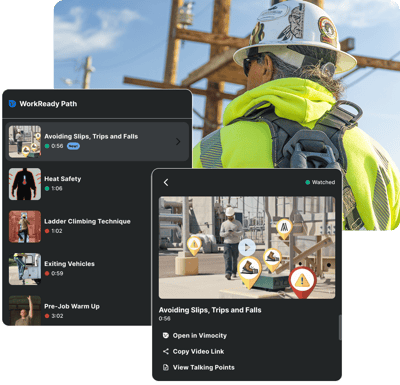
And then I had, uh, six other herniated discs and some torn ligaments in my back. With Vimocity, utility leaders are cutting injuries by up to fifty percent, keeping crews safer, empowering stronger operational readiness. Teams stay engaged, your safety impact scales across every work group, and you gain the insights to prevent serious injuries before they happen.
Vimocity delivers expert content, seamless deployment tools, and real-time risk data in one workforce readiness platform. Learn more at vimocity.com.
Unbelievable, Chris. And if people could see you, I mean, you're just a big, strong guy. And, you know, you look at someone like you and you can't imagine, you know, the amount of pain, uh, and just suffering that you were probably experiencing in that moment. Can you, uh, walk us through what, uh, what the next, it was really the next couple years looked like?
Yeah. You know, it was, uh, it was crazy. So I, I go and I remember, um, they hopped me up with a bunch of pain meds. Again, again, it was... I was at the hospital, and, uh, they said, "Call your wife. Have her come pick you up," because it was during the height of COVID, and they're like, um, "We're not gonna do surgery.
We're not gonna get a surgeon in here right now. We, we need beds for, for people that are sick. Um, you'll be-- Just go home and, and follow up with an orthopedic." So my wife picks me up, and, um, you know, I'm at home. I'm, I'm trying to figure out my shifts that I gotta get covered. I'm trying to figure out where I can sleep at in the house to get comfortable.
I'm certainly not getting back up the stairs. Um, and so I go home, and I remember I'm laying on the couch, and I had to go to the bathroom, and I couldn't even get up, and it was, it was so humbling because, um, yeah, I'm, I'm, I'm a bigger dude. My wife is only five foot two, hundred and ten pounds, and, uh, my kids were young at the time, but they all had to help me go to the bathroom, and that was real humbling, you know?
And, and I started having a mental toll kick in because we always talk about in our careers like, "I can't wait till I can retire. I can't wait till I can retire," until it's taken from you. And then I started sitting there like just, "Oh my gosh, like, I'm not going back to work tomorrow, and is this gonna get covered?
And, and how is this gonna get covered? What is gonna happen? How is this gonna work out?" And, um, I had to wait a month for my surgeon and the insurance company, uh, to talk to say that they, they could do the surgery at a surgery center instead of doing it in the hospital, because they still were, uh, viewing this as an elective surgery.
But, um, workers' comp wouldn't cover it, so we had to pay for it through our own insurance or through the insurance that, you know, just like medical, standard medical. But, um, it was a month, and they only gave me five days' worth of pain meds, and I remember, um, laying on the couch every day thinking about how great I was, you know, like doing things at work and, and now how I had to wait until somebody was downstairs to tell them that I needed to go to the bathroom again because I couldn't physically get up, couldn't, couldn't do anything.
And, um, and I was in pain, so, like, my mental health was declining. And, and I remember even telling, um, you know, my wife like, "I now know why people that have chronic injuries sometimes take their own lives," because it's just so much, right? Like, the negative thoughts just kept swirling in my head. And then, you know, I'm, I'm not sleeping comfortably.
I'm just laying on a couch with my feet propped up for literally 30 days, and I'm fighting with the insurance company like, "Hey, please, like, let's just do this." And, and workers' comp was real quick to say, "No way, man." And, and I even had an attorney, and they're like, "Nah, they, they didn't do anything back in '14.
They're not gonna do anything now." So, like, trying to deal with all that while I'm, I'm hurt, right? And then trying to deal with being a dad. That's the other thing, you know. Like, my, my fuse was so short, and, um, I regret that, right? Because that's a moment I wish I could go back and change. Um, when you hurt, you're not thinking right.
Um, imagine having a cavity, right? And someone's like, you know, asks you something, and it hurts so bad you might be like, "No." Well, I was not able to walk, and, and I was miserable. But, um, eventually I had the surgery, and, uh, it was brutal. It was a five-and-a-half-hour surgery. They ended up fusing, um, th- multiple levels of my back.
I got fused from, uh, L4 to L5, L5 to S1, and they had to do, uh, bone grafts. I've got six screws, two rods, um, spacers in my back. They had to open up around my nerve root and my spinal cord and put, like, little sleeves around there so it wouldn't keep closing in from all the years of sucking it up, writing that check thinking it was gonna cash.
Um, and then, you know, go through the physical therapy and, and go through all that stuff and, and just... I mean, I remember my wife would take me with my walker, um, out to the driveway, and then I'd have to turn around and come back, and that was, that was too much. I was exhausted. I, I couldn't even walk that far, and our driveway's, like, literally the size of my truck, right?
So it's not a big driveway. It's not a big walk, and it was just, um, you know, where do you go? Like, I felt like I was at the lowest low. I'm like, what am I gonna do? I, I, I'm a cop, but, you know, that doesn't translate when you're a, when you're a, a crippled cop in my mind. So it was, it was rough. And Chris, thanks for sharing that story.
And, uh, it, it's tough to think about what things were like back then, but there may be someone listening right now who's in a similar spot. If you were to think back to, to that phase and You know, having the mental resilience to get through that. Like, what, what would you say to that person who might be in a similar spot right now?
You know, the, the first thing I would say is, uh, to that person or to those friends that are listening to this that aren't going through their injury, but they have a friend that's going through an injury, reach out. Reach out and talk to them. Don't just ask them, like, "Are you okay?" But go to their house and have lunch with them.
Show up and just sit there. Just allow them to be part of that culture. No one called, no one checked in on me, and I felt alone, right? And, uh, I, I could have picked the phone up as well, but I didn't. So I just sat there. And, um, it's a lonely world, right? So it's okay to, to reach out to a brother or sister and say, "Hey, man, just thinking about you," right?
Not even a text message, a phone call. Text messages, you know, we've gotten so impersonal with things that, that human contact. Reach out and say, "Hey, can I come over and hang out?" Um, it makes a difference. It picks the spirits up. And going to that, that injured, uh, you know, first responder or frontline worker, again, pick up the phone and call somebody.
Talk to them, right? And don't just talk to them about the negative. Just talk to them about, like, what's going on. And, you know, when they ask you, "What do you need?" Tell them what you need. Because in our culture, we always say, "Everything's good. I'm living the dream. I'm fine," right? We all know what fine stands for, and, uh, we're just faking it.
It's okay to tell people, "I'm hurting. I need someone to talk to," right? And especially if you don't wanna burden your family with that, and you feel like they're, they're not prepared to understand what you're going through One thing that I just was so encouraged in hearing your story is that you were able to find a solution that you could play an active part in your recovery and, and so if, if you don't mind, I'd l- love it if we could share that story with the audience of how you were able to get over that hump and, um, get back to a place of being able to have the strength, uh, both mentally and physically to continue on with your career.
Yeah, absolutely. Um, so I'll go back a little bit. So I had the surgery. Um, I got to my six months recovery because the, the agency that I worked for at the time, their, um, their policy was if you're out of non-work-related, uh, injury for more than six months, you either need to come back, or you have to request for ADA accommodations.
Um, I didn't realize what that meant at the time, but it, it really would've meant just basically that I needed more time to recover. So I went to my doctor. I'm like, "You need to sign this form right now so I can come back to work." And, and I remember my surgeon looked at me and he goes, "Dude, you should be medically retiring."
And I'm like, "That's not gonna happen." And so he's like, "All right. Well, you need to be smarter, and you need to slow down. You need to do things. You, you're not gonna be the same you ever were." And, uh, I still had minimal feeling in my right foot, and, uh, so I-- he signed the form. I, I go back. I'm working on the road, and then eventually I get moved to a, uh, the admin position, which is over, uh, peer support and officer wellness and hiring and recruiting.
And, uh, I met this gentleman because the town of Gilbert was doing this initiative where they were bringing in this new idea called recharge rooms, and it was multiple different modalities to help first responders, uh, recover bas- both physically and mentally from things that, uh, we're exposed to every day.
And so it fell under officer wellness, and so, um, it was a red light, uh, panel, a, uh, infrared sauna. It was a vagus nerve headset, and it was also a cold plunge tub. And so, you know, I was managing it and kinda setting up the pilot groups and working out, uh, with my counterpart from the fire wellness team, as well as the town's health coordinator.
And so we were kinda just getting through those stages, and I remember everybody telling me, like, "Hey man, if you're gonna be doing this, uh, managing it, you need to try it. You should try it." And I'm like, "I don't like cold water. It's not gonna happen." But, um- You know, I, I heard it so many times and, and there was a firefighter that he's, you know, he's big into functional fitness, big into working out and, and he's like: "Dude, I do cold plunges and I do, you know, I do, uh, stand outside and get that, that good vitamin D in the sun."
He's like: "You should try it. It might help you." Because I was still walking around like Fred Sanford. You know, I, I still couldn't bend down to tie my shoes. I still couldn't do things, so I had slip-on shoes. I was faking it until I could make it, right? And, uh, so I started doing the red light panels, and that was, that was what I thought was, like, the easiest, uh, most...
or least intrusive to the cold. And, uh, ironically, after about three to four days of doing the red light panels, I started-- I didn't realize it at the time, but I started taking less and less of the ibuprofen that I was taking as a main- like, a daily maintenance just to get through the day. And, um, I started feeling better.
I started, you know, not having to take as many, like, uh, stretch breaks or, you know, complaining and stuff and, and I didn't notice it, but others around me, they're like: "Man, uh, you taking a new medicine? There's something going on. You're looking better." And, uh, I'm like: "Oh, well, that's, that's crazy, right?" So I, uh, I realized I'm gonna try that cold plunge, and so I went and I did the full circuit.
I did the, uh, the infrared, I did the sauna, and then I did the cold plunge. And, uh, the guy, uh, Rich, he had told me three minutes. You know, you gotta d- sit in there for three minutes. And I'm, I, I looked at the, the temperature, and it said, like, forty-three degrees, and I'm like: "Three seconds." Right? But, uh, I did it by myself.
I didn't want anybody else in the room, right? I don't need to, I don't need to have any self-deprecating moments where people could laugh at me. I needed to do this myself. And, uh, I got in there, and it was, it was cold. But, um- You know, we, we in first responders or the police world, we always train the box breathing or combat breathing as a way of calming yourself down.
And I remember them telling me, "You need to do that." And I did that, um, and after about 10 to 15 seconds, it wasn't painful cold anymore. It was bearable cold, and it didn't feel like 43-degree water. So I did three minutes and 30 seconds the first time, and I got out. Um, I, I like to always share the story, and I got out, I dried off, uh, quickly took off my wet, cold bathing suit, and I realized I know what a Ken doll looks like, um, because everything was cold, man.
It was the coldest it's ever been. But, um, I didn't realize how I bent down without even thinking about to pick up my bathing suit and throw it up on the, the rack over there and, uh, quickly bent down. You know, I was cold, but I was, I was bending down. I put on my socks, got dressed. I did not realize how quickly that happened, right?
And I, I drove home, and I did it at ten o'clock at night, so no one else would be there. And I drove home, and I slept like a baby that night. And the next day, I was like, "I gotta try that again." So I did it three days, uh, throughout the week, and literally, I went from taking Advil multiple times a day, taking up to 800 milligrams a pop multiple times a day, to I was taking no Advil.
Um, everybody around me had realized that my, my patience level was totally changing. And this is, this is not like this life thing, like this woosah moment. You know, I wasn't, you know, playing with crystals or sitting on the vortex or anything. This was like others around me were noticing it. I just noticed that it was like I was back riding the bicycle again.
I didn't even realize that I had to do it, right? It just started to happen organically in my mind. What does it do for you mentally when you've been in such a, a dark place to finally have something that you can do, uh, on your own that doesn't require medication, that provides those type of, uh, benefits and the relief?
Man, it's, it's amazing what it does, right? Because it, it takes you from this, this hypervigilance where I can't go to the grocery store with my family 'cause I'm worried about someone gonna recognize me. And, uh, you know, I used to stare at everybody's eyes when I'd walk into a store, and then I'd look at their hands, and, and my family would be telling me, like, "What do you think about this?
Dad, do you want this for dinner?" And I'm, like, looking straight ahead, and I'm like, "Yep, throw it in the cart. Let's get out of here." To now being in the moment, right? And so what it does is... It was amazing to me because there was no meds. There was no guilt. There was no worry about, am I gonna be an addict?
Am I gonna be hooked on this? Is this gonna be my life? To almost like, wow, like I am, I am doing this, right? The aches and pains are gone. I'm present. And I know that it's something that I can expose myself to for literally 33 minutes if I did that entire cycle, that I'm gonna come out of there instantly feeling better, right?
I'm not waiting for the pill to work its way through the body. I'm not wait-waiting for the therapist to, to tell me it's okay to have those feelings, but you need to look at it this way instead of that way. Like, it is instant dopamine. It is instant good feeling, and it's instant reduction in inflammation, right?
Like the mind, the body, everything's in synergy, so how do you not feel better? I'll give a plug for a previous episode that we had with Rich Ganley. He's, uh, that's who you were talking about who brought the recharge rooms to the Gil- Gilbert, uh, Fire Training Center and Safety Center. But again, full disclosure, I'm on the medical advisory board for that organization, and it's because y- I spent most of my career in sports medicine, and so everything that is a part of the recharge room is stuff that we've been doing in professional athletics for 30 years.
And like you said, different cultures have been using heat and cold therapy for thousands of years. So, I mean, these are just pretty, uh, well-accepted, uh, modalities for helping people recover and improve their health, and yet it just is not incorporated into the workplace. And so that's one thing that I'm really passionate about, is how do we bring these, these mobali- modalities to the workforce?
Uh, Chris, not everyone has access to these at their, uh, place of employment. So what have you recommended or what are ways that you've seen people, you know, try to bring even components of the recharge room? Maybe it's a vagus nerve stimulator, maybe it's going to their gym and using the sauna. Uh, maybe it's cold showers.
But what are some things that people could do who are listening to this who may not have full access, but they're like, "Man, I want to try to start using some of these modalities on my own"? You know, uh, uh, that's a good point because, uh, since I retired, my access to, uh, the recharge rooms isn't as frequent as it was.
Uh, now I have to go to a gym and, and utilize it, right? So I, I do things at home. But, um, I think the first thing starts with the mindset and being intentional and, uh, intentionally find a positive. Find a positive, right? Like my wife and I just went on a walk today with our dogs and, uh, we just saw a neighbor that put in, you know, some new, uh, landscaping and I'm like, "Man, that looks good," right?
As insignificant as that might sound, that's a positive. That is one positive to build on. And then for the, for the, like you said, the recharge side of it, I, uh, I take cold showers, right? I start off with a really hot shower, and then I end the last 30 seconds of my showers with as cold as it can possibly get.
And while I'm doing it, I'm not doing it to gut through it. I'm doing it, and then I'm focusing on my breathing. I'm focusing on controlling myself, right? It's amazing what we can tell ourselves doesn't hurt, um, with any injury, right? Any soft tissue injury, whatever your career, but yet we, we won't allow ourselves to expose ourselves to some cold water.
We can, we can fake it or we can tell ourselves it's not bad and get through it. And then be open to exploring things, looking at things. It's out there Chris, I wanna shift gears, and one of the other components that really intrigued me about your story is, uh, the nonprofit that you started pr- uh, called Preston's Pursuit.
Can you explain a little bit more about what your mission is and how that came to be? Yeah, absolutely. So first part, our mission is, um, our goal is to provide specialized, uh, accredited nationally training to first responders to recognize signs of autism, to give them tools to be able to, uh, have successful encounters, to be able to communicate, to do interviews or conversations, and to provide resources for those that have autism in the community.
Um, because a lot of times, and people don't understand this, but autistic overstimulation behaviors or, uh, intellectual developmental disability, uh, overstimulation behaviors mimic impairment or defiance or suspicious activity. And again, like I said earlier, we are in the culture of a negative mindset and the negative that we go to, and so we can get what's called a familiarity bias.
Um, and so it could be something else. And so we're out there trying to provide this training to first responders. The drive behind it, ironically, is kind of tied to my recovery through the recharge room and, and feeling good and wanting to do good, right? And wanting to change the world and, and open up people's minds.
Um, my wife and I have a nineteen-year-old son that we adopted, uh, at one week old, and, uh, he was diagnosed at five years old with autism. And I will tell you, it was the, the biggest gut punch in my life. Um, and my wife does it so much better, but, um, she was at home. She, she became a stay-at-home mom the moment we adopted him, and, and she was seeing these things that he was-- these milestones that he was not hitting while I was at work, right?
I missed all those, those years. But, uh, she was seeing these things, and then we-- she got this diagnosis, and I remember she got it while I was at work, and she came home, and I'm like, "Well, what does that mean?" And she's like, "I don't know. They handed me a piece of paper and said our-- your son's autistic." And so we didn't know anything about it, right?
And, and in my mind, all my dreams of living vicariously through my son being, uh, the next blind side or the next star athlete or whatever, I- negative mindset. It went to he's never moving out of the house. He's, he's gonna be disabled. He's not gonna be able to be successful. And so that was dark. Um, and at the same time, we were seeing all these encounters where first responders are going to incidents, and they, not having a negative bias, but having a, a breakdown in their training of if this is the behavior, then it has to equal this, the if-then, you know, real linear Excel spreadsheet type training.
And we were seeing them not recognize signs and symptoms of individuals with autism, and it was ultimately ending in a use of force and creating a trauma not just for the individual or the community or that family, but also that first responder because there wa-- they didn't know what autism was, and then they find out this person never had the ability to comply or to even advocate and say, "The reason I'm doing this is because I'm overstimulated, and I just need a moment to calm down."
Um, those first responders have to live with that trauma for, for their lives, right? And we beat ourselves up really bad. It's amazing because we've had so many instances where, um, the old crusty police officer or firefighter that's been on the job for a long time that's already heard everything, um, they'll walk up to my wife on one of our breaks while we're teaching, and they're like, "You just described my kid.
You just described my grandson, and I've been trying to discipline it out of him." Right? And they're feeling that guilt And, and they're like, "Where do I go from here?" And when-- You know, so we're about wrapping our arms around them and hugging them and saying, "You're not in this alone," right? It's like that phone call I said to make to your brother or sister when they're on the couch, or reach out when you're trying to figure it out.
And so, uh, that has been just so rewarding and life-changing. But yeah, we're out there. Um, we're really trying to make a, a huge difference, and, and we've seen it happen, and we've heard about it happening, which has been awesome. Can you explain a little bit more of the training? 'Cause there may be someone listening, and they're interacting with the public on a regular basis, and this could be really powerful for them to, uh, equip their workforce with the tools to identify those behaviors, understand how to interact with an individual who has autism so that that situation can de-escalate rather than escalate.
'Cause I, I would imagine that oftentimes those situations do escalate and, and can have a bad outcome. They absolutely do. Yeah. And so, um, absolutely. So, like, you know, our training is really designed on we explain what autism is. We explain the intricacies of how one person with autism does not mean everybody with autism is going to present or, um, just have those same mannerisms or abilities, right?
Everybody likes to talk about it as a disability, but, uh, it's what are their abilities? What can they do routinely, or what do they have to work harder to do? We talk about and we help them distinguish between impairment and neurodivergence, and that's what an IDD, intellectual developmental disability or autism kind of falls under that medical umbrella of neurodivergence.
So, um, we talk about, you know, understanding and distinguishing between impairment and, uh, neurodivergence. We give communication techniques, and we also provide resources, not just for general, like for the community, but for the first responders that are dealing with this in, in their own houses, right?
Because we want them to be good at home, so they can be good at work. Because then if you're good at work, you're gonna come home and be better at home, right? You're not gonna be bringing that negative with you. I wanna move to, uh, some rapid-fire questions, Chris. So if you were to talk to a first responder, whether they're police, fire, um, even utility individuals or first responders, they're sometimes first on the scene, and you're talking to someone who's twenty-two years old, fresh on, fresh on the crew, what would you-- what advice would you give to them about how to, uh, make their career, uh, last longer?
You know, uh, it, it's... That's awesome that you say that because, uh, I would say be intentional with your body and with your finances, right? You, you don't get a raise and then go buy the new rims or the new lifted F-350. Um, save that money. Set it up for the long haul. But be intentional also with your body for the long haul, right?
Let's not, let's not slam the Red Bulls and, uh, forget meal prep, forget eating healthy, forget working out, right? Like, I, I made mention to the traditional gyms in the police and fire departments. They are, they are m- Venice Beach type gyms, right? Do functional fitness. Do things that are gonna help your body feel better longer, right?
Who cares that you benched 355 when you were 27? Look at you now at 57. You've got shoulders and elbow issues, but the guy that was doing functional fitness who's 57 is moving like he's 27, right? Like, let's do things intentionally for the long haul. How can people avoid writing checks that their body can't cash?
Um, they need to be realistic with what they're doing, but they also need to make recovery and preparation part of it, right? You talk about us being, uh, workforce athletes. Um, you know, if I were in the NFL and, and I followed that dream when I was younger and out of high school, I would have had a chef that made sure I had good food.
I would have made sure that I wasn't partying all night and, and slamming the booze and, and all those other things. I would have been doing things like cold plunge recovery, proper stretching, proper techniques, proper lifting techniques. Uh, not just worried about curls and triceps, but worried about, like, the other muscles and the tendons and ligaments that support those.
Um, so those are, those are huge For the veteran who's been on a crew for 25 years, and maybe they haven't been doing all the things to take care of themselves, what would you tell them right now? Uh, first things first, man. Uh, you gotta start at the bottom rung of a ladder to make it to the top, and that's the same thing with your life and your mentality, right?
You're never gonna get to the roof, uh, just hoping that someone's gonna get you there. It's not gonna happen anything in life. You're never gonna be given anything. So you have to be intentional, and you have to take that first step and get on the first rung, right? So, uh, less soda. Go find somebody that is, is offering these modalities in your area or reach out and, and get them to your agency, get them to your employer.
That, that is a, a benefit to the employees, right? Uh, the Cardinals, they're my local Arizona team, and you got your Seattle team. I guarantee you what the Seattle, uh, NFL franchise puts into their players has paid off in dividends, right? You got, uh, I think it's a couple Super Bowls to we've got maybe one visit to a Super Bowl.
And so putting stuff into your employees, uh, pays its dividends in the long run What would you say to someone early in their journey of, uh, transforming their health when they're feeling a little bit discouraged? Um, it goes back to finding that, that positive win moment, right? Take every positive win in your life and, uh, remember it and build on it, right?
Remember how you felt when you recognized that positive moment. Remember how you felt when you built on that positive moment, and don't let a slip allow you to go back, right? W- it's always easy to go back to who we were because that's, that was the comfortable, that was the norm. But by just pushing yourself a little bit to find the positive, it's amazing how, how great things can be in your life when you start focusing on positives.
What's one thing that s- both civilians and frontline workers, uh, should know about autism? Um, you know, the first thing about autism is they... Uh, it's kind of a weird example, but, um, I'll use it as an analogy. Um, some people understand Macintosh or iOS operating systems, and some people understand Android opportu- operating systems.
Neither one is better or worse than the other one, and I think that's the first thing if you ask, like, a high thing is it's just a different operating system. They're not broken. They're not this. They're not different. It's just, it's a little bit different, but you can communicate. You can do those things.
And have patience, have understanding. Don't expect them to meet you where you're at. Kind of meet in the middle. And I think if we did that in society and everything, it would be in a better place Chris, uh, for the workforce athlete listening right now, they're driving home, finishing a shift, sitting in a break room with five minutes to think.
If they only take three things away from this conversation, what should they be? Uh, the first thing is be a change maker and be willing to be a change maker in your personal life and your professional life. And in your personal life, it is, number one, make a positive impact in yourself. Find a positive, and then do something to, to extend your life, right?
Do something to extend yourself for the better. Uh, number two, it's okay to reach out to your employer and say, "Have we thought about doing something for our employees to make them healthier and give them more opportunities?" Right? Not just another membership to a gym or a discount to a membership to a gym, but maybe bringing something, a culture change, to our organization from the top down and embrace it, 'cause I think that's huge, right?
Invest in your people. And, um, number three, I think the most important thing is, again, be intentional with what you do and how you do it. Chris, where can people connect with you or find you online? Um, our organization's website, it's, uh, uh, prestonspursuit.org. Um, they can log in, look at it. There's a Contact Us.
They could learn about our mission and see the things that we're doing and the changes we're trying to make. If this episode resonated with you, definitely make sure to subscribe to the WorkReady podcast because we have conversations like this every Tuesday, and it just ensures that you'll get, uh, one of...
a notification delivered to your inbox that a new episode has dropped. And Chris, I just can't thank you enough for sharing your story, sharing you know, everything that you went through physically, uh, over the course of your career and how you were able to overcome it and really find tools to be able to help you, uh, take charge of your health and, and make those improvements.
I think what you said, too, about it's never too late, like, we're never too far gone to see an improvement and... But it, it's those small steps that are consistent that add up and compound over time. And so that's really one of the things that I took away from this conversation. And also appreciate just your passion for, uh, serving the autistic population.
It's unfortunately a group that continues to grow and it's more common. And so us being aware of how to serve that population is phenomenal, especially keeping them safe out in the public. So thank you for all the work that you're doing. And until next time, take care of yourself, take care of your people, and stay work ready.
Discover how Vimocity can help keep your crews WorkReady.
One comprehensive platform to help safety and operational leaders prevent more injuries and incidents.