
.png?width=20&height=24&name=Vector%20(15).png) For Leaders
For Leaders For Workers
.png?width=24&height=23&name=Vector%20(16).png) Partners
PartnersWhat Your Body Is Capable Of: Performance & Longevity for Workforce Athlete
WorkReady Podcast Episode 9
-
Speakers
Mark Paulsen | Wilderness Athlete
Dr. Kevin Rindal | Vimocity
-
View The Transcript
How do you build a career that doesn’t break you down, but builds you up?
Mark Paulsen, founder of Wilderness Athlete, has spent 35 years developing practical strategies for strength, mobility, and recovery. Workforce readiness is about longevity.
Industrial people live in a world of physical stress that most people have no idea about. You need to have a vision for how you want to end your career. Discover why frontline workers deserve the same attention to performance as professional athletes—maybe more.
This is the WorkReady Podcast.
Work in the field is tough, and it takes more than muscle to last. We’re building a place where workforce athletes can pick up proven ways to stay strong, earn respect, and lead their crews without burning out. Subscribing is the easiest way to stay connected and keep growing with us.
Welcome back to the WorkReady Podcast, where real stories meet real science to help America’s workforce stay strong, sharp, and ready for the demands of the job. I’m your host, Dr. Kevin Rindal, and today I’m joined by Mark Paulsen.
Mark is a collegiate strength coach, former NFL draft pick, and founder of Wilderness Athlete—a company that has pioneered the bridge between sports, nutrition, and outdoor grit.
Mark is also affectionately known as Coach P and has spent decades studying what keeps people strong in the weight room, on the mountain, and on the job site. In this conversation, we dig into practical strength, real-world readiness, and the deeper purpose behind building a life of resilience, service, and longevity.
Coach P, it is so great to have you on the WorkReady Podcast. Thank you so much for being here.
Thanks for having me on, Kevin. I look forward to this.
Man—35 years in strength and conditioning as a professional. You’re 11 years removed from that, having retired from being a professional coach in 2014, but everyone I know still calls you Coach P. Once a coach, always a coach, huh?
Yeah. We all have high school and college coaches, and we all feel awkward calling them anything other than coach.
Absolutely. Why do you think people still call you coach to this day? Even people you didn’t directly coach still call you Coach P.
Well, I think it’s very well-intentioned. They know you’ve spent a lifetime doing that. And if you’ve had some good fortune—coached great kids and great teams—there’s a level of respect there.
We’ve all had coaches in junior high, high school, and college—coaches who catch young people at a vulnerable time in their lives, when they’re confused. They’re trying to act tough, but they’re really unsure where their life is going. Good coaches can come in, settle them down, help them navigate the landscape, and put them in situations where they can excel. Because of that, they remember you very fondly.
Yeah. And again, everyone I know has so much respect for you. You command such a presence anytime I’ve seen you present or walk into a room. So thanks for sharing your experience as a coach.
But before you were a coach, you were an athlete. You started out throwing discus at the University of Kansas, and then about two years later, you became an NFL draft pick. Tell us that story.
Well, I’m from a little town of about 500 people in northern Minnesota. In a town that small, you have to play every sport just to field teams—which I thank God for, because I loved all sports. My best sport was basketball, but at 6'4", I was a small guy. So I became a discus thrower and went to college for that.
I started in a small Minnesota town and then transferred to the University of Kansas, which had the best track program in the nation at the time. It changed my life. Seeing world-class athletes everywhere—18-foot shot putters, 45-second quarter-milers—it was excellence from top to bottom.
I had a good career, but my roommate ended up being an Olympic qualifier. I thought I was bigger, faster, stronger—maybe even better looking—but he could outthrow me. So I did what all great athletes do when they can’t be number one: I quit and went out for football.
I kept throwing, but I was a decent enough athlete at about 6'4", 265 pounds. I played one year. I walked in and said, “Listen, I’ve got one year to play.” They gave me a scholarship. I played about 14 weeks of college football.
I don’t know that I was a great football player. I think I was just a good enough athlete at that size that someone thought, “This guy could be molded into something.”
I went to the Cleveland Browns and had a knee injury early on. My contract was a whopping $35,000. I was in the training room with a young man out of Oregon, looking at his rehab, and I thought, “For the money I’m making…”
So I left. I never got cut. I’m probably still somewhere in the Cleveland archives. But it was a wonderful experience, and I’m grateful I had the chance to do it.
What got you into strength and conditioning?
My college strength coach at the University of Kansas took a job at the University of South Carolina the same year I went to Cleveland. Once I got injured, he called and asked if I wanted to go to graduate school and help train the football program.
So I did another God thing and went to South Carolina—somewhere I’d never been—and entered the SEC environment. Eighty thousand people in the stands, win, lose, or draw. It was one of the most phenomenal experiences of my life.
South Carolina was remarkable—the people, the culture, the food, the athletics. Blue-chip athletes everywhere. I remember being at a high school camp and seeing 17-year-old bodies that looked like grown men. I thought, “Wow.” That’s how I got to South Carolina. T
hen from South Carolina, you went to California, and then New Mexico?
Correct. We went 10–1 at South Carolina and almost won the national title when no one even knew who we were. We beat Notre Dame, Pitt, Clemson, Georgia—everybody.
As a GA, I needed a paycheck. A job opened at Long Beach State. They’d never had a strength program. It was a step down athletically, but it was a chance to be my own man and start something new. I loved the adventure.
I spent a couple years there, met my wife, then moved to New Mexico and worked with athletes at the University of New Mexico for 25 years.
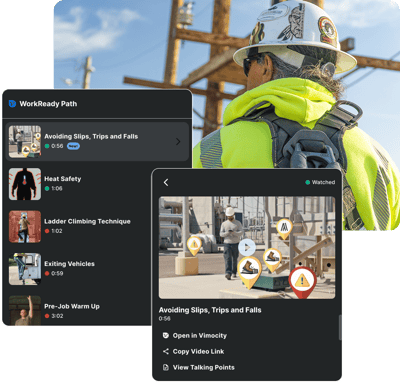
Vimocity is more than training. It’s a safety and readiness platform trusted by companies to keep their field professionals strong, healthy, and ready for the job. Now we’re launching something new—the Work Ready Community. It’s the first online community built exclusively for field employees. A place to connect, learn, and lead the future of our industry.
Join us and be part of the movement.
Along the way, you became pretty fascinated by the impact of hydration and fueling on performance. In the earlier days of your strength and conditioning career, there wasn't much on the market when it came to hydration products or fueling products. Can you tell us a little bit more about what the landscape looked like and how that played into you co-founding Wilderness Athlete?
You're right. There was nothing other than Gatorade, and we thought that was big science because they told us it was. It's not a bad product, but I did my graduate work in nutrition at South Carolina. I was asked to sit on a few boards in my career and I got to know some of the top performance nutritionists, formulators, and biochemists in the world, including Nikolai Vulov from the Soviet Union. That was a wonderful time.
About the same time, I went on my first archery elk hunt in New Mexico. I grew up hunting in Minnesota for white tail, but I got into some elk, and the experience was so physically draining, nauseating, debilitating. It became apparent to me that outdoorsmen and industrial people live in a world of physical stress that most people have no idea about.
So, with the help of Rich Shuckenbach, another strength coach from the Tennessee Titans, and a biochemist out of UCLA, I started a company, Wilderness Athlete, which was going to manufacture dedicated products designed to help the hard-charging outdoor athlete who's never been exposed to this level of nutrition.
I actually have a little bit of the Wilderness Athlete here, my energy and focus that's going to get me through about halfway through this interview. But phenomenal products and definitely has an impact. Where our paths crossed though is that you also started to see industrial athletes as fitting into this what you called the outdoor athlete realm. These are people who are physically spending energy, straining their body on a daily basis. Help us understand how you transitioned the product into the industrial world.
Well, that's an interesting question, and like a lot of companies and businesses, sometimes you just stumble into it. I was asked by one of my partners in Phoenix to go speak to SRP, the second largest utility company in the Phoenix Valley. As you can imagine, they know heat. They were averaging multiple OSHA heat-related recordables, which were costing the company a lot of money.
They asked me to come and speak to them at 5:00 in the morning. I told them what they probably didn't know without boring them, giving them a couple minutes to understand what their body is going through with lack of thermoregulation or what Peter Attia calls thermoneutrality, the ability to maintain your body's hydration, your fluid levels in your blood.
They listened to me and they brought our product in, and they didn't have a single OSHA recordable for six years. That spawned an entire new division in our company which I take great pride in only because I have a great appreciation for people in this industry. I grew up with linemen. My dad worked for Bell Telephone. I used to climb poles retiring insulators in the mosquito-infested swamps in northern Minnesota.
I think so highly of these people, these men and women, and what they do. Therefore, they deserve a product that delivers more than just fluid and a modicum of electrolytes. At least that was my take.
Let's stay on this topic for a minute because you refer to these as working athletes. I know you and I have also talked in the past about this concept of what we call workforce readiness. Can you maybe equate what athletic readiness looks like and then how that relates to frontline workers?
Athletic readiness is very simply put, are you ready to handle the task at hand? Whether you’re going up against a superior opponent, inferior opponent, or anything in between, you’ve got to figure out what your strengths are and look at your competition. Workforce readiness is the same—are you ready to handle the task that has been presented to you?
That’s a broad question and in totality you have to consider an awful lot of things which these men and women listening to this podcast are well aware of. You know, I know there's that saying that which you pay attention to improves. Well, these folks in this industry have an awful lot to pay attention to. There's so many moving parts and the climate that you're in at the time, whether it's freezing cold, ice storms, blazing heat, 110 degrees, they got to take all that on at one time. So, it's a challenge.
An athlete may be on the field or in a competitive environment or practice two to maybe six hours per day, but an industrial athlete, they may be working a storm response and it could be 12 to 18 hour shifts day in and day out. Why is it important for there to be maybe a shift in the mindset from a leadership standpoint or even individuals in terms of seeing themselves and seeing these men and women as industrial athletes and then focusing on providing resources to support them like athletes?
I love that question. I am of the opinion, and I think it's coming more and more to the forefront with the medical community because of the problem in our country with health, is that every single human being should treat themselves with an athletic mindset.
So let me ask this group listening to us right now. Are you of the opinion that baseball players work harder than you do? Are you telling me Tiger Woods goes through more stress than you guys do? The obvious answer is not a chance.
Athletes from junior high to professional have trainers a hundred yards away. They've got buckets full of fluid. They've got X-ray machines inside the doors. They've got medical people on the sidelines. They've got all of these resources, and what's going on in this industry we're talking to is far less dangerous. And they have none of those resources.
So, you have to pay attention and you have to ask yourself the question, if it's good enough for those guys who couldn't carry my water, then I probably should pay attention to this. I love the fact that there's more attention being paid now to taking care of any industrial worker. My hats just off to everybody who makes this country run, Kevin.
You did. And the whole purpose behind strength and conditioning and having a strength and conditioning coach is to further build that athletic readiness. It's also to help build resilience into the athlete—their ability to handle more stress, more load with less impact on their body. We're training the body to be able to break down so we can build back up even stronger. If we do get injured, we can bounce back even faster.
Why is strength and conditioning so important for industrial athletes to consider, and is their work, which is physically demanding, enough to keep them strong, healthy, and having longevity in their career?
I would answer that question, yes and no. If you've had a brutally hard day, you've done enough. Now, you've got to recover with nutrition and you've got to sleep.
But I'm guessing that there are people on this call that are ranged from age in their early 20s to probably their late 50s. And that's a different challenge. When you're a young whippersnapper, you got a lot of juice in the tank that starts to drop off.
You have to, in the words of Stephen Covey in his book Seven Habits to Highly Effective People, take time to sharpen the saw. Your body is your weapon.
If you have a day at work that is not as physically challenging and you want to lead a life where you can come out the back end retired with all your physical faculties in place and therefore live a good life—whether you like to golf or fish or backpack or take your wife to Rome—you don't do that unless you're healthy.
You have to have a goal in mind. My definition for passion was always a picture of the future that produces passion, or in other words, vision.
As it relates to this group of people, you need to have a vision for how you want to end your career. I've tried to stay fit by taking it in 10-year increments. If I say to a 30-year-old, your job is to get to 40 as healthy as you possibly can. And to a 40-year-old, I'd push that to 50. Those years come and go so quickly, you won't believe it. I mean, I'm 66 and I was 26 yesterday.
You have to have a goal like that. And then, of course, it's kind of a three-legged stool. You've got exercise, whatever you choose to do. Just do something.
Then you have nutrition. Put good stuff back in your body because recovery is the name of the game.
And the third leg of the stool is sleep, which is also part of the recovery, because what happens in your brain? You detoxify and eliminate toxic waste.
If you're lacking in any of those things, you're going to pay a price to some degree.
The number out now is that exercise has a 6x multiplier on all-cause mortality over anything else you can do. Nothing touches it. So, I don't care if it's going for a walk with your dog, but you got to do something.
And then again, to your point, you can educate them on the right things to eat within reason. We all go out and have pizza. We all stop at a fast food at some point in time. Whoopdedoo. And then try to get the sleep that you need. I know with the shifts that these people have and their brains never shut off, it's difficult to get sleep.
That is a great summary. I think if you can stick to those recommendations, it does make a dramatic difference. I do want to dive in a little bit deeper on the strength in the performance aspect. If somebody did want to set those goals every 10 years to maintain their health and fitness, what would you say just in general to a 45-year-old utility worker who's asking where should I focus my time over the next 5 years until I get to decade 50 from a strength and mobility perspective?
If that person did not have a background whatsoever in some of the things that go on in the gym that you and I are both familiar with, but let's say they have no background, there are certainly the resources today—YouTube, Instagram, whatever it is.
I would suggest kettlebell workouts that are geared more toward volume than intensity. By that I mean lighter weights for more reps than heavy weight and few reps. As you age, my body wants to push big stuff, but that's where injury lies. Rarely does anybody get injured in a workout where you're doing sets of 8, 10, 12, 15. That's not what this group needs to hear.
You can go to the gym and do split body part, where two days a week you do, for example, chest, back and arms, a little bit of everything. And then two days a week you go in and you do some shoulders and legs. If you know what you're doing, especially coming off of a work shift, you can go and be in and out of a gym in 30 minutes and get really demonstrable results.
I want people to know that. I can get a lot done without putting myself on the edge. Injuries as you age take longer to heal, and so that's something that you don't want. It doesn't take much. 30 minutes if you're focused can make a world of difference.
I would like to mention this. Back in 1988, there was a young man at the University of New Mexico named Gary Kinder. He was the number one decathlete in the United States going to the Seoul Olympics. I was a big bruiser. Gary said, "Why don't you do a circuit with me?"
So, I jumped into what's called circuit training where we had like eight different movements lined up in succession: body weight squats, no weight involved, body weight dips, push-ups, planks. We did eight different movements with very little rest in between. I thought I was going to die because I was affectionately a meathead, a big muscle guy. My conditioning did not match up with that. Gary taught me a really good lesson.
You don't need much. You can do it in your living room with bands. My partner with the Tennessee Titans coach, he does a band workout with his NFL guys that leaves them wiped out. My encouragement is simply to pick something you like, and that may come and go. Just stay active.
I had the honor of speaking 30 years ago with Tom Landry, Coach Landry, head coach of the Dallas Cowboys. I'll never forget what he said. Every year we meet with the Dallas Cowboys and every year we cover the same three things. Number one, what's your goal? Number two, what's our plan of attack to reach that goal?
Number three, he said, "Life doesn't take place in a vacuum. What are the things outside of football that can cause us from not achieving our goal?" That's where the challenge is. You know, you don't do it because you're kind of tired.
Which is why I've always maintained if you can find a workout partner, that could be the biggest godsend in your life because you might not want to go, but you know you're committed to him or her, vice versa.
Regardless of what you choose to do as a vehicle from an exercise movement standpoint, you have to know that the world is out to get you and you are in charge of it. Don't be a victim. It's nobody else's fault. You're responsible for everything you shove in your mouth. You're responsible for everything you do activity wise. You're responsible for going to bed on time.
We live in a world of victims. Everybody's got an excuse for something. And you can live in that world if that's what you choose to do. It sucks and it's not fun, but you can. But I encourage you to take responsibility for your own life. And if you mess up, realize it was my fault and let's move on down the road.
So many great things there. And again, that accountability. The importance of having other people around you to hold you accountable. I love that. I do want to reiterate just the point that you made about the technology that we have available to us. There are so many apps out there where you can just pull up an entire workout program on your phone, do it in your living room. Under 50 bucks, you could basically have everything you need to do a 120-day program that will develop tremendous results. Thank you for that reminder.
Before we leave this topic of strength and conditioning, can we briefly talk about the importance of maintaining mobility and balance or coordination over the course of our life?
Well, this is where you do get into a little bit of what we call sports specificity, where you're trying to mimic the activities that you want in your life. When you're elk hunting in the mountains, you're stepping over deadfall all day long, and you go to bed that night and you cramp in your muscle groups of your adductors, in your glutes, and your hamstrings. You didn't train them with that kind of specificity and you pay a price for it.
What we're talking about here, folks, is try to mimic some of the things that you're going to experience out.
They will tell you that when people get over 65, people tend to start falling in their 70s due to lack of balance, instability, lack of strength in their legs. Once you fall and break something, the data is scary as to how that will affect you the rest of your life. You don't want that to happen.
So whenever you're incorporating an exercise routine, incorporate some movements that allow the smaller muscle groups of the body, the stabilizing muscles, to work. You can pull it up on Instagram or YouTube or anything like that. Look for a balance routine, and you will get 40 of them sent to your phone in the next 15 seconds.
I worked with a coach who was a track coach, a world-class athlete himself. He called it the mule versus a thoroughbred theory. When you have people that are mules, you have to treat them like a mule. You have to do the basic movements: squats, chest movements, strong shoulder movements, some pulling motion. You don't get into the fine-tuning.
Now the thoroughbreds are the people who have to do some fine tuning. They have to do ball tosses. They do all these things because they're past the point of just working on their framework.
You need a little bit of both. Don't get so far into the framework that you forget the small muscles, the thoroughbred muscles, the things that are going to keep you up. If you get sidelined, it's probably going to be because you tear a small muscle in your calf or your adductors or your glutes.
I'm a guy that's not real flexible. I'm an ex-shot putter, football player. I don't like to stretch. I don't try to pull up 15 stretches. I pick out three that I will do every day. I can handle that. But what people do is they get overwhelmed. So, I would encourage you to pick out a couple and as you master those, open the box and find another one. Don't try the other way around where you're going to do 12 mobility movements.
Overdoing it does not lead to long-term habits. If you do two or three things on a consistent basis, it's way more impactful than doing 15 things for 3 weeks.
Let's shift to nutrition, hydration, and recovery. You gave us some really good pointers right out of the gate with the importance of protein, importance of avoiding seed oils, processed foods. Can you expand a little more on the nutrition aspect for frontline workers, who often work in remote locations where access to good food is not always there?
It takes me back to what we just talked about a little bit with Coach Landry. This is one of the variables that you have to take into account. Nobody's out there nursing you. Nobody's going to watch what you eat at home. You have to plan. And especially, plan for the unexpected.
When I talk about nutrition, the one thing that's really coming to the forefront as people age is we do not consume enough protein in our diets. If you skip breakfast and run by 7-Eleven and grab a coffee and a deep-fried chimmy chonga or a donut and go to work, that's not unheard of. Could they have prepared something the night before to grab? Yes, they could have.
Before I forget, we talk a lot about hydration. If I could give anybody a hack, it would be start your day every single day with a large glass of water. Get out of your bed, go to your vanity, use the bathroom, and then pound 16 ounces of water. You just now put yourself in the upper half of probably not having an issue. Didn't cost you a penny.
From a protein standpoint, they're looking now at how we need about one gram per pound of body weight optimal body weight. If I weigh 250 and I want to weigh 220, then I should try to get in 220 grams of protein. High quality protein. That's a lot.
The beauty of adequate protein is that it also has a thermogenic effect and that it helps burn fat. It helps burn excess tissues. Protein serves multiple functions in avoiding what we call sarcopenia, which is muscle loss. You want to gain or retain muscle as you age. I don't want my muscle to slip away because that is the mobility that we're talking about. If you don't have muscle, you're not moving. If you don't have muscle, you're falling.
Pay attention. Do your best to get in on your plate. They used to have protein be about a quarter of your plate. Now they want it to be about a half of your plate, with 15% being fruits and vegetables and complex carbohydrates and the other 15% healthy fats—olive oil, butter, grass-fed butters, avocado oils. Healthy fats are wonderful for long-term health. I eat more fat now than I ever ate in my life, and my blood panel is stellar. Carbohydrates tend to take care of themselves.
When it comes to hydration, most people walk around dehydrated, and it causes problems. Most heart attacks occur in the morning. Why? Because at night you urinate, perspire, defecate. Your body is a thermogenic engine and you're burning fluids all night long. You will lose between one and three pounds every night when you wake up.
What that does is it causes a condition in your body called sludge blood. That sludge blood thickens. When it gets thick and full of particulates, it bogs the engine down. When you get dehydrated, you get foggy and you get fuzzy. And the odds of an accident go way up.
You have to keep the body fully hydrated. Water is primarily the answer to that. But you need two to three servings of electrolytes throughout the day to satisfy the body's requirement. Your electrical system has to function.
Water is the primary resource that you need to put in your body, but you need multiple servings of electrolytes periodically throughout the day to satisfy your hydrational needs. When you keep your blood fluid, you deliver oxygen and nutrients where it needs to go.
We have a very simple phrase: keep up. You need to be a teammate. Watch each other. Pay attention to each other. I think that will go a long ways to getting you to your retirement healthy and happy.
Can you talk about hydration's role in recovery and the health of muscles? How dehydration maybe even increases risk of a soft tissue injury?
Your body is mostly water. Your ligaments, your tissues, everything at the cellular level needs to be hydrated. Those tissues that you use—pulling ropes, pulling cables, hanging stuff, dragging stuff, picking stuff out of the back of trucks—all these tissues need to be hydrated. When they get dehydrated, they get brittle and they get vulnerable.
There's an equation out there called the Galperin equation, which simply goes over some of the parameters of paying attention to how much water you drink. You basically should drink about 8 ounces of fluid every 15 minutes. If it's every 30 minutes, I'm quite frankly, I'm happy. You try your very best not to go an hour without replenishing your fluids, thereby keeping your blood fluid and moving throughout your system, and not compromising your cognitive skills. Most accidents are not going to be due to a physical failure. They're due to cognitive failure.
The challenge you all have that the entire industry needs to address is proximity to fluid. You have to take the responsibility of having water in relatively close proximity for you to get to it.
If you start to feel like you're in trouble, that's when you have to use the Gatorade philosophy. By incorporating some carbohydrates and sugars in water with sodium potassium electrolytes, your body will absorb it faster. It's called fast gastric emptying.
If you are in trouble, you need to incorporate electrolytes right now. Water gets into your system through osmosis. Almost no water gets through the stomach wall. It has to enter the small intestine first. But if you drink electrolytes, that gets pulled into your small intestine much faster. Along with that, then you want to find obviously a cool place.
I would have never guessed that hydration was as important as it is, but most people walk around dehydrated, and they think they're having a heart attack or a tumor. They get there and they do a blood panel on them and what they really are is they're dehydrated.
8 ounces every 15 minutes if possible. I would add to that, the thing that we do that I don't think anybody else does is we put in some vitamin C, branch chain amino acids, things that really help people wake up. If people are going to drink an electrolyte drink, why not expand on that thought process and put in some other goodies that help, like glutathione that help remove toxic waste from the body? Glutamine is an amino acid that crosses your blood-brain barrier in your head and helps you think more clearly. You need more than water is what I'm trying to say.
That was a great answer and that's one of the reasons why I love what you've done and what you've formulated is because all those additional branch chain amino acids and the profile, it's meant for performance. We go through a lot of salt and these electrolytes when we're exercising.
Everybody's physiology is different. You've got people that require a lot of salt, heavy sweaters, some people sweat very little, different environments. Your body is going through a war every day in certain conditions. The question I have for you is, are you up for the war?
The other thing I would mention is that alcohol will really deplete your body and set you up for failure. Friday and Saturday are just about here. If you choose to do that, then that's when to do it. But Sunday should be a recovery day. Most accidents happen on a Monday. Why? Because people don't make good decisions on Sunday.
I just want to encourage you to realize my life is on the line. This is not the time to compromise. I will not do these things Monday through Thursday. Friday, Saturday, I have some latitude. Sunday, I start getting myself ready for another work week.
Before we leave the topic of hydration, I think a really important concept is the difference between sipping and chugging. Why does that equation that you talked about, like the 8 ounces every 15-20 minutes, why is it important?
Scientifically, your body absorbs it. If you sip it, it enters more slowly. It's going to be utilized more efficiently. If you do it consistently, periodically, the benefits will far outweigh an hour and then gulping it. It's going to get into your system, yes, but probably too quickly. I mean, it's almost freaky. And you don't want that to happen with this group of people because you're up on a pole, you're up in a box, you don't have the time to do that.
Gatorade, one of their phrases that started the company was called "thirst mechanism," and they understand that the body has a thirst mechanism that basically tells you when to drink water. The second phrase was "taste acceptance." By adding some flavor to the water, people tend to drink more. If you're fine pounding water, do that. But if at all possible, let that sip it over time.
I don't doubt that a CamelBak is the future of industrial work because of liability and how people don't set their people up for success. I don't know how it would be frowned upon if you just took it upon yourself to have your own CamelBak so that you could get water whenever you want. Try to consistently keep fluids in your body so your body isn't stressed and then you're trying to catch up.
Fruits and vegetables are excellent for sodium and potassium. Sliced fruit is outstanding. Fruit really helps hydrate the body and keep you up to snuff on your electrolytes.
One final question on nutrition. Why should people consider creatine?
Your body creates its own creatine to the tune of about two grams a day. When you exercise, especially with explosive movements, fast movements—climbing a pole, all those things—you burn through your creatine.
Back in 1997, I used to put out 110 glasses every day with 10 grams of creatine in it. My football players would walk in, go get water, slam it. Strongest team I've ever seen in my life.
Creatine today costs about a penny and a half a gram. It's super cheap. Dr. Nikolai Boloff from the Soviet Union, who isolated creatine in the 50s, told me, "Mark, we did not give creatine to our athletes unless they made it to the semifinals of the Olympics. That's how precious it was."
Well, now they're realizing that people, all athletes, industrial athletes, traditional athletes, everybody can benefit from 5 to 10 grams of creatine every single day. It affects your brain.
I will give you a brief list of the supplements I would recommend that people take. Creatine is one of them. I would also take a good multivitamin. I take vitamin D3 every day, which has multiple benefits for cardiovascular health. I take fish oil every single day—to help keeping your blood platelets from sticking together and giving you a good vascular health. And then finally, vitamin C.
Linus Pauling did work on vitamin C. If someone were to take 1,000 milligrams a day, it helps your body repair at the cellular level. It helps build a strong collagen matrix around your cells that make them less permeable to things like cancer. The things I gave you are all cheap. They can really help bolster your immune system for the long haul. My goal as your coach is I've got to get you to the finish line. I've got to get you to retirement in one piece.
Great recommendations, Coach P. Every single one of those supplements you mentioned are part of my daily regimen. Magnesium and zinc for myself has made a big impact as well.
Coach P, you've spoken so much about legacy and beginning with the end in mind. Everything we've talked about takes a little bit of effort. What is your purpose, Coach P?
What I really love and I'm a very fortunate man. All of us go through ups and downs. Life is going to beat you up. You have to have the strength and character to match those forces.
I love to read to keep my brain strong, and I think that's part of it too. General Norman Schwarzkopf said, "A man who cannot motivate himself is destined to a life of mediocrity, regardless of the skills and talents he's been given." It's not my job to motivate everybody on this call. Inspire them. That's what I love to do. That makes me tick.
I would make the case that your attitude toward all these things is almost paramount. There's one thing more paramount, and that's your spiritual life.
The Harbaugh boys had a dad who instilled in that family an attitude. They had a phrase: to attack every day with an enthusiasm unknown to mankind. Their dad would say, "Who's got it better than us?" And they would respond, "Nobody. Nobody."
To live a life of positive enthusiasm goes a long long way. And then comes your spiritual life. I didn't until I was 28. I had no firm foundation to draw from.
I know I have a friend in this industry, Mark Groves, who I talk to him often. He leads the Northwest Lineman's College. He said this: "A man who keeps his body ready, his mind clear, and his spirit strong doesn't just protect himself. He keeps everyone alive. A man or woman of weak character is not dependable. Their poor habits lead to rot. Often anger takes over. Judgment slips, and the whole crew feels it, and somebody will pay for it."
That is a powerful statement.
The spiritual part of my life that has driven me is my own reading. Don't expect anybody to spoon feed you into a strong spiritual life. That is up to you.
There was a phrase I heard one time: the beginning of wisdom starts with frequent and assiduous questioning. For by doubting we are led to inquiry, and inquiry leads to the truth. If you think you're a tough guy or tough gal, then be willing to follow things to the truth. You got to be willing to look under the hood.
I'm very very comfortable where I am, Kevin, and very thankful that I have the ability through people like you to serve people like those on the call right now.
So much there. Great talking with you, Mark. This has been an unbelievable conversation. I appreciate you bringing up thinking about breaking things up into even decades.
Can I leave you with one thing, Kevin?
Please do.
If you get a chance or you want to read something that's powerful and relatively short is a gentleman named Victor Frankl who wrote a book, Man's Search for Meaning. He was in Auschwitz and went through and saw his mother and father, sister, cousins, everyone die. It's just the most remarkable book to see how he came out the other end.
He came up as a psychotherapist. He came out with an understanding that I believe in fully, that your life will really be directed toward how you feel your purpose is. He found that people that had a purpose, albeit so small, survived death camps. But when people ran out of a purpose, they died overnight.
Everybody expects things out of life. But his signature comment was, "What does life expect of you?" People that are the most healthy come to a conclusion that I'm here to serve. I am here to serve in some capacity. And I can tell you this, having had a whole bunch of toys in my life, that if they can break, it will. Your real purpose in life is what does life expect of you, and I can't tell you how much joy it will bring you if you can come to that same understanding.
Coach Mark Paulsen, thank you so much for your time, your insight, your dedication to the industry. This has been a fantastic time. Until next time, we look forward to having you join the WorkReady Podcast. Thank you so much.
Discover how Vimocity can help keep your crews WorkReady.
One comprehensive platform to help safety and operational leaders prevent more injuries and incidents.