
.png?width=20&height=24&name=Vector%20(15).png) For Leaders
For Leaders For Workers
.png?width=24&height=23&name=Vector%20(16).png) Partners
PartnersStandards Over Shortcuts: Building Crews That Rise to Excellence
WorkReady Podcast Episode 13
-
Speakers
Mark Groves | Northwest Lineman College
Dr. Kevin Rindal | Vimocity
-
View The Transcript
What makes a leader worth following? It's not just about skill. It's about who you are when the pressure is on. That great leader accepts those individuals where they are and builds them up, and he takes care of his people. Today, Mark Groves of Northwest Lineman College shares what it takes to lead in one of America's most demanding trades, where every decision matters so that everyone goes home safe. There are boundaries that are set and expectations that are made by that crew leader, and he says, "This is how we're going to operate. You can fail, but you can make a choice to do better." This is the WorkReady Podcast.
If you're out there putting in long shifts, carrying heavy loads, and still trying to save energy for home, this podcast is for you. We share the same kind of field-tested tools we use with the pros, but made for workforce athletes like you. If that's the journey you're on, hit subscribe so you don't miss the next step forward.
Mark, welcome to the WorkReady Podcast. It's such an honor to have you as a guest on the show.
Thank you, Kevin. I tell you what, it's an honor to be here with you.
Yeah, I've equally just enjoyed learning more about the Northwest Lineman College and what you're doing to pour into the next generation of linemen. So, what was your journey then to get into the trades?
Yeah, I was doing iron work, concrete and iron work in Seattle and I'll never forget this ever. I'm down in a hole. We're starting off the steel for the foundation. We're tying off steel and you know it gets better once you the steel starts scaling up and you're still dirty but at least you're not muddy and this was back in the day and this guy walks across the road and he had a flannel shirt on, not FR back then, and jeans. He was clean. That's one thing I recognized. He was clean. He had this nice work belt, hard hat, and I mean, almost looked like the Marlboro Man, I guess, to a certain extent. He had walked up to this big cedar pole, looked up it, and then just started climbing up and I had to go back to work, you know, and I was just like, "Who is that guy and what is that job right there? That looks awesome." I'm filthy. I'm covered in mud, you know? So yeah, that really drew me in. I'm like, I want to find out more about that.
And who were some of those early mentors who I think shaped your just your work ethic? And who are the influencers in your life that really shaped who you are today?
I think that work ethic. I was really trying to figure out where did I get my work ethic. And I think one thing I really threw myself into was skiing. Like I wanted to I wanted to be really good. I wanted to push it as far as I could. And it wasn't until I got into ski racing with Clancy's ski school, you know, up at Stevens. The coach would film us. This is back in the 80s, you know, so I'm not sure how much, you know, it wasn't easy to film us back then, but he just basically told me, you know, I'd come out of a come out of a corner in a rut and lose control. And, you know, you got to be stronger, you got to be more focused, you got to get engaged. And then my skiing really expanded once I worked on the fundamentals. You know, that that opened the whole mountain to me. And so, I really think that's probably where my work ethic started. You know, certainly you could say football and stuff like that, running and and the exercises we did in preparation for a game. But I think, you know, it really did start in sports. And for me, I specifically remember my coach just really focusing that, you know, you're going to have to build up your quads, you're going to have to build up your core strength in order to do this. And I was driven to do that. And then after that, was really when I came to Northwest Limon College in 1996, Aaron How was my instructor, and he was one of the founders of NLC and he told me the kind of hours they were working. Doing iron work, you weren't going to do iron work unless you were strong and you showed up every day and you put in effort. They would they would turn you right out of there. So you had to perform there and that just seemed, you know, look around left and right, you're going to if you're going to stay here, you're going to work hard. But Aaron How kind of told me what to prepare for getting into line work that there were going to be hour, you know, very long shifts. And back then we would work up to 50 hours straight and it was not uncommon. 24-hour shifts were pretty common. And then you would do that day in and day out in a storm until it was finished. Like you didn't finish until the storm was done. You might take 8 hours rest and back into the storm. 8 hours rest back into, you know, and work the storm until it was complete. So, during my time at NLC, I was kind of preparing myself like, okay, this is going to be something different for me, you know, instead of showing up, you know, doing I did 16-hour days, maybe a little more, some occasionally, seven days a week. But line work, there was going to be times where you did these extraordinary hours. And and he also told me is that you show up for your crew members too, you know, like it was the the pride the work ethic and the responsibility to, you know, you don't you're not the first crew back at the yard and you get in your truck and you're gone. You waited for the other crews to show up. You held the gate until they got in there and closed it up, help them untie, you know, unload equipment, whatever it took. And I did see that in the job, too. So, I'd say Aaron Howell and my ski coach really. Yeah, that's I think that's where a lot of the beginnings came.
Mark, in our conversations, one thing that I've so enjoyed is just that you take such an athletic approach to this line of work. I mean, you you have to train to perform and you even talked about earlier like you have to be fit so that you can be more resilient and less injury-prone. Those long hours and, you know, first at the yard, last one to leave, I think has always been a part of the lineman mindset, but how have you seen the mindset shift in the workforce from, you know, this is just a hard job to no, we're athletes, so we actually need to train to be able to continue to do the work because I don't think people have always viewed themselves as being athletes in this trade and that they need to actually continue to condition themselves, think about nutrition, hydration. I I I just even in the 10 years that I've been working with this industry, I've seen a big shift in mindset. Would you say that that's true now today more than what you've seen in the past? Oh, absolutely. For sure. You know, and it may have started a little bit earlier, but I think I met well, I saw a wilderness athlete and I I ran into that. I was hunting a lot, you know, up here in Idaho, Idaho and and that's and it's extreme. I take the exact same work ethic I do on the job site and put it towards hunting and just have an incredible time. It's it's not so much, you know, getting the animal, but but working through that. Obviously, you want to get the animal and harvest that, but it's the adventure and, you know, if you're prepared for that and preparing your your body for that and thriving in in the environment. And then I saw, well, I met Mark Paulsen at at working athlete. He he had such wisdom to go from wilderness athlete and put that working athlete in front of that because that was I was just like, yeah, we are working athletes. These guys are working athletes and we need to be hydrated. I was tired of the Squencher and the Gatorade and I'm not trying to do an ad or anything, but literally, you know, we're just consuming mass amounts of water throughout the day, especially in the summer and, you know, you just get so tired of the sugar side of it. And how do we, you know, we had people who were our mixologists who could mix it just right and not too strong and not too weak, but we still need those electrolytes. And seeing working athlete come along, the the parallel made so much sense is I need to feed my body correctly on the job site. And literally like a light came on. I mean, I had, you know, pack a huge lunchbox to go to work, but you also might have, I don't not that I ate Twinkies, but, you know, Twinkie like things in there that would just make me crash. Get a pastry in the morning and that stuff just didn't work as I got older for sure. I could get away with it when I was young and burning all those carbs, but as I got older, it it was it wasn't as good. And certainly, I wouldn't I would eat a very specific breakfast if I knew I had a a big day, right? Like even the night before there was things I would do in preparation for a big wire pole, something like that. I needed to perform. I wanted to perform well mentally and physically. So it tied in so well when I saw that working athlete like yeah, we can do so much better. And then everything else that's coming that you've been working on, Kevin. I mean, this is what we need. You know, I saw Mark Pollson's episode and he's like, you know, we have these incredible elite athletes to prepare to go to work and perform for an hour, 3 hours, and that's it. And then here we perform, you know, 712s, 24s in the middle. And I'm just right now I'm just talking about my son's shift. He's doing 712s for I think like a month, over a month, maybe two months, you know, and now they're going to take Christmas off. And it's like that is a drain on the system, right? Like you think about the drain and and the strain on his on his body, their bodies out there doing that together. So how how do you how do you manage that? You know, we don't know. We don't know. I mean, I don't know. I'm learning and I want to learn more, but I'm relying on people like you, Kevin, and Mark Pollson to tell us like this. I I I can't get enough of it. The the heat stress, the cognitive function goes down with heat stress. I'm like, I'm taking risks I never knew I took back in the day. I I now I understand why I'm when I'm handling rubber gloving a high amperage conductor and moving it from one pole to another and it's 100° and drinking massive amounts of water but I got a pounding headache, you know? I'm just I'm just like oh, this is all kind of adding up, you know, like what can I do to mitigate that because that's a huge safety component, risks that I'm taking, risks that I never knew I was even taking on the cognitive side. Absolutely.
Yeah. And I mean that's the thing too, Mark, is like, you know, we talk so much about preventing serious injuries and fatalities and creating capacity for people to fail safely, but if someone is not focused on the hydration, the nutrition, the sleep, the recovery, you know, conditioning their body, stress relief, all all those different components, there's always going to be an increased risk for people to make error and and that error is not intentional. It's just because your head's not in the game because you've got a million things going on and every athlete focuses on all those different components. And sometimes it can feel overwhelming, but it's often times just an accumulation of small things that give you that edge that continue to support your ability to perform in that level. So, I I've never been more excited because I think there's so much opportunity to, you know, bring the best from science and sports medicine to the workforce and actually be able to help these workforce athletes, you know, thrive in all areas of their life. I mean, it's a it's a complex. I mean, seven 712s for a month straight, that's that is a ton of work. And then you have to go back be a good husband, dad, or whatever role you play in life on top of it. And it's it's just a lot. So, yeah, there's so much opportunity to support the workforce. Yeah, I'm super excited because a lot of times these men and women that go out and do this work, I'm going to tell you, they got a very active afterlife, right? Like what what are they doing? I mean, you can look on social media and see these people just continuing to go. When are they resting? Yeah.
So, Mark, walk us through some of your journey. So, where did you go to to line school or where did you get your your start in the trades and then walk us through that that path? Yeah. Well, I was newly married and I had a very small contracting company and I was primarily doing like iron work, you know, and I would come home and do some side work makeup for, you know, between jobs and stuff like that. And it was kind of feast or famine, I would say. You know, I was working a ton or I wasn't working much and pick up my contracting side of it. And my wife was like, "You got to we got to do something different. This isn't working." She was going to college and she's like, "We got to we got to fix this." "Hey, have you thought about line work?" And I was like, "Actually, yeah, but I I don't care for electricity." You know, I got caught up in a lot of electric fences when I was a kid, and I did not want to repeat that. I go, "But, hey, if I go to school and someone teaches me how to work with this, I'm in because everything else looks great. I'm outdoors. It's it's adventurous." There's for me, what I liked is there is heights, too. You know, I was already doing iron work and climbing mountains and all that. So that appealed to me as well. And there was so much more that I didn't even know. So, that was probably the big draw. So, came to Northwest Limon College and met Aaron How and I was like, I've never met an instructor like this guy. He was he was great. He met you where you were. Had some I think I had 20 students was the class size and they were from all over and it was a primarily a lot of country kids, I would say, or, you know, people that there were in the workforce already as far as craft side. And just went through and just had a fantastic time at NLC. And from there, got a job at Pacific Gas and Electric, through the hall, through local, 1245.
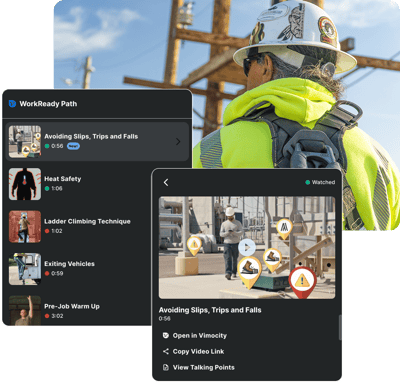
As a safety leader, you have more risks to cover than hours in the day. That's where Vamasi comes in. We give you one platform to scale your impact, delivering expert-curated safety campaigns on everything from slips, trips, and falls to heat stress and soft tissue injury prevention. You'll reach every crew through the channels they already use while gaining data insights to guide smarter prevention. With Vamasi, you can boost awareness, prevent serious incidents, and keep your workforce ready for the job. Scan the QR code or visit vamasi.com to learn how leading utilities are cutting injuries by 50%.
So Mark, tell us a little bit more about your career as a frontline worker. Yeah, you bet. So like I said, '96, started at 12:45, got out with PG&E GC line crews. So, I it was an incredible season in GC, general construction at PG&E on the line side. They they call us like the Marines. We moved around in force and we did incredible incredible work. And man, I I still have some of my best friends work at PG&E and a few have retired, but it was an incredible experience. We did some phenomenal work from storms in Tahoe to wind storms on on the coast to working in some rough places, you know, Oakland, Richmond, some some very difficult challenging places. But I tell you it was great. The people in in those in those neighborhoods were generally very kind, except for there was always going to be something. And there was a rebel element down there that that we all know. It was some drive-bys and stuff like that on the job, which definitely made it exciting. I I'll never forget one time. I was on a pole in Richmond and my foreman was up there with me and we were wrecking this pole out and we're getting ready to build set another pole and we're working away. We're both just going as fast as we can. And this car rips by, you know, tires squeal, guns go off, you know, boom, boom, boom, boom, boom, boom, boom, goes off to our our right side away from us. My foreman yells at me, "Get behind the pole." And I'm like, "I'm on the pole. How do I get behind the pole?" And I'm like, "Up behind the pole from you." And so I kind of centered myself on the pole and I wasn't going to be able to roll around. And he's like, "You okay?" I'm like, "Yeah." He goes, "Okay, get back to work." And I was like, "Back to work." So, you know, of all the places I've worked, I'm going to say I've seen more wild animals in in the hood than I've ever seen in the mountains and just some fantastic people, too. So, I I had great times doing that. So, in GC, we worked all over. We worked in the mountains. We worked in in somewhat desert areas and valleys and farms and vineyards and coasts and and redwoods and it was just an incredible experience. So from there, we had our first child and we I went up to Snowish POD. I had an uncle who was a subt. I had an uncle who was a system operator and I had another uncle who was a meter tech. So, all I had to do was meet the criteria and and get in there and it was it was awesome. Made some great friends at Snowish POD. Got into hot sticking. Like when I was at when I was in California, and of course I'm originally from Washington, but California sometimes we have a hard time migrating places without offending people, right? So, I'm coming up from California and in preparation, I knew I had to hot stick and I knew there was going to be evaluations on me hot sticking. So, I'd actually pay this one contract lineman, contractor lineman that I just loved. I'd pay him in beer and he would teach me how to do a six-pack tie and and do, you know, just doing a lot of hot sticking. We did some in California, but not as much as we do up in the Northwest. So came up to the Northwest and they say they saw that I had some skill but not at the expert level that they were and but they accepted me in and just had a fantastic time at Snowish Beauty. Got on the Highline crew. I had an uncle who who, you know, as I said, I I got to see my family up there, sometimes talk to him on the radio. And just had a great time to go back to go back home and and work up on the Stevens Pass and and recognize every bend in the road cuz you know every bend in the road as you're going up Stevens, right? And some of the the back areas all the way up to Darington. I mean, it was just awesome. It was just an awesome experience to go out there and provide power and and restore power, too. Was a lot of fun. I did have one cranky uncle who would kind of tease me as a kid. Well, he was He at Snowish PD sometimes you would get called out. You had an opportunity to go help the line crews and you could flag. He ended up being my flagger. I was a journeyman lineman. He comes up and there's my cranky uncle and I said, "Hey, go set those signs up." Rolls had just reversed. You know, I was really nice after that. But it was it was it was fun. But yeah, my my other uncle had bought me my first set of hooks and yeah, it was a great time as Snomish. And then I kind of had my sights set on moving over to Eastern Washington. I loved the dry the the drier elements, four seasons. I certainly loved western Washington where I grew up. It was getting busy. I wanted to move east. So I got on with Douglas Pud on which is East Wanatche on the other side of the Columbia River and worked there for a while. Just met some incredible folks. Just had such a great time working up in the wheat fields and just getting to know a just an incredibly beautiful part of Washington. And then later changed over to Chalan PUD on the other side of the Columbia River in Wanachi and worked up at Lake Chalan. I mean, we'd take float planes up to the headwaters of Lake Steaken and restore power out there. It didn't matter what time of the year it was. We'd go back there to take a float plane in in a snowstorm and hop on an old line truck. And I'd never seen an environment like Steaken, the variety of trees and it was just beautiful. And then to get to do work up there was even better. Lake Shaland was great. Pud was great, great place. I was there for a while, about 10 years. Became a foreman. I was a troubleman and just built some great relationships there. Started training there is where I really started to train was at Lake Chalan. We started picking up our apprenticeship program again and kind of got got to help kick that off and just wanted to pull in the experts from the field. So to have a sign up list, you know, for all the just the top foremen who were great at wire poles, who were great at back hoes, who were great at line trucks and and bring them in as exclusive trainers, you know, for whatever they wanted to sign up for to just get the very best training for these guys. And training was hard. I wasn't easy on them whatsoever. We worked at Rock Island Dam and we had an old generation site down there with a bunch of diesels that got ripped out. And we had an incredible training yard. So we would train from about 6:00 till 10 at night sometimes and on the Columbia River just off the Columbia River and it was cold and windy and yeah, kind of put the guys through it and I said when you go to Camp Riolia it'll be easy because it'll be drizzly and 65 degrees. You're going to do this at night and you're going to get good, you know. So, I kind of busted them on that one, but I think they all appreciate it. Thanks so much for sharing that, man. Incredible stories. And quick shout out to my friends at Snow Pud there. That's who provides us with power here. And man, we've had so many storms over the last like two weeks. It's been unbelievable. And I mean, you think about the trees that come down in western Washington. It's it's it's a tough work for sure. And then you talking about Steaken. Steak and honestly is one of my favorite places on the planet. Yeah, our family has done that hike in over the North Cascades from the west side. It's about a 20 mile hike in. But it is what a special place, isn't it? Oh man, just and great people, too. And there's a bakery there, right? Don't forget about that bakery. You got to swing by the bakery. Yeah, that's great. Well, hey, thank you for sharing that.
So, tell us then. It sounds like you've been passionate about like the education and the training and that was a part of, you know, towards the end of your your frontline work, but what what brought you to NLC? Okay, so let's just Aaron How and I, who was my instructor back in '96, we stayed in contact of every year we would talk and kind of check in and he was, you know, just one of those rare people that you meet in life that, you know, surround your people. Surround yourself with great people, right? You know, like skiing. If you want to get better, you got to ski with people who are better than you. And I was just he was just an advocate for me and he would and I I started to invent products. I I always wanted to invent products for the industry. And in line work, man, you're problem solving every day. Every day. And I I don't know a crew that hasn't come up with something that they've created on the job site. Now, maybe that's not a good product to sell, right? It's it's small. It's it's very specific and it's not really going to have the opportunity to take off and sell it. But what we did every day was was create products. So, I started to come up with a couple products. I stayed in contact with Aaron and finally he invited me down to his California campus. It just opened up. Actually, I went down there twice. But the I went down there and did a presentation in in front of Bernie and I brought man a drag bag full of tools, you know, I think I had 20 tools in there and really started my launched the next chapter of my life when it was starting to invent tools and and signed on with Bernie there for a while. Also went down to California and worked with Aaron. He asked me to come down and work on a an Afghanistan project. They were going to train the Afghanis. There was a company called Symbian Power who was working in Afghanistan. And I tell you, we're not going to get guys like me and you to go out and restore power in Afghanistan. So we're going to teach the locals how to do it. And it sounded like just an incredible adventure. Yeah, there's going to be some danger, but they had some, you know, security crews and things like that. So I went down to California and we started building towers from imagine if you're going to build a tower with, you know, donkeys cuz literally, you know, the pictures I got from Afghanistan, these guys are in thongs, you know, sandals and no gear whatsoever, maybe just a little belt around a tower and they were using ropes to build their towers, you know? So we had to go back and work with WAPA and BPA. We went back years in their archives and and got historical photos of these gin poles that they would make. They would set the bottom of the structure. They would get chains and hoist and they would rig these gin poles up and set piece by piece and then they would move those those gin poles up. And so I went down to California and did that with some Wapa guys. Those guys are nuts. I mean nutty. I was climbing up a piece of like 3x3 angle steel swaying in the wind, you know, 20 ft from where it was attached to the cage. And I did iron work prior to this. Like I thought I was pretty cool. No, these WAPA guys were next level. You know, putting in your old bolt steps and it was incredible. So, we built this training program. Aaron built it for Symbian Power and it was going to be delivered over there and they started to do that transition. And so it was really cool. And that's really what drew me into this is like Aaron is this crazy guy. He's doing work in Afghanistan. He's he's changing people's lives. Who is this guy, you know? And then he he got my path in to meet Bernie and I'm like this guy is like next level. So he said he basically invited me to Northwest, Mark, come out, come out here and work with me. I'm like, buddy, I you know, I love the trade. Like I love doing what I'm doing. And he goes, "But you're training, too." And I was training apprentices and just loved it because I wanted these guys to be better than me, right? You know, don't make the mistakes I did. Here's here's, you know, our opportunity to build these guys up. And I think Shalam Pud always did a really good job on their apprenticeship and the rest of the PUDS around there and Snowomish specifically. Those guys rock at their apprenticeship. So, so finally he made this pitch to me. Let's come on out here. Let's make some tools for the trade. Let's make some tools for training, but let's figure out the industry.
So, in 2010, I got on with Aaron and and he was, you know, why I took that job. I did a lot of prayer before I came out there. I mean, it was, you know, going to pick up your whole family and move across, you know, a few states wasn't that big of a deal, but, you know, they're in school and, you know, this is a big deal. So, we took some serious time to figure out. We had to sell our house, buy another house, and all that stuff. And yeah, it worked out well. We get, you know, it was it was I'm not saying it was perfect because it was a lot of challenges wrapped in there. So, got to NLC and was here started being, you know, started training as an instructor. Aaron was my was my instructor to be how to be an instructor and so was Jacob Phelps. And how to reach a student, right? The when I was training at Schlamped, it was very much these guys knew me from the crew. They they they knew who you were. These at the ELP program at Northwest Lyman College, it was different. You you had to really apply Bloom's taxonomy process theorem much more educational-based and focused and that's what Aaron did such a fantastic job on. Now there's actually a professional technical educator apprenticeship that our instructors go through. I wish I could have gone through that. But, you know, got into it, just enjoyed seeing these these young people come in and some older ones too and just be successful in the trade. So that got us into we needed to develop training products for Northwest Arman College. And so we decided let's let's develop something. Let's solve a problem. Like it was going to be that easy. Let's just come up with something and and figure out how this works. So, we really started to look at if you're going to invent things, you know, you look for an industry, ideally the easiest way is to look for an industry, an emerging industry or something hasn't changed in over 100 years. And I'm going to say line work hasn't changed too much. Sure, we have fiberglass now instead of wood hot sticks. We have bucket trucks, hydraulics, battery presses. Some things have really evolved and done really good because of, you know, Buckingham, Milwaukee, those those companies. And so we looked at Pole Top Rescue. It hasn't changed. Like why do we take the only thing that could give us mechanical advantage, the handline block, and throw it to the dirt? First thing we do is throw it to the dirt and then we take a rope and throw it up by the high voltage lines. So, you know, I really started to dive in and research how our mind works, you know, and what do we do in emergency situations and started looking at the firefighters because it was a good parallel was that you're in a team environment and now you have to rescue your own because in line work you're not going to rescue the firefighters aren't going to come rescue. It's going to be a body recovery unfortunately. So, you're going to rescue your own and we're trained in that and certified in that every year. So but what happens to your mind in a rescue scenario? Well, you and I, Kevin, we see an accident on the side of the road and I know you I'm sure you pulled over and assisted when you whenever you could. It's pretty easy because you're unattached to that. But when you're attached to them, then your mind can do different things, right? You can get higher stress, higher cortisol levels, higher adrenaline, and it can just overload your frontal cortex, which gives you the ability to reason, right? And and and reason and think through this. And so, we won't function correctly. So, we want to develop a tool essentially, I'm going to get to it, is something that you use every day. So, you use muscle memory. So, I interviewed a lot of linemen who had done rescues in the field and they had memory gaps of what happened, right? Logically because these are the guys they worked with every day. So they don't remember specifically everything. They just really worked off of muscle memory. So again, that's where okay, let's let's build something that they're going to use every day in the trade. And so when it does come to rescue, it's innate. It's built in. It's muscle memory. That was the whole idea that you're not even going to think about rescue. You already know how to get friction. And you already know how to rig and and successfully complete the rescue cuz no one's coming to save you, right? Like it's it's us. It's it's you and me. If we're on the pole, it's you and me. That's and my crew, right? That's that's who's going to save us that day. So that's where the ox block came out of, you know, and that was our first tool to test the industry. And we partnered with Buckingham on that and we and it's been a great partnership ever since. There's some more tools developed out of that as well. Part of the the the line of tools with Oxlock. And then we turned into how can we create a better training environment at Northwest Arman College. And so we came up with the transbanker, which is essentially a transformer training lab. And we tried to make it as advanced as possible that we could do everything that we do out in the field, but in a low voltage environment, still hazardous, but could recreate all those scenarios so we could work through that. And that turned out to be a real success because Aaron How he structured it and we need to solve these problems. And so it it took years to us for us to finally get that one on the on the books and ready to do it. And it it took a good solid year of focus and design and testing. Additionally curriculum development that went into that with focused outcomes and then alpha testing and beta testing and then to a successful product that that is working well today. And then we applied that towards when we were partnered with Quanta, we started working on other things, you know, grounding, EPZ, grounding into the gas business as well, infrastructure, things like that to support those guys. And you know, it just takes a dedicated focus and research and commitment to it and timelines. Timelines are critical, right, Kevin? You got to have timelines to make you make you execute and finish. So yeah, that's that's been fantastic. Yeah, pretty incredible, Mark, because like bringing a product to market, I mean, it takes so much work. But, I mean, each one of those products that you just mentioned have probably saved hundreds of lives when you think about it, just in terms of like the efficiency of a rescue, you know, keeping people safe up top, teaching people how to, you know, operate in high-risk environments and and have that training. So, pretty remarkable. I I think you actually were inducted into the lineman Hall of Fame for some of those contributions that you made to the to the industry. So, I think that's a a pretty cool achievement as well.
Yeah, that was pretty remarkable, humbling, I think, when you think about all the incredible linemen out there that maybe haven't, you know, they haven't been recognized and like that. So, I was honored to be recognized by my peers on that, but also realize that there are some tremendous folks out there that haven't been recognized. So, yeah, very, very humbling experience and, yeah, honored to be a part of that, for sure. So, Mark, you've you've trained thousands of linemen and future line workers. What separates someone who thrives from someone who struggles? Like what are those key characteristics that you've seen in in those top performers? Well, at the end of the day, you know, when I say desire, and I'll get back to that in a second, but certainly coming in prepared, right? If you're going to learn anything and it has to do with physical being physically fit, I would say mentally fit and prepared. Like if you come to NLC and you go to an apprenticeship, both of those you need to be remove all incumbrances. You need to be dedicated for a time to be able to accomplish any of those. Certainly apprenticeship is longer, three to four years. But when you come to NLC, you need need to be ready to perform and learn and that's mentally and physically. And then also you have the the desire to to get through it because there's going to be some pain involved. And I tell you what, I've seen some I've seen some pretty elite people come in to this program and go through it successfully. I've seen a lot of military folks come in. Had a few special forces guys come in here and the physical side, not a problem. The mental side can get a little complex when it come if they struggle with heights. Most of the special forces guys, they don't have that problem. And I get the the the guys that and and gals who come in and heights is a funny thing. I've really done a lot of research on that. And for some reason at some point in someone's lifetime, they develop that fear and it's not addressed or they never had to address it again. And then they make assumptions because they've been at heights but not quite like this and they think it's going to be okay. And then at that point when they get here, they got to make a choice. And so thank you to Andrew Huberman. It's really got me on that and just all the other brainstorming between the instructors and staff at NLC is how can we how can we make this better, right? So, it starts off with anxiety and how do you relieve anxiety? Often times as a stressor just to your body, you got to use breathing techniques, right? First of all, you need to realize you're in a state of heightened stress, right? Acknowledge that. And there's there's a whole big process. I mean, we could go really dive into this if you want to. Yeah, let's do it. Okay. So, when you get in that heightened sense of stress, it really becomes a bottleneck and you might even have impaired vision, right? Like tunnel vision even starts to happen. Your muscle starts to freeze up. Panic increases. That voice in your head tells you you're going to fall, you're going to die, you're going to fall, you're going to die. So, we start off at the very beginning. And we have some incredible instructors here that that work you through that. You know, first of all, they show you the basics and we start off at the ground level and we start to work our way up. And everyone has their comfort zone. I'm going to tell you, even if Kevin, I imagine you are good at heights, you perform at heights, and that's not a problem. But when you're climbing on a pole with these little gaffs, it's just different. And you're going to find a point where you're like, "Okay, I'm going to stop right here." You're starting to feel that constriction. At that point, you need to get very very familiar. And that's the muscle memory technique where you're you're understanding the and trusting your equipment. And you have to trust your equipment. You can think back to skiing or my binding set. Can I take this corner at this fast? Can I go off this cliff? This shoot, whatever it is. Same thing. You have to trust your equipment and you have to know that. And so we practice that lengthening our belt out, adjusting it correctly, always going with manufacturer specifications. So you build that into that. And then you get to the point where you have to grow your capacity, right? You have to go higher. And and everyone's a little bit different with that. I tell you, we've had a few people that just go right to the top and you're whoa, whoa, whoa, whoa, come on back down. You're too high. You know, we're all going to do this as a as a team here. They just don't have that that block and they're just they're already confident and they probably had got some extreme characteristics already built into them and they're ready to go. But many of them have to fight for that. I mean, there's going to be some that have to fight for it and we found out that and I'm just going to tell you one example. It's not the perfect one. There's going to I I'm I want more science behind this where we can find out psychologically how to pass how to get people through this. But I had this incredible young man come and he was struggling on the higher poles at 55 ft poles and he went home on on a break and he was out hunting with his friends and they shot a bird, quail or something that got stuck up, you know, they're on a on their friend's farm. Got stuck up on this this phone service. And so he grabbed his gear, which I hope he did everything right, but we're just going to assume that he did. He tested the pole and did everything correctly, but he climbed up the pole and it was dark. And he came back down and he had a paradigm shift. Whole new perspective. He climbed in the dark, couldn't see the ground. He realized he performed well up there and his confidence flipped at that point. Oh no, I can perform at heights. I climbed in the dark. I can't see the ground. And that was a big transition. So we started to do a night climb, you know, we started night climbing and we started focusing we we had we separate we will separate groups and we'll have instructors dedicated to the high performers and the ones middle performers and even the low performers let's say we're struggling and focus with those guys. Let's let's talk about breathing techniques. When you get to that point where you start to get bottlenecked and you feel you're feeling your muscles constrict, what do you do? Stop right there. Breathing techniques. No, do something, you know, tighten hardware, loosen hardware, tie some knots. It doesn't matter, but you have to do something that you're supposed to be doing on the on on the pole at that point. We started to see some breakthrough through that. But it it so much is the guide who is next to you, who is guiding you through that experience, the instructor who is there coaching you through, you know, the feelings you're having. You might be feeling like this, you might be feeling like this. Okay, if you're feeling like this, try this. And I think I mean that probably relates to some many sports that you that you know of. You you need a good guide there to walk you through it cuz it's just unknown. It's like walking into a dark room with a flashlight. You can't see the corners. So, you need to illuminate that and try some things out. So, yeah, that's that's some of the stuff we've been doing, you know, to focus on getting through the heights side of it. But I I I've seen people struggle with it and then they come in with this this new purpose. I have to I have to finish this for this reason. And they do. They do. You know, it doesn't mean there's a lot of suffering and, you know, working through, you know, the panic and the fear. But no, I dang it. I got to get there. So I got to do what it takes. And they make that transition. It's it's incredible.
I appreciate you sharing that about and Andrew Huberman is a physiologist. He has I think one of the best podcasts out there just in terms of human performance and the science behind it. And part of what I love about breathing technique, cuz it doesn't matter if you're talking about world-class athletes or Navy Seals, they all learn a technique called box breathing. Because physiologically, I mean, we can't control our digestion. We can't control a lot of physiological process in our body, but breathing is one of the few things that we can control. And so it's all based on our ability to control our diaphragm. And when we can slow down our our breathing, when we can, you know, slow down our heart rate even by controlling our breathing, it does change that physiological response and and decrease stress. And so, you know, in a a situation like being on a pole when you feel like everything's out of control, if you can control your breathing, all of a sudden in your brain, it switches over and it's like, okay, I do have control in this situation. I can slow things down. And it it helps you get through those tough times. So, I'm a huge advocate for things like diaphragmatic breathing and and box breathing as a as a tool to be able to optimize performance and it it just continues to be reinforced by the the literature. So, that's that's pretty awesome. Yeah. The induced vision, the proximity, the things you can do with your eyes, right? Side to side movement to eliminate threats. All these things that that Andrew has really exposed and I know they've been out there and maybe he's just done really good on his podcast, but really drew me in like you know using your eyes, right? They're connected to the nervous system and they can help you relax as well, right? Yep.
One of the other guests on the work podcast is Eric Capatulic. He was a former special forces marine and he talked about he talks a lot about standards and that you you know an organization rises or falls to the standards that it establishes and it maintains. What are some of the standards that you see are so important for the students going through NLC? And what are the standards that you hold them to so that you're continuing to elevate the graduates that you put out? Wow, that's a good question. The standards that we Well, I would say that we have pillars of behavior, right? And these are the things that we want them to know. Work ethic. All right. What is work ethic? It's somebody who goes to work, a self-starter, right? Find a role. If you know, find something to do, ask for ask for something and complete it. And when you're finished, go find more work. Right? If you don't know what to do, go ask and find out what you should do. Right? I mean, you need to provide value. Got to provide value. So that work ethic should take you start at the beginning of the day and take it right to the end of the day. And that comes to closing the gate when the last crew rolls in. You know, that's what work ethic is. And and there's some overlap there too with professionalism, but it's going to be professionalism as well. 99% of the time we are working on private property or public property, right? So we are not at headquarters. We're not at our show up. We're not at our job site. So we need to have a professional attitude. And and look professionally, too. You know, it doesn't mean that you can look professional and have creassote on your pants and your and your shirt and aluminox, which is that we use for connections on on the wires all over your body, you know. But you can be professional and dressed professionally and look good. I mean, just like skiing, you know, I'm just going to go back to that relation. Some of the best skiers I know didn't look like they came out of a ski shop with everything perfect. They kind of had an eclectic mix of of good gear, right? Nothing necessarily matched, but it all looked good. It was fit well. And I think the same thing your gear should be should you should have attention to your gear, whether it's your harness or your work gear, your boots. They should be greased. I don't care if they're worn in and they might have some scratches on them. When the sole's coming off, replace them. Don't come to work like that. And and and have enough equipment that's going to that you're going to be dressed for success to perform throughout the whole day, no matter what the weather conditions or conditions at night. So that means you have need need to have the right attire and FR gear is expensive, but I tell you what, it will save your life. It will not catch I mean it it can catch on fire. It's it's you know, it's fire retardant, but it would take a lot versus polyester or something like that. So we got to wear the right equipment to work and be prepared for that. We don't want to become a victim. I would say the next thing is is going to be that safety mindset where man the energy wheel is so incredible, isn't it? I started looking at some of the the the studies on that and research the white paper on it that that if you and I were to walk on a job site, we could only recognize 45% of the hazards. That's just such a gap. Unacceptable gap, isn't it? I mean, 45% I thought I could recognize every hazard until I did some tests, you know, where are the hazards on just on a picture, you know, like, oh, that that that that. Oh, but what about this? You know, let's go through the energy wheel and take a look at this. And so I think I think those things are super important to have that safety mindset. You start off with the idea that I'm going to finish the day and I'm going to start tomorrow and I'm going to, you know, I'm going to keep on going. I need to start the day and and that means I'm listening to the job briefing. I'm paying attention. I'm knowing my role inside that job briefing. And every day things will change. So at that point, does a job briefing change or does your communication and my communication change? Right there. Communication is so important. And I'm going to say I've worked on some some top tier crews where the guys we simply nodded, looked and made gestures where that was our communication because we were such a fine crew. You know what I mean? We we knew what each other was was thinking. He would move to this point over here and address this port portion and I would drop down. I would move the bucket over here. I mean, it set the line track over there. This person's over here. It just worked so smoothly. But as soon as you have one person and this is kind of goes to that point who doesn't know what's going on, safety drops to that level. Right? To a certain extent, they go work on a guywire, but are they releasing it at the right time? So that echo command, that communication of what I'm doing and why I'm doing it. And if I if Kevin, if you yell down to me, hey Mark, go ahead and loosen that guy. I'm going to yell back to you, hey, I'm going to loosen that guy, Kevin. You tell me when. Okay, I'm at the guy. Tell me when. You ready to come off? Those are the simple communications that that can seem at times like over-the-top, but they're not. They're not. They're so important to having having a safe day and in the communication that you know what's happening. I know what's happening. I know what you're doing. And I I can tell you that firsthand because we've failed at that before and and had some, you know, some some challenging days because, you know, we we weren't able to mitigate something because we we lost communication. We didn't have communication or maybe we someone took a shortcut. Maybe I took a shortcut. So, the safety mindset is super important that you're looking out for yourself and you're looking out for others. You got a plan A, you got a plan B, and you are you got to know cause and effect, right? I think if you're pulling on a load in this direction, where is it going to go if it gets released, right? That stored energy in so many different areas. And to realize that if there's one change in a normal routine, setting a pole, set a pole, set a pole, but one thing changes, that one thing could be the problem because now we could have lost communications, we could have lost our routine. And yeah, things happen. Like anytime I had management show up, I would shut I'd bring my guys down. Just come on down. Let's talk. Let's talk to them. Supervisor wants to talk to us. How's how's the day? How's the job going? But it was a distraction also. So often times if I could, I'd shut the crew down and bring them on down and just eliminate that potential risk level to go up.
Man, there's so Yeah. No, there's so much in that statement. And I just want to circle back on a few things that you said cuz you highlighted that, you know, most people who look at a job site, they can only see 45% of the risks that are on there. But research has shown that if you actually step back and you an evaluation, use the high energy wheel to to identify those hazards, you can actually increase that to over 70% of the hazards are identified just by having a framework to view that job site. But then when they show you the research shows that then if you have a prejob brief and you talk about all those hazards, that number even goes up higher because now you have all eyes looking for those high energy hazards. And so a prejob brief is like one of the most critical things from a research standpoint that has shown to keep a a work site safe. But then the three-way communication that you were just talking about, not just someone command and control, but it's that that communication going back and forth is absolutely critical. And then going back earlier to our conversation, thinking about all the things that enhance the human aspect of that, like, you know, being able to make sure are we hydrated, do we have the right nutrition? Is our head in the game? You know, is one of my co-workers, is their head out of the game because of stress or family or or something like that. There's so many components, but when you bring all those things together, I think that's when safety just goes to that next level. So, I I just wanted to pause on that because there you just talked about that are all these things that are researched. And I think if we can again, we we rise or fall to the standards we set. And so if your standard is we look at a job site, we look at it through the high energy perspective, we do a prejob brief, we communicate, we make sure that as humans we're ready to perform at our highest level. If we can just continue to to raise those standards, I think the industry is going to continue to just elevate from a safety perspective. Absolutely. The human performance side is what I'm really excited to see is we got the energy wheel. Now take it to the human performance side, right? I mean, you talked about family. One of the things I learned early on just with good foreman is addressing the family side because I tell you what, when you have a great job that you're going to go do that day, it is such an escape. I mean, you are wholly focused on that. Like, and the same thing goes for skiing, right? When you are in the moment skiing, you think about nothing. It takes everything you have to perform well in that environment. And I think the same thing applies to line work. You are so fully engaged in it, you forget about everything else unless you can't unless you can't. And if you're not there, man, that's a huge risk. And so I've saw that addressed in Telbirds before. Hey, is everyone here today? You know, someone's going through some trouble at home. And man, I've seen heard some crazy stories, right? I mean, life's life's crazy. I got this to address. Okay, you know what? I'm going to call another guy in. I need you. At what time do you have to go address this? And we would call another guy into the crew to relieve this guy at 11:00 cuz he had to go do this what turned into a family emergency. And just imagine the stories, right? You know, all the all the complic life is very complicated and so you need to be ready to do work. And if if you're not well, you not only jeopardize yourself, but you jeopardize others.
Mark, can we double click on this because our last guest, Jenny Lavin, from Union Care Solutions, she presented the International Line Rodeo Safety Conference and one of the stats that she showed is we focus on, you know, deaths on the job from high energy hazards. And the rate of people that actually experience a serious injury or fatality versus the number of people who die by suicide or drug overdose. Right now, drug overdose and suicide is 10x the number of people who are dying because of on-the-job injuries. And so what that tells me is, you know, we have a crisis right now in the trades of people who are dealing with issues. It could be stress. It could be family. It could be, you know, a myriad of of of issues. But what can you say to to those who might be listening who, you know, may have a co-worker or maybe even themselves who do have those feelings of despair, have stress in their life, and what is that response or what is the role of like a prejob brief or just, you know, pulling someone aside when you're out on a crew and just saying, "Hey, man, are you all right?" Because I'm I'm noticing these things. Love you to hear your perspective on that. You've worked on a lot of crews. Yeah. I would say one way to recognize that is not normal is not normal, you know, and and that can come from withdrawing, you know, not participating. That can come from emotional outbursts, just strange behavior, you know, and that needs to, you know, I think you need to talk to talk to somebody. You need to bring them aside. That's the most important thing is you need to find out where they are right then and and take a few minutes. Cuz it's worth it. It is totally worth it. You could you might meet somebody where they need somebody right now. You know, we've all heard those stories where someone's on a bridge or something like that. If someone says one nice thing to me, I won't do this. You know, I think on the job site that it's it's we can be pretty rough and tumble out there, you know, and we can be pretty callous. And sometimes the teasing means that you actually like the other guy, you know. It can be too much and and we all we all have done that. We've all it's all happened to us, but sometimes it can be just be too much and someone it it could just be the catalyst that takes takes it to the next stage to suicide, let's say. Yeah, it's it's something that needs to be addressed. You know, I've I've heard this before that, you know, with our apprentices too, these guys take a a lot of flack. Apprenticeship isn't easy and and you don't have to just be an apprentice. You can be a journeyman lineman, too, or any or any part of that. It could be outside of of a of a lineman crew, but you need to have those discussions. It's worth it. It is so worth it. And if you're feeling like that, like you need to just go talk to somebody. I think that it's a difficult subject because I think just about everyone's been touched by this, right? So, just to know that, hey, man, we care. Somebody does care. We all care at the end of the day. Yeah, we can be all pretty callous and we can honk each other in traffic and and have problems, and but at the end of the day, hey, we care about you. You know, we do. And taking that extra time to find out, man, could mean the difference. You know, it could mean the difference in life and death.
Thanks for sharing that. And is that something that you're you talk about at NLC? Is it something that students get exposure to of the stress that can be a part of the job and how to manage that? And what are some of the things that that you do to to nurture the the students coming out?
Yeah, I think at certainly I think, you know, whether you're high school or you're a technical college or a college, there's always going to be that stressor, right? Where you you have to grow your capacity and life just hits you sideways sometimes. Yeah, we do address that. You know, specifically with our vets, we have a vet program. That one's kind of our the VA has got a good system already, and we have vets here at our college that that run that program. So it it doesn't resolve everything. It does address it though and it does provide a system. But what you have to do is you can't isolate yourself. You know, you cannot isolate yourself. If you see somebody isolating yourself, you got to reach out to them. That's the number one. And we got to, you know, when we see that, you know, we are not psychologists. We are not professionals in that area. We are professional technical instructors and education, but we are trained to recognize that and we do our best to recognize that and address and talk to the students immediately and, you know, and that's why we have a behavior rubric. Like if and that's an easy way to to spot it is behavior starts to drive off, you know, there's some or attendance starts to drive off. So, we draw those meetings. We pull them in. We have to have discussions right there. And at that point, there's options, right? We work with I've worked with Boise State here locally, BSU, and, you know, talk to their psychologists and, hey, how can we best prepare ourselves as technical educators? You know, we're like I said, we aren't professionals in and with psychology or anything like that, but what can we do for for our students, you know, and our staff as well. So, that's one of the ways we measure behavior, we measure attendance, and as soon as we see something starting to go away, we flag it and we bring them in immediately and you start the process. But we also have that VA program which has just been awesome. Yeah, that's so cool.
On the flip side, what are the behaviors that you've seen of top performing crews? Like when you think about the crews that you've been on that have been above not not just above average, but have been like high performers, what what are the characteristics of of crews that really they click?
They have that it factor. Well, every one of those has a great leader. That starts with that. And I think that great leader accepts those those individuals where they are and builds them up. Sometimes they come to that crew already built and they are high performers and the day just flies by, right? Like it just it it goes. But you can even have I'm going to say maybe they're not as skilled, they haven't been in the trade as long, but you can have guys who were pretty new get onto a crew like that and and perform highly. And that's just really the dynamic that's set, right? Like it's encouraging. You can make mistakes, but you got to ask questions. There's boundaries that are set and expectations that are made by that crew leader and says, "This is how we're going to operate, right?" And he takes care of his people. He takes care of them and he he's encourager. And he gives them the right encouragement because sometimes, as we mentioned earlier, Kevin, a little teasing is what they want, right? And it's in a positive way. It's with a smile. It's not to beat somebody down. It's like, yeah, you can fail, but you can make a choice to do better. And when you do better, ah, yeah, that's what I want. That's and they're going to receive encouragement in that in that area. And I think the whole crew when it's a synergy, it happens. And you just, it's just great times. It's a great season. I call them seasons. You know, a great crew doesn't last forever. But, when you do get on them, it's a great season. So, embrace every season. That's what I say.
You talked about Mark Paulsen, Coach P. You and him worked on a statement. A man or woman who keeps his body ready, his mind clear, and his spirit strong doesn't just protect himself. He keeps everyone alive. A man or woman of weak character is not dependable. Their poor habits lead to rot. Often anger takes over, judgment slips, and the whole crew feels it, and somebody will pay for it. Can you can you share a little bit more about how the two of you came to to that paradigm?
Well, I tell you what, having the honor to talk with Mark is just it's so refining. You know what I mean? He he he's great. And we both have different experiences, but what we really wanted to do was get to the core and and of what it of what it means. Good characteristics are, and they're not easy. And it doesn't mean you're going to meet meet it every day, but you have the opportunity to try again tomorrow, you know, and and poor characteristics do lead to rot. They do. And I really kind of thought about somebody I worked with in at GC, PG&E GC line. This guy was a a standout. He was a what we had what we called a heavy foreman. So, he had almost two crews built onto his crew. The study and preparation he would do prior to a big wire pole. I would always find him in the job shack preparing. He was on the phone communicating. He always made time for us. He was an exuberant leader who would would teach and guide too, you know. He would he would meet you where you were and and he would he would grow you cuz the opposite side of that, like I could say I've had poor characteristics before in the past, right? But I've been able to change those and hopefully I won't in the future, but I know I'm going to come short sometimes, right? But I got a choice choice to make another decision tomorrow and rise to that. And that's the honorable thing. That's what's good for everyone. And those bad decisions, you know, you think that those just affect you, but it affects everyone. It changes the dynamic. It it it it can challenge safety even in that in that point. So yeah, the the the guy that I'm talking about, he had a standard. And if you didn't uphold to that standard, whether it was safety or work ethic, he was going to pull you aside and address it privately and coach you on that. And that either led to, in some instances, it was a it was a crew rotation for some people. They weren't ready to be on that crew, but he had a very high performing crew. And he had set expectations and that that weren't going to diminish the job. And they that that he had these characteristics that he was in great shape. He was sharp. He was prepared. He spent extra time and spiritually I mean he guided me on that.
Yeah. Along those lines, how have faith, family, and identity shaped your career and just the decisions you've made over the course of your life?
Oh, I think incredibly for sure. You know, it started off this direction, you know, marrying my wife, her family had a, you know, Christian faith, very sound. And just seeing that and just going, "Okay, this is this is cool." You know, I was I was going to church and and occasionally and maybe once a year, maybe Easter, maybe Christmas and through her family and my faith started to grow and certainly with the people I worked with. I want to say that that person that I described at GC, you know, started to go into his church and it was like, "Wow, this is this is cool." Like, I didn't know we could have. And I I think I want to go back to one thing is I was a lineman. I really focused my identity as a lineman. Like I thought that was it. You know what I mean? I'm the biggest, the baddest. You know, that's not a very open perspective. You know, I'm much more than that, you know. So, you know, I'm a father, I'm a friend, a husband. So, trying to trying to perform well in all those categories, buddy, that is hard. You need some you need some direction. You need some encouragement. And I think you need that that unending love that, yeah, I need it. I need some direction right now. So, the faith part of it has has grown and grown and grown. And I tell you, it's finding other people who who are like-minded in the trade is just it's empowering. You know, it and it's a great thing. I think at the end of the day, all you all you want to do is come to work, encourage others, be honorable, provide be a a teacher, an educator, an encourager, and and encourage people to grow, you know, in life and not try and be as narrow-minded. Personally for me, not as narrow-minded as I was and had a sole identity as a lineman, right? Which, hey, man, being a lineman's cool. It's pretty it's a it's a pretty great thing. It's a great achievement, but there there's a lot more to give and a lot more to do.
Well spoken, Mark. What gives you hope about the future of this industry?
All these young people coming up, they got some energy. They got some gusto. They're they're excited. I think one thing that I see is in some cases and it's just my perspective and my bias is they seem to watch a little more and maybe it's because they got all these YouTube videos to reference everything from that you and I never got, right? Like you know, they they can reference everything and they want to look at it and learn and then they jump into it. And they're successful. And I think they're going to be the next best generation. Yeah, I got a lot of lot of hope and a lot of cause to have hope, too. I'm seeing these guys go out and and excel and do great things, you know. It's awesome.
Tell us a little bit more about what you're excited about with Northwest Line College.
Well, I think we've grown quite a bit since I've been here in my 15 years. The one thing that I'm super excited about is we're focusing on behavior. You know, at the core of everything of our performance because we've seen, you know, you look at the collegiate coaches and they're like, he could have all the skill, but the attitude has got to be there. If the attitude, he's a he's not what I want. I want somebody who's coachable, who has good skill, maybe not great skill, but they have they are coachable and they got the great attitude. So, at at at the fundamental focus is the behavior. We want these guys to understand what good behavior is for themselves and not on the job. How we want these guys to perform and bring value every day. One thing and and the last thing I didn't get to mention was craftsmanship. If we don't have craftsmanship on the job, we're going back. And no one likes to go back on a job. Nobody. It's kind of like a slap in the face to some extent. Why do I want to go back the job? I we just finished it. I want to finish and go to the next. But if we don't have craftsmanship, we're going back there or we're leaving a problem for somebody else if it's not if it's not built correctly. So, the behavior side of it, getting people to understand to develop their core beliefs or redevelop their core beliefs, right? And and that that comes from the behaviors of work ethic, professionalism, safety mindset, and craftsmanship is what we believe. And there's, you know, the integrity at the end of the day, the most important thing is if you get on my crew, and what I would expect from my crew is you better be honest with me. Like, I need you to be honest. If you screwed up, own it. Like, you will go up in my book if if you tell me I screwed up and you own it. If you don't, then I probably can't have you on my crew because I can't trust you. And we need to have trust on our crew. Like I need to know if you did something. The outriggers are down, the pads are down, we're in a good base, whatever it is. The wires cut off that I can trust. Have trust on that crew, number one. Yeah. So, integrity is is great. Passion, I think, comes with it. We have a passion, integrity, and excellence. I think with integrity the passion and and excellence is definitely the craftsmanship side of it and the professionalism side of it that all ties into people find this trade and they're like, I can't I didn't know I I was going to love this so much. I didn't know I was going to love it so much, you know, being outdoors and the environment and the storms which, you know, my son's out there now doing it and I'm totally jealous of him. But it's good to be on this side of it where I get to influence people and draw them into it, encourage them and and try and provide the very best education. So that's one thing we do also as we constantly go through our education is we're focusing on the behavior side of it. We are pouring through the education. So when I had my shift and moved to campus president here at at the Idaho campus and then I did a stint in Texas and then came into program delivery program development and innovations. It was really like what would be the best product you could you could work on, Kevin. Would it be a would it be a block of aluminum or would it be the human? I know you. It's the human. You know that, right? That's what you work on. The very best product. And that's where I think I am now in my career is the very best product to work on is the human. So, let's do it. So, awesome.
Mark, any final thoughts you want to leave our guests with? I just think that if you're here, you're you're interested already. You you want to be work ready. That's for sure. And what does that take?
Preparedness. You have an interest that's similar to Kevin and I that got us in into where we are. That you want to perform better. You you want to do your very best every day. You want to do your very best at home and in in the things you pursue. And but you got to have your mind, body, spirit ready for it. And I think it starts with having conversations with Kevin.
Man, I've gone through your podcasts. I'm still listening to all of them. You have such a depth of of podcasts on there and experience and knowledge. And I would just ask you guys, hey, keep keep going through the podcast. And you know, if something doesn't interest you, we'll just pass it for now because that's okay. Find the stuff that interests you, that draws you in, that helps you take action. Number one, start taking some action. Whether that's your diet, your exercise, the stretching. Kevin, you've already helped me so much just with Tiger Tail and learning how to stretch and relieving tension in my body. Different than I'd done it in the past. Opened my mind and to getting in and out of a bucket truck. Like I was just like, yeah, sometimes it was painful. My shoulder would pop and it felt like it was going to dislocate cuz I was up in there in a bucket for hours. You know, things like that that man, I want to know more of that. I want to know more. You know, how am I supposed to use my body correctly so I can use it? You know, I'm not going to say 100%. I don't use my body 100% anymore. I try and take it 90% and leave a little reserve. I want to make sure it lasts and that's probably the biggest thing is yeah, make it last.
I appreciate you saying that. One of my last questions is usually what does it mean to be work ready or what is your definition? And you kind of nailed it there. It's that physical, the mental and the job specific aspects of of being ready to perform that task at your highest level. And so appreciate that. Anything else that you want to add to that definition of of being work ready?
Yeah, I'm going to say, you know, have I we've talked about having second chances. You know, if you make a bad choice, you can make another choice. Well, I've made some bad choices on my body physically. I've got a rebuilt elbow. I've got two brand new titanium knees. I've made some bad choices. I've I've I've been hard on my body over the years, you know, but I have new knees. I'm taking care of my elbow. I'm sure I've got I've got discs that I don't know if they're there. I'm not growing anymore, I tell you that. I'm shrinking. So now I still feel like I never knew I was going to be in this decent of shape at this age. So I'm pretty excited about that. Even though my body I put my body through it, I've had a second chance. And so man, I I just want to be in good shape and I want some longevity, you know? So, this is people like you, Kevin. What you're doing is going to get get me there. It's going to keep my body ready, hopefully keep my mind going strong, nutrition and and taking care of my body and my mind, man. Buddy, thank you.
Absolutely. Thank you, Mark. How can people find you?
Either online or learn more about Northwest Lineman College. So go to lineman.edu edu or just type in Northwest Lineman College and we'll pop right up. We got several campuses. We have the Idaho campus, we have California, we have Texas, we have Florida. And they're all great campuses. I've been to every one of them. Sometimes it's good to get out of your state and go somewhere else and sometimes it's convenient to be in your state. We we have just an incredible program to get a hold of me. It's m groves g r o v e s at lineman lineman.edu or you can find me on LinkedIn, Mark Groves Northwest Lineman College. There's a few of them out there. One one is a famous relationship expert. That's not me. I'm the lineman guy.
Well, Mark, thank you not just for this conversation, but for the life you've lived and the standard you've set. Your work reminds us that readiness isn't just about skill. It's about character, discipline, and purpose. And when someone keeps their body ready, their mind clear, and their spirit strong, they don't just protect themselves, they protect everyone around them. And that's leadership and legacy. And you've done such a good job of of sharing that today.
And so for everyone listening, whether you're an apprentice or a seasoned journeyman, I hope today's conversation challenged you to take ownership of who you're becoming, not just at work, but at home and in your life. We have this firm belief here that your body can build you up instead of break you down. And when it's anchored in the right things.
And so Mark, thank you for your time, your wisdom, and your service to this industry. It's been such an honor to have this conversation with you. And if this conversation did resonate with you, please subscribe to the Work Ready Podcast on YouTube, Apple Podcast, or Spotify, and leave a review if you're able. It helps us continue to bring meaningful conversations like this to the people who keep the world moving. And so until next time, just remember, you are worth investing in. Work hard, take care of your people, and stay work ready. Thanks so much.
Discover how Vimocity can help keep your crews WorkReady.
One comprehensive platform to help safety and operational leaders prevent more injuries and incidents.