
.png?width=20&height=24&name=Vector%20(15).png) For Leaders
For Leaders For Workers
.png?width=24&height=23&name=Vector%20(16).png) Partners
PartnersRecover Faster, Work Stronger: The Field-Tested Hydration Playbook
WorkReady Podcast Episode 2
-
Speakers
Dylon Koch | Working Athlete
Dr. Kevin Rindal | Vimocity
Resources-
Everyone Communicates, Few Connect by John Maxwell
-
Craig Groeschel Leadership Podcast
-
Dr. Andrew Huberman Podcast (Hydration & Galpin Equation)
-
-
View The TranscriptYou fuel your truck with premium gas, change the oil on schedule, and check the tires before every trip. What aboutyour own body? The one machine you depend on to provide for your family. Dylan Cook from Working Athlete learnedthe hard way what dehydration can do to your mind and muscles. Now, he helpsthousands of field workers avoid the mistakes that can cost lives. Whether you're Tom Brady or you're Tom climbinga utility pole, your body breaks down. That's your money maker. If you've ever grabbed two monsters anda bag of funions on the way to work, this episode could change how long and how strong you last on the job.Dr. Kevin here and I just want to personally thank you for being a part of this community. It means the world to usand without you, we wouldn't exist. The only favor that I will ever ask is thatyou like or subscribe to the Work Ready podcast as this ensures that we can continue to grow this community andbring these amazing guests and conversations to you each week. Thank you so much. Now, let's get to work.Hello and welcome to the WorkReady Podcast. I'm your host, Dr. Kevin Rindal. So happy to be here with DylanKoch uh from Working Athlete. Dylan, it's so good to have you on the show. Thank you so much for joining us.
We first got to know each other through the introduction from Paul Salgado and Raul Guardado at the Power Element podcast. And Paul was like, "Dude, you've got to connect with Dylan. He's such a good guy." We immediately hit itoff. And one thing that I've just so appreciated about you is you're an educator. and and every time I've seenyou ever connect with people, uh it's always about educating them, bringing value to them, and so just I've alwaysreally appreciated that about you. Absolutely. Well, we're really excited to hear your story, also hear about your background in hydration, nutrition, heat safety, and I think our listeners willreally enjoy learning some of the things that you have to share today. And then, yeah, just hearing some of your your personal background on things that youdo. you've you've been an athlete your whole life. You're working with industrial workers and industrial athletes and so yeah, really excited for the conversation. But one thing one thing that I love about you and I'm sure a lot of our listeners can relate to this. You started working with your hands at the age of about 6 years old uh with your dad owning a landscaping business. So tell us a little bit more about um your growing up and how that influences what you do today.
Yeah, absolutely. No, that's that's part of my I could you could say my story orupbringing that I absolutely um cherish and it's one of those things that youknow in the time in the moment you don't realize how many lessons you're learning um that are that are lifelong lessons anduh being able to share that um in the blue collar hands-on manual labor spaceis is amazing. But then doing it with your father and your dad is is even better. So, um yeah, my dad is a Marine.He got out of the uh Marine Corps after a desert storm. Um and he quicklystarted, you know, he had nothing. Got out of the Marine Corps and had nothing. So, um he took what was ever in the bankand went and bought a mower and a weed eater and started his business. And uh you know, essentially was knocking ondoors and uh 30 years later, he just he just retired. and he sold his company and um but in the earlier stages of hiscareer uh it was myself and my brother that were his helpers. You know, we wewere the cheapest labor around and he was able to teach us his his boys some lessons about the value of the dollarand hard work. And um this was in the valley of Phoenix. So it was hot. I meanI looked at the weather in Phoenix today. It's a high of 120. So um that's not even real feel. So I I just learnedso much about how your body responds uh physiologically,you know, mental mental readiness. And in those moments, it's so difficult tounderstand the impact of heat and hydration and fluid balance on cognitiveability and decision-m and and your body working. And at the age of six, seven, eight, all the way through high school,I didn't think of it because I was young. I could I was resilient and I could handle a lot, right? Um but then,you know, actually I won't get to that yet, but I I did that for a while, right? And um I was also an athlete, soour our family, you know, we revolved around sports in a lot of ways. And umyou know, I was blessed enough to play baseball all the way through college. Um and then continued my education as yousaid in sport and fitness administration and then you know was in sport uh strength and conditioning for athletesuh professional collegiate high school in their offseason and uh you know and then jumped over to corporate wellnessin the white collar space and it's just really shaped me into uh being able tohelp people as an industrial athlete right as a working athlete to help themunderstand uh that what you how you take care of your number one machine, which is your body, it impacts so much. Not just safety and performance, but quality oflife. And that's what I'm passionate about. You know, I like to hunt. I like to fish. I like to do physical active things. You know, I've got two daughters and um I want to be able to be physical.And in order to do that, you have to take care of your body. And I I think that's what's so impactful with with uhwith what Vimocity is talking about as well. I this this is amazing just being work ready, you know, workforce readiness. I mean, this is very cool to see this shift in people's mindsets paying attention to these topics. I love that. So much uh that I want todive into about your background. Uh before we do, what is your definition ofuh an industrial athlete or working athlete? I think you guys have like the best name out there when it comes to a company working athlete. But yeah, what does that mean to you and what do you see the workforce doing that is athletic in nature?
Yeah, I mean the reason why, you know, I think working athlete is so um relatableis because a lot of bluecollar or tradesmen out there in general wereformer athletes. A lot of them are, you know, they're gritty. They're kind of rough around the edges a lot of times.Um they have this toughness and grit that a lot most, you know, a lot ofpeople in society don't have. Um, and that's just because a lot of times through their life, they they grew upblueco collar. They grew up with their, you know, loved ones working in trades or being, you know, uh, working longshifts or, you know, with their back up against the wall, right? And, uh, thatnaturally establishes, uh, grit. And I believe that, you know, being involved in sports athletics for most of all my life up until the age of probably, you know, 25 26 years old, I was I was highly involved with sports. And then jumping over to the bluecollar oroutside work, I guess you could say. It doesn't even need to be outside. There's inside industrial athletes as well. Um,it's just amazing how relatable and how physically and mentally demanding anindustrial athlete is demanded. I mean, very similar to a sports athlete. You know, we always say sport sportsathletes only compete on average like 30 minutes a game on average. You know,football players are on average like 4 seconds long or something, right? And it's these short bursts, high impact.So, it is a completely different energy resource that they're pulling from in general. Um, but also people don'tunderstand the physical demand and mental demand in blue collar or tradework and it's long it's prolonged over a whole day, right? Um, the mental demandand physical demand, you're an athlete whether you believe it or not, you're an athlete. So, um, you've got to beresilient and you've got to be able to adapt to the situation that you're in. And I believe that's what creates an athlete is the adaptabilityum to look at your environment and make sure that you know you're building in capacity or margin to perform strong orsafe. Absolutely. Yeah. Tell us a little bit more about your sporting career. Uh youplayed baseball, football. Love to hear a little bit more about that. Some of the the highs and the lows of of playingsports. Yeah. No, I I mean my dad's a lifelong coach. Um he coached uh my team, mybrother's teams, not all of them. Um but you know, then he was a semi-pro coach,he was a collegiate coach, high school coach. He still coaches high school football. He can't give it up. But it itinvolved us in sports naturally because, you know, I would either go to practice and just be around the game. Um youknow, and then I just fell in love with Sandlot. So, I wanted to be, you know, Benny the Jet Rodriguez my whole life.So, I was watching BA or I was playing baseball and um I was lucky enough to toplay baseball all the way through college, but I was I was a football guy at heart. Um an absolute football playerthat was playing baseball. Um you know, I just I had probably more recruitingopportunities for football than I did baseball, but I just unfortunately had some some nerve issues going on in myneck. Um, I guess that's what happens when you're playing middle linebacker at 185 lbs, you know. So, I I just playedlike I was 220. So, I had a lot of a lot of banging of heads and necks and I justhad some nerve issues that prevented me from maybe expanding that career or prolonging that career. It would havebeen done at college anyways. I mean, I'm only 5'10", so I'm like, you know, I probably wasn't fast enough to play pastcollege in football, but I feel like I could have had a good career in in college. But, um, I had to make a abusiness decision and understand that, um, at the end of the day, I wanted the support for my schooling and, uh,baseball was going to give me that opportunity because I felt like I could do it longer. Um, and which is directlyin line with, you know, um, industrial work, right? Because pain tolerance andyour ability to stay focused on the job and you know playing injured whether itbe in the industrial field or on the sports field, you can't cut inphysically or mentally if you're always in pain. And um I was experiencing thatat too young of a time in my career. Um but luckily, you know, I as I mentioned,I got to play baseball. I was recruited for baseball. I played uh for 5 years in uh college and it allowed me to finishmy schooling and uh stay involved in athletics which was fantastic. But yeah, I mean still to this day I still helpathletes on the side just because I can't get away from it. The coaching runs thick in my blood and um you know Istill help athletes uh here around town for their to increase their performance.So um it's never going to go away. Awesome. I love the the Sandlotreference. Benny the Jet Rodriguez. We just had Fourth of July. Every Fourth of July, I have to listen to or watch thatscene, America the Beautiful with Ray Charles singing and the fireworks going off. I think that's one of my favoriteclips in in movies. But uh yeah, relate to you 100%. I was 185 poundmiddle linebacker who was playing way above my weight and uh multiple brachioplexus injuries, concussions uh kept me from playing football at the next level and but at the same time it's like oneof those things that motivates you. I I don't think I would have gone into sports medicine without that experiencebecause uh part of my journey was overcoming uh those injuries and figuring out how do I rehab this? How doI, you know, continue on? because I mean constant numbness and tingling in my right hand for for years. Um but it'sthose experiences that definitely uh impact things and and influence you know who we are today.Vimosity is more than training. It's a safety and readiness platform trusted by companies to keep their fieldprofessionals strong, healthy, and ready for the job. Now we're launching something new. The work ready community.It's the first online community built exclusively for field employees. A place to connect, learn, and lead the futureof our industry. Join us and be part of the movement.[Music]I do want to I I love that idea on the coach uh aspect and I want to doubleclick on that cuz uh when you go out and you meet with let's say utilityconstruction utility company or construction company I mean you're educating folks on hydration and you'renot just saying drink this, drink that, do this, do that. It's like, let's No, here's the why. Can you explain a little bit more about um your style witheducation and coaching and why why you found that to be effectivewhen it comes to connecting with with frontline workers? Yeah, absolutely. Um, you know, I'm jumping ahead, but uh I know that we were going to, you know, discuss my favorite podcast or book, so I'll save that for kind of later, but I know that one of the things that I believe is mostimportant is is connecting with people. And um that I actually it was my highschool football coach that instilled that in my brain. And that was, you know, you have to show you care beforeyou critique somebody. And um I I as I mentioned I was involved in sports mywhole life until post college and um you know and then I I jumped over to thiswhite collar corporate wellness role and that was a demographic that I've never dealt with and it was a challenge tocommunicate and connect with these people. Right? I went from having, you know, to find I went from trying to maxout a power clean to trying to get people to get out of their chairs to get a healthy snack out of the b the breakroom, right? And that was a challenge for me. Um but I believe that mybackground in coaching uh it helped me adapt quickly and helped understand whatintrinsically and exttrinsically motivated that demographic because they weren't motivated as the same way assports athletes were right they it was a completely different uh motivation andcoaching strategy and um as you mentioned yeah I mean in what I do umyou know we're in the we're in the I guess you can say business of electrolyte support, but really we're inwe're in the business of um helping people out. I mean, that's that's what we do. We go in and we train on, as youmentioned, heat illness and dehydration, but um we we open and widen that scopeso much more because people don't understand that your fluid balanceimpacts your mental health, your muscularkeeletal injury prevention, yourbrain fog, right? your cognitive ability, your your um healthy aging, like it has so much impact. And so when we come in and coach and train, at first when I first got in this, I walked into a room of like 250 linemen. And I swear those guys were like, "Okay, who the hell is this guy?" You know, I was way too technical. Didn't talk to them the right way. And what I learned was,"Okay, I have to do better job relating to who I'm talking to." And any goodcoach will tell you that that's you know that's what you have to do. You have to find a way to motivate that person. It'syour job to do it. And um you know so I had to change kind of the way I Iapproached this demographic. And it it's one of those things where that's when we really started to lean on the relationof sports athletes and industrial athletes. Um because your body is your money maker. Whether you're Tom Brady oryou're Tom climbing a utility pole, it doesn't matter. your your body breaks down, that's your money maker. Andwithout it performing at the highest level, um you know, you don't get toprovide, you know, and that that motivated a lot of this demographic. And I we kind of leaned on that and hookedinto that. Um, and it was one of those things where, you know, we we we becamethe subject matter experts on, yes, heat illness and hydration, but really in general, it was just um building a a aphysically resilient workforce, you know, through high quality nutrition uhand hydration programming. And um you know, we we take on that. We don't takethat lightly because it's so preventable. you know, heat illness and dehydration is such a preventable thing.Um, and now that we understand that it's the root cause of a lot of other incidents, you know, people are startingto open their eyes to it a little more. Yeah. No, I I love that. Uh, one of thethings that I've found just so interesting is that when you talk to people about things like hydration andnutrition, exactly what you're talking about, people are like, "Oh man, another safety initiative, another safety talk."It's like, do we really have to do this? But what I find fascinating is, you know, a lot of the the men and women outthere, I mean, they're driving nice trucks. They are putting like high quality premium fuel uh in thesevehicles. They're doing all kinds of stuff to to make sure that they're running in tip-top shape. But then when it comes to like you said their moneymaker, their most important asset, it's like there's not a ton of thought or even education to um to people in termsof like why you choose this over that. Can you uh maybe share with us some of the the most common misconceptions thatyou hear uh related to hydration, nutrition, and just fueling your body for performance?Yeah, absolutely. And you know, um, you know, one of the things that, uh, youknow, you fail to plan, you plan to fail. Like, as cliche as that is, with hydration, it is so easy. I, heck, I do it. I I'm involved in hydration for a living. That's how that's how we put food on the table for my family. Andthere's days where I don't take uh ownership to my hydration protocol,right? and then all of a sudden you start to feel or see the symptoms and you're like, "Wow, okay, that's so easyto you for you to um forget." Um, and hydration in my opinion is one of themost neglected things. And we know that. I mean, about 70% of Americans are chronically dehydrated. You're notgetting enough water every day. Um, and you know, one of the things that we canfocus on is is having a plan. And it's such a simple fix just to make sure youhave, you know, a 20 to 28 ounce hydration, you know, next to your bed. So, you know, whenever you wake up at night or in the morning and that uh littlethought comes in your mind like, "Oh, I'm thirsty." And then it's like, "Oh, well, I'm rushing for work." And then it's like, "Oh, I got to grab a bar." And next thing you know, you don't have any water and you're tired because maybe you didn't have a nutritionally dense or sound uh diet the day before. And now you, you know, now you're reaching for a canned energy drink or a 20 ounce coffee, which there's nothing wrong with coffee. It's the most consumed beverage in the world probably. Um, and caffeine.
There's so many benefits to natural caffeine in your diet at healthy doses, but um, we need to make sure that we'rekickstarting our system with water first thing in the morning. So, our challenge is always establish a hydration plan andif you follow through with it, you're naturally going to feel better most importantly, but you're going to performstronger and safer as well naturally because your body's 80% water. um ratherthan running on fumes all day uh you know you can have a full tank and uhmake sure that we're firing on all cylinders. So, uh, developing a pre-intra and post hydration plan is probably, if I had to guess, the, um, biggest issue with with bluecollar hydration. It's just because, as I mentioned, you don't plan and then you run to QT and get two monsters and acouple tornadoes and a, you know, bag of funions and you think that you're goodto go for the day. And uh you do that time and time and time again, it startsto compound and things catch up to you. You hear it all the time. I hear it allthe time from guys in these trades and gals in these trades that are like, "Man, I just wish I would have paidattention to these things a little bit more." You know, because people don't understand inflammation. They don'tunderstand how your body responds to this gunk you're putting in your body. Um and then you have a job that demandsso much out of you physically and mentally and uh we don't ever we don't ever refuel properly. So uh the biggestmisconception in my opinion is not having a pre intra and post hydration plan.Yeah. And one of the things I've heard you say uh several times is the water you drink today is the water you'll havefor tomorrow. So thinking about even hydration the night before if you know that it's going to be, you know, extrahot tomorrow, you're going to be physically uh active the next day. Can you talk a little bit more about thatand maybe some recommendations for the night before and then first thing in the morning?Yeah, definitely. Yeah, we we like to say you can only work tomorrow as much as you recover today. Um and really, youknow, the the cliche terminology that's used is hydration starts at home, right? Everybody prints them out and puts themon posters in the break rooms and you know, but what does that really mean andwhy? You know, why does hydration start at home? You know, we've heard it a thousand times, but yet we still havepeople falling out all the time. And the reality of it is is just because peopledon't really understand that, you know, as we mentioned, your your muscle tissue is 80% water, your brain's 80% water,your lungs, your heart, your blood, everything's water. And if we don't uhpay attention to it, how do we expect it to improve? Right? We always say that what you pay attention to improves. Andone of the things that you can do very very simple is as I mentioned 10 to 20ounces of water within the first hour of waking up. And then um at the end of your day, you know, if you're going tobe having a few cocktails, I know bluecollar culture is a lot of peopledrink, you know, and that's just one of those things that culturally um that's just kind of what has taken hold, Iguess you can say. And it's it's something that we we don't tell people how to live their lives or anything atall. We just say hey why don't we compound it with some good you know let's compound it and complement it withsome some water in there because you know alcohol is a natural diuretic. Uhthe caffeine is a diuretic and then most people because of that they don't sleep well, right? They've got increasedcortisol which is causing poor sleep cycles and now they're always in their fight orflight mode. And um you knowthat's another big problem with energy drink consumption is it actually can increase your cortisol levels which inmy opinion has is a big root cause of mental health in bluecollar trades. Umbecause you're never shutting off. You don't ever shut off. And we're marketed and commercialized into believing youhave to drink two to three Monsters or canned energy drinks a day. You have to do it. Um and unfortunately the sideeffect of that is just completely bashing your uh natural adrenalineproduction, your adrenal glands. And in turn, you know, in response, as wementioned, we lived in a in a over production of cortisol society and and Itruly believe that that has a lot to do with mental health in the in the trades. Um, I know I kind of went off on a tangent there, but um, at the end of theday, we need to make sure that we have that 10 to 20 of ounces ounces of water first thing. And then after work,challenge yourself to do about a bottle of of water an hour because if you aren't saturating yourselves at thecellular level constantly and consistently, um, you're not going to get truecellular hydration, which means you're going to be behind the eightball in the morning. Um, and actually to piggybackoff of that, the importance of that is because at night, unless you're hooked up to an IV or have a camel back on yourback, you're losing fluid all night, right? That's that's why when you wake up, you're 2 to three lbs lighter everyday, you know, because you're you're respirating. Um, you're sweating, you'rebreathing, you got all this vapor coming out, and then you get up to use the restroom. And so now you wake up waybehind. And then if you compound that with the night before you were drinking alcohol and didn't have enough water,now you've probably 5xed the amount of fluid you've just excreted, right? Umand now you've got to go to work and perform safely and and then you thinkthat that's not going to have a prolonging effect on your body and your mind for a career in a trade.Unfortunately, I think that's why this the the trades are riddled with some of the issues that they have. Um is justbecause we aren't paying attention to the things that we need to. Um so yeah, I I would just say that post and thatpre and post hydration is so key. Yeah. And you know, I think one thingthat's really helpful is you go to any operations room, safety room, restroomat a, you know, a facility and it's like they have P charts and you can look atLagging indicators: thirst and urine color explained
the color of your urine and understand like where you're at from a dehydration perspective or they talk about people,you know, paying attention to the thirst uh reflex and response.Those are both great um guidelines, but if you're having like excessively yellowurine, you're thirsty, you're already behind the eightball. Can you expand on that a little bit more? Because thoseare both lagging indicators that you're already dehydrated. Yeah, you you hit it on the head. Those are both lagging indicators that umunfortunately your your brain and your cognitive ability and capacity has already already gone through the phaseof heat illness. By the time you realize your your peas darkening um or even you,you know, you begin to lose uh extremity response, right? Your brain's alreadygone. Um, which in in my opinion is is what is most scary about heat illnessand dehydration and heat stress because you may have somebody that umunfortunately goes through a fall, right? Or a slip or a trip that resultsin a broken arm or some or maybe they backed up their bucket truck into a intoa civilian vehicle or per se, right? And it's one of those things that that wasdue to heat illness and dehydration or or dehydration, cognitive decline, right? That caused that issue, but it'sgoing to be recorded as something else when really it was due to lack ofhydration that caused a brain fog, right? Um, and that's in my opinion whatis probably the highest risk on on in heat heat cases because oftentimes wecome in and we ask companies and we say, "Hey, how many heat related illnesses do you have?" And they say, "Well, we only had one last year." And it's like, "No,actually, I would imagine that you probably had a lot more. They just weren't categorized as heat cases,right? they weren't in OSHA recordable as a heat case, but somebody was in a brain fog and made a silly decision andgot themselves hurt or somebody else hurt. Um, and so it's looking at root causes in my opinion that uh really isand more and more people are opening their eyes to that which is good. Yeah, you and I have had quite a fewconversations about this like the energy wheel and thinking about hazard recognition and putting direct controlsin place and I talk a lot about it from a perspective of pain. You know, how ispain impacting brain function? But then when you start talking about like how is hydration and heat impacting cognitionand brain function and someone's ability to actually see those hazards and put the direct right direct controls inplace I think is a big part of this serious injury and fatality prevention framework and that human being at thecenter of the energy wheel is is a big part of this. Uh any any other thoughts on that? No, I I I mean I would sayyeah, you and I are kind of cut from the same cloth as far as believing that because I I truly believe that um if ifwe could collectively get all of the trades or bluecollar work if you want to call it, industrial athletes um to payattention to just simple things, simple manageable things like your hydrationprotocol, proper electrolyte replacement, um soft tissue injury prevention programming, whether that beum you know a recovery program or a stretching program or a muscular movement program, ergonomic program,whatever it may be. I think we would all quickly realize that um it has so muchmore impact than just how many soft tissue injuries you had or how many heatillness cases you had. I truly think you would see a massive shift in safety. Um,Hydration as a cornerstone of safety culture
and in turn, you know, a lot of these people are motiv motivated by production, you know, and sometimesthrowing safety and compliance out the window in order to achieve production. Um, but I think the irony behind it allis if we all had this programming and set in place in the framework of all these processes, I think you wouldactually elevate all of those things. safety, performance, production. Um, andyou know, and I truly think that because it's completelyuh it translates directly from sports, right? It it's the same thing. You youhave that athlete that you take care of and all of a sudden their career is40% longer than other athletes that don't do those things, right? and they have less injuries and they have highersalaries because they're performing more and better, right? So, it's the same thing. It's the same exact thing. Ittranslates directly over to the industrial work. Yeah, I love that. That's a great tiein.Um, speaking of professional sports as well, uh, the founder of WorkingAthlete, Doc, uh, Mark Pollson, uh, Coach P, we we affectionately call him.Uh, absolutely love the guy. We've uh done some collaboration with you and him on some educational series with tell usa little bit about coach P and I've heard him talk about sludge blood and that was a new concept for me just theterminology but love to hear a little bit more about coach P how he's influenced you and then if you couldtalk about sludge blood. Yeah. Um, you know, Coach Pete kind of took me under his wing when I firststarted with us on the wilderness athlete side of our business, the hunting side of our business. And, um,you know, I I then transitioned over to the working industrial side of our business and did a bunch of trade showswith with coach. And, you know, my dad being a coach, too, it's like, okay, now I've got Coach P who's a lifelong coachas well. Um, and being able to just, in my opinion, just witness connecting andcommunicating with people and helping people understand the concept of hydration in general.And, you know, if you've ever seen Coach Pete speak or you have the opportunity to, you definitely should. Um, he's oneof those guys that being a former athlete, like I I want to run through a brick wall after after sitting in apresentation, you know. Um, and he's just really he's a charismatic guy. So, yeah, a lot of shout out to Coach P forsure. And yeah, one of the things he talks about all the time is uh he he preaches on performance and recoverybetter than most people um as it relates to nutrition and how you take care ofyour body and how it affects your recovery, you know, cuz you can only work as hard as you recover or you canonly play as much as you as well as you recover, right? coming from the sports world. But um yeah, he uses theterminology uh sludge blood. And essentially what that phenomenon is,you know, it's kind of like the engine oil to your vehicle. Your blood builds up toxic waste as well, just like youroil does, right? Um and your your oil begins to thicken from all this, youknow, metal shavings and toxic buildup. And um it increases friction in your inyour block or in your motor and it it uh increases pressure and all of a sudden you blow a gasket, right? And uh that'sbecause your oil is thickening. It's getting dirty. And so in order tomaintain that asset, what do you do? You you change the oil every four to 6,000miles or if you've got a newer vehicle, I've seen some up to 8 to 10,000 miles or, you know, whatever it is. you'rechanging your oil to make sure that it's remaining viscous or fluid-like or cleanbecause it as I mentioned reduces friction which lowers heat um a bunch ofother positive things about oil lubricating the machine right same thing goes for your blood though your bloodtrans it transports oxygenated blood to your brain to make sound decisions ittransports them down to your extremities to move your fingers you know at the neurotransmaticUm, and it transports electrolytes to act as conductors or connections to makesure that we're firing on all cylinders mentally and physically. Um, and thenyou know obviously the natural cooling mechanism of you know there's a bunch of benefits of hydrated blood. But moral ofthe story is your blood is on average around 40 to 50% water. Um, and whathappens when you aren't on a proper hydration protocol is you stress the fluidity or viscosity of your blood andit actually thickens and it makes it harder and harder to pump through yourbody up to your brain to your extremities. And that's why when you go through a dehydrative state or heatstress, you feel like your heart's about to pound out of its chest. um because it's having to work so hard to maintainand it's trying to cool your body through thermmorreulation and trying to get blood up to the brain to to makesure we're still firing on all cylinders, right? And it just has to work so much harder. And that's wherethe the terminology sludge blood comes from. It's because it turns into sludge, turns into gunk where it just doesn'twant to move and your circulation decreases. And there's so many, you know, negative side effects of poorcirculation in general. Um, but as it relates to natural cooling mechanism or moving your extremities, you know, itcan be very dangerous being an industrial athlete. Yeah. And even beyond circulation, one of the ways thatI often time describe dehydration is hydration levels are really importantfor our lymphatic system as well. And our lymphatic system is basically like I mean that's like the sewer system ofyour body. It's like flushing all the the toxins, getting all the junk out of your cells. When we exercise, when wework, we're physically active. It produces a a waste byproduct in ourbody. And our body has to send that through the lymphatic system, uh get it to our kidneys, flush it out. And Ioftentimes tell people like if if your driveway is dirty, are you going to pressure wash or are you going to washit with a garden hose or a pressure washer? And you know, if if you have a pressure washer, you can get get thatjunk out of there. But if you have a garden hose, it's it's going to be a lot harder. And so when we have that sludgeblood, I think I I think that's a great way for people to think about it. It's just there's less hydrostatic pressurethat is going through your body to clear stuff out. And so, uh, again, you talk alot about this that, um, dehydration not only affects your brain, and it's it'snot much. You might want to correct me here, but I think it's 2% dehydration impacts cognitive function, but therewas a study that also showed that 1% dehydration, which isn't much. I mean, for the average person, if you're 200lb, it's like, uh, you know, 1% dehydration is like 32 ounces of ofwater that you're dehydrated, which that can happen pretty quickly. I mean, if we can lose 32 ounces in an hour in certainconditions, that increases our risk of developing a muscular skull injury. So, it it changes the uh the structure ofthe muscle, the tendons. They become uh less resilient to stress. And so thereis a definitely a correlation between like muscle strain uh injury to tendons,ligaments in those type of settings. Can you talk a little bit more about how dehydration impacts soft tissues aswell? Yeah, absolutely. I mean I know whenever we were you know in my previous job weworking with athletes I mean hydration was like number one priority because youknow your your muscle tissue is up to 80% water and I like to use the theanalogy of a sponge. You just take a dishwashing sponge or some, you know, car wash sponge, doesn't matter, asponge, and you take a dried out sponge and you try and move it and it doesn'twant to move through functional patterns, right? It doesn't want to really move at all. It's kind of rigid.It's stiff. It's a little more prone to maybe like a tear or a break or it just doesn't seem like it wants to move,right? Doesn't seem healthy. And you take that same sponge and you dunk it in a bucket of water or a sink and all of asudden that there's life in that sponge and it's able to bend and move withoutheightened risk of tears, right? And that same thing goes on in your muscletissues daily. And you know, you hear people in the trades of all these achesand pains and these things and joints and as you mentioned how that affectsyour ability to concentrate and perform um you know pain tolerance etc. So yeah,there the the muscularkeeletal or the the soft tissue injury approach to hydration in my opinion. I mean we knowit makes up close to 40% of all injuries in the trades. And it's to me it's justso obvious. It's like hey everybody listen look at the sports world. Theyfocus on these things because they know it affects their performance and injury resiliency, right? It's the same thingthat over here in the trades that we should be doing too. Now, we don't have as much umyou know, I guess you could say attention like we don't have trainers on the sidelines. they're in our, you know, luckily there's some job sites that haveuh physical trainers on jobs and, you know, on-site health and safety teams and, you know, that it's amazing how farwe've come. But, you know, it's one of those things where injury prevention asit relates to soft tissues is, I think, can be addressedfirst with hydration. you know, you pay attention on getting on a sound hydration protocol and then let's workinto some actual ergonomic and you know, muscularkeeletal release programmingthat can allow your body to actually uh perform at its highest capacity and inturn you're going to feel better. If you feel better, you're going to perform stronger.Few months ago, uh, Vamosity, my company and, uh, working athlete collaborated ona video series on heat safety and hydration. We'll definitely add a linkinto the show notes so that people can access some of that content. But, uh, I may butcher this. Is it the galpingequation? Is that is that that can you can you talk about that becauseI think it's a great um way for people to think about um how to pace uh theirhydration levels over the course of the day. So what is kind of a rule of thumb when it comes to hydration?Yeah, I mean most people um in a normal lifestyle they say about your like half your body weight in ounces would betypical uh structure and that's no heat just like regular atrest. Yeah, that's like at rest in your home minimum uh is what you shouldyou weigh 200 lb you should be drinking 100 right now.That's like on the low end for most most people. Um theclosest I I guess I would say the closest to the gold standard of recommendation for for hydration I thinkit's the it's the most transferable to everybody is uh what we Yeah. The Galpinequation. And I heard this on a Dr. Hubman podcast and it just really hit home with me. Um, and it was it's youtake your body weight and you divide that by 30. Whatever number that gives you is how many ounces you should haveHydration and soft-tissue injuries (the sponge analogy)
every 20 minutes during work in a perfect world. Um, now we don't live ina perfect world, but we can all strive to achieve as close as we can to that. And what that means is I'm 210 lb.Divide that by 30, that's 7. I should be having about seven ounces of water every20 minutes during work. And if you start doing the math, that's 21 ounces every hour. That's about a bottle and a half.Uh, you know, your typical water bottle is 16 15.9 ounces, 16 ounces. Um, so youcan call it a bottle and a half per hour during work. Um, and that can that canchange so much from person to person, but as far as a like as gold standard orrule as possible recommendation, that's a great framework to work off of becauseum then from there you can hone in on your individual needs and it takes it it takes personal ownership here too, youknow. Um, it takes you understanding, okay, yeah, you know what? I may be on a medication that actually holds on to allmy salts or I'm on a medication that excretes all of my water and salts. Right? You need to know these thingsbecause your employer, they may not know that. And if you're being treated thesame as the person next to you that is the complete opposite as far as conditions, that can be a heightenedrisk as well. So we need to make sure that we understand uh those type of things. But yeah, back to your question,Galpin equation is probably the best one to offer for everyone. And the wholepoint of that is a uh it's like using the termin or the analogy of a uh24-hour drizzle rain versus a 2 to 4 minute downpour monsoon. Um youknow, which one's going to saturate the soil more? which one uh gets a deeprooted moisture. And we can all agree that a 24-hour drizzle is going to bebetter for saturation. And that's the same thing that goes for yourselves. You know, your cellular hydration is whatyou should be paying attention to. Um and often times, what do we do? We like, oh man, I'm thirsty. And it's boom, I'mgoing to slam 32 ounces of water. And then it triggers your urinary response and you urinate a lot of it out andthere's no saturation. Um, so we need to just make sure we have a strategy and plan to offer a saturated approach toyour hydration and um, you know, you're going to get true cellular hydration through that process.Yeah, that's such a great uh example of, you know, the the drizzle versus thedownpour. And I mean, I teach this stuff all day long and, you know, I wouldstill guzzle water. I I do a lot of like long-distance triathlons and so it would be you know pound at 16 ounces and justrealize that it's just going through my system and it's not being absorbed. So I think that guzzle versus you know 7 ojust slow steady throughout the day is such a big difference. Uh talking about electrolytes toobecause most people when they think about electrolytes they think of sodium chloride potassium. It's like, oh, eat abanana and you're going to be good. But let's talk about some of the other um really critical, you know, minerals,electrolytes, uh different um components of hydration that are really criticalfor cell function. Um love to hear more about that. Yeah, you know, electrolytes um a lot oftimes people don't realize that all they I mean they're essentially salts, right? And your body demands them because theycarry positive and negative charges throughout the body. And you know wewant balance in those two because you know too much of one thing you know it creates imbalance and you want to havethat balance connectivity and uh you know this is where as we talk about ownership you know in a perfect world everybody would be getting all their vitamins and minerals from their natural diet and water that they're drinking but that's not the world we live in anymore.you know, we live we live in a convenient uh demanded lifestyle where we never stop. We're on our phones and we're working and now you've got AI and I it's just never stopping and you just uh unfortunatelywhat takes a toll is our is our um our diets and our nutrition and electrolytesin general. We need to have conductivity at the neurotransmitter level to move your fingers and your your feet and yourextremities and make decisions. And um they act as conductors or connectors inorder to do that. And what happens when you don't have enough of them is we youknow you've got arcs, right? Or you've got zero connectivity. And that's where muscle spasms kick in or brain fog kicksin or um you know another thing it would be hyponetriia on the other side of thespectrum is you've got people that are well I all I drink is water. You knowwater's it's not the same as it was 40 years ago. You know, you take water outof a faucet 40 years ago and take it out now, due to um chlorinating andcleaning, having to clean water through that process, it strips the vitamins andminerals from your natural water as not, you know, it's not the same as it was 40 years ago. Um because it loses efficacyuh whenever you have to clean the water. And um what people don't realize is thatyou know water water is not the same. That's why you go to the gas station and there's 30 kinds of water at the gasstation, right? And um it's uh it's one of those things that when it comes towater only people, a very big danger to that is you canflood out your salts. You can uh you can actually dilute your salt so much andthis is very dangerous because it mimics it mimics dehydration almost to a tea asfar as the symptoms. And so you'll have somebody that or will be going through the same symptoms as dehydration andwe'll naturally say you need to drink more water and they'll intake more waterand continue to dilute their salts which is just as dangerous as not having enough salts, right? And um uh thatcauses very very very bad issues because you think you're hydrating and you're actually making theproblem worse. You're actually flooding your own system out. So um yeah, thatcan be very dangerous as well. But it's one of those things where electrolytes, you know, we we got to try and findbalance. That's great. I appreciate that. I I wore my Whoop every day, so I'mconstantly looking at my recovery, especially first thing in the morning. uh heart rate variability and sleep quality, heart um resting heart rate, stuff like that. I also do a lot of blood testing, urine analysis, uh twice a year, I I do pretty in-depth testing. Um when I started that, which was about 2 years ago, my vitamin D levels, zinc levels, magnesium levelswere like hardly even showed up on on the test. Like I was so depleted in allthree of those. and I was really struggling with my recovery and heart rate variability. My recovery scores were really low. Once I started supplementing with vitamin D, magnesium, zinc, especially before bed, and paying attention to some of these other minerals that you talked about, I really started to see um a positive trend in my recovery. And then over the last year, the last two tests, things have started to normalize and it definitely has hadan impact.
Can you talk about magnesium, zinc and vitamin D and just the importance of having those either in your diet or through the um hydration that you consume?
Yeah, absolutely. I mean um you know zinc and magnesium are probably the mostuh widely deficient in you know minerals in mostpeople's diets. you know, unfortunately they're not found in convenience foods.Um, oftent times they're they're usually found in like green leafy healthierstuff on the outside of the grocery stores. And um you know it's one ofthose things where I I think they I I forget what it was what the exact number is but it's it's uhit that or zinc plays over 400 over 400 processes throughout the body that zincis responsible for or at least involved with and you know 80% of Americans arechronically deficient in in zinc or something like that. And it's it's just one of those things that you don't knowuntil you know, like you said, and if you aren't tracking data, how do youever expect to make improvements? Um, you know, this, you know, obviously coming from like strength training,right? You know, I'm working with an athlete right now actually, and he's trying to build weight for his senioryear of football and um he's complaining, I can't I can't gain weight. I can't do this. And I said,well, do you do you even know what your measurables are? you know, do you even know? Like, are you tracking how muchprotein you're taking in a day? No, I don't really know. Well, how do you expect to to actually make improvementsif you don't know? And um that's often times with like magnesium and zinc, right, or vitamin D. People don't knowthat they're deficient in these things until, like you said, you get tested. You go above and beyond to get testedand and find out and hone in on it. But yeah, it's one of those things you don't people don't realize how good you canfeel until you supplement things that you're deficient in. And as I've saidbefore, I always always will encourage people to get everything from yournatural diet if possible, you know, because it's the most bioavailable. Um,and the the efficacy of it so much higher than most supplements, you know, depending on which grade of supplementsyou're sourcing. But there's no better way to get those same minerals that you're discussing than than getting themfrom a natural source. But in today's society and world, if you find out you are deficient, you know, supplementingwith a high quality bioavailable supplement or vitamin is,you know, there's a lot of great ways to do that these days. Yeah. No, that's that's a really goodpoint too because I think with the physical demands that a lot of the workforce has or if you you knowphysically train from an athletic standpoint um you are going to probably have to supplement and uh and also thinkabout different things. You know, part of the the the thing that I was experiencing was like muscle cramps atnight and I was like having trouble like calming down just realizing that that magnesium was a big part of thatequation. uh especially with the sleep and calming down my autonomic nervoussystem and uh and so again that's one area that I was I eat a ton of greenleafy vegetables and and good sources of zinc and u magnesium but realizing thatI needed some supplementation to help out with that was really big and you know a lot of people are like well I'mcramping I should have potassium which is part of the equation but there are other components there and so yeahmagnesium um and zinc definitely is another area that I think people should look into. And again, having blood tests orbiomarkers, things that you can um actually use to measure that so that youcan track it. You can't you can't manage what you don't measure and uh so I think that that's a a really important uh part of that. Can you talk about branch chain amino acids and you know the importance of that uh as well when it comes to uhcellular recovery and function? Yeah, absolutely. Um one thing topiggyback with what you just did before I talked BCAAs is the importance of magnesium. It's it's that relaxing likeyou said. Um it allows your body to relax your muscle tissues to to relax.And that's you know the that's all that cramping is is just over uh constrictingoverfiring muscle tissues, right? And it that magnesium actually allows yourmuscle tissue to relax. Um and that's why it does enhance with sleep and irritability etc. Right? Um so yeah alsomagnesium it's the activating or um carrying electrolyte. It actually ifyou have an electrolyte product that does not contain magnesiumum they actually say that that sodium and potassium completely loses its efficacy because magnesium actuallyum bridges the barrier or gap at the cellular level to pull in the sodium andpotassium. And a lot of people don't realize that magnesium plays such a vital role to transporting those otherelectrolytes. So extremely key to make sure that you are at your uh uh properlevel of magnesium and make sure magnesium is present in your electrolyte uh replacement product because it'syou're that transporting electrolyte. Um BCAAs building blocks. BCAS are buildingblocks of protein branch chain amino acids. Um, you know, I won't go too farin depth with like specific ones or like elusine or, you know, there's there's a ton. We could we could dive into more.Um, but just to keep it generally speaking, I like to explain them like uhlittle bricks to your wall, right? BCAAs are like bricks that you're stacking andmortaring and putting together. And um you know we like to say the vitamin C is like the mortar to your your your wallright. So we always say maintaining a high quality zinc and vitamin C uh dietor you know supplement with a solid BCAA in your in your diet as well can itmakes you more resilient right because you're building this strong strengthened wall. Um, and those BCAAs, as Imentioned, are those are those actual building blocks to your muscle tissue. You're, you know, as it relates toindustrial athletes, you're doing a physically demanding job.And unfortunately, you aren't ever recovering your muscle tissue most of the time. Um, and that starts with arecovery program, of course, but also replacing what you're damaging. And youhave you can only replace what you're damaging by giving it the fuel that it needs. And BCAAs are precursors to theprotein synthesis process or rebuilding process. So BCAAs are so so important torecovery and muscle management. Where do people get BCAAs naturally infood? And when is it appropriate to supplement or maybe have that insomething that you're drinking from a hydration standpoint? Yeah, absolutely. You know, BCAAs, youcan find oftentimes you can find BCAAs where you're sourcing protein. Um, butalso there it's such it's the supplement world is there's a lot of there's a lotof fraud in the supplement world. So, um, you have to do your own research and find find supplements that work for you,right? We're we're in our hunting side of our business has been in the supplement space for 24 years and we will be the first ones to tell you. We may not be for you. You may find one that actually is more bioavailable to your body that absorbs better with your with your particular body, right? So, umI would just highly suggest that if you're going to go the supplement route with BCAAs, which often times you haveto in today's world because, um you know, even sources of meat they saydon't uh offer the same bioavailability for BCAAs and protein as they used to due to overprocessed foods, etc., etc.,etc. Um, so if you are supplementing, we would just highly suggest, you know,finding one that works for you because you'll know if if you're if you're const you're consistently uh offering yourbody the fuel that it needs and it's making itself available to your recoveryprocess, you're going to feel it. You're going to feel better. Um, you're probably going to start seeing a a adifference in your, you know, muscle tissue. Um, but yeah, the the supplementspace, you know, as far as suggestions and BCAAs, I would just I would just make sure that you're doing yourresearch to find out what works best for you. Um, but most individuals due to theuh society we live in would absolutely benefit from a high quality branch chainamino acid supplement. You mentioned that there's a lot of fraud, which I totally agree in thesupplement space. I mean, I look at some of the stuff and I'm like, "Oh my gosh, how how is this stuff even on the market?" What are some of the warningsigns that people should look for that uh a supplement may not be of the rightquality, purity? Um and then on the other side, what are what are somethings to look for when it comes to choosing um a brand of a supplement?Yeah, absolutely. I mean oftent times you know you can look at uh thereputation I mean any you know most of the time you can try and trust reviews right um but at the end of the day youknow there's so there's so many bots out there too where you don't even know what reviews are real or not. So um you knowdoing your own research to look at the the how long a company's been around or the reputation that they have. Um, butalso there's certain uh there's certain information out there as far as where they're sourcing ingredients from. Youknow, are they getting them from a a from a massive supplement farm thatessentially they're just a marketing like they're just a marketing brand that's white labeling supplements andsaying they're a supplement nutrition indust. Um and you know over over production ofthose uh those supplement farms typically you know it can be uh a lowergrade source of ingredients that they use. Um so I would just say do your own research. There's not there's really notlike very visible warning signs, but I would just say know know your body too.And like you said, you you can't manage what you don't measure. So if you're taking a supplement, you should havesome sort of accountability measure to make sure that what you're taking is doing something. You know, whether thatbe a qualitative measurement or a quantitative measurement. Are you feeling better? Generally speaking, dois there you know, then there's placebo effect there. I guess you could say a little bit, but um there's also thingsthat you can track measurably, right? or uh quantitatively like as far as like ifyou're an athlete and you're maxing out and all of a sudden you started taking creatine or branch chain amino acids andyou find out that your max went up 40 lbs in 6 weeks, it's like, okay, this stuff's probably pretty good as far asthe efficacy and bioavailability of these ingredients, right? There wasn't. Obviously, there's some other variablesthere, but you you'll know because you should feel better and you should be performing stronger most of the time ifit's something that you're defi deficient in. Double clicking on creatine. I remember,you know, playing sports in the 1990s, uh, you know, everyone was trying to bulk up and, uh, people would docreatine loading. I was definitely one of those people. I had no idea what I was doing. It was just the thing to do.you go to GNC, you get a a huge massive tub of it, and you're, you know, throwing stuff into protein shakes. But,uh, let's talk about creatine real quick because I I do think that, you know, more and more research has come out overthe last few years about it and just it's something that we could pretty muchall benefit from and it doesn't matter what age. Can you talk about some of the the more recent research that um youknow validates how creatine not only is good for you know muscle development andcellular health but also even cognitive function. Yeah. Absolutely. No, it's one of thosethings like you said it's um it's the most well researched and probably widelyused supplement ever. Um, and it actually kind of came from muscul uhmusculardrophe that they started using creatine and then it got commercialized into bodybuilding, right? And theneverybody was taking creatine and then it got a bad rap because uh of issues with kidneys and uh etc. But there'sover the last few years there's been a ton of research around creatine and the benefits of athletic and fitnessperformance. But then as you mentioned um actually improve brain function anduh there's actually a bunch of research out there that it may it may actually positively impact cognitive function andum especially due to people that maybe aren't getting enough sleep or maybe they're in high stress environments ormaybe they're constantly feel like they're in a mental fog or brain fog. Itcan actually improve uh they say it can improve your memory focus and it can reduce the amount of mental fatigue thatyou're going through. And um I will say this, my myself, I just I took creatine in high school alot and through college and then I just stopped. And then the last probably 12months or so to 18 months, um we just we actually launched the creatine ourselvesand I was like, you know what, I'm going to get back on it. And um I will tell you this, my my mental sharpness I focusI what I noticed was a lot more in tune whenever I was on creatine. And um Ithink it's just because it actually you know create you know creatine ingeneral is uh it helps produce or regenerate a ATP which is you knowobviously your your primary energy source for um you know the mostly highintense type stuff but it does impact just your normal energy as well. And um I felt like I could feel thatdrastically. And then I mean as far as the gym and my my performance and fitness, I mean it was hands down like acomplete shift whenever I got back on creatine. Um so yeah, my personal likemy personal uh encouragement would be to explore creatine if and uh do it in a safequantity. Uh there's plenty of information out there. I I'm not here to tell you how much to do or not. I meanthere's people that are saying you can take up to 10 grams a day safely. um most of them air on the side of like twoto five. Uh so we would just say you know do your own research but I can tellyou firsthand that my cognitive mental focus is improved just as much as myphysical performance has. Awesome. Thanks for sharing that. And then you know we would uh be remiss tonot mention protein and give people some guidance on that. Can you talk about some of the the general principlesrelated to how much protein people should take? Again, physically active people. Protein is absolutely thebuilding block of um recovery, muscular health, um every everything involvesprotein and I think for a lot of people out there, we're probably not getting enough. Um, I know that protein is thenumber like when I think about food choices, I'm always thinking about how to get protein in every single um, mealthat I I have over the course of the day. But can you talk a little bit more about just general recommendations?Yeah, absolutely. Um, protein in my opinion, you know, in in today's societyis neglected so much. Um, and it can it can vary on what you're what you needbased on uh, you know, what you're trying to achieve. You know, if you'relooking to, you know, be building, you know, you're look, say you're an athlete and you're looking to be putting onCreatine: performance + cognitive benefits
muscle, per se, they actually say that you should have around one to evenupwards of 1.5 grams of protein per pound. Um, which is crazy to think aboutbecause I mean you start tracking your protein it's like wow okay getting 225 mil grams of protein is pretty hard umbut you know with supplementation it can be achieved and with focus it can be achieved but um you know in general youknow generally speaking for non-athletes or nonfitness muscle building bulkingpeople uh we don't need we don't need you know a gram of uh protein per pound.Most people you're looking at, you know, half a gram to uh you know, 3/4 of agram or.7 g per pound of body weight for most people to maintain to maintain yourmuscle mass. Um but you know, I would say generally speaking for the for likethe industrial worker, if you don't replace what you're breaking down, you're going to continually be in thisdeficit that's going to increase fatigue, physical fatigue. So we you want to have more protein than asedentary person or somebody that works at an office job. So I would encourage people to stay right around a pound of apound or I'm sorry one gram of protein per pound in order to uh maintain andnot uh you know get a heightened risk of physical fatigue.We start out this conversation with you talking about planning for success and alot of times, you know, people they're out the door first thing in the morning. Um maybe they don't bring food with themand you know they're like, "Oh, I'll stop and I'll get a good lunch, but then, you know, they're schedule getscramped and it's like it's another gas station meal for for them or a gasstation snack." And uh you know, it's pretty tempting to to pick, you know,just something off off the shelf that maybe isn't high in protein um or highquality, has a ton of preservatives or maybe a ton of sugar in it. Can you talk about some things that people can do toprepare to have protein ready and available when they're working before they leave, but then if they're, youknow, out and about, they have to stop in a g gas station. What are some good uh tips that you can provide people withfor sources of high protein snacks? Yeah, absolutely. Um that's one of thebiggest challenges I think in in bluecollar industrial work is the the time demand and the the schedule thatyou're on. It's so difficult to stay on top of your of your nutrition, you know,and unfortunately, like we said, commercially and I guess in society,you're just marketed to not be making the right choices. And um it's so mucheasier to to run through, you know, the the drive-thru or to stop by the gasstation and um you know, just get things that aren't nutritionally sound for you.Um but yeah, some some basic things would just be preparation. Uh you know, trying to maybe put together some umsome macro, you know, balanced snacks trays or, you know, have some cheese andsalami and uh maybe a few pretzels or something like that just to get somegood high quality macronutrition in your diet throughout the day. It's going to be so much better than, you know,slamming a cheeseburger and and just hoping that you're going to get by. It will give you some um natural, you know,quick response energy, but oftent times it's not going to be solid fuel. It's not going to be sustainable fuel. And umyou know, your energy production, it relies so much on high quality proteinand high quality fats and carbohydrates, complex carbohydrates. And um you know, having a having a plan to hey, you know what? I'm going to run by Sam's and get I'm going to get some protein bars for the week or I'm goingto get uh like I mentioned, maybe some some snack packs uh on Sunday. I'm going to pack up somesome snack packs for me to keep in my cooler, right? It's inconvenient. It'snot the cool thing to do, but you will absolutely feel better and in turn, um,you're probably going to have a more enjoyable life because you're going to be feeling better.Yeah. And one thing that I would say too is watch for like the sneaky ingredientsin in some of those high protein snacks too that you know over time like you just keep eating them over and overagain. I would say that preservatives are probably one of the number one things I see like especially in a lot of the beef jerkys and um you know meatsticks. It's like MSG, sodium nitrite, like all these different uh yeahpreservatives that probably are not that great for you as well. Tons of sugar in some of that stuff that you know youjust don't realize how much sugar you're actually consuming in in some of those products that seem like they would behealthy. So yeah, I I would say that just watching that stuff as well is important.Dylan, man, we've learned so much. Uh this has been a great conversation. Before we uh close things out, just wantto hear some more personal thoughts from you just in terms of like what what you do. I mean, it's one thing to recommendstuff, but what what are the things that you do like for a pre-shift or a preworkout meal or snack? Um would loveto hear some of your ideas on that. Yeah, definitely. Um, you know, I'm I'mhuman. So, one of the things I think why we relate so well to people when we go train is like, hey, I I I'm human aswell. I make mistakes. I have a beer every now and then. I eat my cheeseburgers. You know, it's one ofthose things where you've got to have balance in life, you know, and whatever your balance is, you need to find youneed to find that balance. Um, but try and live as, you know, 8020 as possible.um because it it impacts so much more. And my motivation is like I want to be around for my grandkids and I want to beable to still be physical and maybe do some hunts still and and fishing tripsand camping and being able to throw the ball around. I want to be able to do that as long as I can and I want to beable to enjoy my hobbies as long as I can. And um as it relates to being, you know, in the workplace is you want to beable to after your trade still be able to do that cuz you're at an increased umenvironment to to actually you're up against it more than normal people. So um I would just say myself in general isif I do not plan I I will not I will not succeed. I have to have things preppedfor me. Um, luckily my wife owns a uh meal prep business, so I'm prettyGas-station hacks and meal-prep strategies
spoiled. Um, I'm pretty spoiled. I have meal preps uh that are usually stockedin the fridge and they're just easy grab and go. Um, but unfortunately, I fall into that trap all the time of I don'twant to have to make this and put it together and do all this stuff. And as humans, we make the mistake of reachingfor for the convenience. And uh convenience, you know, that's not built for our success most of the time. Um, soyeah, I would just say developing a plan. I could tell you my my preworkout or morning uh routine is is uh 3/4 of acup of uh whole fat Greek yogurt, plain Greek yogurt with some raw honey and uhmaybe some fruit. Um, so I'm getting, you know, high quality nutrition there. Um, and then I reallyreally try and stay on about a one 1.25two five to one and a half grams of protein per pound for myself. Um becauseI feel like if when I don't I'll wake up in the mornings groggy. I won't be recovered. My energy production'scompletely depleted. Um and I'm constantly living in that deficit. So I got to make sure that I keep my fuel upin order to stay performing. You're crushing that protein, man. That's good. That's that's a challengeto get that much protein. Yeah. Well, luckily I work for anutritional company, so I I have a I have a monthly stipend of protein shakes, which is nice.Love it. Uh, what are your go-to recovery techniques? You still train, uh, lift, do do all that. So, maybe evenjust, you know, overall recovery. What what what are your go-tos? Yeah, I mean, the number one modalitiesof recovery is sleep. And um you know through this season of my life it's beendiff more difficult to achieve that with you know two Irish twin daughters and umit's just that season where some you catch sleep when you get it right and uh but sleep is so important you know 7 ton hours of sleep a night has so much impact on your recovery and it's hard torecover your body if you aren't giving it rest and um so yeah sleep would be number one. Uh, and then obviously, uh,myofascial release, whether that be foam rolling or stick work or, um, you know,lacrosse ball, uh, trigger point release, that type of stuff is is very key to, uh, maintaining a a pliablebody. But, um, you know, in normal stretching, as much as I despise it, itI my body feels so much better whenever I work through functional movementpatterns. And um you know I know these things I and that's the thing is it'ssuch a challenge that I know these things and I still neglect it at times. So it's one of those things where Iunderstand and I can I can sympathize with people that um don't come from this world and how alienated they can feelwhen you try and implement these programs and processes into their into their daily lives, right? Um, so yeah,it's important for us to just try and be 1% better every day, you know, even ifit's taking one minute to stretch tomorrow morning and then maybe by the end of the year you're up to 30 minutes,you know, and you're listening to a a leadership podcast or a motivational podcast at the same time right now.You're double dipping. So, um, just doing things incrementally and letting it compound over time is extremely key.Awesome. I I love that. And uh Irish twin daughters. You've got your handsfull right now. My my boys are 13 and and 15, so I'm well past that, but Iremember those days. One thing that I want to compliment on you is that, you know, more and more research is showingthat the impact of positive relationships and community on overall health and stress. And I mean, I've beenat line rodeos where you've got the whole family there and you're you're taking them with you when you're on the road and you're on the road a lot. Uh,but just I think you do such a good job um prioritizing family and putting thatfirst. So, just want to give you a shout out for that. Uh, Dylan, how are youlearning and growing right now? What podcasts and books are you listening to? Yeah, I um I one of the books that I hadwritten down was Everyone Communicates and Few Connect by John Maxwell. Um Ilove Maxwell's stuff, his leadership stuff and um you know I it's one ofthose things where it's completely right right everybody communicates and if you you actually connect with people andwhen you connect with people you establish trust and when you can establish trust that's when a lot ofgreat things can happen and um you know as you mentioned I'm I'm technically in the world of sales andcommodity sales at that and it can be very difficult if you don't have the ability to build relationships with people and help them understand uh their why and why you know why these things are important. So yeah, I mean Ithat's one of the ones I had written down but um I am amonthly listener to the Craig Craig Relle leadership podcast. I absolutely love uh Craig Relle for formany reasons. Um but also his leadership podcast is is just phenomenal. He bringson amazing people. Uh obviously he comes from the world of uh you know Christian you know Christianity. He he he has uhuh life church all across the world etc. But his leadership podcast um isn't likea religious podcast. He he kind of just brings on business leaders, thought leaders and they just talk all thingsleadership. And uh I I really kind of nerd out and gig out on leadership stuffbecause um you know being a being a father and um a thought leader as itrelates to you know how much people I get to talk to and speak to uh you know being able to share more than just heatillness procedures is what is why I do what I do.I love that. And John Maxwell, he he says uh leadership is influence. And Ithink that's such a great definition of what leadership is and we all have influence. And so that by default makesus all leaders in in some way. And so yeah, highly highly recommend him. He's I would say that his work has had aprofound impact on on my life and my leadership. And Craig Rochelle, man, I Ilisten to his podcast every single month and so definitely would second that. Um,what is your personal mantra or motto that keeps you motivated?Um, mine would probably just be um I mean in general we I come from a verystrong family that's deeply rooted in faith and um you know I I don't takethat very lightly. I was I grew up around very strong uh strong men and Ibelieve in having a you know strong men in in community and in family. Um andthat's I would probably say that uh probably the most important part of my life is is being that to my daughtersand then obviously uh you know w with my wife as well. So, um, yeah, I would justsay family in general is just so important to me and and why I, you know,do the things I do and why I'm passionate about the things that I'm passionate about. Yeah, I love that. Comes through inevery everything that you do and say, Dylan, uh, final question here. What is your definition of being work ready?This is the work ready podcast. How do you think about being work ready? And what would you like to leave our guestswith? Yeah, I think being work ready is um essentially building in enough margin uhLeadership lessons: Maxwell & Groeschel
or capacity to make sure that when things go south that you're you're still going to go home safely and you're stilluh it's not going to turn into a serious injury or or something worse. So, I think what that means is um you know,paying attention to to your physical readiness, your your mental readiness,right? Um because all those things are going to impact uh the environment and and situation that you're working in.And you know as you know everybody fail safely right failing forwardessentially. Uh we want to make sure that you're you are cut in and mentallyand physically fit to perform your work safely. Um and because we want you to gohome and be able to enjoy the things you want to enjoy. I love that, Dylan. Man, so good tospend this time with you. Just appreciate who you are as a person, husband, father, uh leader in thisindustry. Thank you for sharing all this knowledge with us. We're all better because of it. How can people find you?Um outside of this podcast? Yeah. Um I'm pretty active on LinkedIn.You can just look up, uh Dylan Cook on there. It's Ko. uh a working athlete isalso on there on LinkedIn. Um and then you know my my my email address is verysimple. It's just my first name Dylan d y l o nworkingathathlete.com.I'd be more than happy to to connect with anybody that's interested and maybe expand on some some topics that we discussed.
Awesome. We'll put that in the show notes, but really appreciate this time. Thank you everyone who has joined this again. We so appreciate the work that you do. Your commitment to keeping the lights on, building the buildings that allow us to function, the roads that allow us to drive on. We wouldn't be able to enjoy the things that we do in life without the men andwomen who do the work um with their hands. And we're so appreciative of that. And I just want to leave everyone with the thought that you are worth investing in. I think it's so important to remember that you're a gift to the world. And when you take care of yourself and you invest in yourself, you become a better version of yourself, a healthier, happier, more resilientperson. And again, leadership is influence. We all influence other people and and we can really have a profound impact. So, thank you so much for joining the Work Ready podcast. Can't wait for our next conversation. And thanks again, Dylan. Really appreciate it.
Thanks, Kevin. Nice talking to you.
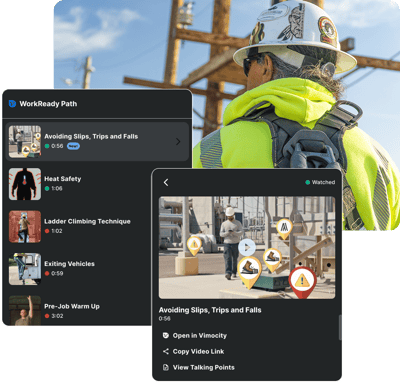
Discover how Vimocity can help keep your crews WorkReady.
One comprehensive platform to help safety and operational leaders prevent more injuries and incidents.