
.png?width=20&height=24&name=Vector%20(15).png) For Leaders
For Leaders For Workers
.png?width=24&height=23&name=Vector%20(16).png) Partners
PartnersFrom Burnout to Purpose
WorkReady Podcast Episode 5
-
Speakers
Ken Lulow | Line Worker Solutions
Dr. Kevin Rindal | Vimocity
Recommended Resources-
Extreme Ownership – Jocko Willink
-
The Infinite Game – Simon Sinek
-
Atomic Habits – James Clear
-
Hydro Flask 32 oz Water Bottle
-
-
View The TranscriptWhat do you do when the people around you tear you down instead of build you up?
Today's guest shares how the earlyyears of his apprenticeship were marked by toxic crews, long hours, and a culture that treated pain and exhaustion as a badge of honor. Instead of walking away, he doubled down on his values, found mentors who were leading differently, and he built a career centered around purpose, brotherhood,and service. Now, after 25 years in the line trade, he's helping crews see themselves as athletes and leaders capable of more than just surviving and instead leading and thriving.
When did you feel the most alive at work? Lead with that purpose. It'll change your life.This is the WorkReady Podcast.Dr. Kevin here and I just want to personally thank you for being a part of this community. It means the world to us and without you we wouldn't exist. The only favor that I will ever ask is that you like or subscribe to the work ready podcast as this ensures that we can continue to grow this community and bring these amazing guests and conversations to you each week. Thank you so much. Now let's get to work.Hello and welcome to the WorkReady podcast. I'm your host, Dr. Kevin Rindal. So happy to be here today with my good friend Ken Lulow. Ken and I have known each other for the past several years and I've just gained sucha great appreciation for you, your leadership, and um just your innovation in the uh in the industry. Ken has been in the trades for over 25 years. started out as an apprentice and workedhis way up and has held many safety leadership operational roles throughout his career and now is doing consulting with different utility companies all across the United Statesthrough Line Worker Solutions. So Ken, so good to have you on the call today.Yeah, thank you Kevin and thanks for the kind introduction and it's always been a pleasure to work with you and have find an individual that's um such an inspiration too for for the trades and such an advocate for uh a better futurefor everybody and I just appreciate taking the time and opportunity to sit down and chat with you.Oh, thank you. I appreciate that, man. Well, Ken, let's start off right from the very beginning because you have I mean you're brought up in the trades and it's it's pretty much what your life has been. Tell us a little bit more about where you grew up and and how you first got exposed to the trades.
Yeah. So, third generation line worker. Uh my grandfather was a line worker andmy my real father was a electrician. stepfather was a line worker and I spent majority of my uh teenage years with my mom and stepfather. So, it's really all that I knew or the electrical industries all I knew. And uh they were a littlemore the old school kind of um line workers there. Not always the best role models either. I wasn't necessarily intending to go down that path. Just having that exposure and the interaction with the group and with the other, you know, peers that line workers that would come over and the camaraderie that they had and that sense of duty about, youknow, getting out during storms and it was, you know, it was really intriguingand it really that's what really drew me to that this industry and uh and throughlike a series of events like I honestly I wanted to be a a firefighter. That was my dream, just to dress up in in theuniform and save kittens and without fires.And uh I'm really glad that I didn't go that route and that I did take this route because it's been extremelyrewarding career for me and it's just the individuals that I've builtrelationships with and the lives that you get to interact with is is superrewarding. And um and you do build those those bonds and those relationships inthis industry. And um you know, I've always been in the Northwest for the majority of my life. A little bit in theNew Mexico South area, Southwest area, but most of it's been Northwest. Most ofmy working career been here. And it's been a uh interesting journey to get tothis point. And um you know the one that's been full of twists and turns andthere's always been a reward at some point uh to get to this journey and and just beingexposed to line work and I can't really fix a whole lot on the car. I can, youknow, work on the power system and it's just like uh part of what's ingrainedinto me and and uh just uh I don't even really knowhow to how to explain it. that bond that you have with your peers other than whatI would maybe say like sports teams like the this bond you build on sports team or maybe even like in the military youovercome all these challenges and obstacles to do the impossible and face all those conditions it's just extremelyrewarding career and one that doesn't get enough recognition to or even exposure to individualscoming through high school and and um you know trying to pick their career pathway where it can really offer a lotof opportunity and a lot of uh purpose and direction in a person's life.Yeah. No, that's you know I many of you know I started in sports medicine and I spent my entire life there. I grew up inthat world and it wasn't until about 10 years ago that I was really exposed to the trades and just the more I learned II'm like man this is just some like a path a career path that we don't exposeour kids to and it's something uh that I'm a huge advocate now when people come and talk to me about you know what wouldyou recommend your kids do or you know young young adults these days and I'mlike I'm a huge advocate for the trades. I just think there's tremendous potential there. Um and that's thanksfor sharing about your your growing up experience third generation. U but evenwith being a third generation uh you had a little bit of uh you know this yourstart was a little bit rough at at times and and I I remember you telling me astory about questioning if you wanted to even go down that path early on. Uh can you tell us a little bit more about yourapprenticeship? Yeah, absolutely. So, I I really I graduated early and I had to wait till Iturned 18 years old so I could sign the union books and and try and get into the trade. And then um being exposed to, youknow, all the individuals in the field and getting taught to how to climb a pole, you know, early on, I felt moremaybe a little entitled that I had all these connections. I was third generation that I could just walk in andI'd get an apprentichip and be this line worker. So, I wentto the interview for the apprenticeship here in the uh Northwest and I'm pretty sure that my stepfather had called insome favors to have them take it a little extra rough on me in the interview that I went through there. NowI'm coming in with the mindset that I'm going to get into this industry then I'm going to be great and it's just going to be just the next step in the processjust like it would apply to any school. And it was one of the most brutal beatdowns that I've ever experienced inthis interview process. And it was very um defeating andit definitely put a bit of a chip on my shoulder where I left the original uh interview and Iwas like there's I want nothing to do with this industry with these people. I don't want to be a line worker. I wasalready, you know, experienced growing up and the guys coming over and just how rowdy sometimes they could be. And I waslike, I want nothing to do that. I'm going to go back to my original plan. And I made that drive home. It was like three-hour drive home and just kind ofstewed on it the whole time and slept on it that night. And I woke up with thismassive chip on the shoulder. going to deciding that I was going to get in this industry. I was going to prove that Ibelonged and that I was going to do whatever it took to uh work my way upand be that individual that I prove that I do belong, that I am capable and goodenough. I don't need a family name or anything to get me into the industry. So, that was the route I took. And Ispent a year as a groundman just in the trenches doing conduit andum all pretty much the task that you could imagine that you would have as the ground helper and applied for theapprenticeship again and came in there and I said you know I'm may not be thesmartest person that will come through today or the mo most well polished but I'll be the hardest worker that comesthrough here today and I prove that I do belong here. And 8 days later, I gotaccepted into the apprenticeship. And then I was introduced to a whole new world again where now as a young18-year-old or 19-year-old um teenage man in the world having to navigateum different personalities and being on the road and um you know, not what Iexperienced at home or what I had anticipated early on in the career. I would say someof the individuals that I worked for weren't the best influence and were verychallenging and it was sometimes questioning if I made the right decision, if I was cut out for this. AndI think that was really good because it taught me a lot of um resiliency and lessons early on. And then later on inthe apprentichip, I worked with some of the most incredible uh line workers there were that um also helped becauseat the time losing family and not having the adult male guidance in my life,you're at the mercy of the crews and they become your family and you want tomodel their behavior and and be like them because they're they're cool and I want to be like them. And uh early on Icould have gone down a really bad pathway for some of the crews I was working on.Later on the crews that I worked for have become some of the most incrediblementors that I could have ever asked for. And it was definitely a gift that not only the line work aspect of it, butjust as being a a good human being and um you know wanting tomake a positive impact on the next generation, be a teacher and um therejust so many lessons that that I got taught that I'm glad and grateful thatit was that pathway where it was hard early and then I got to experience whatit should be like later on so that I knew who I wanted to model um myself formy behavior and who I wanted to be like and uh yeah it was definitely aninteresting pathway that I took and I don't think it could have worked outbetter right there was the struggle early on and like I said you got to see both sides of the coin and make my owndecisions and decide who I really wanted to replicate but who I wanted to be as ajourney level worker and as an adult and just as an influence to the trade andyou know just life in general. As I hear that story, uh, you know, itsounds like even though it was a rough start, that was actually probably a hugegift for you to not have that feeling of entitlement just cuz I've been in this trade, have family in it, like it ittaught you to actually have to to take that ownership and and carve your own path. What would you say to um you knowa young apprentice out there who's just getting into the trades and they they're like, "Oh man, this is this is tough.Did I make the right decision?" Um and you kind of touched on that, but anything else that you'd like to add uhjust for those people? I would say it's it's tough in thebeginning and don't look at um you know the current situation you're in. Looklook to the future. Believe in yourself. believe in the dream, the purpose that you that brought you to this industrythat you were joined for. And at some point in time, there's goingto be lessons that you're going to learn. And you're going to see different u behaviors and different uh methods andwork practices. All of that is a form of training. I mean, you get trained whatyou don't want to do. You get trained to what you want to do. Um, just believe in yourself, stick true to the course thatyou're on, and when your opportunity comes, you'll be in a good position to be an incredible leader and and uh modelfor the next generation. With Vimosity, utility leaders are cutting injuries by up to 50%. Keepingcrews safer, empowering stronger operational readiness. Teams stay engaged. Your safety impact skillsacross every work group and you gain the insights to prevent serious injuries before they happen. Vumasi deliversexpert content, seamless deployment tools and real-time risk data through one workforce readiness platform. Learnmore at vumasi.com.Ken, thank you so much for sharing that story just about your own personal experience going through theapprenticeship. And you know, it's easy when you've grown up in the line trade, you're third generation to feel thatentitlement. Um, but I would imagine and it sounds like when I hear your story is that it actually the way that you weretreated um definitely helped you take that personal ownership and itultimately the the short-term pain led to better outcomes in terms of your experience growing up in the trades andmaking it your own. What would you say from an advice standpoint to someone whomay be in apprentichip right in an apprenticeship right now and they're experiencing like, you know, push backfrom from the senior people on their team or they're just feeling like, oh man, did I make the right decision goinginto this trade? What what would you say to people in that situation? I would say always double down onyourself. believe in yourself and the journey, the purpose that you are on that brought you to the industry and thepains are going to be short term. Down the road, you you'll be the one who'sgoing to with the lessons that you've learned be able to impact and influence the future. And just believe in yourselfand the challenge that you're facing now is just going to make you a betterperson and a better line worker in general. and you're going to learn a lot of lessons through this experience andjust embrace that challenge. Um, you know, both the mental aspect of it, thephysical aspect of it, the emotional side of it too. Um, just really embrace that and cherish that that opportunitybecause you're learning a whole lot of lessons right now that will be beneficial to you in the future.Yeah, thanks for that. And you know, as being a more senior person on the teamas well, uh you and I have talked about this just the the culture has changed a lot in terms of the trades and the waythat kind of that old school mentality of, you know, just rub dirt on it, don't talk about anything, don't share youremotions. like there's been a pretty big shift I think and you can maybe I mean you're the expert you can speak to thisbut um what are some of the opportunities that you would maybeencourage people who are more senior in their role uh in terms of encouraging the younger generation and being anadvocate for them and helping them with that transition? What what are some lessons that people might be able toapply in their own life as they start to transition uh into a leadership role?There's a few parts and one of them I just got to make a comment where you said being a little a senior person andthat one's still hard to uh process because I was started in the trade as 18years old. I was always the the young one and now 25 years later uh well 26 years later it it's you knowI am the senior person and it goes by so so fast um inways as a senior person now like recognizing the impact that you have onthose next generations the lives that are coming in just the influence the impact that you have in recognizingthat your legacy that you're going to leave isn't some power lines that you're building up on the rightway or you knowthe next major project or something like that that will mean nothing. It's going tocome down in a storm get hit by a car and eventually it'll be replaced. It's the people that you have the opportunityto influence and help them to have a successful career and carry on thetraditions of the trade and make improvements and and be able to innovateand take this trade and the industry into the future, right? Not the sameelectrical grid that my grandpa was installing that we're still building right now. the one that's gonna take usto the future where the world needs and you know all the technologies there.It's just to be open-minded and help to make that your legacyto bring the industry forward and to influence all these next generations and help them to be successful.I heard you give a presentation on leading with purpose and you talked about um a sense of belonging, a senseof service and a sense of challenge. Can you maybe expand on leading with purpose and you know the the thepurpose may be different for other people but can you share uh your personal purpose?I will I can give you a little bit of the the story there too and being young in the trade. uh I you know journeylevel when I was at 22 years old and foreman really young and you're justchecking the boxes and I was successful I think you know by theindustry world standards like checking all the boxes doing everything that I thought you're supposed to do to besuccessful and happy and recognizing that all these boxes that you get todon't actually make me happy it made made it h made me happy for a moment but it didn't fulfill me and I wasreally kind of starting to struggle with that and just through fate and some uh experiences that I hadthrough individuals in the apprenticeship class that I was helping to you know influence in a positive wayand help them to be successful led me on a bit of a quest or a journeyto kind of explore my purpose in life and I come to realize that through thatchain of events that my purpose wasn't building, you know, power lines. Itwasn't on being able to be the fastest crew or the,you know, whichever big job that you're out to tackle to conquer that challenge. It was the actual people and being ableto influence them and help them to be successful. And um what I recognizedearly on too is from some of the leaders that I had is we all learn differently. We're all unique. We have our own uniqueskill sets. And to take the opportunity to not compare every individual to youand your skill set. Recognize them for their unique gifts and reach them wherethey're at and use your knowledge and your skill to encourage them and supportthem. to believe in themselves and and achieve their personal success, whatever thatmight be. And I got a phone call from one of the apprentices that I'd helped,you know, get through a tough time. And that phone call was more rewarding thanany promotion, any raise I've ever got. I even at one of my old companies got aemployee of the year award. That phone call hands down was one of the most rewarding experiences that I've ever hadcompared to anything I've ever gotten. And that's where I found that my real purpose is is being able to make apositive impact on other people's lives and and contribute to their success.Thank you so much for sharing that story. Uh can you talk about belonging and serviceand challenge? uh those those three things that I've heard you talk about before and and how critical that is tohaving purpose because that's what gets you through the tough times. That's what like you know when it's 70° out andsunny uh it's it's pretty easy to show up and do the work but when you're working 18 hours and it's a storm andit's you know it's leading out those are the times that there has to be a purpose that's that's fueling you beyond um youknow beyond just showing up to work. It it it is and and it kind of goes back tothat um chain of events that led to, you know, identifying where I felt my mypersonal purpose, my compass, my true north compass kind of guiding me. And ituh was really, I guess, eye opening or mind-blowing.I I did a poll with some of my first year apprentices on why they joined theindustry in during the first year. It it is challenging and it's you're away from home, you're on the road, you're notmaking a lot of money. You have somebody else really controlling your life, telling you where you're going to go and you're not, you know, you're not treatedreal well and it's a struggle. So, you know, why did we choose this industryand the replies that I got back and this was all anonymous and three thingsbrought three things were were unanimous across the board and you know one of them kind of varied on how they wordedit. The one thing straight up was a sense of belonging to something biggerthan themselves. And that's something that the trade offers is thatuniqueness to being belonging to that group. Whether it's just the belonging to the union or being considered a aline worker in the camaraderie that you get from that that feeling of brothersisterhood um shared purpose that's you know something bigger than myself thatwe fight all these dangerous conditions andbrave all the elements together as a team. you know, working, watching out for each other, overcoming impossibleodds to restore power, bring power back to the communities. And so that sense ofbelonging to something bigger than ourselves was that one. The second onewas a sense of purpose and helping people. And um for for like a lineworker, you know, we're bringing power out to, you know, whether it's a new building or restoring power after mothernature brought it down. And again, the challenges, the terrible conditions, cold, wind, um all the dangers from theelectrical system, sleepless nights, starving mixed with the camaraderie of that groupthat you're mixing those challenges together. And then the third element or third part to that that they came withwas that challenge whether that was a physical challenge, med or mentalchallenge, the emotional aspect of it and even the chip on the shoulderproving that you are good enough, that you do belong where maybe somebody said, you know, college, you aren't goodenough for college or you're not cut out for this and you'll never amount to anything. and being able to prove thatyou do have you are good enough, that you do have a purpose. Um those threethings mixed together really powerful and it's exactly what this industry offers people. Um, youknow, you got that camaraderie. You have the impossible odds that now you're building and overcoming as a team andyou're doing good for the communities by bringing back power when people aresuffering because the power's been out and clearing the dangerous conditions off the road. And uh when I read thatand I saw the results and just kind of went over the data again, I was like mind-blowing cuz it brought me back towhy I really joined the trade too. And having that realization, it was reallyenergizing and I wanted to, you know, pursue it even more and get back into it. And I think just the way thatsociety and the world is today, we a lot of us achieve the goals that we set outearly on and we maybe didn't set high enough goals or far enough goals and itgets to where you're chasing more extrinsic type rewards just the next raise or the next award of some sort andit never really brings happiness. And when I focused on those pieces of it,the trade was extremely rewarding again. And that felt that purpose and and thenbeing able to share that with other individuals and help them maybe gainfocus back onto their purpose, too. What really gets that person out of bed? What made that person join this industry andovercome the challenges and the dangers and the time away from the family, the sleepless nights, all of that? It'sextremely rewarding when you when you think about that again and it encouragesto get out there and also bring that insight to you know some of your peersor or the next generation help them keep focus on you know what really bringsthem true happiness. One of our other guests on the work ready podcast, Eric Capatulic, um hetalked a lot about mission and the importance of having a mission. You use the term uh you know your true north, uhpurpose. I feel like all these words are interchangeable. Um but it's it's likeyou have to have direction. But his his point was that you don't wake up with purpose. You don't wake up with, youknow, a mission. And it's it's something that you have to like wrestle with. You've got to like narrow down what arethe what are the three things that give you purpose or give you direction. Umthat is your true north that's your mission that that drives you. What are somemaybe uh advice or guidance that you give topeople who've never you know sat down and gone through an exercise of identifying what their purpose is, whattheir mission is and um you know how could how could they go about exploringthat? I don't know that there's a direct link to finding purpose. It's kind of ajourney that you need to take on your own. And everybody's I believe thateverybody's purpose. We have we have shared purpose. There's also the purposethat has probably been shaped at some point in time through your childhood that um through whatever events thatyou've been through that that uh you know control the behavior evensubconsciously that you do and what makes you actually truly happy and maybethat's providing for your family or maybe that's helping other individuals.um you know, a hundred different things that it it could be. And it's just taking the opportunity to really sitdown and maybe reflect back on to when were you the most happiest? When did youfeel the most alive at work? Like what were you doing? Were you mentoring somebody? Was it one of these impossiblepuzzles or challenges that you had to solve to overcome? Was it that kind of piece of it? And maybe just reflect backon those times when you felt truly happy like alive at work, not just satisfiedor status quo, like you felt energizedfrom from work and kind of investigate there like follow that pathway and whatyou what was it that you were doing exactly that made you feel that way. And it might be eye opening to really findthe direction that it is. And once you do have that purpose and you realize thatand being able to lead with that purpose, it it'll change your life.I have a friend and I remember he talked about finding his purpose. uh you useenergize, but he used the the example of like resonance and you know whenvibration is happening and then you pair vibrations so that it's in sync and allof a sudden it goes from everything feeling chaotic to now it's in sync and it just it amplifies everything. And Ithink that's such a great way to to think about it is when when you find your purpose, your direction, whetherthat's, you know, in your career, whether it's through a faith journey, whatever it is, then when you're doingthose things, it's like that wavelength is in sync and it justamplifies everything. And so I don't know that that's that's an image thatfor me I was just like oh man that makes so much sense because there there as I've gone through that process that'sdefinitely how I've felt. I I I do love that. And I I'll make a comment there,too, because it's still life and life is very challenging and you're always going to get, you know, thrown a Y in the roador some kind of obstacle to overcome and you're probably going to hit some turbulence along the way. As long asyou're sticking to that pathway, it will even out again and come back to beingsteady. So, just there's a lot of times that I've questioned still too like Ibelieve something. so much and then you're not getting the traction or the response that you you were hoping toreally have or make an impact or maybe you just feel that maybe I'm notthinking right. Just still believe in yourself and follow that and eventually thatturbulence evens out and you're back to flying nice and steady again. I love that. So, Ken, I've never workeda day in the trades uh as a full-time, you know, lineman or apprentice. I Iworked for the county uh growing up on my college breaks on the public service crews and uh public utilities. So, I dida little bit of the work, but um one of the things that I've heard from peopleas I've been in the trades now for 10 years, just uh you know, as a consultant and um interacting with a lot of peopleis that for people who are motivated to continue to grow and advance their career, often times they go from likefrontline worker and then they move into a supervisor role and then, you know, your your career path tends to becomeless of the hands-on work and for leading people and leadership and ummaking those decisions, but there's not a lot of training that happens to toprepare you to lead people and to um gain that leadership. And Iknow you and I have spoken about you do a lot of leaders leadership consulting, but what are some of the things that youfound helpful? You gave some examples of some people that went ahead of you, whomentored you, who were influential to your development. What were some of the attributes that you saw in those peoplethat, you know, subconsciously you probably just started to, you know, tomodel some of those same behaviors to to develop your own leadership? Um, and what what could people look for in um,you know, their co-workers if they're like, "Man, I really look up to this person and and I want to learn from this person." What are some of thoseattributes? So there there's a there's a few that wewould touch here and I think one that we just overlook is weput too much thought or we we value just the idea of aleadership position more than it is. It's not the leadership position is justa like you're a job. It's just management. leadership is a responsibilityand not the title. And I think the biggestum I guess asset or gift that you can have or or tool is to be to be human andto be open, vulnerable as a leader. You're going to make mistakes.Admit that you've made a mistake or that you don't have the answer or that you need help with something. allow yourteam to contribute to, you know, feel like they're part of the solution. Don'ttry and have all the answers because as a leader, you will not succeed if you act like you have all the answers. Youneed to have a team around you. Allow them to participate and be vulnerablelike model that type of behavior to them and and be human and and real like wehave emotions, we have struggles and challenges to overcome.pretending that you're in this position that everybody does what you say, yourwords, the final word won't get you very far and really will lead to accidentsand lower productivity and bad culture. It's it's just that human element thatyou need to really have and and and embrace and and and encourage andempower your team to contribute and be part of that solution.And you you hit on some really important things there because again, you pleasespeak from your experience, but it seems like a lot of conflict on team comes from leaders who don't want to admitthey're wrong. And they also lead from a command and control perspective ratherthan um what you said having the the rest of the team participate in thedecisions and provide feedback and uh come up with those solutions so that they can take ownership. And the otherkey component of leadership is also just being present too so that they can see that you're willing to um you know maybedo the work or that you're you see what they do and how hard they're working.Can you maybe expand on that? Like the the difference between those twoleadership styles and the impact that that can have on culture. Yeah. Uh, and you hit on a couple piecesthere, too. When you when you're on the cruise, that command and control, all all it does is really limits the growthof your if you're um individuals that are working, your team that's working with you, your crew that's working with you, it's limiting their potential. It'slimiting innovation. It's actually engineering probably adisaster or a safety incident to happen when you're just controlling everything and you're people are just going to doexactly what you say and not use the skill or the knowledge they have when they see a potential hazard upcoming ora roadblock. They're just following your orders. Just mindless mindless compliance to, you know, dowhat you say, which we're going to be wrong because we make mistakes all the time. We can't know everything. there'stoo much, it's too vast, and there's all other um factors that are coming in on,you know, weather and real-time environmental conditions and just anything else that you can imaginethat's going to have an impact there. And your people, your crew, your team needs to be able to be innovative and umto be able to adapt to the conditions. And if they're just following orders, they're going to fall right into adisaster or an accident. And that, you know, that style might have worked atone point in time when there was, you know, very little in the way, verylittle traffic hazards and certain things. It still probably led to a lot more accidents than we ever realized.the way that the world is today with being so dynamic, you really have to behuman. Like take that human element to it. Empower your team tomake decisions. Like um another big piece of it is not just the how, the thewhy aspect of it. Like you have to explain why we do this procedure. youknow, why we're um potentially setting a poll here or whatever the task might be.What's the purpose behind it? So that we actually have an understanding and we can all work towards the same goal oryou know this the same solution where when we just give directionsometimes it's just mindless to that destination and there is no reward whenwe meet there as a team and everybody just wants to check the box and go home and um I just think it's not a greatmodel to try and utilize does. So, when I hear that, I think of ascenario where a crew is doing a prejob brief and, you know, maybe someone seessomething that potentially could be a hazard, but they don't feel comfortable speaking up orum maybe somebody's a little bit hung over. I mean, does that ever happen, Ken? Have you ever experienced that on acrew? Oh, yeah. and they know deep down I probablyshouldn't be working right now or I shouldn't be doing this task or someoneon the team recognizes you know another teammate is maybe not quite fit for dutyon on that day. Um how as a leader or as a teammate do you create an environmentwhere people can speak up or you know you as an individual can say you knowwhat for the for the safety of the team we need to we need to have a tough conversation hereand that that's a really important role for for a leadership for anybody in aleadership position and it doesn't even have to be um you don't have to have an official leadership title. I mean, youcould still be the journeyman on the on the crew and not the actual foreman andstill have that responsibility or I guess that accountability to your teamfor everybody's safety and to really have that impact and and to watch outfor each other's safety. It's again it's being vulnerable and it's as the leader you have to start like it has to startwith you. You have to model the behavior that you want to see from your peoplebecause you won't you can't just ask somebody to be this way or say I want tohold you accountable to this if you're not accountable to it yourself. Like you have to model that before you can everask your people to to follow that direction or to lead this way or to acta certain way. You you have to be the one that starts it off. So you have to model vulnerability. You have to admit,you know, that you don't have an answer or you have to be the one that admits that you made a mistake that todemonstrate that it's okay to have a mistake and you'd rather have thatmistake brought up so we can solve it as a team instead of waiting until it comes time to energize something and then itburns it down to the ground and now you've got a bigger issue. So being able to just start that off where there'ssafety and trust that's built up on the crew to share the condition that they're in and really to check in with thepeople on your team. Make sure where you're at physically, mentally, andyou know, maybe they're fatigued. How is it at home? Maybe they had a a small child that's kept them up all night.Where are they at? because maybe they're having a a a fight with their spouse. And it's really evaluating uh where yourpeople are at mentally, physically from, you know, maybe they were, like I said,up all night, so physically they might be fatigued and might not be all there. And maybe it's time where they take adifferent role and somebody else takes, you know, steps up and and uh I think onextreme ownership, what is it called? Uh duck and cover or something. Yeah, of that nature. And same kind of conceptwhere cover and move. Cover and move. Yeah. Where you're you're really sometimes it's a trade-offand it's you build up that camaraderie, that team mentality where you're everybody's working towards the samegoal. And be really clear on your expectations as a leader, too. What youexpect from your crew, what you expect for everybody when they show up. andstay consistent. When if you're not consistent, it won't matter at all. So, it's always it consistency and reallyclear expectations on the behavior, on how we're going to act as as a a crew,how we're going to interact with the public, how we're going to interact with other people, the example we're going to set. Just be very clear on thoseexpectations and then very consistent. And you have to model that first before you can hold somebody to that standardas well. I'm going to run something past you. Uhso a lot of the conversation right now on safety focuses on sticky stuff that cankill you. So it's the high energy hazards. Um we talk a lot about uh the energy wheel and identifying high energyhazards. And I think that all these frameworks are so so important becausewhat it does is it it provides you know just the awareness and a framework forpeople to identify the hazards that exist. But one thing that I I feel likeis missing and part of this sticky and the stuff that can kill you is not having honest conversations. And it'salso the human element. And uh I just feel like we've got to put the human atthe center of the energy wheel because everything that you just talked about like that person might have just, youknow, had a a rough night. Um wasn't able to sleep. Um maybe they yeah didhave an argument. Um maybe financially they're experiencing something. And so there are all these things that areimpacting someone's presence of mind and their ability uh to identify hazards orto you know even speak up um that they're maybe not fit for the job thatday. What role do you think the human does play in the bigger picture from asafety perspective and how do we bring as an industry bring more awareness toto that piece? Cuz to me, it's like you can do all those other things, but if you don't also focus on that human andtheir readiness to perform work, we're only going to get so far from an injury pro prevention standpoint.And it's it's really ironic that you bring this up. I just had a conversation with somebody earlier on the capacitywheel and that's what I said. I go, where's the human element at here?Really, I think what 80% of workplace accidents can be blamed on the humanelement to it. And it's not that nobody sets out to make an accident happen ormake a bad decision. Uh it's usually another factor just like all the parts that you hit on. You're dealing withfatigue which can reduce our reaction time and our attention or dehydrationthings that we've talked about in the past. And then the stresses and anxieties that you have fromrelationships, from children that might be having some hard times, parents that are struggling with health andfriends that might be struggling or like you said maybe financial stresses that you're on and the risk that you reallyneed this job and if you don't, you know, make enough money that you know, maybe you're not going to have enough topay rent or whatever that might be. that add stress that um take up yourattention, reduce your reaction time and put give you that tunnel vision that lead to the accidents that there's, youknow, all kinds of factors that that factor into are like pain, you know, from an injury that you might have beenexperiencing too that leads to that human factor. And and Ilove the capacity wheel that that model there. As a crew leader or somebody that's beenin the industry for a long time, you tend to focus on the the big serious hazards like the electrical ones, thegetting in the bite, the pinches and the gravity type things. And some of the more minor ones that you're used todealing with or you've dealt with for the past 20 years, you tend to overlook. yet we assume that everybody on the crewis the same as us and recognize those and somebody's newer and they haven't experienced those and it's still ahazard that can lead to a bigger incident or an injury and it it all hasimpact and um I like that capacity model because then it generates if usedgenerates the conversation and if you use it correctly it it gets theinvolvement of everybody on the crew and gets a voice from everybody and starts to generate the thought of what are thehazards so we can point them out and um it's pretty amazing when you get otherpeople's perspective. It's the pieces that that you overlook and you think that you're an industry expert andyou've been in the industry for so long and somebody that's brand new, maybe it's their first week and they pointed out three things that you were obliviousto. So, um I really like that and I agree with you that 80% of that wheelshould be the human element as well. Yeah. And I just thank you for that. I Ido want to also acknowledge that I think that these frameworks are incredible. It's it's moved the industry so farforward and it allows us to put the direct controls in place so that people can fail safely. But if you can combinethe human element with this other these other frameworks, it just feels like that's where the magic happens andthat's where we can really move things forward. Um but yeah, there there's so many human factors that should beconsidered. So to me that feels like an exciting frontier uh that we can all work towards.Yeah. And it was like I said kind of ironic that we just brought this up.One of the comments that got made to me of why that human element wasn't there. Maybe it was by design because we knowit's such a wide, you know, big big hazard andthere's potentially too much in there that if we acknowledged it that we wouldhave to make a lot of adjustments out there cuz the work model that we have with the storm and the fatigue andmaking sure and we tell people to drink water, but we don't give them the reason why and how it impacts them and anddriving in the vehicles. for a long time and being in the sun and you know beingaway from home for a long time and just not recognizing the impact that it has on the families and to yourum mental health or fitness with the relationships that you have at home andthe challenges that it introduces and all of thosefactors that cloud your judgment and get like give you that tunnel vision.Yeah, it's messy, but until you address it, it's just going to continue to, youknow, sit under the cover. So, yeah. No, I I appreciate you having this conversation cuz it's one that I don'tthink a lot of people want to talk about or they want to address, but I think that these are the things that as thisbecomes more part of the conversation, we're going to figure out different ways that we can support that human comp uhcomponent in a much more holistic manner. And I I think everybody wins when we do that.Agreed. And it really it starts with the conversation. So Ken, um you now have transitionedinto line worker solutions, which is an awesome organization, and uh you'redoing a lot of training with frontline workers and leaders. Uh what are the things right now that you're excitedabout uh and that you're teaching uh people on the front lines? The things I'm most excited about is theopenness from a lot of like the new generation, even some of the older generation when we look at the waythings are and realize that it isn't maybe the best route and maybe there isa better way and the openness to bringing the human element back anddoing away with the old command and control and going towards that um likethe capacity model where in in just the psychological safety and recognizing that we are human, we probably shouldn'tbe designing or or engineering taking the human element out of it, right? So, we makeprocedures and checklist to engineer the human out of it the equation. Yeah,that's our biggest gift, too, is being able to be flexible and and be innovative and and transition skillsthat we've learned somewhere else to a new situation when the procedures changed or the conditions changed. Andif we're just following that checklist, we're not necessarily going to be in the right position. And um being able toutilize that kind of concept and more the psychological safety where wedo encourage um you know vulnerability and and andyou know not having all the answers and encouraging individuals to have a voice, share what they know, ask the questionsand build trust where near misses get get um shared. so thatwe can learn from them. And the also the the um change fromblaming the individual for the problem and maybe looking at the like thesystems that we have in place that allowed that to happen. And that change in mindset which 20 yearsago, 10 years ago, people would have just laughed and said, "Put your feelings aside. Get back to work. Rubsome dirt on it." Now there's a lot of openness and um intrigue I guessinterest into where this might lead us and I'm excited and hopeful that as anindustry and as a trade we can venture down that pathway and continue toimprove safety because if you're looking at the statistics from this year withall the tools and technology like safety incidents should keep going down andthey're not they're staying at a plateau and actually increasing this year and it's I think it's all because of thatmindset and it's we start to embrace the mindset that you know we are going tomake mistakes that we're going to learn from those mistakes blaming somebody isn't giving them psychological safetyit's causing people to hide those mistakes and we need to encourage peopleto you know share their near misses share share the lessons that they learned and not just have like a safetymeeting or something and say, "Okay, this is your floor to talk." also acknowledging that your voice is valuedand we want to hear what you have so that we can learn from each other and have that kind of peer-to-peer supportand we're I'm getting that feedback and there's a lot of um people that areexpressing interest in it and there's excitement when we talk about this kind of different philosophythat's really encouraging to me and we're seeing even leadership likeexecutive level leadership that's buying into is and wanting to go that direction too. And I'm really hopeful that as anindustry we trend that way and we start to see more fulfillment from work, lessaccidents, more enjoyable lives outside of work and uhand just better industry overall. Ken, I'd love to hear from you. You youshared a lot about the demands that are placed on frontline workers. I mean, working long hours, storms, being awayfrom family, uh, all those different components, and yet, you know, you do agreat job at taking care of your your body, your health. You re, you know, talked about stress reduction and sleep.We we've covered all these different things. What is what has been your formula that you've found has has helpedyou in those areas? because I'm sure it's it's not always been on track and there have been times where it's likeyou're working a storm and it's like a week long of of you know limited sleepbut what are some tips that you can give to our listeners in terms of how to invest in yourself so that you can showup your best because you know fatigue impacts stress it impacts all theseother things um that help us restore I think it's recognizing and we've hadthis conversation in the past that your body is your biggest tool. You buy anice truck and you take care of your truck and you wash it and you make sure that you're getting it serviced and youyou know you you baby it and yet you abuse your body and that's that is whatbrings you food and supports your family and keeps you working and helps youprogress and you need you have that one tool that you need for the rest of yourlife. all of those hours that you're working to save for retirement that youwon't get to enjoy if you continue to abuse the tool that you're using. I think it's just recognizing thatyou're not invincible, that your body does need proper care, just like you would be caring for your house, youknow, putting a new roof on it and making sure that all those that you've winterized your pipes, all all of thatkind of aspects to your body, too. that you are making sure that you're getting the proper hydration, proper nutrition,and um you know, the sleep and and how the fatigue impacts your health and thefoods that you eat impact your health and stretching and moving to keep your uh muscles and joints, everything looseto prevent the injuries. And pretty much everybody that I know has had some kind of uh injury or event that's caused thempain that they have to deal with. And most of the time you kind of just shrug it off and say it's part of the job whenit really isn't part of the job. I mean there's things that will happen, injuries and accidents will cause thosethe little day-to-day dings. If we took proper care of ourselves, we wouldn't have those and we wouldn't be taking allthe Tylenols and Advils and maybe adult beverages when you get home or whateverit is that you're trying to cope with. that's, you know, can be the gateway to even more umtypes of um recreational vices or whatever it might be that can lead to adangerous pathway. And um it all has an impact on you. It's just realizing totake care of yourself and prioritize that. And even the relationships that you have with your family, with thepeople on your crew, um at home, your friends lead to your health, too. andputting some priority into those relationships, you're you get a lot ofhealth benefits and happiness from that where just chasing the next overtime orthe next carrot or the next toy that's going to make you happy for a day or aweek and won't keep you happy when you're retired and won't, you know, you won't be able to enjoy it then. Andit's, I guess, prioritizing what really matters and it starts with yourself.goes back to purpose too, doesn't it? Does I mean that that drives every decision. Um,you know, and I really appreciate you sharing that. I have a fundamental belief that your work should build youup rather than break you down. And you know, it is possible that someone could,you know, with the right maintenance, with the self-care, um, you know, making those decisions to invest in their theirmovement, health, their, you know, nutrition, hydration, all those things. Um, your work could potentially, youknow, build you up rather than break you down. And sure, we are going to experience accidents or muscle strainsor things like that that that set us back. But um wondering if you have anyadditional thoughts on on that topic and uh how to change that mindset becauseyou've heard me tell this story before. I mean my grandfather lived with a mindset of like I'm just getting old. Iyou know my work's broken me down. This is what I should expect. And I think there's a little bit of that old schoolmentality that, you know, you get to the end of your career and it's like you replace both knees and your shoulder andyou try to, you know, take care of all that stuff rather than spending your career investing in in the maintenance.And I'd love to hear your thoughts around that. Yeah. And I I've seen that and you know,early on too. Um, being being young, you think you're invincible and eventuallyit catches up and you start to feel those pains. And I've had to overcomesome of those pains myself and deal with that. And you can make an excuse toaccept it and just deal with the pain and cope, medicate however you decideto. Or you can take accountability and ownership of how your body feels andresponds and put in, you know, the necessary work to stretch and make surethat you're fueling it properly, that you're hydrating it properly and you're exercising or just going for a walk inthe improvements that you get that you just accepted as a badge of honor or theway it was. It it'll be it'll be mind opening or mind-blowing to you how goodyou can feel just putting in the effort to want to you know educate yourself andseek additional type of um treatments oryou know tools to improve your improve your health. educate yourself on the foods that you're eating and um you knowkeep track of what you're putting into your body through hydration or throughyou know your adult recreation type things and don't I guess don't jeopardize the youryour long-term enjoyment and happiness for just a short period of reward andand really look at the long picture and the memories and and the enjoymentyou'll get from a long healthy life of being able to go on your adventures, go on your fishing trips, go on your traveland see the world, spend it with your family, spend it with your kids playing ball and all that or sit on the couchand eat some Doritos and have a beer and, you know, watch a movie which willcatch up to you and it'll shorten your happiness and and the whole work. So, it's really just being aware of that,educating yourself and making that effort. It's and don't even do itnecessarily for yourself. Do it for the people that count on you, for the people that love you, and for the people thatyou are there to um support your your kids and the people that need you in inyour life. Like, you do it for them, not just yourself, for that short-term enjoyment, whatever it might be.you. People need you and they need you to be healthy and to be happy and to be active and engaged and you can't do thatunless you're taking care of yourself. Well said, Ken. So, going back to LineWorker Solutions, what are some of the uh the services that you offer and howcan people get in touch with you? You can get in touch with me linework lineworkers.com.Uh I'm also on LinkedIn, Instagram, Facebook. You could find me on there as well. And the services that we offer, umwhat I like, how I like to describe myself is being that voice that can helpbridge the gap between the front office and the frontline workers. That us versus them mentality that's that'sthere and being a voice that can help bring those two parts together. and umyou know restore the culture so that we're a team and not just two opposingforces that are trying to accomplish uh maybe a same goal or something. and recognizing that realistically weall have the same goal in mind when we work for an organization and beingaligned and and helping just helping to bridge those gaps and change that thought process and then also bringawareness to different safety aspects that might be maybe it's you know the electrical hazards, the arc flash typehazards um and you know the maybe the the fatiguethe the physical ical storm type situations that a person might berunning into. And really, it's the focus is just on that culture aspect thoughand and um providing your frontline workers with the skills they need to totransition into those leadership positions and be able to make uh positive influence on their culture andtrain that next generation so that we're all heading towards that same purpose orthat same vision. and uh together as a team and not like I said those two opposing forces.Ken, any final thoughts you'd like to leave the audience with? Just how much I appreciate Vamasi andand the work Kevin that you do and and even the other individuals that you'vebrought on as guest. It's honestly it's just encouraging to see that there'sindividuals that are advocates for the industry and if anybody's listening thathas searching, you know, or wants to contribute to to go all in and tocontribute and find purpose in whatever it might be that takes you that way and advocate and be the leader that be theleader that you needed really. and uh help us to be the change that we need totransition the industry and the world to a better place.Man, Ken, thank you so much for that. And I just want to thank you, too. Uh,you know, me being kind of an outsider coming into this industry and really wanting to learn and and serve. Like,you've been one of my go-tos. like you always respond to my text messages when I have a question or if I'm like, man,are are people even going to resonate with this this concept or this idea? Am I wacky thinking this? Uh you've justbeen such a great advocate for um helping me better understand uh thetrades and um so just eternally grateful for that. Appreciate anytime we cancollaborate on conversations like this. I know that everyone gets better when leaders get better and you're doing suchgood work on helping um tomorrow's leaders improve and um have moredialogue, be able to, you know, to speak up when when they when they seeopportunities and to yeah, just lead that next generation. So, Ken, thank youso much. Uh thank you to the audience for for joining the Work Ready podcast.We're just grateful to serve you and we're grateful to continue to learn, to wrestle with better ways of doing thingsand we're so happy that you're here. Uh Ken, thanks so much. And uh everybody uhcontinue to tune in. We've got new conversations coming up each week. And until next time, let's get to work.
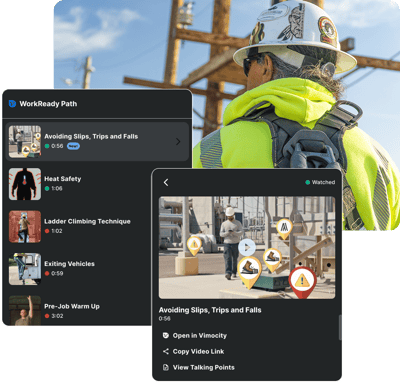
Discover how Vimocity can help keep your crews WorkReady.
One comprehensive platform to help safety and operational leaders prevent more injuries and incidents.