
.png?width=20&height=24&name=Vector%20(15).png) For Leaders
For Leaders For Workers
.png?width=24&height=23&name=Vector%20(16).png) Partners
PartnersBrotherhood in Action: Supporting Field Athletes and Families Through Recovery
WorkReady Podcast Episode 14
-
Speakers
Zach Spicer | Line Brother's Keeper
Dr. Kevin Rindal | Vimocity
-
View The Transcript
Instead of letting a life-threatening injury define him, Zack Spicer transformed it into a calling.
"I figured since the good Lord let me stay around, I might want to make it worth his while."
Through Line Brother's Keeper, Zach walks alongside injured workers and their families, turning one split-second mistake into a mission that's helping hundreds stay safe. If you get hurt, understand that you're not in this bubble. It's like dropping a rock in a in a pond, right? You affect so many people with your actions. This is the WorkReady podcast.
At the end of the day, it's not just about getting through another shift. It's about having enough left in the tank for your family and building a career that lasts. That's why we created the WorkReady podcast. If that's the kind of life you're working towards, subscribe and walk this journey with us. Every episode is one more step towards retiring strong, not broken.
Today's guest is someone whose story has impacted the line trade in ways few others have. His message is about more than safety. It's about identity, brotherhood, mental resilience, gratitude, and the belief that a life of purpose can emerge from unthinkable hardship. This will be one of those conversations that stays with you long after. Zach, welcome to the Work Ready podcast. It's so great to have you here today.
I appreciate it, Mr. Kevin. Thank you for having me on.
So, we're looking forward to learning more about Line Brothers Keeper. But before we jump in, can you tell us just a little bit about your background, Zach?
Well, as you can tell, I'm southern born and bred kind of thing. I come out of the great state of Tennessee down here and just your usual country boy raising kind of thing. Ended up going into the Marine Corps, serving Uncle Sam there for a good four years. Ended up picking up sergeant. But coming out of the Marine Corps, there's not a lot of call for the nuclear, biological, chemical defense guys. So that didn't parlay into something in the civilian sector. And I got very fortunate, very lucky that just so happened to step into a job at the local electric department and started this apprenticeship, went up line work and ended up going into the sub department there because my anal retentiveness, right, helped out pretty well with that. All the small wires and minute stuff. But, ended up taking over the sub department and stayed there. I think I spent 17 years at the electric department down there and, ended up, you know, like he said at the beginning, ended up having a life-altering accident there. And I figured since the good Lord let me stay around, I might want to make it worth his while, right? So, I figured that I'd do a better job of helping folks out than I would pulling wire. And that's what's led me into the Line Brothers Keeper thing and and and getting out and talking about this stuff.
Yeah. Well, I'm really looking forward to being able to hear that full story and just your learnings. First of all, before we jump in though, thank you for your service. Really appreciate everyone who serves our country and the military and we have a lot of listeners who who also serve. So, thank you. What did you learn during your time in the Marine Corps, how did that shape you as a young man?
That was one thing, of course, coming from the country background kind of thing. My granddad had always taught me to work, you know, and that that's one of the biggest things. It don't matter if you dig in a ditch, it's going to be the best ditch there is, you know. And that worked well in the Marine Corps. I heard so many times in the Marine Corps that um good initiative, bad judgment, but good initiative, right? I don't sit still. I don't stop. You put something in front of me and I go, right? And that that helped me sort of hone that in. You see something, go after it kind of thing. Now, may not go after the right way, but I go after it one way or another. And that ended up helping me coming out of the Marine Corps into the line work side of things.
But another good thing about it is I had not realized just how much odd stuff in the Marine Corps actually did help tremendously out in the civilian side. Just everything from properly hydrated to CPR to all that kind of stuff that you know you really sort of take for granted cuz I know when I got out in the civilian world I assumed everybody did that. Everybody knew about this kind of stuff and what to look for and all that and didn't know that at the time that that actually was some sort of niche kind of stuff that they taught us. But I made a lot of great friends, seen a lot of the world, ended up 9,000 miles away from here, and very fortunate to come back, enjoy what I got out here, and so I've been, I guess you could say, making the most of it, I guess.
How did you find your way into the trades, Zach? What What got you into that?
Well, every Marine is a rifleman. That's our that's our biggest thing, right? Every Marine's a rifleman. It don't matter. Ground pounder, whatever you are. Well, when I got out, my the NBC thing didn't really work too well here. So, my dad actually was a reserve sheriff's deputy for a while. And so, I was like, well, I I'll go that direction. I I'll go to apply sheriff's department, apply state trooper, stuff like that. And ended up, I remember the sheriff calling me and saying, "Hey, you got an interview tomorrow." And I was like, "Awesome." Five minutes later, the manager of the electric department called cuz I put in applications everywhere. And he said, "Hey, you want to come to work tomorrow?" I was like, "You said come to work tomorrow. It's not an interview." Cuz I can screw up an interview, I imagine. Right. I'm I'm pretty good at screwing things up. So I was like, "All right, I'll go to work."
I had no earthly idea what it what it was about the electric department cuz I was just like your average Joe out there that the lights come on when you turn them on. Like, you know, you don't ever think about where the power comes from and it just it's there. I didn't understand what it took to get that power there. And I walked in that first day, ended up asking the warehouse guy like, "What do we do exactly?" Like he said, "Oh, we climb poles and you know, we do a hot work and this and that." And I'm like, "That sounds cool. I can do that." And I mean that's that's the best decision that I ever made, man. It's just this line of work. I equate it to like you got a million man army, right? Marine Corps is like 125, 150,000 somewhere around in there. The the line worker side of things is is like the Marine Corps. It's it's very very tight-knit group of a very specialized individuals cuz when I say linemen are special, I mean they're special, right? I mean, you know that as well as I do. But it it's worked so well. And I think when I talk folks and see folks, I see a bunch of them that are prior service and stuff like that. And I think it just speaks so well to them. That's why it attracts so many of them good folks. So that's how I ended up starting my line work career. Over here I'm right outside of Nashville. About 45 minutes outside of Nashville. Just a little small town about 38,000 customers or meters and 20 25 linemen. Pretty small place, but absolutely best best career decision I ever made in my life.
That's awesome. And you know, a lot of our listeners are linemen or in the industry, but we also have a lot of people outside of the the line industry. And you know, I never appreciated that, you know, the hardest working conditions that a lineman faces are, you know, typically when the power is out. And you know, it's it's never nice weather when the power goes out. It's never 70° and sunny and and so you're putting in like hard hours, you know, late at night, stormy conditions. Can you paint a picture of what it's like to be a lineman? And just so that we have that perspective.
I was fixated when coming into it knowing nothing about it understanding that like you said you're you know 8 to five you know job or whatever. They they told me at the beginning this job is dangerous, very dangerous. And the old sort of funny adage the old joke I got told by old foreman he said you get one mistake in this line of work. And he said, "That was the day you got hired. You know, there's no other mess up you can do now." And the truth about it is is it we're like an unofficial first responder kind of thing cuz you know, we'll get calls at at midnight, 2:00 in the morning from a wreck, car hit a pole, there's wires laying down, cops ain't going near it, firefighters ain't going near it. Nobody's want to go over there cuz that that'll that'll hurt you. That'll kill you kind of thing. And so we get out there, clear up that kind of stuff. And then we have to after all that's said and done, we have to then put everything back normal because nowadays especially, people assume the power is always going to be there.
Like you said, it's ice storm, it's tornadoes, hurricanes, it's everything under the sun that mother nature can throw at you from floods. That was that was one of the worst ones I ever worked. We worked 12, 14 days, like 18, 20 hours a day. We had a bad bad flood. It was one of them 500 year floods or something. And when you have a you know a third to two thirds of your whole system just washed away, you just have to rebuild. And the time you spend with the folks at work versus what you do at the house. I mean that's that's the thing about it is you spend a whole lot more time with the people at work than you do with your family. It's miss Christmases, miss holidays, miss birthdays. But that's what we sign up for. And I think that's why the service related thing works so well because it's we know what that sacrifice entails. You know what that means? It's it's that in this line of the in this line of work, it's customer service, customer related kind of thing. But it's it's serving your fellow man kind of thing, right? And so line work summed up in a nutshell.
Typical every day we're putting rubber gloves on, rubber sleeves on. We're 40, 50 foot up in the air handling wire that has electricity in it that's odorless, colorless, sitting there invisible, but at any point in time, any any small mistake you make, it'll reach out and grab a hold of you. And there is a very good probability that you will not be going home. And that's what we work with every single day, all day long.
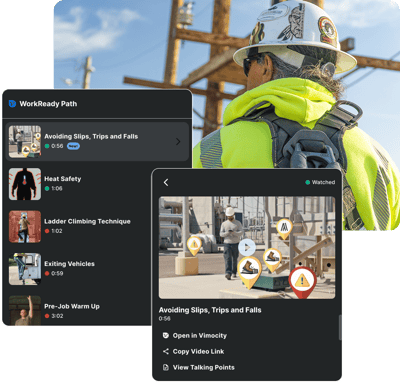
With Vimocity, utility leaders are cutting injuries by up to 50%. Keeping crews safer, empowering stronger operational readiness. Teams stay engaged. Your safety impact scales across every work group, and you gain the insights to prevent serious injuries before they happen. Vimosity delivers expert content, seamless deployment tools, and real-time risk data in one workforce readiness platform. Learn more at vimocity.com.
And Zach, you led into this section talking about the dangers of of the trades and you don't get too many opportunities to make mistakes and live to tell those. Fortunately, you did live to tell about that one incident. Can you tell us more about that that day where you did encounter high energy and and walk us through what what happened?
One of the things that if any of y'all's listeners and viewers and all that kind of stuff know know of any lineman or have any lineman in the family and stuff like that, I would be hesitant to say that they probably are they think highly of themselves, right? Sort of like I said about the Marine Corps, right? Of course, we're the best military group of the bunch, you know, obviously that's no doubt. You won't get any comments about that, by the way. They know it, right? We're like the whole men's department of the Navy, all that kind of jazz. But that that's that's the beautiful thing about the military side of it. We can poke and prod and fun, you know, make fun of each other. End of the day, we're all pulling together when we got to, but linemen tend to be sort of the alpha kind of mindset. And because we don't make mistakes, we know the cost of mistakes. Coming out of the Marine Corps already had a very high I guess a high view of myself you could say and then a line worker. Yeah, I I I could walk on water kind of situation.
Well, the problem is when you do that job, no matter how dangerous it is, if you don't stay on your toes every single day, it's sort of like driving a car, right? The the first time that you go over the speed limit, you get a little nervous. First time you cut a corner, you get a little nervous, but you do it again. And then you do it again, and then it becomes common place that you're 2 to 3 miles an hour over or 5 miles and over, you know, but you know, in the back of your mind, there's a possibility that I'm going to get caught doing this. We get that complacency sort of creeping in. That complacency starts to build up. That's what ended up leading in to what happened to me.
I had a substation that was deenergized. I had cut it loose myself, pinned it back, all that kind of jazz. And so I knew it was deenergized. We had had a little class in there. They liked the class. So the following year they said, "Hey, we want you to do another one." Sound good? Roll back in there on a Friday afternoon. I didn't test. I didn't ground. I didn't look for a visual opening point. I didn't do any of the things that I knew that I should have done because the last time I was in there, it was deenergized. No big deal. Did my thing. I just took it for granted, right? And that's one of the biggest things that I try to get across, especially to the the younger guys to sort of instill that right off the bat. But even for the guys that have been in 10, 20 years, sort of make sure that that's always sitting at the back of your mind that I don't care if you've done this a thousand times. People getting wrecks every day. They've drove for 40 years and there's a wreck, right? So, you've got to stay on your toes in this line of work.
It ain't like we need more safety rules or we need new safety rules or anything like that. It's the basic things that we are taught at the beginning that will keep you safe guaranteed. And it's just a matter of you owning it, taking that responsibility on yourself. It ain't nobody else's job. It ain't the foreman's job. It ain't the safety man's job. It ain't the company's job to keep you safe. It's your job to keep you safe. Right? So, that's one of the biggest things about it. When I went back in there in 2017, took that door off, reached up in there, it was hot. It was energized.
That ended up the blast. Cuz normally when you have arcs, they're all kind of different numbers out there. Some say four to seven times hotter surface the sun, 35,000°, that kind of stuff. I mean, obviously it's hot enough to melt metal and everything, but made that contact. It knocked me out like getting just donkey punched pretty much. And I'm knocked out. Everything is happening. I come back up. I ended up walking around the station for a minute.
Ambulance shows up. They're wanting to life flight me to Vanderbilt, which was the closest trauma center, burn center. And originally, they told me with the injuries, the doctor I had was super awesome. She wasn't sugar coating anything. She was like, "Look, I'm going to give it to you the way it is. That way if I if I sugarcoat it and say everything's going to be fine and you wake up and your arm is gone, well that's not my definition of fine, you know. And so she said, "Look, we're going to take the right arm off and the elbow down. We're going to take all the fingers off the left hand." And because I didn't have my safety glasses on that day, my contacts had melted to my eyes and they told me, "When you wake up, prepare to be blind." Yeah, I don't know how you prepare yourself for that exactly, but that right there was a to excuse the pun and I opening experience I guess you could say, but that is what led me into wanting to help folks and wanting to try to take care of folks cuz we we've been through all that and we don't wish it on anybody. But if we can, we'd rather prevent it. Prevent them accidents, prevent them injuries, prevent the fatalities. But if that does occur, we end up being there for them because truth of the matter is, you know, them old says are an old saying for a reason. Like that that ounce of prevention is worth a pound of cure thing.The Aftermath and Recovery
And when you encounter something like that, I'm I'm sure it I mean, you're probably concussed, you're not thinking straight, not even sure what's going on. Um, and maybe walk us through that, but maybe also share with us, you know, the impact that it that had on your wife. I know that your wife has been really involved in Line Brothers Keeper, but what was it like for her when she first found out that you'd been injured?
When I was coming up, of course, I had told her, you know, my job's dangerous and all that. And she had told me after the accident and everything, she said, "I didn't really have an appreciation for that because, yeah, I knew you said it was dangerous, but I didn't understand the gravity of that statement."
When we talk about arcs and arc burn, of course, the heat, one of the biggest things just like how heat zaps your body, dehydrates you, everything else. You know, what's I always tell folks, we start talking about hydration and stuff and I'm like, look, I said, you ever had you ever you ever had a Wendy's frosty, you know, when you try to suck a thing up through a straw, I said, you dehydrated, that's like your blood. Right? Cuz if if it's more viscous, right? It's harder on every organ and all this kind of stuff. And I said, "Just drink water, dude. Just easiest thing in the world you could do." I get off on a tangent occasionally. My apologies. But one thing I didn't know about was the arc blast. And so like a 480 volt arc blast will create about 500 PSI. And so you're talking about 500 pounds per square inch hitting you, right? It'll it'll literally push your brain in the back of your head, deflate your lungs, all that. So I I I assume that's what knocked me out. Cuz I was face first in the gravel. Which I'll say this. I'll deny it, completely deny it, but I'll go ahead and say it. When I had come to, I told my buddy that was with me that I need you to call my boss because my being the guy I am, I was worried about the power outage, right? I was worried like I I knocked the lights out. I know what caused it. I don't need people out here trying to fix this. I said, "Call my boss." I said, "Then call my wife, but don't tell her that you called her second." Right? Cuz in my head I was like, I know this is bad, but I'm alive, right? I'll be all right.
The wife showed up, got to talk to me for about two minutes in the ambulance before Life Flight took me, and she said that like all the skin on my face was just this ashy white charcoal color, but it was like melted wax, melted plastic, just sort of off and down. And I had told her, I'm like, "Hey, this is all right. I'm okay." Right. She actually felt better because well, he's he's alive. He's talking like this. We'll be home this afternoon. The problem with the burns and the electricity is, you know, it cooks from the inside out kind of thing. It normally takes two or three days for it to finally start really showing itself where it's where it's done the most damage. And my wife went to work at Friday morning, like any other Friday morning, right? Urgent care clinic and then ended up didn't come home for another 25 days. Right. She stayed with me every stinking day, every minute. Well, except for one time. She got stuck in the elevator for about two hours, I believe. But other than that, she was by my side every second, every day.
And that's for all your followers and listeners and stuff out there. It ain't got to be line work. It's just work, right? It's like I said, driving to work, getting a getting in an accident or something like that. But if you get hurt, understand that you're not in this bubble, right? It's going to affect the wife, the kids. It's like dropping a rock in a in a pond, right? It's them ripples that go out. It's friends, family, co-workers. You affect so many people with your actions. And I'm not saying directly like what I do at work obviously doesn't affect my wife, but it does because if I make that mistake or I cut a corner, she's going to end up suffering the consequences cuz she went from being the mom, three boys, little girl, cooking dinner, doing homework, let's take the kids to soccer to I've now got to handle every bill. I now got to figure out how to get to yard mode. I got to make sure kids get back and forth to this. I've got to make sure they're fed, homework's done. And on top of that, I'm also signing paperwork saying, "Okay, doctor, if if you think it's necessary, cut his arm off." Right? She's now having to handle the the entire world's on her shoulder from my one my one split-second decision not to check this. And so those consequences that you or those actions you do at work have drastic consequences. And I'm let me back up. Not just the the actions or the decisions you make at work, but every decision you really make if you're regardless married, wife, kids, just mom and dad, whether you got a dog at the house, right? So your your actions every day have long lasting effects for everybody around you. And I'll tell you, my wife's 5 foot nothing, 95 pound. Like, I'll put her up against the biggest man in the world. She She's stronger than anybody I've ever seen in my life.
Well, I we're going to definitely talk about her more in her role with Line Brothers Keeper. It sounds like she's just been an absolute rock in that that organization. But before we jump there, you do have your right arm below the elbow. You do have your fingers on your left hand. You can see. I'm so glad that the outcome was better than they initially thought. Can you tell us a little bit more about what the recovery process looked like?
When I was in that life flight ride and they had sort of the life flight doc sort of had give me an idea and in my head being there for 13 years I had heard stories like this. And typically if if the guy or gal lives, they're going to lose something, right? That's just a given. And so in my head, I'm like, the the price I've got to pay is going to be probably losing this arm. And I was like, all right, that it it is what it is. I I know several people that have prosthetics, have hooks, all kinds of stuff. And I'm like, I will that's what I'll do. I'll get a hook. I'll be all right. You can get good with a hook.
They ended up moving the goalpost on me because after about three days they went from the arm to probably taking the hand and then about two or three days probably taking the fingers and all that. And it was sort of a wait and see game because the medical professionals are awesome. They're super great at what they do, but it it's the human body and the good Lord has made us in such a way that it's miraculous at times. And they straight up told me, "Look, we really don't know 100% what's going to occur out of this. So, we'll we'll just sort of wait and see a little bit." And then typically when stuff ends up sort of dying, right, the the the flesh or the bone or whatever's cooked, they they sort of just start, you know, don't want to be overly I don't know, overly gruesome here. But when it's necrotic, they just start carving away at it until they hit good, fresh blood essentially, and then they stop.
I was fortunate enough, good Lord decided to take care of me that after three days, I was able to open my eyes. I was able to see I know they had to dig the contacts out and all that kind of stuff and then through the the hydro room. Oh lord. Like I I've thought I've handled some pain in my life to be honest with you. Just coming out of the Marine Corps doing things I've done. I've I've actually last count I've got about 30 broken bones. I'm that guy. Oh yeah. I'm that guy. If you can get hurt doing it, that's going to be me. And I thought I could handle some pain, but the hydro rooms where they have to debride and scrub and just I I I cannot describe it just how bad it is. But you make a grown man, 35-year-old, wife, kids, house, cows, farm kind of, you know, marine that's been 9,000 miles away from here. You make a grown man wish for death. You make a grown man beg them to cut like I begged them to cut it off because how bad this was. And that amount of pain is just it's indescribable. They ended up skin grafts on all this stuff. They did end up taking a finger off on the right hand, left hand ended up still okay. They had to make me new eyelids, different things like that. But all in all, I blessed, fortunate, lucky, whatever you want to call it. I I think the good Lord had to be here that day. Just my honest opinion to for me to be able to walk out of there the way I walked out of there cuz typically that don't happen. Typically that don't happen. So, I I was very blessed in my mind.
Zach, you've stewarded that experience in a way like no one I've ever seen. You're so honest about your mistake. Very few people want to admit it mistakes. But it's really helped, I think, encourage other people to to be willing to to talk about their mistakes, to be able to talk about the near misses. And when we just gloss over that stuff and we we don't acknowledge when we make mistakes, we can't learn from it. You talk to crowds all over the place and line schools and safety groups about this experience. What are some of the key takeaways that you learned and that you share with the audiences that you're able to connect with?
I've had so many younger folks come into this business that need to realize they don't know everything. Whether you've been to a line school or a pre-apprentice school, stuff like that. Understand that you this is not a job that you fake it till you make it kind of thing. And don't come in acting like you know all of it. The other side of that coin is the guys that have been there 10, 15, 20 years. Yeah, they typically do know what they're doing and know to do it right and all that kind of stuff. They've had the training. They're qualified, you know, but guess what? You put your britches on the same way I do every day, right? One leg at a time. Being a man, being a human being, right? Being a female, whatever it is, we can make mistakes. We all do.
I've had so many folks come up and and just just like there was a injury in Mississippi this past Friday. Guy been working there eight years. Boss man foreman told him it was deenergized. He trusted him because that's what we do. We trust those fellas because they've been around the world. They they've worked there for a while. They know what they're talking about. And when I say, "Let me let me check it. Let me put a set of grounds on it." It's not that I'm saying that as a as a young guy to an older guy because I don't trust you. It's just a simple fact that I respect the far out of you and for most of them love their foremans to death. Love their bosses to death. But it's also it's me that's going to get hurt. It's me that's going to be injured or me that's going to get killed here. And it's it's not that I I respect you, love you to death, but everybody can make a mistake.
And so that's the biggest thing about it. The younger fellas need to realize, the younger folks, they need to realize they don't know everything. And I don't know anybody in this business that does, but they need to come into it hungry to learn and understand that their their education, their attitude is on them. They need to be the one that, hey, there's a there's a class coming up. Let me go. I' I'd like to learn about that. Learn everything you can. I don't know about where you are, but I've heard this from about half a dozen states that I've been to from different organizations. The work ethic from the younger folks may not be as as good as what they want kind of thing. So, I don't know. Just coming out of the Marine Corps, I I never had to worry about that cuz it was I got told, you know them little 4x6 scrubby pads, they used to cut them up in like one inch squares, right? And give them to us to clean the heads where the toilets and stuff. And I would have a drill instructor say, you know, that's that's the cleanest that's the cleanest toilet I ever seen. You know, I could eat off that. I don't care if I'm cleaning toilets. It's going to be the cleanest thing you've ever seen in your life. Right? If you're going to do a job, do it to the utmost best of your ability and and strive to be the best at it, right? And you can't do that without a good work ethic.
But the older guys need to also back up. And if younger folks are asking them questions just because you were yelled at when you were coming up, maybe you were demeaned a little bit because, oh, are you dumb? Why are you asking that? Come on. You don't have to do that. You don't have to be that guy, right? So just it change that, right? You have the power to change that. You are now the guy in charge. So change that. Change the culture. Make it make it the cool. Make it the fun. Make it the right thing to do to do the right thing. Right. But I've seen that all over the country from talking to folks that it's typically it's gripe back and forth between the younger and the older generations and all that.
And with I think we've had around 111 folks and families we've helped out this year. That's way too many and it's we don't need that. We we need to solve this problem and we need to fix this. We don't need people injured, hurt and and all that kind of stuff. I I think personally we're typically always on like the top 10 most dangerous jobs, right? We have the power to flip the script. You should never hear about one of us getting injured or anything like that. That's how good we can be, right? And it's all on us to do that. You should never hear of a line worker, electrical worker getting injured or fatality because we are so good at what we do. You know what I mean? I don't know why we can't strive for that.
Zach, you're now a safety professional, have your CUSP, and what are some practical takeaways that maybe those who are either foreman, they're leading crews or maybe they are safety professional or even just someone who's coming up through the ranks, what are some practical steps from a safety perspective? I know we talk a lot about serious injury and fatality prevention. And we talk about high energy hazards and the energy wheel and we talk about the importance of pre-job briefs, but what are some of those things that people can practically do so that we don't have these type of injuries happen? Because we've identified, you know, the hazards that exist. We've put the direct controls in place. We're communicating as a team about what those risks are and what what we're going to do from a job perspective. And what role does PPE play in all that? Because it should be, you know, the last line of defense.
Exactly. That's that's the thing about it. It's one of those things that if if we were really truthfully and honestly, you know, honest with ourselves here. I've been in a business since ' 04. One of the things that line workers especially are supposed to do with their rubber goods or PPE, we're supposed to test them before like each use, right? I have never met a line worker out there that can look me in the eye and tell me they have done that. I know I didn't do it. I tested that morning or whatever, but when you come down for lunch or break or whatever, you're supposed to test it again before you go do it.
You can look me in the eye. You can look your safety man in the eye, boss man in the eye, and you could tell a fib all day long. The biggest thing though was there's one person out there that you ain't gonna lie to. That's you. You know the truth. You know the facts. You know whether or not you've done the things you're supposed to do. Like a job brief you're saying, right? That that that uh that job brief piece of paper. It gets more likely pencil whipped, right? Maybe it's on an app now and it's just click whatever. You know, it automatically signs your name. I'll tell you how a job brief how important that is because when I did mine it was just sort of and which by the way you still do verbal ones but I said meet me at old white bluff sub. Well everybody electric department knew where that was, right? It's like meet me at the office, right? The problem was is when there was an accident the 911 dispatcher doesn't know that 911 address of that substation. Well, guess what? We didn't write down. Guess what we didn't have? Something as simple as that. Just writing down the location where you're at, right? It's it's literally all the small things that are put in place that need to be there every day. And if you get good at doing the small things, the big things are going to fall into place. And it's just taking responsibility and ownership of doing the right thing the right way.
We know the rules. We've been taught the rules. If you don't know them, dude, I mean, when I started out, it was the only way you could learn about any of this is you had to go buy Lineman Cableman's handbook, you know, for $100 and read through it. There's more apps. There's more information on the internet and just everything out there. Social networking, knowing folks, reaching out on all the social media platforms, listening to podcasts like this, this stuff 20 years ago there, nothing like this out there. You have so much good information at your fingertips that there's no excuse for it anymore.
I always like seeing how, you know, safety guy kind of thing, right? I always like playing the devil's advocate, man. Because I I've been on the other side of it, right? You know, you see the safety guy roll up, you're like, "Oh, man. There he is." All right. Yeah. Everybody come down. I come over. I've been there. I know what you're doing. I know what you're doing. I did it. But I like playing that devil's advocate because like going back to job briefs. All right. Um, something happens. Who's who's in charge of calling 911? All right. Foreman. Awesome. He's the one that had a heart attack. What are you going to do? Or he got hit by a car. What you going to do? Right. You need to have a plan for this stuff because it doesn't always just go, "Oh, yeah. Well, he's going to do it."
It it's that I don't know you ever heard of the um the bystander cheerleader effect to where something happens and everybody else assumes that somebody else is going to do it kind of thing. Yep. Unless you have somebody step up and be like you get the AED and like you tell them you get it, you start compressions, you call like you know what I mean? You need to have this planned out because I don't think anybody out there ever has an accident that they plan on, right? Hence the reason I don't I don't think the definition of the accident says you can plan on it, right? So, it's you you got to have these insurance policies in place and it's about doing the right thing. You know what I'm saying? And that's one of the biggest things out there, man, is just we know to do the right thing. It's just do it. It's all there is to it. Just do the right thing.
One of our previous guests, Derek Singh, he was just on Work Ready podcast here a few episodes ago and he's been in the FR business for a really long time. And one of the quotes from that episode was he said, "If you have to test out the gear that my company manufactures, it's arguably the worst day of your life." And I mean it's it's absolutely true. You don't want to test the limits of that. But give a shout out to him. Also, give a shout out to to Dragon. I've got my Dragon War shirt on. They they helped co-sponsor the Line Brothers Keeper at ILR this past year. But, you know, the importance of having the right gear, wearing it properly. One of our other friends, Felipe from Y Delta, he just sent me a photo a couple days ago of a guy who had his glasses on and he had an arc flash and it's like he was just torched unfortunately everywhere around those glasses, but it just showed the impact of wearing the right gear and and so I mean you had mentioned I mean no safety glasses, contacts melt to your eyeballs, sleeves rolled up just because you're not thinking and that it's a it's a you know dangerous situation. Maybe share a little bit more about that and I I've just appreciated your willingness to to go through this and it's like you can't take any of it for granted but what would you say about that when it comes to the reason why we have rules and how we go beyond rule following and rule making to you know just taking that personal accountability for safety.
That's that's the biggest thing about it. And you're right. One of the biggest things was when my accident was investigated, the investigator found that I as a qualified journeyman lineman, right? Qualified electrical worker. I know about the proper PPE. I know about the minimum approach distance. And I know how to work and handle energized lines, right? Well, obviously being burnt on the hand, didn't have my rubber gloves on, burnt on the arms, didn't have my FR rope down properly. All these things added up to saying, "It's your fault. You did it to yourself."
I tell folks, you should follow the rules because they're the rules and they'll keep you safe. But a lot of times a lot of folks are possibly sort of pushed by the money aspect of things, right? The financial side of things.
Well, I could tell you walking out of the hospital, they were saying that it was about $865,000 that was on me because I broke the rules. And I don't think a lot of folks understand that. If you get hurt, the majority of times you're not going to be dealing with your company. Your company is going to turn it over to an insurance company, which is workers comp. And it's just like you driving drunk getting in a wreck. Your insurance company going to be like, "You did that. It ain't on us. You know the rules. You did it wrong." They can do the same thing to you on the workers comp side because if you knowingly break the rules, they like to use willful, right? They you willfully break the rules, then the insurance company don't have to handle any of that. They can they can deny your claim and it can all fall back on you. If you don't want to stay safe and do the right thing to go home every night like you want to in one piece and all that kind of stuff, you might want to do it because unless you got a million dollars in your back pocket, you might be so because then not only you laying in the hospital possibly missing limbs, maybe not return to that same job. All that combined with you owing a million dollars kind of thing.
Luckily, I had a good safety man that legitimately legitimately put his job on the line and fought for me. And he actually appealed the workers comp process, whole nine yards, got another investigation going and all that ended up getting it overturned and workers comp picked it up for me. So luckily my safety man literally he, you know, he's worth a million, me and a half to me, right? But a good safety man should be that guy. He's not there as a cop to catch you doing something wrong cuz shouldn't be doing anything wrong, right? Know the rules. You should follow him. He should be like a coach, right? Like he should have your back. He should be there to make sure that is there anything you need? Can I get you this? Right? You know, y'all y'all doing this, y'all need y'all need this equipment or that equipment. Like, what can I do to help you do your job safer? And he's going to have your back because if something ever does go on, he can go, I know my guys, they were doing the right thing. And I'm going to stand here with them. But we got to do our part, right? Like you said, that personal accountability all the way down to that last level of defense right on that hierarchy of control, last line of defense is that PPE. If you do nothing but wear your proper PPE, the proper right way, I'm not saying an accident ain't going to happen, but at least that's going to put a layer of defense between you and what the outcome is going to be. It could be the difference between losing a hand or losing an arm. Or it could be the difference between a 20% burn and a 1% burn. That is made up in such a way that hence the upside down triangle thing. That's the reason it's wrote that way cuz a lot smarter people than me figured out, hey, if we do this first level, right? Eliminate. Hey, you know what? I don't want to wear rubber gloves. I don't want to wear FR. I don't want to do any of that. Okay, we eliminate the power. Turn it off. There you go. Problem solved, man. Obviously, we can't do that. People like power, but that would be the safest way to do things. Hence, you got all them other steps in there to keep your butt safe. But at the end of the day, there's no safety man that I know of or no company that's going to have a guy standing behind a guy on on a pole or in a bucket going, "Hey, you got your glasses on. Hey, you roll your sleeves down. You are grown up, buddy. You you you you should be out of your parents house, I guess. I don't know. But you grow up enough that you got this job. With that comes responsibilities. It's on you to do them." You know what I mean? Ain't nobody out there going to make make sure you're doing these things.
Zach, did you you said 111 people just this year you've served through Line Brothers Keepers and that's a lot a lot of folks and a lot of families impacted. Can you tell us a little bit more about Line Workers Keepers, what you do and just the mission behind it?
Since we have experienced the burn side of it and everything from skin grafts to physical therapy and what we call the new normal when you make it home because an accident a lot of folks, you know, will come out when you're in the hospital, hey, what can we do? How can we help? You know, and all that. And then when you go home, it sort of just dies down and all that.
Well, knowing what happened to us, like something simple like this, your wife gets that phone call or the boss shows up and says, "Hey, we got to go to the hospital." My wife went up there. Next thing you know, her phone's blowing up. Her family, my family, all these people, right? And then it dies. She just left work, right? She just she got in the truck with him. He drove her to the hospital. I didn't bring a phone charger. It It's It's stuff like that that nobody ever thinks about. So, like, we'll have a care package. We ended up taking one down to Memphis with us. Got a phone charger. It's got stuff for two or three day stay like little travel toothbrush and stuff, right? Cuz if you're going to be hanging out in the family waiting room for 3 or 4 days, right, you need stuff like that that you don't ever think about because all you're focused on is is he okay or are they okay? Are we going, you know, what's happening? You're not worried really about yourself.
We start out from that point. We offer advice on I've had phone calls. One guy he called me up and he said, "I don't know who I could ask this question to. Your name popped up. They're wanting some skin graphs and they said, 'Do they want it for my thigh or the do I want it for my butt cheek?'" I was like, you called me? He goes, "Yeah." I said, "Great, man." I said, "I got an answer for you." And so, you know, it's weird stuff like that that who's going to have that answer, right? Cuz the majority of folks don't ever experience this. But stuff like that all the way through to physical therapy, hopefully going back to work, even the consequences of going back to work because the day I went back, my wife is standing at the door balling. I mean, just boohooing cuz she's scared to death. She is absolutely scared to death because the last time I went to Bert went to work, I almost not, you know, didn't come back home. And so I've got to, you know, I've got to then help her understand, look, from this point on, I promise you, this is the safest human being it's ever going to be.
We help out folks from the from the individual burned or injured, because it ain't just got to be burns. We've we've had folks with trees fall on them, different things. You know, falling off of poles. But also with the families, talking with the families, letting them know what's going to happen next. You know, what to look for the first couple days. Look for these protein levels in the blood. The doctor should say that. But we also help out with money cuz typically workers comp is 2/3 of a base pay, right? 40 hours. And the majority of folks live beyond their means. Like we live because we get that overtime or we live because of this or that, right? We shouldn't do that, but we do. But we help out financially. We help out. You know, we've had folks that we've helped two, three years down the road.
And then I've I get honest and tell folks that I ain't going to get on a soap box about it, but the mental health aspect of it of going back to work and being a big bad strong man lineman, pushing all that stuff down, but having anxiety attacks, having panic attacks, PTSD stuff like I never thought I'd have that. I never never thought I'd deal with any of that, but it happens. You're It's It's crazy how you You can tell your body to do something, but your body just overwrites it and goes, "No, I'm doing this." It's just I don't like this situation. Here's what we're fixing to do. And so, I just be honest with folks about here's what happened to me. Not saying it's going to happen to you, but here's what happened to me. So, look for these things, you know, that kind of stuff. So yeah, I think we're up to I think it's 111 or the fell in Mississippi might be 112, but yeah, we've I think it's 34 35 of those fatalities and stuff like that. And so it's everything from folks losing arms to losing arm and a leg to, you know, it's it's all kind of stuff.
And we've got other resources If somebody loses both arms, we've got a a great guy that's been through that. He's able to help also. We we make a call. He's up in Illinois, made a call to him. He drove over to Missouri back during March last year because there's a young man lost arm and leg. So he he goes to the hospital. He visits, right? He's like, "Hey, here's what happened. Here's here's how I how I come out of it. Here's what I had to do to figure out how to live with no arms." And and it's it what we've been told it gives those people a little spark of hope to know that somebody's been through that and come out the other side of it and and sort of I guess making a normal life for yourself. But that's that's what we do with Line Brothers Keepers. We we try to be there when there ain't nobody else there, you know, just walk that path.
Zach, that's incredible. I mean, we weren't meant to go through life alone and and having each other to walk through that is pretty remarkable. One thing that I was so impressed with when we shared that booth at International Line Rodeo is you had a whole table with with all the woodworking materials and gifts and gadgets that you put together to help raise money for Line Brothers Keeper. I got to show this here. You made me a pair of climbing hooks to thank us for our support of Line Brothers Keepers. So, huge shout out to you and thank you for for that gift. I I have it right behind my desk. It's it's it's got a permanent spot there. So, I appreciate that. But, Zach, can you tell us a little bit about how you've usedWoodworking for Fundraising and Awareness
woodworking to help raise money for Line Brothers Keepers?
Well, I I felt weird asking for donations, which technically being a a 501c3 nonprofit thing, like that's technically what we're supposed to do. Like, I just feel weird. And linemen typically don't like asking for help anyway. So, I figured if I made something that looked cool that I think would look cool that I would hang up in my office, right? Then I'm like, well, somebody else might like it. So, what two and a half years ago, I picked up some wood, started tinkering with it, and it's led into this right to where building that kind of stuff. Everything from climbing belts to pliers and opening clothes and just woodworking stuff is it's typically how we raise money. We'll go to rodeos, different conventions and events and do like tickets and and different things to raise money and we'll give that stuff away. Of course sell it on the website and all that kind of jazz and I can personalize stuff just like yours, you know, if somebody wants something for retirement or employee appreciation. But that's that's what led to line working because I didn't like asking for donations. Which if you want to donate, great. Go ahead and donate. Hop on Linebrotherskeeper.org. But I it's that's what led me into the woodworking side of things is I figured it looked cool and somebody might want it cuz I thought it looked cool and I might want it. So that's what it led into.
Well, I'm glad you gave it gave that the web address for Line Brothers Keepers. I mean, part of this whole interview is to just continue to raise awareness. I mean, you're having such a profound impact on the people, the men and women, the families that have been impacted by these injuries. How else can people find you, Zach?
We've got all the social media stuff. I am now learning all that TikTok-ing, right? Got Line Brothers Keeper. I guess that's the handle at Tik Tok. Then of course got Facebook, Instagram, all that good stuff. Line Brothers Keeper on all of them. Folks reach out to me. That's the easiest way. I and I I use a lot of that stuff because of the networking side of it to where it'll be a buddy of a buddy of a buddy that hollers and says, "Hey, this guy got hurt." Because a lot of times companies, which I understand it's it's about investigations and stuff, but I don't care the investigation part. I don't I don't really and honestly care about how at the moment. I think that needs to come out later to learn from. But at the moment, all I know is somebody's injured. I want to help. The best thing about it, social media side, is, "Hey, I heard this guy. Holler at him or here here's his sister-in-law's number." And that's how we get in touch with folks and reach out to them. Tik Tok, Instagram, Facebook, web address, all that kind of jazz. That's we're on all of it. And if anybody ever needs us, there there's bunch of ways you can give us a buzz because it's all got our emails and phone numbers and all that good stuff on there.
Any final thoughts you'd like to leave our audience with, Zach?
I tell you this, I appreciate you giving this platform to folks like me because the biggest thing at the end of the day, I know we're I think you know, filming close to the holidays and stuff, don't know when it goes out and all that jazz, but rather a holiday or just your average everyday Tuesday. The biggest thing about this, man, is from the bottom of my heart, whether I know you or don't know you from Adam, I want people to go home safe every day. And I legitimately think the majority of folks out there, especially on the safety side of things, want that for their people. Be a big enough person to own what you've done wrong or know what you're doing wrong and correct it. Shouldn't Shouldn't nobody be out there making you correct it? You should want to. And without platforms like these and without great folks like you, Mr. Kevin, we can't get this information out. We get this information out there. We see the problem. Let's talk about it. And you give a voice to a lot of great folks, even me, but you give a voice to a lot of great folks to allow us to get that information out there because at the end of the day, we want people to be safe. Whether it's wearing the PPE, whether it's, you know, hydrating, whether it's knowing CPR, whether whatever it is, just there's so much good information out there you help deliver. So, thank you for allowing me to be on here. Thank you for this interview. I appreciate it.
Zach, thank you for sharing your experience and perspective. Your story reinforces that safety isn't just about procedures. It's about personal responsibility, crew accountability, and decisions that protect people's lives. And you chose to use your experience to help build safer cultures and support others injured in the line of fire. And that choice and the work that followed continues to make this industry stronger. So, thank you very much. And for everyone listening, this is a reminder of the impact you have through your choices, your presence, how you show up for others at work and at home. And Zach, we are just so grateful for your leadership and continued commitment to the industry. So for all of you listening, if you found the value in this conversation, please subscribe to the Work Ready podcast on YouTube, Apple Podcast or Spotify. Your support really helps us continue to bring these practical real world conversations to the workforce and we couldn't do this without you. So until next time, remember you are worth investing in. Stay safe, stay healthy, and stay work ready. Thank you so much.
Discover how Vimocity can help keep your crews WorkReady.
One comprehensive platform to help safety and operational leaders prevent more injuries and incidents.