
.png?width=20&height=24&name=Vector%20(15).png) For Leaders
For Leaders For Workers
.png?width=24&height=23&name=Vector%20(16).png) Partners
PartnersThe Mind of A Leader: The Brain Science Behind the Best Crews
WorkReady Podcast Episode 22
-
Speakers
Dr. John Medina | Brain Rules
Dr. Kevin Rindal | Vimocity -
View The Transcript
You've worked with leaders who made everyone better—and the ones who made everyone want to quit. Neuroscience can tell you why.
All of a sudden, you turn a group of people into a team if everybody thinks they've got each other's backs. And that flows from the leader.
Today, Dr. John Medina, the New York Times best-selling author of Brain Rules, breaks down what's actually happening inside your crew's heads—and how the best leaders use that knowledge to build teams that perform at the highest level.
The point is not to be softer or to be harder. The point is to instill as much psychological safety as you can in the people that you're leading, so they can function at the highest level.
If you lead a crew, want to lead a crew, or want to understand why some teams work and others fall apart, this episode is for you.
My guest today is Dr. John Medina, a developmental molecular biologist, research consultant, and best-selling author of Brain Rules. This isn't theory. This is neuroscience for people who work in the real world. And the question that I want to lead off with is why is the biggest safety risk on a job site, not the equipment or weather, but how the human brain works under stress, fatigue, and distraction.
Well, almost all safety issues require a decision. You actually have to use your brain. So, it all comes down to the brain. It's as simple as saying, well, cut off your head and see how much safety you can deal with for the rest of the of the experience. The answer is of course not. It all involves the brain. And so the brain at the end of the day is the ultimate safety organ.
Yeah. And how does the brain react under stress?
Well, it's an interesting question to ask about stress because there are several types of stress and there are several types of reactions. Perhaps the overarching thing is to say it's not the presence of an aversive stimulus that usually hits the brain and and hurts its ability to function. It's almost the it's almost always the inability to control the aversive stimulus that's coming at you. And control can be measured in two dimensions. Number one, you can measure the severity of the stress coming at you. Or number two, you can measure the frequency of the stress coming at you. If you feel in control of an aversive stimulus, you might not even report it as stressful, and neither might your physiology. But the more out of control you begin to feel, that's the type of stress that can actually hurt brain function and in some cases even cause brain damage.
Well, in relating this back to the frontline workers, I mean, they may be working on power lines that are down. And so, you know, it never happens in ideal conditions. It's always like extreme weather, there's wind, there's rain, you know, sometimes there's cold, but then you have the public barking at you cuz, you know, they're wondering why why are these lines down? So, how can things like deadlines and you know, just the stress of people saying when is my power going to get on or getting a job done and maybe you don't have all the equipment that you need in that scenario? How can that lead to to stress that people don't even realize?
Well, that's a feeling of being out of control if people are barking at you because they want their power restored and you have to execute a series of steps to get it done. You might even looking for where the line is down. There might be mitigating circumstances that are totally beyond your control. You're liable to get really stressed. So one of the first things that you can say to a frontline worker after they have started working with it, their sense of being of having an inner calm in the midst of stress is probably one of the single most important things they can do for their brain.
And when I talk to a lot of frontline workers, they oftenimes say that, you know, safety feels like a check the box. Why is sa why are safety systems sometimes you know designed against how the brain actually works? I mean if if we were to design a safety system that function based on the how the brain works how would that look different?
Yeah. I think a lot of safety lists and a lot of safety systems are built to prevent lawsuits. So some types of safety lists are probably CYA type things but not all of them. many of them particularly with newer technologies people have learned over the years that if you follow certain things better things get done there was some studies that have been done over the years asking questions this was mostly done in surgical suites so it's not frontline but yeah surgeons would actually get checklists they make fewer mistakes if they follow them so the importance of a checklist comes in its original design if it really does help you make something safer if you really have less bodily harm as a result of doing X behavior. That probably is the thing that's most important for people that are frontline workers that know certain things about their jobs. I've often thought Kevin that those are the people that should be on the advisory panels to advise what safety checklists should be and that frontline workers should probably even be the majority of the committees that work on those things so that they can create regulations and rules that actually make sense to the people around them because I know some of them are going to look at that and go yep this makes no sense I'll bet just somebody is doing and from my perspective you know they're just looking they're covering Well, they're making sure that they don't get litigation and and leave it at that.
No, absolutely. And, you know, thinking about an actual job scenario. So, we're on the ground. Foreman is taking the crew through a prejob brief. They're talking about, you know, going through that checklist of here's here's what to watch out for. Here's how we're going to perform this job safely. Make sure we have your PPE on properly. But what should a foreman know about their crew as it relates to distraction and how much people are actually retaining when you're having that conversation?
Well, they should know something about the temperament of the individual people in their team. They should know them on a fundamental level that would allow them to make important decisions in a crisis. Perhaps I could give an example. Are you familiar with the concept of orchids and dandelions? Do you know about this at all?
No, I don't. I'm so curious. Let's go down a rabbit hole for a second. I love it because this will relate to the question about what should a team leader do. Okay. Jerome Kagan a while back, he's he's dead now. He was a developmental psychologist from Harvard asked this question. He know he worked with babies a lot and he knew that there were some babies that he worked with that were so environmentally sensitive that if you turned the light on suddenly, they could cry for hours. There were other babies that you could turn the lights on and bang symbols around them and all that and they just look at you and smile and go. They weren't affected by it at all.
And Kagan really wanted to know what in the world was out there. What was what was that all about? He was able to find that there are p babies that are born with a temperament. Some of them are extraordinarily I'm going to use the word fragile, but what I really mean is sensitive to it. And if you have a stressor coming at them, if you measure their cardiovascular recovery rates after they've had the stressor, you know, it can last for hours. These poor babies just cry, cry, and all you did was turn the freaking light on, right? Other babies, the symbols and the lights and all the other kinds of things, they you look at their cardiovascular recovery rates from a from a stressor that's coming and they just very there's almost there's a reaction and then it quickly fades.
Long story short, working with some folks at the University of California at San Francisco was able to discover that there are what they're calling orchids and dandelions. Some people are born orchids. Orchids are extra they're beautiful, but they're extraordinarily sensitive to their environment. You got to have the right pH in the soil, the right amount of water, and so on. They're really, really sensitive. There are others, Kevin, that are born like the Tom Hanks character in the movie Saving Private Ryan. They they they could take it all. And as a result of that, they're called dandelions. You're born with those tendencies. By the way, you could no more change those tendencies than you could change your eye color.
So, there are people that are born in the that that are frontline people that are orchids. There are people that are in the front line that are dandelions. And I'll bet a good boss knows the difference between the two. And a good team leader, Kevin, is going to know who are the orchids and who are the dandelions in their team. It's one of the reasons why I think the cognitive neurosciences, which is what this this comes out of, we actually know some of the genes that are involved in conferring some of these behaviors can be an extraordinary friend to the workforce. And one of the first things that you can ask if you're a frontline responder is, "How many orchids do I have in my team? How many dandelions do I have in my team?" We're going to let the dandelions go first and let the let the orchids do all of the detail situational awareness afterward.
That is so fascinating. And so what are some of the key traits that a leader can you know look at in their workforce so that they can understand like who fits more of the orchid versus the dandelion category. A good team leader in order to assess assess who's the orchid and who's the dandelion needs to themselves have a very particular cognitive gadget. We call that gadget theory of mind. It's the ability to peer inside someone else's psychological interior and with very little queuing understand the rewards and punishment systems inside that interior. Theory of mind is the ability to understand the intentions and motivations of somebody else. So, it's the ability to pierce inside the cranial cloud, if you will, and and and figure out the emotional landscape in someone else. But number two, this is the one that I think is most interesting. Somebody with terrific theory of mind also knows that at any one time the person they're looking at and trying to sus out will respond to the rewards and punishment systems in their world which may not be the same ones in their world. But that's okay because you are not the center of their universe. And so you will allow them to breathe. You allow them to be themselves who whoever they are. Maybe you're a dandelion, but if you have to work with orchids, you're going to utilize your theory of mind to find out where the orchids and dandelions are. So, one of the to answer the question in a practical way, what can a leader do? One of the first things they need to do is sharpen their theory of mind skills.
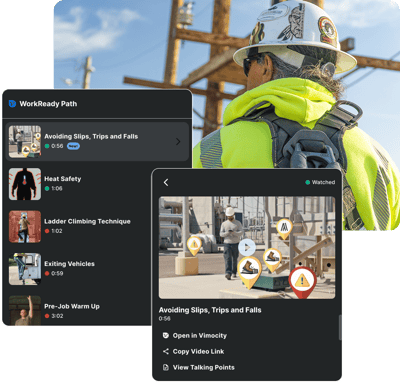
As a safety leader, you have more risks to cover than hours in the day. That's where Vamoski comes in. We give you one platform to scale your impact. Delivering expert curated safety campaigns on everything from slip, strips, and falls to heat stress and soft tissue prevention. You'll reach every crew through the channels they already use while gaining data insights to guide smarter prevention. With VMASi, you can boost awareness, prevent serious incidents, and keep your workforce ready for the job. Scan the QR code or visit vamasi.com to learn how leading utilities are cutting injuries by 50%.
Something that I hear quite frequently is this is the way that we've always done it or the previous leader that I had, this is how they led their crews. And so what you're saying is that if we study how humans think and how we communicate and it opens our mind to be more emotionally intelligent to you know the the people on our crew that alone can help us actually sus out where people fit on that continuum so that we can gear our communication and work style all that to to the individuals on the crew. Is that right kind of what you're saying there?
Right. The best leaders exercise constantly, this is something you can show empirically, something we call social distancing. It's the ability or social refocusing. There's a a million terms for it these days. What it is is the general idea is is common. And it's the ability to get out of your own experience and get into the experience of somebody else. In other words, not being so self-centered. It's the ability to socially desenter yourself, if you will, so that you can get inside someone else's experience.
That's something you can show a a group of researchers. I I read about this in the book Brain Rules for Work asked the They had anthropologists and sociologists. They had a whole group of historians cognitive neuroscientists all sitting around in a group asking a single question. You know what makes a good leader over history? What makes a good leader? Most of them are going to be looking at males because males have historically dominated. There's no reason for that except that it's just our our cultural history. But they found a couple of things. Thing number one, almost all when people get into a group, they almost always have a social hierarchy where there is an asymmetric distribution of power almost immediately. Kind of a Lord of the Flies thing. Although it doesn't have to be awful. It can be wonderful, but it is asymmetric and some people start making decisions and other people start to follow. That's one of the things that they found. The second thing is that they found the groups that work best together practic sometimes called prestige leadership. And prestige leadership is leading through motivation as opposed to leading through punishment. Leaders that could allow a motivating factor to be the reason why they were leading tended to make better work groups and tended to make better political geopolitical decisions, tended to make better cultures. I mean, like I said, this was expanded. It was quite a series of studies. The bottom line in all of them is that the the leaders themselves were very interested in other people's motivations to try to understand their world. So, they're socially decentering.
On the other hand, there are whole groups of leaders which are awful and they're sometimes called, they've got several names for them. The universally the good stuff is called the prestige leadership model. But the bad stuff is sometimes called the dominance theory. And here do here leadership is not lead is not exerted by coerc is not exerted by understanding someone's motivation but by coercion or by brute force. You will do it this way because if you don't do it this way I'm going to slap you. Where there's a punishment system. It turns out that that type of work group really sucks. People tend to start fighting each other. they tend not to work very well together. The orchids are almost immediately going to shrivel and the dandelions are going to go, I think we're going to kill this guy. But you can see that at all different places and universally Kevin in the prestige model, the good model, the model that's being led through understanding the motivation of the people around them. All of them have strong wait for it theory of mind. The ability to understand the in the intentions and motivations of another person, the ability to understand the rewards and punishments.
And let's add a bonus to this because if you really want the work group to work really well, you not only have the ability to peer inside someone else's psychological interior and understand those rewards and motivations, but you are kind with what you see. That produces feelings of psychological safety in the workg group. And all of a sudden, you turn a group of people into a team if everybody thinks they've got each other's backs. And that flows from the leader. So, if you are not only understanding what someone else is feeling, but are kind with what you see, you have a much better shot of making a frontline workforce that can just wreck through a a disaster and keep the team intact and competent.
Yeah, that's that's so fascinating. I mean, I remember playing sports growing up and I had two different football coaches over the course of my experience and one of them was just like motivated by shame, yelling, everything. And then there was another one that and and some people responded really well to that. He got those people to play incredibly well. For me, that wasn't my motivation. And then I had someone who was much more encouraging that, you know, saw mistakes and leaned into it and helped us improve. And so you can see how those different scenarios can definitely impact things.
If you are verbally aggressive to somebody, so you just yell at them, okay, if they're in a you just yell at them, and that's your normal management style. What happens to the brain of the person getting yelled at? The answer is amazing. The first thing that happens is their short-term memory collapses. You can measure this through what are called Raven's matrix tests and other tests that measure short-term memory. And if you really really want somebody to not be productive in the moment, go ahead and yell at them.
One of the reasons why has to do with what Beth Loftess calls weapons focus. Here's something that you can see. This is an awful story, but I I think it it would illustrate something important. One of the things that draw can drive law enforcement crazy after there's been an assault is that there's often an amnesia that's associated with the assault. There can be a retrograde or retrograde amnesia that's just forgetting the events on on either side. And that's a problem because you want to be able to identify the per you want to be able to, you know, get the time and the date and what happened, whatever. But the brain ain't doing that because especially if there's a weapon involved. This is why it's called weapons focus. the brain collapses down to a single thing. It collapses down to the source of the threat. So, for example, if there's a gun that's involved in this awful story I'm making, the where there's an assault. you might not remember the the perpetrator's hair color, you might not remember their weight or their height or even what they were wearing, but by God, if they've had a weapon, you'll remember the weapon. And if you're good at weapons, you'll say, "Yeah, it was a 9 millimeter and the safety was off, so I know this guy was mean in business and he cocked it at a 45 degree." You can go on and on even though you can't remember the person's name. We call that weapons focus because what the brain does is that it immediately gets into efficiency mode, looks for the source of the threat and either tries to neutralize it or get away from it. That's why the brain does that. Like I say, can drive law enforcement crazy.
But if you yell at somebody and there's no weapon involved, your weapon is now your mouth. Wow. Is weapon is now your attitude. the change in the amplitude of the wave coming out which is going to be the energy of the of the voice that's you're you're being yelled at you're being it's verbally aggressive and you're being yelled at the brain collapses Kevin it's does it's going to do the same retrograde antro amnesia it's not going to remember much but by god it will remember the mouth and it will remember what that mouth said and it will remember that it was a threat and that they felt either humiliated or they wanted to punch him if you're an orchid you want to you want to fire you you want to leave and if you're an and if you're dandelion, you're going to want to quit. It doesn't really matter. One of the things that's so important to understand about the brain, particularly in high stress situations, is that it is the world's best survival organ. And it is constantly looking for feelings of safety in order to be able to accomplish the things that it can do. If it doesn't feel safe, it actually collapses down to just a few priorities, which usually involve threat assessment, followed by a rapid solution, which usually involves leaving.
By the way, you know, we didn't do a lot of fighting in the plea scene back in our back in our cave people days. look at our endoskeleton. I mean, our soft flesh. We're pretty weak. We were the plea to seem's biggest chicken. We used to try to leave. And that's what people try to do when they get yelled at, when they then they feel like there's a weapon involved. One of the first things they want to do is get out of dodge. They don't want to improve themselves, which is what the boss may be trying to get at. what they want to do is that they want to escape the feeling. So there's, you know, you can say that bosses need to be softer. I would argue that that's probably the case, but that's actually missing the question or missing the point. The point is not to be softer or to be harder or to get people to be motivated or not motivated or whatever. The point is to instill as much psychological safety as you can on the people that you're leading in order that they may function at the highest level. And that's actually what bosses want.
That is such a great example of communication and how that impacts the brain. But I'm thinking back again going to dandelions and orchids. As a leader, what should I be thinking about when it comes to the motivations for each of those groups so that I can be more cognizant of how to reach each each group a little bit more effectively?
Sure. Well, I think probably the first thing is that you need to understand who you're working with. So you need to understand what an orchid and a dandelion is and you need to identify who's the orchid and who's the dandelion. That's the first thing. The second thing is that you need to understand that both have great value to your efforts. dandelions can't see nearly as much resolution as an as an orchid can. So you're actually getting a nice radar, a forward a forwardlooking view of the world by continually having orchids. But you have to realize that orchids come with some limitations just like dandelions do. So if you're asking me for a piece of advice, I would say populate your teams with both and make sure each un make sure that you understand that each can contribute of value. It's you're not awful because you're an emotional idiot. You might just be a dandelion. Fine. You're not you're not less of less value because you crumple if somebody rolls their eyes at you. It could be that you are an or from a genetics point of view, one of the things I say to audiences over and over again is because these things are hardwired into the temperament. Don't try to change them. If you think they're valuable, work with their strengths and be aware of their weaknesses and that that's okay that you as a boss have to do both.
And I would imagine that teams are probably lower performing if they're all orchids or they're all dandelions. And so the mix of both can really actually enhance the team and their effectiveness.
We survived our evolutionary history. I think because of that I think there are a number of those genetic I sometimes call them echoes of our of our pastime in the Serengeti and the and Gorggo crater. Maybe I could give a good example. ADHD. Shall we talk about ADHD for a second? Will we're going down another rabbit hole, Kev. That's okay. Well, there are there are genetic components to ADHD. There really are. If you've got a first-degree relative that's got ADHD, you're going to have a bunch of some of it, too. But it's a lower level of the population. The question was asked was why would that be selected for? Why would that be around? Well, here's the thing about people with ADHD. They're restless and they got to move all around and do all the things that people with ADHD do. But they're often very socially competent and have strong compensatory skills such that you can be undiagnosed with ADHD and not get a diagnosis clear into your adulthood, but by golly, you are a very successful adult. So there's a com. So those two very valuable things, the restlessness and social competency, if you're in a group of 150 people roaming around the Serengeti or the sides of the Enor crater for these as a hunter gatherer, they are very valuable to have somebody with ADHD. Why? They're restless. So, they can't stay with the group. They got to go out a kilometer. They got to come they got to go out for a while and they and you know what they do when that happens? That's like adding a forward radar apparatus to the group because they're restless. They're going to go out. Oh, there's the lions and oh, look, this is a water source and look here's where the food is. But because they're also socially competent, they can come right back to the group to the leader and say, "Hey, look, there's lions. get away over here and the leader will go, "Yeah, you know, you're right. They're there." So, they perform a very valuable service to a group. I would argue that orchids and dandelions are exactly the same way. You need both. You need the diversity of that of that idea in order for I think the most successful teams to exist over the long term. Over the short term, I don't know. But over the long term, that's been measured.
That's a great explanation. We're going to shift gears and and start to talk about brain rules. Dr. Medina, you're a developmental molecular biologist. I'd love it if you could describe what that means. You you've been at the University of Washington and are one of the most wellrespected prominent leaders in this space and also the author of brain rules. If you could expand on what your background is and then start to bring us down the the path of what brain rules is in the basis of that.
Sure. Well, as you said, I am a developmental molecular biologist and congratulations for saying those words. Not everybody can. It does not trip off the tongue. My research interests are the genetics of psychiatric disorders. But my main interest is I'm very interested in the distance between a gene and a behavior particularly when things grow go wrong. And I'm particularly interested in a very early part of gestation where there are a number of magic genetic processes that occur that if they get screwed up result in most of the psychiatric mental health disorders that we study. So, I've been deeply interested in that.
And what I saw, Kevin, is that I saw lots of mythologies occurring about how the brain how they how people thought the brain worked. Here's the word mythology. you only use 10% of your brain. You're using all parts of your brain all the time, not just I know where it comes from. 10% of the brain is involved in active neural cells and a lot of it scaffolding. The 90% of that is scaffolding. But even that scaffolding is smart scaffolding. So it's not like you're not using it. So but that's the thought. Another one is that there's a rightbrain personality and a leftbrain personality. And I would just shake my head looking at that thing and you know you need both hemispheres to make a freaking personality.
So I wrote the brain. Turns out Brain series became a New York Times bestseller, national bestsellers, all of them. And I thought well okay that's got that that'll work. And what I was mostly gratified and remain gratified with, Kevin, is that people really would like real stuff. At the end of the day, they get tired of the mythologies. I can't even imagine the AI smog that's coming over a great deal of our intellectual understandings. Yet still, regardless of how much dust there is, people still want and I was out to give them at least from a a professional brain scientist point of view, what we knew and what we don't know. And half of my lectures are center around the words well we don't know yet and we just have to leave it at that. So there that's the very long answer to your very good question. Sorry.
Well no and I I love that book. It's so practical and it's relatable whether you're you know at home at work our brain you know controls how we talk how we communicate how we respond in different scenarios. jumping into rule one is my favorite because I I have a background in exercise physiology and so I love that brain rule one is that exercise boosts brain performance and you know it just validates I think one of those things that a lot of us intuitively know that when we exercise we we feel better endorphins are released we're more alert. But can you expand on that?
Sure. You bet. One of the most stunning things, it actually starts coming from aging research because it was shown that some people were aging really well and some people were aging really poorly. And the answer to the question, was there an independent variable? There was, you bet. It was the presence or absence of a sedentary lifestyle. And if you if you lead a sedentary lifestyle, sedentary lifestyle is so dangerous, it's being called the new smoking.
So, and it was a perfect chapter for me to begin to write because I am not even close to being what you'd call fit. Yet, I walk three miles a day, six days a week. Have for a long, long time. And as a result of that, I have never felt clearer in my brain. But it's something that you can show at the behavioral, cellular, and molecular level that there's benefits everywhere. Everywhere. Let's go through a couple. Number one, if you exercise 150 minutes in a 7-day period, okay, moderate aerobic exercise, this is just walking too fast, just saying, so it's nothing. It's not what you'd even call a workout, you can change your executive function scores dramatically. And I do mean dramatic. It's some of the best behavioral deltas I've ever seen in this lit in in the in the behavioral literature. Executive function is the ability to get things done. That's the way I like to say, but it actually has two peers. It's involved in cognitive control, which means you have the ability to focus on one thing, then defocus, then refocus back again. There's a bunch of stuff in cognitive control. And also emotional self-regulation, which is impulse control. It's the ability to not punch somebody in the nose when you feel mad at them. Those are the two peers of executive function. And exercise works with both. So if you really want to get along better with people, if you really want to look at particularly changes in your executive function, for heaven's sakes, do moderate aerobic workouts on 150 minutes in a 7-day period. Necessary and sufficient. Hallelujah. Because I don't have any intention of becoming an Olympic athlete, but I also don't want to die. Yeah. Right now.
So when so when somebody says, "I just need to go for a walk to blow off some steam." Like that's I mean a true statement. That's fantastic.
Yeah, it totally is. You actually don't blow off steam when you work. But what it does is it decenters you because now your your body's got other things it has to do like maintain its balance which is no small trick for the brain. Vestibular activity when you're walking or running or up a hill, down a hill, whatnot, engages you. So it necessarily forces some energy away. So that's part of it.
But the second thing are the cells. exercise can change particular parts parts of the of the biochemistry in your cells. There's a region of the brain called the hippocampus. One of the things that exercise can do is that it can change the vascular density inside the hippocampus. By that I mean it can actually grow more blood vessels right into the hippocampus with more exercise. And why is that a big deal? It's a huge deal because blood is the thing that provides you energy and gets rid of all of your waste. And the more blood vessels you get into a given tissue, the more efficient it can become. So you can show this at the cellular level. The more you exercise, these are called angioenic uh uh uh uh motivators, I guess, would be a way to say it, but it's actually stimulation of blood vessels directly into an area. The hippocampus is extremely important because it's where you memorize things and it's also where you look at things for place value and and know where you are in any one particular case. So at the cellular level, 150 minutes of moderate aerobic activity seven days a week changes the interior cell structure of your brain.
Number three, now that's my thing. That's the molecules. This is where I live. And it's one of the most delightful and exciting stories that I think comes out of that literature. There's a a a protein in your brain called brain derived neurotrophic factor BDNF. We like some BDNF. You want BDNF. BDNF is like miracle grow for your brain. It does all kinds of really good things. Too many here to list simply to say that you would like to have more of it if you possibly could because then your brain's going to function better. particularly some of the anterior regions of the hippocampus. I mean, they would love to have more BDNF. How can you get more BDNF? Well, I'm glad you asked. Go get off your butt and go exercise 150 minutes of moderate aerobic activity in a 7-day period and you can get more PDNF. Like I say, you don't have to do all that much, but aerobic exercise in particular changes executive function scores. It changes the vascularization of areas of the brain. They're deeply involved in learning and memory and I would argue problem solving for a frontline worker. Absolutely. And then finally BDNF which is going to keep which is miracle gold which is going to keep the system up and running. So I led that with those facts in the chapter in the first chapter and that story Kevin has only gotten stronger as the years have gone by.
Fascinating. What about dementia Alzheimer risk associated with exercise? Is there a link to being able to reduce the risk of both of those conditions?
There is, but we have to be careful here to keep our grump factor high. Hopefully, I'm a nice guy, but I'm a pretty grumpy scientist. And that data to this day is strong. It is strong. I believe it. But notice how I just said that. I said, "I believe it. I don't know it. I believe it." Because we just have associative data right now. you can't do the experiments that would be necessary and sufficient to truly answer the question. So you can only say that the data are trending in a particular direction. One of the things that the exercise research has done is has been very valuable. It's to show that there are many types of Alzheimer's disease. So it would be better to say Alzheimer's diseasees. Most people go to the tow plaques and the amaloid plaques and the tow tangles and all and then that's that's for sure that's a real thing. But that's only one type. There are a number we're just beginning to uncover. It turns out that exercise reduces the probability of you succumbing to one of those dementias of every dementia that's ever been tested except one.
Well, 150 minutes of moderate activity per week. Is it the prescription for everyone? So just thinking again practically so a some guy who doesn't like to do it. I I was a wide receiver in high school football team. Now I'm just wide, but I still get out there and do 60, you know, 150 years of aerobic activities. I live till I did. I love it.
So, making it practical, we've got a crew that's driven an hour to a job site. They've been sitting in their vehicles. It's cold. They get out to do the work. Is there a benefit to doing a prejob warm-up to stimulate the brain to prepare for the work? Are they going to be safer if they're if they do that prejob warm-up?
Utterly, absolutely. Get as much blood into the system as possible as quickly as possible. You can reduce the amount of stress that you're feeling. I would argue that there is this literature is growing. It's not strong yet, but it's getting better. And it with emergency situations, just forget everything I just said, okay? But places where it's not where it's critical that you that you are safe but you don't have to rescue a down power line immediately. Okay. One of the things that I think is most important is to understand the power of John Katzen's mindfulness training. I'm going to use the word mindfulness and I do that with some hesitation and the reason why is that there's a mythology about it that's almost as strong as left brain right brain. You have to be really careful with this stuff because it's been a fad for a while. And that's sad because it has obscured some really terrific work that usually doesn't make it into the headlines. What I call, forgive me, Kevin, woo woo land. I think you know what I might be saying because the meditative practices that have been put forward by an 8-week course that John Katzen designed and that David Creswell he was at um I think it was at Pittsburgh maybe Carnegie Melon showed in the brain shows that if you can get your mindfulness practice first so you can center yourself for a while for a minute while after you're doing and maybe even while you're doing your warm-up exercises but just practice mindfulness that prepares s both the mind and the body to be the best that they can be. And one of the biggest things that mindfulness does is that it causes you to disengage from the moment for for a minute just for a minute to slow things down. You're not looking at your cell phone. You're not looking at each other. You're just focusing on well what the mindfulness training says to do. I practice this in my own life and I remember I have and maybe I can share an anecdote about this. Is that that be all right? the um one of the things that they'll ask you to do and I was first I just sucked at this at first. Oh my gosh. Look at a raisin. So I would look at a raisin and I go, "This is boring. Now I need to go back and do some brain science." But I looked at the raisin. Okay, John Cabbid Zen. He's he's a memeritus out of out of UMass. he's a real scientist and was an amazing guy actually the um so I looked at the raisin and saw all of the light and whatnot. Make a long story short, I learned how to focus on the raisin for about five or 10 minutes and then just go off and do my own thing.
Where I saw it began, it took eight weeks and it's a prescribed course if you really want to do this, but then you have it forever. So, it's like it's nothing to to do. I was driving to the my office over in the department of bio engineering at the medical school at the University of Washington and some undergraduate came and just cut me off and I almost got in a wreck with them and that happens fairly frequently over there because not they're not all great drivers and I you know in times past I would have just gotten angry Kevin I would have gotten mad maybe even just you know internally made some comment about their mother or something. I would instead you know what happened? I saw this picture of a raisin. I said I called right down, you know, and I thought and I said, "Man, this stuff really works." I'm not advocating that the frontline people get a bunch of raisins out, but the ability to have mindfulness in their behavioral toolkit is a benefit that has been shown to to to to make you a better parent, to make you a better spouse, and to make you a better worker.
So, I love that example. So, moving on to rule rules two through four, survival, attention, and multitasking. There's a I mean there's a lot there, but I would say that you know all three of those things directly relate to to frontline workers. I mean we're we're always in a position where our brain is trying to fight for survival. we're constantly distracted. So attention is is something that's you know always competitive. And then multitasking, I mean it's it's so common for us to try to save time by doing three things at once and then you realize that you're way less productive. So, do you mind talking about each of those?
Sure. Well, let's start with this the following principle. The brain can't multitask. So, stop trying. The brain can't multi if you define multitasking as the ability to attend to multiple stimuli at the same time. in what sometimes is called the spotlight, the brain can't do it. It'll look at one, then it'll look at another, and all you're doing is task switching between the two. If you're good at task switching, you know, it can look like you're multitasking, but you can't.
Now, having said that, it's important to understand to be grumpy about this because at another level, your brain is constantly multitasking. I'm talking to you, Kevin, but at the same time, my brain's looking down at my heart and my lungs and seeing what's going on and it's taking a look. There's signals coming up from my feet, propriceptive signals that are constantly telling me that, you know, my butt is in a chair right now and I should be exercising. Take your pick. So, that that's true multitasking. At the same time I'm attending to you, I'm also attending to those. But at the attentional spotlight, the thing that people think of when they think of I'm paying attention to something that could only do things one at a time. And that's something you can show empirically. So multitasking, don't do it. Can't do it. So don't try.
And so I would imagine phones are probably one of the the biggest things in today's culture that relate to multitasking. and difficult to even walk and text look at your phone dangerous like so how do people catch themselves multitasking so that they can say okay I got to stop I got to stay focused
Well, one of the first things we're going to do a a modified 12step here because one of the first things is that you have to realize that you have a problem those little texts that you get give you dopamine lollipops in tiny little increments and the algorithms are designed to give you dopamine little lollipops and they stimulate the regions of the brain. I call it the highway to hell. It's the vent the vententral mental area and the nucleus ccumbent. It's not very they're not very large. They're just about this big. You got two of them, one on either side. But they traffic in dopamine and they are the things that give you your addictions. And the behavioral addictions, if you have a problem with porn or with gambling, if you the alkoid addictions, cocaine, alcohol, they're addict and let's add it to to the mix, cell phones, because it does. And the algorithms, as we know, are are designed to give you that dopamine lollipop to keep you and to keep you addicted to it. You have to treat it like you would treat any 12step program because you're addicted to it. Most people are addicted to it. And the first thing you have to do is recognize that you got a problem.
One of our other guests on the work area podcast is Dr. Jim Bowen. He's a sports psychologist and he reminded us that, you know, coaches get a certain number of timeouts in a game so that they can slow down the momentum. They can just adjust the flow of the game, but there's often times situations where you're working in a, you know, high stakes environment. You've got stress and you've got distraction from weather or, you know, the public who are watching. There are all those things and what he talked about is you know you have a timeout you can take a time out and reenter. Why is just continuing to work where there's stress and distraction combined? How does that increase the risk of error and you know stepping back may be a good strategy to just say okay we need to refocus reenter get the stress down so that we can avoid an accident.
Sure. well that research has been done. You can show that if you give uh uh line workers a break every two hours or so and give them a a good solid break that changes the accident rate if it goes down and then they come back to it what but you have to punctuate it continuously. Why does that work? Well, probably for a couple reasons. Number one, your brain is active and when you're on a job and it's threat, you're in full active mode. So, you're exhausting the supply of energy. Bioenergetically, stress is very depleting. You just if you've been stressed for a while, you just get tired. I can't imagine what it's like to be a forward air control officer in the in a in a tower in in a modern tower. You need breaks. You need a lot of them because you have to be able to resupply the energy. But not just breaks. It's important that you do something in that break. And that is a complete awayness if you will from the stimulus. So you don't look at your phone and see if the boss gave you a text on your break. you take a break.
That's that's great advice, especially in today's world because you take a break and then you get on your phone and you get on social media and then you just watch all these inflammatory posts or you read the news and there's no break to the stress I think for a lot of people. So, you know, obviously there are steps of going to mindfulness instead of the film, but what does chronic stress do to the brain? What does it do to performance?
Well, there are behavioral, cellular, and molecular components. Shall we go through all three briefly? Let's let's do it. One of the first things that it does with with when you're in let's make sure that we're we're defining ourselves well out of control. You it's the stress where you feel out of control where something is coming at you and you don't know that there's much you can do on a sustained level behaviorally. you begin to in incorporate lots of memories of feeling out of control. A war zone is a really good example. One of the reasons why we think PTSD when you get a memory form a memory it is it is incorporated into the cellular structure of the brain for a period of time. But the nerves the circuits that hold that memory also have another circuit on them which we call the forgetting circuit. No kidding. Because after you've had the memory for a period of time, your brain says you know you got other things to do. Why don't we just destroy this memory? Okay, you forget about this memory. At least deactivate the circuit for a period of time because you got other things to do. And that's a normal part of the human experience. That's why you forget 90% of everything you just had within an hour of having a of having had a lecture, which is depressing for me as a professor, but I know darn well that 90% of everything I gave them, they're going to forget because of those darn forgetting neurons. They're supposed to be active and well.
When you get stressed, it is becoming clear, one of the things that elevated hormone levels do is that they destroy the forgetting cell function. So, you can't forget it now and instead you loop onto it over and over again. So, the first question you can ask about chronic stress, chronic stress is destroying your ability to forget. And if it's if it's if it's if it's an extraordinary situation like you would see in a war zone or you would see it if you've been assaulted if there's been a criminal activity exerted over you you're going to remember parts of that. So that's the behavioral part and that's very debilitating. It even intrudes into your memory at night so that it's going to replay itself over and it's it's almost as if it's broken and it is. Okay. So that's the behavioral.
At the cellular level, you can actually destroy certain neurons. With elevated levels of cortisol and elevated levels of stress hormones in general, you can actually change the ability of the brain to function because some of the neurons are beginning no longer to work. You know, our stress response was built to solve problems that lasted less than three minutes. You know, the saber-tooth tiger either ate you or you ran away, but it's not going to sit there for a decade and think about it. In modern society, you could have a saber-tooth tiger that is at your door for a decade. If you had a bad marriage, if you're in a bad job, if you're in a if you had a series of horrible situations that occur to you at the cellular level, you begin to see brain damage. So, there is things that begin to occur. We weren't built, the system was not designed to solve stress in long-term chunks. It was designed to solve short-term situations. So, when you drive it, when you force it to exist in a stressed environment that lasts for, I don't know, a day, a year, a decade, you've permanently hobbled it. And that's something you could actually show. And then finally, at the molecular level, there's lots of you're you're deregulating the the stress hormones that would normally your cortisol is supposed to be high in the morning, low in the evening, but if you're permanently stressed, that stuff just stays.
Are there things like meditation, cognitive behavioral therapy that can help change that pattern so that something that maybe structurally is changed in the brain can rewire, reprogram so that people can work through that?
Yeah, what a great question because that's actually mindfulness-based cognitive behavior therapy actually is a thing and it's the single most powerful way to de-stress anybody. The reason why not to bang on the door of mindfulness now with another thing that we have introduced cognitive behavioral therapy which is the ability to understand that thoughts are just thoughts and they are just thoughts and that feelings can can be generated from those thoughts but you know if the thoughts go away the feelings stand too. There's a lot of training that can go into that. But if somebody that's in a mindfulness-based cognitive behavior therapy program, you can actually show it's one of the very few behavioral interventions that do this. When you're stressed, you have a choice of one or two giant stress reactions you can make. One of them is the stimulated by the hypothalammus, the pituitary gland and the adrenal gland called the HPA axis hypothalamic pituitary adrenals. the the star hormone of that system is cortisol, which we've talked about. And so when you activate that, you activate the cortisol. That's not the only stress system that's available to you. And some people don't lead with the HBA. Some lead with the SAM, the sympathetic adrenal medularary system, whose star hormone is not cortisol, it's epinephrine, except or if you're in the UK, adrenaline. But it's the same thing. But you can lead with adrenaline or you can lead with cortisol, which means that if you've got either medications or certain therapies that only get after one or the other, you you're leaving half of the stress system still intact. Mindfulness-based CBT is one of the very few behavioral interventions that can hit both of them equally, which is why I think it's probably so powerful. It easily has the best numbers of anything out in the literature for being able to control stress in the in the in the chronic way that we often experience it.
Two other therapies that I've become aware of recently are Vegas nerve stimulation and then stellate ganglam blockers to help people with PTSD and to overcome some of that chronic stress. what any thoughts on either of those two treatments?
I'd say the the jury is still out. I'd add a third one to it. There's also MDMA, oddly enough. MDMA targets specifically the forgetting cells. The and so there's probably that. But all of that, I would argue, is still in the not ready for prime time stage. Better to stay with ones that are powerfully subscribed and have been known for years and replicated sometimes dozens of times in laboratories because the the um experience is too serious.
Yeah. So rule number six, sleep is not optional. And I would say that that's probably one of the the biggest struggles that frontline workers experience. I mean, you're working a storm. It could be 18 hour days for, you know, two weeks straight. We're in the middle of storm firm right now and I know people for sure are working those type of hours. So, how do you manage sleep in those type of situations and what are the impacts of chronic sleep deprivation or maybe just daytoday just not getting enough sleep?
Sure. Well, let's tackle the sleep schedules first and then go into the damage that it that it does. One force in your body is it's called the circadian arousal system. If we're awake right now, Kevin, talking to each other, it's because our CAS is active. But you have another sleeping bear. You and I both do. the whole human family does. That's also in there called the HSD, homeostatic sleep drive. Its job description is to try and tell the CAS to shut up so you can go to sleep. These are in opposition to each other. The CAS is going to wake up is going to keep you awake in the morning. But the HSD as you progress through the day, the homeostatic sleep drive, the one that's trying to make you go to sleep, starts to raise its ugly little head and says, "I think maybe you know you're going to want to go to sleep when the sun goes down because there's a lot of nocturnal predators out there and you're going to be lunch if you're not asleep." So, they war with each other for a while. There's only one place where they're active equally and that is at about 3:00 in the afternoon. They're the opponent. The homistanic sleep drive and the circadian arousalis system are equally opposed. They're like this. And it's at that point that the brain can get so exhausted by this struggle that it asks you to do something. It says, "Will you please take a nap so I can figure this out and get the system reset to get you ready for bed?" Yeah. 3:00 or so. I can tell you how to calculate it. This is the rough calculation. It's uh what you need to take a nap at that point. The nap needs to be about 26 minutes in length. You don't even have to really go to sleep. You just have to disengage. Here's how you calculate it. The nap zone when you need to take a nap is 12 hours past the midpoint of your previous night's sleep. So if you went to bed at midnight and you got up at 6 a.m. The midpoint is 3:00 a.m. Wind that out 12 hours. That's 3 p.m. Boom. Take your nap right there. Now there's a confounder to these data but one of the things I'm going to suggest immediately is that everybody that especially if you've got huge problems that need to be solved and you can have this luxury everybody needs to be taking a nap as soon as you can at that time because if you don't you if if you don't you will struggle the entire afternoon with it because the brain is constantly saying hey you need to take a nap you idiot take a nap take and you just get sleepier and sleepier and sleepier because that also takes energy for your brain to call itself an idiot. But it's trying to wrestle with a biological force that is actually beyond culture's ability to change it. You either ignore it or you see to it, but you're not going to change. You need to take it out.
Okay. But there is a confounder. And this is where it gets to what might be very important for teams to understand about frontline particularly. It's another one of those orchid dandelion things, but in a different way. There are people in the population about one in five 20% of the population that if they had their brothers would wake up every morning at 6:30 in the morning if they could disengage in life. That's when they would wake up naturally. No alarm clock, nothing. And they would go to bed at 9:30 at night. 9:30 at night. How about that? if they could disengage. They report that their most productive, most active, enriched times are in the morning. call you would call they probably call themselves morning people and if we measure them they're right for the most part they're accelerating up to the peak. The peak is at noon when they're when they're really kicking in. We call them early chrono types early or sometimes called larks. U that's rewired and set at birth. We think we know some of the genes that are involved in it but you can't change it no more than you could change your eye color. Another one of those orchid dandelion things.
And they are the sworn enemy, Kevin, of another 20% of the population. Because if that other 20%, if they had their brothers and could disengage from life and do anything they wanted, would not go to bed until 3:00 in the morning and would not wake up until 11, 11:30 the next day, they report that their most productive, lively cognitive times are at night when everybody else has gone to bed. And if we measure them, by golly, they're right. just like their early brothers were right. We call them late chronotypes or owls and they once again could no more change their sleep schedule than they could change their eye color. I'm convinced because we live in a more or less an early chronoype business world that and school world for that matter too. Those late prototype kids, you could see them, man. Sometimes I can just look pick them out in a in in a in an assembly. They've had a sleep debt their entire career and they're maybe maybe they're a C student as a result of that, but when they get to college finally they can start taking night classes on their own and all of a sudden they can get their schedule. All of a sudden their gradepoint sores and you know everybody else would like to call them late bloomers but the neuroscientists in the room would simply say no you're finally being chronotypically congruent with what the genes were telling you.
So that's a confounder to the NAP thing, but it's important to understand that frontline workers should probably know who are the late and early chronotypes in their in their group just like they should know about the orchids and the dandelions. U unlike orchids and dandelions, which you can actually do in certain cases a genetic test for, you can just ask somebody. They know that they're night people. They know that they're morning people. And you want to have a proper balance between all of those. To answer your question practically from a brain science perspective, I don't know why we don't screen everybody who's extraordinar whose job is extraordinarily important to our survival and put the late chronotypes with the late and the early chronotypes with the early. Yeah.
Yeah. And you know, societyy's not at all organized in that way, but I would imagine we'd be safer and more productive as a society if we did start to screen people and adjust work schedules to to meet those people where they're at. I mean, would you agree? Because well one of the things you can show is that sleep deprivation really does hurt productivity. And the weird thing in the laboratory and this has also been tested because it was so common is that if you keep people up for a period of time so sleep deprivation exper and you ask them how they're doing if say that you give them a calculus test before when they're when they're active and and healthy and whatnot. Now you're going to keep them up for 24 hours and give them the same test. Before you give them the test you ask them well how do you think you're going to do sport? and invariably they'll say we'll do just fine. Nobody gets it that their cognitive when they when they see that their scores are in the toilet, which is what they are. The 24-hour sleep deprivation allnighters do not work the over the long term than actually the short term too. There is a self-d delusion there that is so big that people tend to ignore it. And I think that's a huge problem. That's why people need to really understand how powerfully how deeply sleep affects cognition. It affects cognition in virtually every way you can measure it. Whether you're looking at memory, whether you're looking at problem solving, whether you're looking at connectivity issues, executive function, impulse control, one of the things that's so interesting about sleep deprivation is that people get pissed. They get angry when they don't get enough sleep. We even think we know why, Kevin. Because social interactions keep people awake a lot. If you want to get go to sleep, become so obnoxious that nobody wants to interact with you socially. And then your brain says, "Gotcha. Now we can go to sleep. And I think that's what that's what you see. So pay attention to the moodiness that comes from sleep deprivation. And for heaven's sakes, get on a sleep schedule and stay there for the rest of your life.
But someone who is sleepd deprived and is running like heavy machinery, what are what are the risks associated with that? Previous guests on the show have talked about how certain level of sleep sleep deprivation is equivalent almost to it like being drunk. Correct. Can you expand on that?
Sure. Well, one of the things you can show there's two things you can divide human intelligence into roughly two large categories. This this passes the grum factor but it's just barely but there one is called fluid intelligence which is the ability to be to be creative. The other is called cementive intelligence. Sometimes it's the ability to memorize something via it's the ability to create a database. You need to have both of those to work heavy equipment.
You need to have both of those to be able to do almost anything in life. What you can show is that sleep deprivation kills off fluid intelligence and it kills off your ability to memorize things. Both sets are moving. And the reason why is that the brain the brain is so bioenergetically active even when it gets up that it is constantly building up crap all day long in the brain. There are waste products in the brain. They're they're free excess electrons. They're just sitting playing around in the brain waiting to ping itself into a molecule and create what are called free radicals which are just nuts. They're can even be cancer-causing. The the bottom line is that the brain really needs to sleep because it needs to be able to flush out all of those all of those nasty unpaired electrons and and get something. And the brain knows this which is why it's trying to do it. So I I tell most everybody I can think of. I've talked about this a lot because I I used to teach in a medical school where we would talk about it's fact the fact that it's insane to have a resident on call for 72 hours straight that after after the first 24 hours I wouldn't trust them with my life. Are you kidding me? And yet that's what routinely happens. So even the people who actually know this of Kevin they don't do anything about it. And if you're asking me the question why is that? Well that's a mystery much greater than brain rules can ever solve. We just know what the data say.
As you're talking about two taking those short naps, I prescribed naps for sure, but I always think of like George Castanza, you know, having his bed underneath his desk, taking a nap in the middle of the afternoon. Like most frontline workers can't do that. But you did say one key thing that I want to hone in on is that even if you're just disengaging, so it may be you're waiting for some equipment to arrive and you have 10 or 15 minutes and you're in your truck, you know, shutting your eyes and just not looking at a screen. Is there a benefit in that when it comes to just renewing that cognitive function?
Absolutely. When you can start to take a break the instant you start to do something other than what you were doing by that I mean get disengaging from the stress it's not important to disengage and then go to another stress it's important to disengage from the stress that's key because you it's just changing the activity is is not is not sufficient to get the benefit you actually have to get away from it you have to disengage from the stress then you can come back to it I'd also argue a second thing I gave a lecture this last summer to a group of first responders when talking specifically about um the uh uh some of the floods and the hurricanes that came in North Carolina and other places that were around.
One of the things we ended up talking about, this was after I gave because I lectured on stress and age and generational stuff the um I told them uh do you guys have any mental health PTSD clinics in your construction shop? And they said no. And I started and then I asked the question,"Well, why not?" And here's the reason why. Those first responders often have to go in with the first responders medical team, the construction people, because they have to go in with the medical teams to clear out the stuff to show where the wires so that the medical personnel can get into the people that are trapped. But guess what? Because that's their job in the front. They see all the icky stuff that a doctor sees or that an EMT sees. And Kevin, they have absolutely no training for how to get off of that, for how to deal with that once they're finished. They can move the logs out of the way and they're going to reveal the bodies or reveal the broken house or take your pick. It's going to be stressful. It's going to be awful. They're going to they're going to experience everything that a physician would or that an EMT might without any of the training.
I so appreciate that perspective. And you and I shared or had this discussion of just the incredibly high rates of suicide in construction and utilities and I think it's for that very reason.
Well, let's talk about rules 7 through nine. So, memory, sensory load, and learning and maybe where we can focus this part of the conversation because it's critical there. There are points during the workday where you know we do safety training and we're trying to articulate some really important messages or maybe you're doing a toolbox talk or a prejob brief. What are some of the reasons from a brain rolls perspective why traditional mechanisms for delivering safety content or delivering these toolbox talks it doesn't stick and you know maybe we check the box but it doesn't stick.
The first thing that we have to understand is that the brain processes meaning before it processes detail. The brain processes the meaning of a particular thing before it processes the detail. Not the other way around. What I mean by meaning is this. The when a when a piece of information comes into the brain, the brain immediately interrogates it with what I like to call the big six questions. Number one, will it eat me? Number two, because its job is also takes a lot of energy. Number two, can I eat it? doesn't give me an energy supply. As every Super Bowl commercial that has melting cheese is going to show you, we pay a lot of attention to if we can eat it. Number three and number four are the the whole reasons why from a Darwinian perspective, we were built to project our genes to the next generation. So, the fourth, third, and fourth questions, forgive me if this sounds a bit inappropriate, but it's just simply procreation. Can I have sex with it? Will it have sex with me? And questions number five and six to me are the most interesting because there's no a priority. It just tells you something about how we learn. and it's have I seen it before? Have I never seen it before? Turns out we're just terrific pattern matchers. And if we think we've seen something before, we'll go, "Ha, I think I've seen this before." And if for a a real good example, let's stay with Super Bowl commercials, if you will. A celebrity will come on and will just be the celebrity, but their eyeballs are right to it because they've seen them before. You have in lecture 9 minutes and 59 seconds of delivering your content before you have to stop and answer one of those six questions. In fact, I would argue that you should start with one of those six questions because the brain processes meaning before it processes detail. So what I tell most audiences is that depending upon your the age of your audience, be very careful to pay attention to the fact of continually addressing meaning. If you don't do the meaning first before the detail, you're going to lose your audience.
So if I'm a foreman or if I'm a safety leader and I'm giving a safety message to a crew, probably my most effective strategy is to take the information and say, "What's the why here? What is what is the big picture thing that I'm trying to get across and what is a story that I can relate this concept to to those people so that they internalize it and they pay attention to the message.
If it's traffic safety, show a wreck. There's lots of videos about it. Show wreck and and show the wreck and then say this is the reason why I'm talking to you.
Fascinating. Such a such a great shift in how we communicate. And I think we always have to pay attention to how are people learning, how are people communicating, especially in the social media world.
So rules 10 through 12 focus on vision, aging, and cognitive longevity. And we've dove into this a little bit at the very start, but I think it's good to also think about like you might have a generation or two between workers on the same crew. I mean, you may have a 20-year-old and a 60-year-old on the same same crew. So, how do you think about adjusting the communication style and adjusting the workflow and and all that from a cognitive perspective so that both groups are actively engaged?
Well, the first thing to say is that multi-generational teams work better than just about any other team that exists. And one of the reasons why comes from the fact of the aging people themselves You know the if you if you're with a bunch of old farts, they've been around the block, they've seen a lot of icky stuff happen. They tend to be more cautious as a result and not always wise in that caution. Sometimes wise, sometimes not. But they have institutional knowledge I guess would be the way and they've seen they know how the world works at least they the way the world worked for them and so they can bring that knowledge which I consider to be quite valuable and also subject to amendment because you got the young kids who don't have that experience at all and as a result are constantly asking questions like well what if you know why and why not questions that the old farts may not have asked for a long long time but that that in that structural tension actually when it's done when everybody's civil to each other and they're not digging each other for their alternate experience changes in their experience actually makes extraordinarily productive teams. So the first thing I want to say before we start talking about how to how to work with that is to say it's extremely valuable. You should have old people that know their way around whatever you should have a bunch of new people with the new technology that know the way around that and make sure that they don't ding each other simply because their knowledge base is different.
So okay now the second thing it's for sure that their ability to learn things is going to be different for sure but that could be a wonderful teaching moment if the old people are willing to say to the young people well how would you learn this better and if the young people would be willing to say to the old people well how did you learn that back in the day what can we extract that might be positive from both senses and come together to an agreement agreement about how it is that we are going to embibe information and allow that to be an ongoing discussion. If it's done with kindness, better to say if it's done with conscientiousness, where there isn't a lot of judgment simply because somebody's older or somebody's younger, I think really good things can happen. But when there is a a mutual respect, you respect the younger people for their energy and you respect the older people for their wisdom. Man, you don't get better than that.
That's great. So, we've got to pay attention to orchids, dandelions, young, old, and if we all just communicate and talk better, too, while we're at it. I mean, we're going to cover the whole thing.
We can change it all, Kevin. We should. Most of these things were never designed with the brain in mind. And yet, we've known about some of this. We've known about prototypes for decades. Yeah. We still haven't done anything about it. Yeah.
Well, Dr. Medina, this has just been a fantastic conversation. Are there any final thoughts that you'd like to leave our guests with?
Maybe two things. The first one is the world of the brain sciences is an amazing powerful tool and we're beginning to know more and more about just the stuff that we've talked about for these last these last many minutes are valuable. But number two, be careful with the mythologies. If there was not the AI smog that I'm seeing now, and I would also argue the social media smog, I wouldn't have had to say this before because I live for curiosity. I love I haven't had a boring day in 40 years of doing this. And I still can't believe I get to do it. The I get paid to do it. How about that? The strong sense of it though is that you as long as you are very very careful with what you know and how you interpret data you can see a great powerful world that's out there and is definitely worth looking at. So have two intention be extraordinarily curious and be very careful with what you believe.
Dr. Medina I absolutely love your energy your perspective on this topic. thank you so much for translating these complex neuroscience concepts into something that actually protects people in the real world and relating it back to the frontline workers. what I will say is that your work reinforces a powerful truth that most the most advanced afety systems on any job site is the human brain. And I think that's so important that we remember that that if we can tap into people and and help them think clearly that's that's going to be huge from a safety perspective. And, when we understand that, we make better decisions, we're safer, and we can extend people's careers. So, thank you so much.
Well, if this conversation changed how you think about safety performance, we're going to continue this conversation inside the Vimocity WorkReady community. We're going to break down key brain rules from today's episode and translate them into practical job ready insights around focus, fatigue, decision-making, and long-term readiness. If you're an industrial athlete or someone responsible for keeping people safe, this community was built for you. A membership is completely free. So, you can check the show notes for how to join that.
And if you haven't already, please subscribe to the Work Ready podcast. It just helps us continue to get these messages out there. And again, Dr. Medina was so grateful for your time.
So, until next time, remember, you are worth investing in. Work hard, take care of your people, and stay work ready.
Discover how Vimocity can help keep your crews WorkReady.
One comprehensive platform to help safety and operational leaders prevent more injuries and incidents.