
.png?width=20&height=24&name=Vector%20(15).png) For Leaders
For Leaders For Workers
.png?width=24&height=23&name=Vector%20(16).png) Partners
Partners
Stop Getting Passed Over: The 7 Behaviors That Actually Get You Promoted
WorkReady Podcast Episode 25
-
Speakers
Jon Harrison | The VIP Way
Dr. Kevin Rindal | Vimocity
Resources-
The 9 Expectations of a VIP Way Leader/Employee
-
Upcoming VIP Training Events
-
The Jon Harrison Podcast
-
-
View The Transcript
If you've ever wondered why some people get promoted while others get stuck, it's not a question of personality. Success is a learnable skill.
You will blow your supervisor's mind if you went, Hey, I just wanna make sure I'm doing the right things for our customers. What are some things I could do more of or less of that would help in that vein?Because see, that's back to self-awareness and I want to grow. I want to get better.
Jon Harrison spent decades leading teams inside Caterpillar. He used that experience to create the VIP Way, a framework for defining expectations, developing people, and building cultures where accountability actually works.
And by the end of this conversation, you'll know exactly what they are. So if we think of ourselves, regardless of what level we are as the CEO of ourself, then all those titles and stuff that, that the world would give us doesn't really matter. This is the WorkReady podcast.
Let's just jump straight in and start with something that a lot of people feel, but don't always know how to articulate, which is why so many workers are disengaged. When you walk into a workplace where people are disengaged, what do you see? So what I would see, even walking into those facilities that the Gallup numbers say two outta three people disengaged.
The biggest chunk of that are people that I would call toes on the line. They're not, you know, they're not toxic using that kind of term. They're just hanging out doing the bare minimum. And I think that can come from all kinds of reasons. I think. People would think, well, maybe they, their pay and benefits aren't what they expect.
I think that's a very minor reason. I think usually it's, uh, they're not being challenged or probably number one, they are seeing a lack of accountability. So did they come into the organization disengaged? Probably not. You would hope not. You hope they came in excited. But what they have seen over time is why is that person able to behave that way and nothing gets done about it?
Why is that person not being held accountable to timeliness, quality of their work, whatever. So I think they drift and I think they drift down to this bare minimum mentality. Uh, that's what I saw the most everywhere I went, that it was just a reflection of the entire culture. We would think when, if that machine breaks down, that really irritates people.
If the weather's bad. People can get through that. It's that daily, why are we not, uh, being held to these high standards that we talked about in the interview? And so at some point that your best people are gonna leave or they're, they're gonna go, well, I kind of like working here, so I'll just drift to that toes on the line status.
And we've been talking about disengagement for like decades. Why do you think we haven't solved this yet? I mean, I know that people like you're are talking about this, but why does it continue to be such an issue? You know, Kevin, I think in my opinion, it's one of those people think we don't have time. I always think of culture just like safety.
I know you spend a lot of your life talking about safety. Safety is not a one-time event. You, you could come speak to a group and we go, good, we're we're done for the year. We had a great speaker. Come talk to us. No, we can have a safety, you know, contest. We, all these things that companies do, we know.
Every organization knows really, safety is a everyday thing. I think culture, we think, well, let's just have an event. Let's make hamburgers and hotdogs for the employees today. Uh, let's have a great speaker come in and that'll do it. And so I think it's that. I think, or probably in the clients that you and I work with a lot, industrial con, you know, construction, utilities, it can seem warm and fuzzy and we have to get work done.
So why would we be talking about this culture stuff, uh, engagement? Well, to me it's the, it's the glue to everything that happens in the company. So I think for a lot of times it's, we don't have time. We got too many pressing matters. But you wouldn't do that with safety, which is interesting. You wouldn't say, we're so busy today, let's not be safe.
Let's not talk about safety at our huddle in the morning. But culture, to me, it just gets, it can get ignored because of the reasons I just gave. And how does a company's culture get established? Yeah, it's funny because there, it's there whether you like it or not, right. And, um, I think it's, it's usually driven by upper management at some point, and that can be great, but it's generally what's allowed.
So if we allow, uh, poor behavior, poor performance, pretty soon, it's, I always think about it's like a garden that has a couple weeds in it. Well, when we see a couple weeds, we go, we need to get those out of there, but we ignore it for a week or a month. The weeds have taken over the garden. And I think it's just these, again, little things that happen throughout the days and the weeks that now have become embedded like weeds.
And, you know, some of the people listening to this, they may be new to a crew, new to a company, and they feel like, well, I'm not in a leadership role so I can't influence the culture, but what can each person listening to this conversation do to an influence on the culture at their company? So you mentioned VIP way.
So what is that? So when I was at Caterpillar, I wanted people driven by three things. I wanted them driven by values. Now, companies have often have a set of core values, teamwork, integrity, respect, but individuals should have them as well, in my opinion. And that can come from their faith, it could come from their family, but hopefully there's individuals saying, I want to be a great team player.
I want to be show high integrity, et cetera. So I wanted people driven by behaviors. That's the VI wanted people driven by information. Basically. They are curious, they wanna learn, the company needs to train them. It's not education, it's information. And then the P is passion. And I always use a water bottle to talk about passion.
And this will get right to your question. If you think of passion like water in a bottle. So you come to work and let's say it's gonna be a great day, you feel it. You know, things happen throughout the day. It could be a safety incident that now drains a lot of passion from people's bottles, especially the person that got hurt.
It could be whether, it could be a supervisor that's, you know, belittling people. It could be parts not available to, to build a Caterpillar machine. Anything going at home on at home is gonna drain this too. Just an argument with your significant other. A child that's sick, parents are, are dying, going through a divorce.
So I always like to think of passion, almost like water in a bottle. So when you talk about individuals, certainly supervisors, managers can either put water in people's bottles or take it out. But let's just say I'm a new employee. You and I are on the shop floor together and you've been there for 10 years.
I've been there for 10 days and I go, Hey Kevin, do you guys think, can you help me with this? And you go, Hey dude, nobody help me when I started here. Figure it out. I go, okay, note to self, uh, we'll, we'll talk about this later. Being approachable, Kevin's not real approachable and you probably just drained a little water outta my bottle, so to speak.
And I think sometimes to your point, we can easily think, well, that's not my job. It's not my job to create culture around here, or, you know, change the culture. That's human resources or the vice president or the manager. But every single interaction is part of the culture. So yes, I think probably the, the staff and hourly frontline people have a bigger impact on culture than the vice president.
If, if I was gonna put some money down on it. That's a great example. 'cause I think the scenario that you just described, everyone's been there before and they recognize, you know, what that feels like to have water drained from your bottle. It's easy to identify the situations that drain the water. I think it's a whole nother thing to, to be able to spot that, to identify it in other team members and say, okay, I want to be a water bottle filler now.
Yes. And that, that was kind of the whole point of your seven characteristics of a star. Um, you have your flagship, um, nine expectations of the VIP way, which I'd love to get into that so that we can share a little bit more about that, that next level. But seven characteristics of a star. It just was so practical.
And again, it seems like a really great way to identify areas to fill other people's water bottles in, uh, those seven characteristics. Can you maybe give us a, a quick lead in, and then we're gonna break down each one of the, the characteristics of a star. Sure. So when I talk about a star employee, I think sometimes people could think superstar.
And I'm saying to me a star is someone that is living up to expect to behavioral expectations and performance. Both. So if I interview you to come work at a Caterpillar factory, Kevin, and I'm gonna say now if you come work for us, will you be here every morning ready to work at 7:00 AM What are you gonna say in the interview?
Absolutely. Okay. Awesome. Will you wear your safety, your PPE every minute of the day? 'cause that's a requirement every minute of the day. Okay. I love it. Uh, and you're going to be, uh, open to change. Hundred percent. A hundred percent. Okay. Love it. And you're gonna be respectful and all coach. So my point is a star.
I think if anybody that's listening to this owned their own company, I, you could be a. Four person landscaping crew. You want people to behave well and perform well. That's what I call a star. And so I've had people over the years say, so looking back, what, what do you think are those characteristics that make people star employees?
And you know, what's amazing about the, as we start to go through these, you don't need a master's degree or a PhD or have 20 years experience or be 60 years old. Uh, these are just common behaviors that I think maybe they're not being taught at home. Like we, it used to be. I don't know, maybe they're not taught in school maybe.
And I, what I see people getting frustrated with this, oh, these, these high maintenance people. And when you think of the phrase high maintenance. You may have people in your family that are high maintenance. Well, it's, it's usually their behavior, right? It's not their technical skills, so to speak. So what I tried to do was just, I just came up with seven.
There could be 17, but I just thought of, what are these things? As I looked back on employees that were so, uh, easy to deal with stars using my term, what, what behaviors were they? And so that's, I think that the seven that I'm talking about it, this could be something that an organization just uses for new hire orientation or actually interviewing, like asking questions about these.
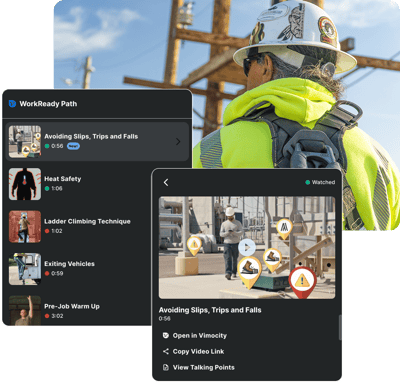
'cause I, I feel like if people could nail these behaviors, we're all gonna have bad days now and then, but this would make, this would've a lot more water to keep us bottles. Animosity is more than trade. It's a safety and readiness platform, trusted by companies to keep their field professionals strong, healthy, and ready for the job.
Now we're launching something new. The Work-Ready community. It's the first online community built exclusively for field employees. A place to connect, learn, and lead the future of our industry. Join us and be part of the movement.
Before we jump in, yeah, let's differentiate behaviors and characteristics versus traits and why it's so important. Because again, I, I see behaviors and characteristics as things that we can develop on our own versus traits. Some people think this person either has it or they don't. And you mentioned the word personality before, right?
So, so I can be an introverted person and maybe that is my personality. It's an in inborn trait, so to speak. But I can still be, I can still be resilient and I can still be respectful and I can still be approachable. Someone that is life of the party, you go, wow, that person talks to everybody on the, on the, on the job site.
Fun. Fun. Okay. Well, that, that could be inward. But even taking that trait, someone that is life of the party could come across disrespectful sometime. They could tell the joke that's not appropriate, they could. So yeah, I think it is that regardless of what you feel your, your inborn personality or traits are, I think these are things that could be learned and practiced.
And, and back to this thing about people just getting frustrated, I, I think. All human beings go, why are these parents not teaching these kids? Blah, blah, blah. What? Like, we were Now I also think it's funny, I do a whole thing on generational, uh, differences in my training and, and I wrote this whole curriculum, not because I'm a genius.
Like I said, I just kind of saw and, and made a lot of mistakes along the way. I think we just get frustrated that people aren't like us. Like, why, why aren't these 20 year olds raised like we were, the, the, the 60 year olds. Why aren't schools doing this? Why does social media do that? And so what I'm trying to say is, let's, instead of getting mad, let's, let's teach people kind of what behaviors we're looking for on a daily basis.
And I think most people can, can learn and adapt, like you said. Let's jump into characteristic number one, which is resilience. And maybe before we jump in, can you give us just a real world definition of, of resilience and how this applies to somebody, um, on the job. I, I think real world term. And, and it's funny 'cause when I do trainings, I'll ask the audience, what's resilience mean to you?
And you know, usually it means get, get up, dust up dust, dust yourself off and get back at it. It's to, to not get, um, spiral down when these adversity events happen in our lives, which again, could be family could be at work, but they, they could just keep on going. And it doesn't mean they don't have human emotions and human sadness, but it's really, they keep going.
And it sounds pretty simple, but, but it's, it's critical to parenting, it's critical to marriage and it's critical to the workplace. What are some of the other components or ways that you would describe resilience as it relates to work and, uh, outside of work? I think a big part of it is realizing if we really stop for a second, that we have been resilient.
We've gotten through things and, and I don't care if you're 20 or you're 60, we go, yeah, I remember back, well, it could have been a year ago or 30 years ago. I thought this was the worst possible thing and I wasn't ever gonna get through it. And I did. And I think sometimes we just need to stop and remember that I think, I really think God designed us to be much more resilient than we think we are.
And, and so I think it's remembering the things you've been through in the past, but if you're going through something right now, to, to put it all in perspective, and again, this can sound a little cheesy, but you know, the sun's gonna shine tomorrow and their life's going to go on and, and what I see a lot of people do is they, in their brain, they start thinking the worst case.
Well, I don't know the numbers on this, Kevin, but the worst case happens very, very, very rarely. So we convince ourselves that we're not gonna get around this. Uh, it's gonna be awful. And I think we just have to train our brains. Just like you talk about, you know, training our bodies. We've gotta train our brains to go, no, we're gonna get through this.
And if you talk to 80-year-old people, they can talk about this forever. 'cause they've go, oh my gosh, that, that's such a minor thing, you know? But even our, we have three grown daughters, two of which are, uh, all three are married, but two of them have children. And you know this Kevin, that when the, when their kids are one years old, they go, oh, are we ever gonna be outta diapers?
Are we ever gonna be able to sleep through the night? And of course, at 60, I go, yes, you will absolutely be, be through all that stuff. And you won. Like, I can't even remember those days, basically when my grown children were in diapers. And it's just, you know, it's a little bit of that like. Remembering the past, but, but changing your brain about the future and what is a exercise somebody can do because again, we're inundated if we watch social media or the news, it's just like there's constant doom and gloom happening all around us, and so it feels like there's a constant war for our mind to actually have that resilience component.
So what would be like a practical exercise somebody could go through to even think back to a time where they did go through a hard time and it a demonstration of resilience in their own life so that it's a reason to believe that they have that skill to be able to overcome and they can take on this, this next challenge and actually be able to get through it.
I think part of that is we, when you start to feel another doom and gloom moment to separate from that, when we wake up in the morning, I'm not talking about serious illnesses, but colds or flus. Generally what people will do in the morning is go really of all weeks now I have a cold and I, I have to go to this and I have to do this meeting.
And I, and what we should say, the other 360 days that most of us are healthy is go, I'm healthy today. I'm thankful for that. And, but like you said, even, you know, okay, I'm dealing with a difficult thing right now, but I know I'm going to get through this. And it's, it, it sounds silly, but you're, you have to do self-talk and get away from either media or possibly there's people chirping in your ear at work that are gonna tell you everything's terrible and you are, we're never gonna get through this.
And, and, and I think that's important not to isolate yourself from people like that. 'cause maybe you can be a positive influence on their life, but to filter that stuff, we, we, we've got voices in our heads now that I did not have when I was 20 years old. A practice that I started, I don't know, probably 10 years ago, is I have a journal and I just write down three things I'm grateful for every day, and that's the first thing I do every morning.
Uh, the research is pretty compelling 'cause you do start to rewire your brain towards a positive outlook, towards, you know, being thankful. And then when you, when you encounter those, uh, times where it presses against your resilience, uh, it, it gives you that edge, I think, because you can see the other side of it and you remember back to how you got through those tougher times before.
Yeah, it's, it sounds simple, but it, we've, we really do have to retrain our mind, like you said. So characteristic number two is civility. And, you know, he, he think about civility and especially in a macho culture. I mean, it sounds pretty soft to, to say that civility is, is something that we want to embrace.
Can you first of all give us a definition of civility in the context of work and life, and then why that actually is a performance advantage? Yeah. To me, si being civil with people is the first word that comes to mind is being respectful and kind and listening more than talking. And some of that how you react.
And again, you're right in the, in the, in the industrial world, so to speak, you can go, oh yeah, so we, so we can't hold people accountable and we have to be everybody, you know, be soft and fuzzy. No, I think unfortunately back to social media, what we see, most of the little videos we see are people not being sued.
It's the person at the restaurant that throws the, you know, stool at the cashier 'cause they're mad or they, you know, knock all the, you know, napkins on the floor. Uh, it's, it's traffic, it's road rage. It's so, to me, I feel like people that are civil at work get heard more. That's all. Yes, it looks more passion filled if I cuss and scream and yell.
But I, and we'll talk about this later, but I, I think when they're, if you can reach out to people in a civil manner, especially today, it, it's gonna look so unique and so different. So as a supervisor, I did have to work on, I was probably because I had a heart for people, I wasn't holding people accountable as well as I should.
I was never, I would say uncivil to people. So there's a balance. I didn't want to yell and scream. So I thought our, can we have a culture in the workplace work? Kevin knows exactly what you need to do every day, and if there's something that's not going well, I'm gonna correct you in a respectful, civil way.
I don't have to come down on you, so to speak. And so I do think it's, um, it, it is countercultural today to be civil and I, we can disagree and be civil, but you don't see a lot of shows on, on television or podcasts like that. Like, you know, we, we could do a podcast, Kevin, where you and I just yell at each other for a half hour.
Like, we disagree. And this happens with sports shows all the time. I feel like, like two, two people that say, you know, I, I hate this guy's the greatest of all time. No, I don't think he is. And they argue for a half hour. And unfortunately that gets ratings. But I'd rather listen to, hopefully you and I chatting and doing that in a civil manner and getting people to think and not have all this, uh, shrapnel around us, so to speak.
And you said that you came up with this, uh, framework, uh, from real world experience in, you know, your 25 years at at Caterpillar. Can you give us a, a real world example of where you saw civility positively impact a culture and that stuck out in your mind to say this is definitely a core characteristic that people should have?
Yeah, and, and frankly, what I saw, especially in the factories, and I started off in the, in the office side and then went to the factory for most of my career, obviously I saw the opposite a lot. So public belittlement of somebody, and I remember my stomach hurting, just, just hearing. I wasn't even the one getting yelled at, but just being around it.
But then there was a, uh, there was a supervisor in a factory that I saw who I saw him literally pulling people aside and, and, and almost. Like a coach, uh, talking to them privately, volume was down and I, I, I like the phrase lean in. I, like, I saw employees almost lean into this person. Uh, where per, back to personality types that you mentioned, if you are a bold type, a kind of personality, I could yell and scream at you, and you, you're probably fine.
Like you can handle it and you go on with your life. But people are so different that I saw that, that overbearing type of, uh, approach ruin people. And it's interesting because I, I went to college at Indiana and Bobby Knight was our basketball coach, and he was known for a lot of that stuff. But I also saw players that just crumbled under that approach.
So he held people to high standards. I just don't think he, he. He adjusted. And so it doesn't mean civil, doesn't mean, again, soft or weak or I don't hold people accountable. I might need to be a little bit more forceful with this employee than, than this other employee. But what I saw in this individual, I was, I'd be on the shop floor and I would see people just wanted to bust through a brick wall for this person because he did hold them to high standards.
But he didn't embarrass 'em, he didn't belittle, he didn't showboat, so to speak, in front of everyone else. And that's again, back to the toes on the line we mentioned or the disengaged people. At some point people go, I'm just gonna fly under the radar here. I'm gonna do the bare minimum. 'cause the last thing I wanna do is get publicly embarrassed.
And I've yet to find an employee by the way that said, Hey, uh, Kevin, if I come to work for you, just so you know, I love to be. Look, I, I like to be made to look stupid and be publicly embarrassed. So if you could do that for me, I will be motivated. Now, can some people handle that better than those? Yes. But I have yet to find an employee that that's, that's the key to their success.
It's interesting that you say that, 'cause it, it almost, going back to the opening of this makes you wonder if a lack of civility may be one of the underlying causes of the lack of engaged, uh, employee and the lack of engagement. Like that just seems like such a huge part of that whole equation. I think it does because even if you are doing the right things, you're thinking, I don't wanna get on the wrong side of that person.
And so now back to water bottle, I'm now walking on eggshells. I, it's that kind of stuff that is pretty hard for accountants to quantify. That is really, that's waste. It's a waste of time. It's a waste of effort. We know in a factory, if we scrap, if I'm putting a final drive on a Caterpillar machine and we ruin it, well, I know how much that final drive component costs.
I can, accountant can say, we just scrapped $8,000, whatever. It's, but this stuff that you just talked about, Kevin, where I'm, I don't, I don't wanna say this and I'm afraid, and these emotions, my gosh, that, that's, that's more than the final drive component, I promise you. Well, characteristic number three is gratitude.
And we briefly touched on it, but maybe give us a little bit more perspective on the importance of gratitude and maybe even some personal experiences that where you saw that as a just non-negotiable trait when it comes to building, uh, star teams, star employees. Yeah, and I think gratitude, again, it can, we always go extreme in our society and we think, oh, like.
Everything's perfect in your life? Is that No, no, no, no. That's not what I'm saying. Uh, it was funny. I, I had a woman in my session and she said, uh, yeah, we hired this new guy, and when you see him in the morning, he says that you go, how are you? And he goes, happy to be up. And she was almost like, uh, irritated by that.
And I went, you seem irritated by that. And we, we had a good rapport, so we were kidding around. She said, yeah, I, I don't think he actually means that. And I said, well, maybe he says that just to keep water in his mouth. But you know what? It's also possible he's gone through some health things in his life and he is literally happy to be alive.
I, I think it is a little bit of training of the mind, but I, I think sometimes. Again, we can easily have one thing spiral us down for the day. Why me? Why, why did I get stopped for speeding? 'cause the guy going, you know, he was going 20 miles an hour, just, uh, two minutes ago. They didn't stop that guy. And, and yet I would say, but I was speeding.
I was going 10 over. And it says speed limit, not speed, suggestion. So instead of getting mad that I got caught, you know what you could say, I speed a lot in my life and I've only gotten about three tickets in my entire life. I probably could have 300 tickets and lose my license. So I do think it's, it's things like that where our, our human nature says, I'm being wronged.
I'm, this is unfair. And I'm not saying, by the way, any employee anywhere should deal with harassment of any kind. Racial, sexual, anything like that? No leader, no employee should be taught or told to do something unethical or unsafe. I'm not saying just suck it up. That's not what I'm saying. But these things that happen throughout the day, traffic backing up, the fact that, you know, I have to stay af after work for another couple hours because this thing went wrong today.
I think to, to catch that early where we say, but in the whole scheme of things, I'm healthy. I've got a family, hopefully, uh, you know, I, I have a job. I'm paying my bills. I, and I think especially in America, we probably can be, we can miss it, right? Because we are. With all the problems that America has. We, we are generally pretty well off in terms of the world, and I think sometimes we just need some perspectives like that.
And it's, it's funny, even like, uh, when our power goes out, well really, I can't believe, you know, my power goes out for three hours and I'm like, people would go, so you're, you're upset about that, right? So you have power 99% of your life and you have hot water coming out of your faucets. So again, I think we can say, yeah, you're just being rainbows and unicorns.
No, I, I think it gratitude goes a long way to keeping water in your own bottle and it's contagious. It just makes other people think a little bit that maybe this isn't, I shouldn't be as frustrated right now as I, as my humanness wants me to be. And, you know, gratitude sometimes, like you said, unicorns and rainbows, like sometimes you can express gratitude in a way that people get annoyed and they're like, this person can't be that happy.
And it almost does the opposite thing seems fake. Yeah, yeah, exactly. So what are some things that people can practically do if, if they're in an environment where it's just tough? I mean, maybe the civility issue is, uh, you know, an issue on their, on their crew. What can they do to demonstrate gratitude in a way that's subtle but consistent so that it maybe starts to, you know, put more water in other people's water bottles rather than, um, you know, get perceived the wrong way.
And I think part of this is regardless of what level you are in a company, but if I'm on a crew in a, in a factory, on a job site. If the supervisor shares some bad news or we have to work Saturday or whatever, like I, I would kind of pay attention to other people. Some people they're going, yep, this is life.
And you know, they, they move, move forward. But someone else, you can almost get a sense that they are really frustrated about that or sad. I don't think there's anything wrong being a crew member and going, Hey Kevin, what is one-on-one? Of course. What, what's going on? You seem really frustrated. Well, Saturday's my kid's birthday and this was gonna happen or that, or my, you know, my mom's in a nursing home.
And I, I think some of it is just reaching out to people and going, Hey, I, man, I get it. And who knows? Possibly you could say, well, if it's your kid's birthday, I don't, maybe you're new, you, you can talk to the supervisor about that. Maybe, maybe he can make an accommodation for it. Like. I, I feel like more than ever, that's all people need sometimes is, but, but I think you don't have to be an HR person or a supervisor to notice how people are feeling.
And again, back to safety, of course, in any environment, if I see you doing something unsafe, I don't go, well, I'll just wait for the safety person to come deal with Kevin. I'll wait for the supervisor. Every company I know of says, no, John Harrison, you're supposed to go help Kevin. Be safe right now. And I think for some of this, it's those one-on-one conversations is probably where you can get people to be a little bit more, show a little more gratitude.
And if they are going through something just that, like that person. By the way, if I go, Hey Kevin, I know this is really tough. I remember when I had to miss my kid's part. I don't know, maybe they're, now I'm just showing gratitude for having a coworker like you. Because we do spend 40, 50, 60, 70 hours with the these people.
And maybe part of gratitude is, yeah, my job can suck sometimes, but I've got people around me that I know I can rely on. And if you're one of those people that, that can help people through stuff like that, gratitude jumps up pretty big. I think absolutely. Characteristic number four is flexibility. And I like this one because I would say that most often things don't go as we plan it.
And so it can really create disharmony for people when, uh, you know, things don't go as we plan, and then they have to exercise that flexibility. So why is flexibility such an important trait? Well, and, and again, you'll see these seven can all start to overlap somewhat because flexibility is part of resilience.
I'm, I'm gonna get through this, but I'll tell you. I just mentioned earlier that I've yet to find an employee that says I like to be publicly embarrassed and made to feel stupid. I've also found a a hundred percent truth about employees. Generally. They like to make more money, generally. Like if I want, Kevin, here's more money.
Most employees will take it. Now you and I know this, not because we're so smart, but in any organization to make more money, what do you usually have to take on? More of, more responsibility or more hours? Yes, and responsibility. You, yes. You gave one subset of that. If most organizations, if you go, I wanna make more money, someone's gonna say, well, Kevin, then you'll need to take on more responsibility.
It could be ours, it could be a crew. It could be, if you're a salesperson, a bigger territory, it could be three projects instead of one, whatever. So if you take on more responsibility. In work or becoming a parent or whatever, guess what? You gotta be flexible because things happen and we joke, Jen and I joke about this, my wife, people read parenting books and they go, got it.
And then they have the baby and they go, oh, this wasn't in the book. And, and so we gotta roll with the punches. And I think flexibility is so important because first of all, I think you'll have more water in your bottle if each little change that happens doesn't drain your bottle. But if I'm thinking I need a supervisor for this crew, and man, Kevin is so flexible, like when the weather hits or we change priorities for the day, he doesn't, he doesn't crumble.
He doesn't say, he doesn't cuss and scream about the change. He is flexible. If, if I'm gonna promote somebody to take, to take on more responsibility, I need somebody that can roll with the punches. And I, I think a lot of times I didn't realize this when I was a staff level person or hourly person. I don't think we realize that these, how we behave throughout the day is really the biggest part of what's gonna happen in our career.
You can be the best technical person in the world, but if you are not flexible and you can't, you can't adjust. Literally, I'm gonna think, I, I really don't wanna put Kevin in a supervisor job, so to speak, because he does not adjust well. And man, you gotta adjust all the time in that role. Or like we said, just being a parent.
You can read a book and, but if you can't adjust as a parent. Which we all have struggled with being parents. So that's why I think it's such a critical piece because, and, and one thing that ties into all seven of these that I haven't said yet, I used to try to teach our people, pretend there is a customer attached to your belt loop all day long.
A paying customer or a potential customer, because a customer wants you to be flexible. A customer doesn't say, you know, well, it's starting to rain, so I guess we'll just, you know, shut down for the day. Or this, this part on this machine just broke. I guess we'll just sit around the customer's going, I need you to be flexible.
I need you to figure out a solution to this. I, I think we forget a lot that there is a paying customer that's really our boss, if you think about it. And if so, I, I think mentally I try to have our people realize if a customer was walking around with you all day, what, what comes out of your mouth? I think the customer would want you to be civil.
We just talked about that. I think the customer would like you to be grateful because I think your performance would be better if your brain was in a better position. But I, a customer would certainly wants you to be flexible. If, if, if my garbage doesn't get picked up today and I call and they said, well that's 'cause you know, the truck broke down.
And I would say, well, I'm just curious. Do you have other trucks? Yeah, but you know, that would've been a, we would've had to made a phone call to that other truck. And I mean, at some point as a customer go, well that's silly. Like, I understand trucks break down, but I would assume you've gotta a plan B.
Right? You, you can be flexible. So I just don't think when we're in the heat of the moment, which most of our hours at work, we're thinking about these behaviors and, but yet we all wanna make more money. And maybe that's potentially a reason why you're not gonna be considered because you, you're not flexible.
Okay, John, a little Kevin, self help here. So I, I'm very flexible and that's kind of how I've always rolled, but I tend to not have a high tolerance for inflexibility, especially when I'm working with other people. And so then I'll just be like, if you're not gonna be flexible, I'm gonna just do this on my own.
Uh, how do I improve as a leader to work with other people and help them become more flexible rather than just saying, all right, just get outta the way and I'm gonna take over. Yeah. And it, and I was similar to that. I, I think because we, most people get into supervision, let's say, because they have gotten things done.
And so at some point that transition, and you mentioned our other trainings, we do with, we have nine expectations of what it means to be a leader. I, I think it's, we people get promoted. Generally because of their technical skills, and all of a sudden now they have people reporting to them. Well, that's a whole different job.
And to your point, a, an employee, if I say, I need you to change or do this, and if they put up a fuss, then if you say, fine, you know, forget it. I'll just do it myself. I hate to tell you this, but some employees will go, man, that was easy. You, you just put up a fuss or you, you complain a little bit. And because Kevin has such high level of responsibility, he's just gonna go do it.
And I was guilty of that too. And, and I think the point is maybe not in that heat of the moment, but maybe it's after that moment to say, now can we go talk about that? Here's why, uh, flexibility is so important because it is time and money. It is the customer paying for it. And so when you, when you say no to that.
I want you to understand what would a customer say. Now, the other thing I would say, Kevin, sometimes people will say no to things, but there's really more going on. Hey, I need you and Joe to cross train today to learn. And you go, no, I, I'm not doing that. 'cause you know, I'm not paid to do that. And I go, okay, okay Kevin, I'll pick somebody else.
But maybe you don't wanna cross-train possibly 'cause you're afraid of looking stupid because you're really good at your job. And if you go learn this new job, you might not look like the expert today. So this is where one-on-ones are so critical, because I could say, now Kevin, I asked you to be flexible today, and you kind of, you know, pushed against that.
Pushed back. Why? What's going on? Well, I just think it's stupid. Why? And see, I'm telling you supervisors, especially in the worlds that you work in and I work in, they're thinking, I don't have time for conversations like that. Um, I think you do because I'd rather spend 20 minutes talking to you about that or maybe an hour and have this fixed.
It's, it's preventative maintenance. We, we don't wanna fix machinery all day long. We shut down machinery so it runs longer. You talk about our bottles, you have to do preventative maintenance on your body, but we eat movement, sleep, so we don't have a catastrophic event. So I think a lot of these things we're talking about, Kevin, someone not being flexible.
Yes, you have the right, right, then you gotta get it done. I'm gonna go do it. But I would want you to circle back and talk through that with the person. So it, so they walk away with a different perspective. And maybe they do say, well, Kevin, I'm afraid to do that stuff when you're around because you're so good at it.
I don't wanna look stupid if I make a, I don't know if they'll say that, but the only way you're gonna find that out is one on. John, I appreciate you saying that too, because it does take extra time. But you, when you get to that deeper level, uh, then you can start to, to understand it. And it goes back to, I, I think it was Mother Teresa said, fir seek first to understand and then to be understood.
Maybe I'm wrong on, on the source of that quote, but I think I, I think that I like it. The, the sentiment there though is that you understand somebody's perspective and then you can help them. And the, what's great is that that leads us straight into characteristic number five, which is discernment. And there's a quote that you provided in your, uh, handout that said, uh, from Robert Green that said, pay less attention to the words that people say and greater attention to the look in their eye.
Their tone of voice and their body language. And it is interesting when, when you start to encounter the resistance with flexibility, all those three things tend to be present. And then it's a clue that maybe there's something deeper going on here that you need to dig into. So could you share a little bit more about what discernment is and how to leverage that, um, when you're leading other people of, of course.
And I would say this again, both sides, right? If you're a staff, hourly person, um, discernment to me is, I, I like to use Read the Room. 'cause that's a phrase you'll hear in our society, that person doesn't read the room. So, and that could be, by the way, that could be your aunt at Christmas, you know, that comes in and tells, you know, she's talking about something that she shouldn't be talking about at the, at the Christmas dinner table or whatever, and you go, oh my gosh.
She doesn't read the room. And, and, and I think discernment, it's, it's a, it sounds like a complicated word, but it's really. Saying, what's the vibe right here? And so to your point, as a supervisor, now Kevin has generally been a good employee, but he's, he's not wanting to cross train, he's not being flexible.
I, I gotta dig into it. I've gotta discern that there's probably more going on here than I, and maybe you say something like this. Well, the last company I worked at, they asked me to cross train and they told me that would lead to, you know, some more money and I never got the money. Okay. Well, I wouldn't know that.
I'm not saying that's the right thought process on in your mind, but I need to talk about that. I need to, supervisors need to feel the vibe and, and I just said this a minute ago, many supervisors, if I said, Hey Kevin, we've got a supervisor job. It's $15,000 more a year and you get a company truck, what would a lot of people say to that?
Absolutely. Game on. I like money and trucks and I'll do it. So. We, I created nine expectations of a leader. One of which like is holding people accountable. One is knowing your people. One is communicate with excellence. 'cause I wanna be honest with people and go, Hey Kevin, we're not even gonna talk about how much a supervisor makes right now.
We're not even gonna talk about a company vehicle. Are you interested and willing to have the conversations like you and I just talked about, or, well, not really. Uh, do you, do you wanna get to know people? No, I wanna say my way or the highway. Do you wanna, um, do you really wanna be a champion of health, wellness, and safety?
Do you, do you wanna act, actually have conversations with people about their stress or their burnout? No. Now that doesn't mean you're a bad person, but I go, well I just wanna be honest with you 'cause that's what. I believe a VIP way supervisor does. If they go, I just kind of wanted the money in the truck or in an office setting, I wanted the office with the window and the money.
That'd be like saying, now what, what's your goal in being a parent? I just wanna have awesome days and have 'em love me and I'll love them. And while birthday parties and we'll go, okay, great. But there's gonna be all kinds of other stuff. And, and so I think the point is for, for discernment, a supervisor has to have those eyes and ears to go.
Something doesn't seem right right now. And again, think about in a vehicle, if a vehicle starts to make a noise, that generally, that's not gonna just get better by itself. So you go. I gotta go check in. Why is that? That could be a bearing, that could be a break. Break pad. That could be a, and I think it's the same thing, right?
Like reading the room now for, from an hourly staff person, let's say we're having kind of a serious huddle in the morning about safety. There was an injury the day before. Probably not the right time to go, Hey, I just thought of a great joke. So, you know, or something like that where you, or you're maybe, uh, everyone is kind of joking around and say, Hey, you know, I, I just, my dog just died last night.
I don't know. Like, there's times, right? Time and place reading the room. I think that's what discernment is, is just knowing, even if I'm frustrated with something at work, I probably aren't, I'm not gonna say this at the safety huddle. I'm gonna catch my supervisor one-on-one and not, because here's the thing, if I make a sarcastic comment in the morning.
I just might have taken two inches out of 10 people's water bottle like that. And the key, of course, and we'll get to this as we wrap up, I know the key is if people go home with little to no water in their bottles, bad stuff happens at home. And I don't think there's an employee, I haven't met an employee that wants to really hurt people's marriages or their, their physical health or their relationship with their children, or, but I promise you, not reading the room was gonna do that.
Characteristic number six is very closely related. So we have discernment number five and number six is self-awareness. And I love this quote that you provided by Lawrence. Uh, bossy. Yes, butchered the name here. But self-awareness gives you the capacity to learn from your mistakes as well as your successes.
And it, it enables you to keep growing. And so. Again, discernment is reading the room. Self-awareness is learning from mistakes in that openness. Can you expand on that? Yeah. This is one of, you know, I try to have simple phrases like we just said, read the room. Self-awareness is look in the mirror. Like, is it possible I am coming across in a way, right?
Blind spots. You people may have heard that term. Is it possible when I say this to my wife or I say this to a young person on my crew that, uh, I'm coming across like a jerk, uh, or whatever it is. And, and I think to me, successful people, and when I say success, I'm, I'm not talking about promotions and money.
I'm talking about are you a person that puts water in people's bottles? That's a pretty successful life if you were remembered that way. They do basically self-inventory and they're gonna have to think, I need to. I need to watch what I say and how I come across. And sometimes people aren't self-aware.
And if, if you, this is why I know your people is one of my leadership, uh, things I teach. If you and I have a relationship and I'm your supervisor, Kevin, I can say, Hey Kevin, can we chat for a minute? So, at our safety huddle this morning, when you kind of said, man, you know, everything sucks at this company.
Uh, I wanna talk about that because I don't think you realize, first of all what that did to your teammates. But I wanna know, I want you to see how that's making you people see you. I don't think you're aware that you, you make a lot of sarcastic comments or you tell some jokes that I promise you, uh, don't need to be, you know, it's gonna impact a mixed audience, whatever.
So I think it's, yeah, discernment might be what's the vibe around me? Self-awareness is like, I need to check. Um. It'll be one of the, I think, something I'm gonna say at the end. But one thing Jen and I do as a married couple, we do self checks a lot. I go, is there anything I could be doing more of or less of as your husband?
And most of the time there's, there's nothing major, but I think there's something just to say, I, I wanna make sure I'm, I'm living up to the expectations of this marriage. Same if I worked for you, Kevin. I go, is there anything I can be doing more of or less of that would lead to the success of your organization or this organization or our customers or whatever.
So again, I, I, you see again on social media, we are very good at pointing out everyone else's flaws. And that can be a, we can do that with politics, with celebrities, with athletes. But I always like note I'd be careful. Because if your entire life was on video or what are, are you, are you really looking at yourself too?
And it's just something that probably, again, you don't need, you don't need to be a certain age or a certain level in the company or have a certain, uh, academic status in your life to be self-aware. You're just going, I, I really need to take a step back. Where that overlaps with discernment is I am frustrated right now.
That's self-awareness. I am frustrated right now. The discernment is, and I'm not gonna share that at the safety huddle this morning. 'cause it'll feel good for two seconds if I say it, but I just drained a bunch of bottles. Absolutely. And what role does coachability play into that? You know, some people may have self-awareness and good EQ, so to speak, but when somebody tries to, to help coach them, they immediately get defensive and it just counteracts everything that, you know, would probably help them improve in that situation.
It's so critical, Kevin, because here's what I would say, coachability just means I'm gonna be open to it. The word embrace is great. I'm gonna embrace change. That doesn't mean every change is gonna be great, but if, if you tell me we're gonna try a new way of doing X today, I'm gonna go, I'm gonna embrace that.
Uh, if it doesn't work, fine. Coachability is exactly the same thing. If you go, Hey, if you're my boss and you go, Hey John, I just wanna tell you something, I, I feel like. You know, when you say blah, blah, blah, it's hurting the team, first of all. And I do this in my session sometimes I don't, I don't have to agree with that.
I don't. You're absolutely right. Like I, I'm not good at that. Thank you for telling that. I don't have to say that, but I can be respectful and I can say, I appreciate you saying that. And you know what I need to do then is go think about it. That's, to me, a big part of coachability is my, I'm gonna embrace the comment now if you say you blankety blank stupid more on, okay, well that's why I have, I want leaders and employees trained on the same things.
'cause a supervisor, you're not gonna, if I'm your supervisor and I give you feet coaching like that, of course you're not gonna take it well. But I think it's important that we don't make quick judgements on that. And, and so yeah, really you're talking to me about that. Why don't you ever talk to Bill about his.
That's not what a mature star employee is gonna do. I'm gonna go, Kevin, I appreciate the feedback. Thank you for that. You go, thank you. Why would I say thank you? Because I think you'd care about me if you give me feedback. I tell employees the worst possible thing would be to get no feedback because that almost sounds like you're so meaningless here.
I don't care what you do. So I think coachability really is a matter of, again, taking a step back. And by the way, you know what I would do if you gave me some coaching like that, I would come home to Jen and I go, Hey, I'm just gonna share something Kevin said that I can come across kind of, uh, you know, kind of a jerk sometimes when I talk.
And she might say, yeah, I, I've seen that too. Like it's just taking time. And I promise you someone that handles constructive criticism well that's the person you're gonna think about promoting at some point. 'cause guess what, when you're a supervisor, gonna get C criticized all the time. And, uh, characteristic number seven is being approachable, which is right in line with this.
It's, it's that you're putting off the, the vibe, the aura that, um, people can approach you with a coachable moment or they can come to you, uh, with hard news and they know you're not gonna blow up or not be, you know, teased or something like that. So why is being approachable so important to leading teams?
Well, and again, this is what I would say goes all through the organization. We mentioned a minute ago when, when I was pretending that we were peers and I go, Hey, can you help me with this? And you went, Hey, you know, no one helped me. Well, guess what, I, I'm pretty sure you're unapproachable. So this goes back to the customer on the belt too.
Um, if I'm a supervisor, what, what are some reasons If I'm a supervisor. Employees are going to approach me throughout the day. What are some things that they're gonna want from me, Kevin? They're gonna want instructions on a job that we're about ready to do. They're gonna want to know how to problem solve a situation.
If it's, it's not going the way that it's been planned. Yes. Yeah. They, they're gonna, they might come to me and say, I need some time off 'cause my child is sick. They might come to me and say, I have an idea on how I think we can, you know, improve our efficiency or productivity or safety. Basically, if I'm a customer, I want all supervisors to be approachable because I'm the one paying for all this.
And if Kevin's got a great idea, but he, I have put out, uh, this image of being unapproachable for the last two years, Kevin's not gonna tell me my idea. If Kevin needs help on a project, doesn't come to me. 'cause I'm unapproachable. Now, by the way, we could be unapproachable for all different reasons. It could be.
We're just rude. It could be we're too busy. I'm nice, but I'm always on my phone. I'm running a hundred miles an hour. And Kevin goes, I like working for John. John's a nice person, but I can't approach him 'cause he has no time for me. Um, pride is a roadblock to being approachable. You come to me and go, John, I've got a, a question.
I go, you don't know how to do that. I can't believe you don't know how to do that. 'cause I knew how to do that because I'm as amazing. And when I had your job, I was amazing and I've gotten promoted and I'm amazing and I'm being silly. But you go, I don't want to hear how awesome you think you are all the time.
So I do a whole thing about roadblocks to being approachable because ultimately the customer needs supervisors to be approachable. But we all need to be approachable because I just gave you an example. I, I need some help and you. You just shut that down in two seconds. It's funny, when I'm with groups like staff and hourly people, they'll go, yeah, our supervisors need to be approachable.
And I go, you're right. And guess who else needs to be approachable? You too. And by the way, this is completely translates to home because I know there's people listening to this podcast today that would say, my father wasn't approachable, or my mother wasn't approachable. Or I couldn't, I couldn't even share anything with the person because they were either too busy or they were prideful.
Or they were demeaning or So I think approach, there's a reason the approachable is number seven. 'cause I feel like it kind of takes all of them into place. If you are seen as an approachable person, you're gonna be filling bottles. And I think a customer would say, that's the kind of person we want to be a supervisor.
Now, approachable doesn't mean we turn our heads to poor behavior performance, but if I am approachable, and back to what you just said a minute ago about coaching. If I've been an approachable supervisor and I give you a little coaching, I bet you're gonna take that better than if I barely ever talk to you.
And you know, the one time I do talk to you, I go, you're, you know, that was stupid. That was a dumb mistake you made today. Don't ever do that again. I bet you're not gonna take that the right way. So it, it is, I feel like it's a cornerstone of life to be an approachable human being. Tension that I oftentimes hear in the workplace is that.
The most technically skilled people oftentimes are also motivated. They're trying to, you know, grow in their career. They're trying to move up the ladder in the organization, but there's not a lot to develop that person as a leader. So they may be great technically, um, but from like a personnel standpoint and managing people, they just don't have that training.
What is, what are some steps, and this is an incredible framework. What are some steps that people can take if they have that self-awareness and they're like, man, I'm, I'm really good at my job, but I definitely could use some improvement from a, a leadership standpoint. What are, what are some of the first steps that people can take to grow these different characteristics that we just talked about?
And here's the great thing today, right? And I mean, obviously there's formal training like I do and others do, but. There's a million YouTube channels on if you looked up like, you know, super how to be a great supervisor or reading books or, I think part of it is if you just have a thirst for it, then I think you'll find places.
But, but here's what I would say. I've used Michael Jordan as an example in this because Michael Jordan, obviously one of the best of all time six championships with Chicago Bulls. He became an owner slash executive of the Charlotte Hornets and they won zero NBA championships under Michael's leadership.
Now, I'm not blaming Michael for that. What, what that example I just gave is what happens in the workplace all the time. Michael is an awesome basketball player. He should be the leader 'cause he basically will build us a winning culture here in Charlotte and we'll be winning left and right and it, it didn't happen because it's such a different job.
And I think in sports we find. Leading people. I mean, the people that are great athletes often are not the best coaches. It just occasionally, but really dramatically, small percentage of great athletes become great coaches. It's just such a different job. And so my theory is, the reason I have the training I do is I want people to see going in eyes wide open, this is what I believe leaders need to do.
And if you said, I don't wanna hold people accountable, I don't wanna communicate with people and talk to people all day, well that's awesome Kevin, because we love you as an employee here. But that's what comes with the job. It's kind of like saying, I, I'm gonna get trained on how to run a fork truck, but I don't wanna wear the seatbelt.
And I think you would tell me, well, no, you have to wear the seatbelt. You have to wear safety glasses. You have, I don't get to pick and choose. And I think in leadership, we think, well, I, I'll do the technical stuff. This whole thing about conversations with people and you know, and being approachable and holding people account.
I mean, I'll just fire people. Let's just do that. Well, that is so much time and money. So I think the starting point is if a leader says, I realize there's some things I'm not good at. And so there is a lot of books and videos and things you can do, but, but here's what I would say happens from the company perspective.
And there's a reason my flagship training that I do is a three day session and think about what a client might say to that. Well, we can't, we, we can't have Kevin away from the, the, the job for three days. And I'd go, no, I understand. Three divided by 365 is 0.8. So basically what you're telling me is, and I don't say it like this, but, but basically you're saying you can't.
Kevin cannot give 0.8% of his year to be a better leader. Well, I'm not saying that. Now, I'll tell you, a lot of times we don't get pushback, which is great, but it's preventative maintenance. We shut caterpillar, shut down factories for a week, the entire factor for a week. Guess how much money that, but you know what the, the ROI was there.
And so I think self-help is great greeting stuff, videos, but at some point, I don't care where you go, but I think to get some real life leadership training is necessary. And it probably does. It's funny, after my three days, sometimes people go, we could have done six days. I went, yes, you could have. 'cause it's, again, you can't, you can't become a parent, a great parent by reading a 200 page book.
So. If people show an interest in that, it's great. But I think from the company perspective, I just speak truth to companies and go, if you're not willing to invest in leaders in that way, then I would be concerned. Because we invest in safety, we invest in, you know, technical training, but leading people is very difficult.
It's very rewarding. But it's gotta be, it's gotta be a two-way street in that regard. And, and so probably, like you said, technical, technical people get promoted and they're all of a sudden going, this other part is, you know, Michael Jordan was going, why don't these players basically, why are they not me?
Well, guess what? They're not gonna be you. And, and how you tell them to be awesome isn't working. And, and you, the, the coach that you hired, 'cause Michael was up here as an example. So this whole thing has to be. Really looked at like a technical skill, I think. So we're gonna move to the section, uh, the rapid fire question section of the, I'm stressed.
Okay. So John, one habit that quietly hurts a worker's career. People that play too safe. I don't wanna cross train, I don't wanna learn anything. I don't wanna take that difficult assignment. That's what I think. I think being open to some things that look challenging makes all the difference in the world.
Best career advice you've ever given? I had an older gentleman tell me, I'll never forget, and I kind of alluded this earlier, he said, don't define success by money or position. 'cause there're always gonna be somebody that has more of that or higher up in the company. Um, basically I would say I, I realized that if I can put water in people's bottles all day, especially in a world that is trying to do the opposite, that that's success.
What's the biggest mistake a first time supervisor makes in their first 90 days? I'd, I'd say kind of acting like the new sheriff in town. Like, I'm here, it's gonna get better. I'm awesome. And you might not say those words, but it kind of feels like I have to set the tone right now. And I was taking over facilities at Kenpo that were struggling mightily, but I spent the first 90 days sometimes just working on the shop floor, getting to know people, getting to know our processes.
That's it. I think, uh, you gotta build trust before you think all people are gonna just love all your ideas. What separates someone who gets promoted from someone equally skilled who doesn't? So this just came up the other day and this is my answer, that I would be a person that everyone wants on their team.
I don't care if it's a permanent team, like you know, I'm gonna join your team, or it's a project team, or it's the team that's gonna plan the company Christmas party. It's as simple as that because there's a lot of smart people, there's a lot of technical people. But I'd go, you know what, let's get Kevin on this team.
'cause you know why he does have some technical expertise. Yes, but you know what, he's open to new ideas. He is really collaborative and people love working with him and he's civil. And I'm telling you, that's the, I I think that's the main difference is at some point, if you are difficult to be on, have on a team, it's gonna stop you.
It's gonna hurt you somewhere. What's one question every employee should ask their manager and almost nobody does. And this is so great 'cause I just said that, that this made me think of this. So with I asked, I just told you Jen, and I say, as a husband, what can I do more of or less of? I would say, you will blow your supervisor's mind.
If as a staff or hourly employee, you went, Hey, I just wanna make sure I'm, I'm growing, that I'm doing the right things for our customers. What are some things I could do more of or less of that would help in that vein? I, I think if you did that, the, the supervisor would fall over. Because see, that's, that's back to self-awareness and I want to grow, I want to get better.
I like moreover or less of, instead of what do I suck at and what am I great at? Because kind of people will go, oh, you don't, you don't suck at anything. But if Kevin said, you said, what could I do less of? I'd say, I'll tell you what, in our huddle meetings in the morning, I understand you got a lot on your brain, but I think some of those things that you bring up at the huddle would be better One-on-one that's all like that.
You know what I'm saying? That more of or less of is a, will almost always lead to a better conversation. What role does dependability play in how somebody advances in their career? And this is why I started with, you know, if I interview you and say, you'll be here for work on time and you'll wear your safety glasses.
So it's not about the one-offs. Of course we're gonna have a flat tire and we're gonna oversleep here. Okay, fine. But dependable people, I mean that's, we see it in sports all the time. See people see these concepts in sports or other parts of their life and they go, do you believe you know that our quarterback overslept for practice and now he's not available for the game?
I mean, how selfish is that? Because now it's affecting us in that way. And I think dependable doesn't mean perfect, but dependable doesn't mean just showing up on time, showing it's back to these behaviors. If I don't ever know what I'm gonna get from Kevin, man, that's hard. Is he gonna bite my head off today?
Or is he gonna be kind? Is he gonna make time for me today or is he gonna blow me off? And so, yes, I think. Dependable. It's, it's just like we think about machinery or a vehicle. You want to get in your vehicle, turn the key and have it work every day. You want the internet every day. And now we used to think it was amazing, we had internet.
Now if it's out for 30 seconds, we get irritated. So are you that kind of person at work where people can depend on you for time and behavior? For sure. John, imagine someone is listening to this, uh, interview on their way home from work, and if they only remember three things from this conversation about being in a a star employee, what should they, uh, focus on?
And this won't be a surprise, I think the water bottle thing is number one. Are you filling bottles? Are you draining bottles at home and at work? Again, in a, in a culture where a lot of what we see on social media is draining it, um, in our se longer sessions. I haven't said this exactly like this, but I think getting awkward early is a phrase that helps.
If you are frustrated with your supervisor, don't let that blow up into a volcano. If you have an issue with your kid or your spouse, whatever, getting awkward early, just saying, Hey, when you said that yesterday, that kind of irritated me. I wanna chat about that catching up as early as possible. And I'm telling you this because I was awful at that.
I was awful with that in my first marriage. I was awful at that as a supervisor. So I'm just sharing my pain with you. Getting awkward early is not that awkward, by the way. And it'll, it'll just fix so many things. And, and then I think the last thing is, uh, remember that customer on your belt. But on your other belt loop, I would put whoever on your, on your belt that will inspire you to be a star employee.
If you are a faith-based person, then that's probably God that's on your belt. Great. Uh, it could be your children. I used to think I had lots of belt loops and I'd be like, what would my three daughters say if they saw me at work today? But for some of you, it could be your grandparent or grandfather, grandmother that's no longer here, and you think that person meant the world to me.
And what would my grandmother say if she saw me at work today? And you know what some grandmothers would say? They'd go, Hey, Kevin, suck it up, dude. Like, don't talk like that. Get back to work. So I think you have to have some reminders and the customer has to be one of those. But who else is on your belt loop every day that you know, okay, I can't drift.
Because I, that person means so much to me. And again, that could be lots of different answers to that. Who's on your belt lip. But I think that's, if you can keep that stuff in intact every day, I think, I think it'll be a good, a good run. Dawn, any final thoughts that you'd like to leave our audience with, or questions that I did not ask that you think we need to discuss?
Keeping our, our health intact? Uh, physical health and mental health overlaps big time. And again, and you know, 'cause I've heard you say this too, like, we're not saying you have to be Michael Phelps and you don't have to run marathons, but we've gotta keep our bodies moving. We have to eat. Right. Uh, we have to.
We have to sleep, we have we to be the best we can for our spouses and our kids, and our workers and our customers. We have to do both. And I, and I think this should be an overlapping concept, right? That, uh, I'm not saying you have to be a superstar employee and that you need to aspire to be the CEO of the company.
You're not saying you need to, you know, get a gold medal in the Olympics, but there's some pretty basic things we could do that I think when, when you use the phrase quality of life, I think that goes into physical and kind of emotional health. And the, that's what I get excited about is just there's so many negative messages out there and so much angst and frustration and anger.
I would say let's, let's make the workplace. Let's show, let's show people something different. And, and I'll wrap it up by saying this, you know, 20-year-old, you, you and I, and I'm older than you for sure, but we didn't have all these voices in our heads, 20 year olds, that's their whole life, has been these voices and basically 20 year olds are hearing a lot of us on media don't trust people.
Uh, we all don't like each other. That person's a moron or unethical or a jerk. And that could be a political person or a sports person or a celebrity. It's just constant. And like I said earlier, I don't know who's gonna fix this. Like, it's not gonna be poli politicians. It's social media's not going away.
Parents won't parent the way you want them to, but man, people are at work for the a, a huge chunk of the time that they're awake. So why can't we have a work culture that gets bottom line results, but sends people home? With water in their bottle. And my gosh, what a privilege it would be to do that. What?
'cause that is something we can actually do something about. We can't fix all the other stuff I just talked about. So whether you're a frontline person or a CEO, I don't know why we're not jumping on the workplace big time to make a difference. So that, that's why I gave up my executive life. 'cause I just felt that's what we need to do.
That's where we need to spend our energy. John, where can people find you online? Uh, it's John Harrison vip.com. You can Google John Harrison, JO and John. It'll come up and some way we have podcasts and things like that, but, um. We're just honored to get asked to train leaders, train hourly employees. 'cause it's the same concepts that we train for hourly and leaders.
'cause I, we talk about unity in our society and at workplace. Well, I don't know how you're gonna be unified at work if people aren't all trained on the same things. And frankly, caterpillar didn't do that. You know, we trained hourly people hit and miss. We trained executives in very fancy ways. But no, no one was trained on the same stuff.
So I, I think that's critical too. One thing that I appreciate about, about your work is that it puts the focus back where it belongs on ownership and behavior, the behaviors that we talked about today, resilience, civility, gratitude, flexibility, discernment, self-awareness, and approachability. Uh, there are just so many great insights there.
I know that I'm gonna be re-listening to this conversation so I can, uh, bring these concepts back to, to my company as well. None of these require a title. None of these require permission, and they're available to every person listening right now. So, John, again, thank you for the work that you're doing and sharing this with our audience today.
Really appreciate that. I, I appreciate your approach too, just getting real and the, the fact that you call. People in the workplace, athletes is really awesome. And so if we think of ourselves, regardless of what level we are as athletes, we think of ourselves as the CEO of ourself, then all those titles and stuff that, that the world would give us doesn't really matter.
So thanks for the opportunity and Kevin's gonna be a guest on our podcast too, so stay tuned for that.
Yeah, I can't wait for that. Well, to those listening, make sure to subscribe to the WorkReady podcast. Just make sure that you get pinged whenever these new episodes come out. And if this conversation helped you think differently about performance, culture, or leadership, make sure to share it with someone on your team.
And until next time, take care of yourself. Take care of your people and stay work ready. Thanks so much.
Discover how Vimocity can help keep your crews WorkReady.
One comprehensive platform to help safety and operational leaders prevent more injuries and incidents.