
.png?width=20&height=24&name=Vector%20(15).png) For Leaders
For Leaders For Workers
.png?width=24&height=23&name=Vector%20(16).png) Partners
PartnersNo Excuses, No Exceptions: How a Combat Amputee Defines Extreme Ownership
WorkReady Podcast Episode 36
-
Speakers
Rob Jones | Rob Jones Journey
Dr. Kevin Rindal | Vimocity
Resources:-
Put Your Legs On, Available on Amazon
-
-
View The Transcript
If somebody said, "I'm not a leader," what would your response be? Leadership is all about influencing other people to take action, and the way that we do that is by utilizing the four laws of combat. Explain the concept discipline equals freedom. You have to have the discipline to put your legs on even when you don't want to, even when it's painful, even when it's not fair that you have to put your legs on.
It's vital that every single person on the team takes extreme ownership, complete, total, absolute, 100%, no excuses, no blaming other people ownership
My guest is Rob Jones. Rob is a retired United States Marine Corps combat engineer, a double above-the-knee amputee, a 2012 Paralympic bronze medalist, a leadership instructor at Echelon Front, and author of the new memoir, Put Your Legs On: One Man's Journey to Survive, Recover, and Live. If you listened to part one, you know the journey.
Today, we go inside it. Rob, welcome back to the WorkReady podcast.
Thanks, Kevin. Really appreciate you having me back.
Why did you write this book and why now? Wwell, why now is a practical answer, which is it just, that's how long it took me to write the dang thing and get it to be good. But why write the book?One of the parts in the book is me meeting this guy, Dan Knosen, and he was in the hospital about, for about a year before me, and I didn't know him, but when I first saw him, he was a double above-knee amputee like me. When I first saw him, I was new to the clinic, and essentially what I saw was my potential future. I could be if I just worked hard, and it was right in front of my face. And what that taught me was that you can be a mentor to a person, even if they don't know you personally, even if you don't work with them day to day. You could be... You can find a mentor, you can be somebody's mentor just by knowing their story, just by knowing of them, knowing what they've done.
And people can find solace in that, they can find hope in that, they can find some guidance in that. And so I think having... So I guess I figured maybe there's a chance if I write this book, somebody will be able to find it, read it, and then gain something from it, like I gained something from, from knowing Dan and other people that I read about.
And can you expand on what you saw in Dan that caused you to think, "Man, that's what I wanna be like, and this is what I want my future to emulate"? Yeah. When I was in the hosp- when I f-first saw him I was in a wheelchair. I didn't even have-- I didn't have my prosthetic legs yet. I was in a wheelchair relied upon the wheelchair to get around.
Uh, my dad was living with me as my non-medical attendee, so it's like somebody that lives with you just in case you need anything type of th- type of thing. I never really did, but, you know, it was always good to have him around just in case. Uh, because you're going from being perfectly able-bodied to now disabled, you know, thing, things can happen.
You can run into problems. And when I saw Dan, he was walking on two prosthetic legs. Uh, he had a big backpack on. He didn't have anybody looking after him all the time. He came into the clinic, he started lifting dumbbells up over his head and do- working out, and I wanted to be able to work out just like I did before.
So he was doing all these things that I wanted to be able to do, and the only difference between me and him at that point was he had been there for about a year. And so I, you know, was able to put together that, okay, well, if he can do that as a double above-knee amputee, then I can probably do it too if I just work hard enough So Rob title of your book, Put Your Legs On.
Um, obviously that has a meaning for you, but I think for each of us who are not double above the, the amputees we have a similar choice i- to put our legs on, so to speak. Uh, can you explain what the inspiration of that title is from? Yeah. One of the things I, I recognized last year... I was trying to think.
Honestly, the, the way that the phrase came up was my boss, Jocko, posts a picture of his watch every morning and the sweat from his workout, and I was trying to do something. I was trying to figure out what could I do that's like that. What's something that I do every single day that I can just post that'll be really easy, to be honest with you.
Uh, and uh, I thought about it for a long time, and I couldn't think of anything, couldn't think of anything. Then all of a sudden it dawned upon me that, oh, well, you know what I do every single day is I wake up in the morning and I put my legs on. I have to put my legs on in order to do anything useful that day.
And so that's how it... And I just would start... I just started filming myself putting my legs on and then doing something that I did that day, whether it's working out or sweeping out the garage or just whatever it was. I had to put my legs on in order to do that. And basically, what that means is your...
things in your life are gonna be calling you to take action, whether it's your family or whether it's your, your country, whether it's your goals in life. Uh, things are gonna be calling you to-- calling to you to take action. And the vast majority of the time is the, the calls to action aren't gonna come when it's a, it's a f- a time that you want it to be, or it's fair to you, or it's something that you even wanna do.
Um, but those people, those important people, those important things need you to do the thing that they need you to do. And it doesn't matter whether or not it's fair or you wanna do it, or it's the right timing or the right conditions for you. You have to just do what you have to do in order to get the job done.
And for me, that's putting your legs on. So the metaphor for somebody that doesn't have to put prosthetic legs on is prepare yourself however you need to prepare yourself. Get, get control of your attitude, look at it the right way, get yourself ready, and just go do what you gotta do for the people that need you to do it And Echelon Front is best known for the concept of Extreme Ownership and teaching those principles.
How does Extreme Ownership relate to putting your legs on? Yeah. Um, it relates directly because if I want to do anything in my life, if I wanna be the person that I wanna be, which is be a good dad, be a good husband, and be a good member of Echelon Front, but just be a good person, be a good citizen of America s- be a good citizen of the world, I have to take ownership of making that happen.
Nobody's gonna come and do that for me. My, my wife can't, you know, be... she can't make me be the husband I need to be. My, my kids can't be the dad that they... They can't do it. I have to be the one to do it, and if I want to accomplish what I want to accomplish with my life and be the person I wanna be, I have to take ownership of making that happen.
And that means sometimes I'm gonna make mistakes. I have to take ownership of those and correct those moving forward. I'm gonna have problems. Well, I have to take ownership of solving those problems. I am gonna have a mission in my life. I have to take ownership of making that mission happen and, and, and learning the things I need to learn and the skills I need to have in order to, to make that mission possible.
So I have to take Extreme Ownership, which is complete, total, absolute, 100%, no excuses, no blaming other people, ownership of all that stuff if I wanna make my life what I want it to be and I wanna be the person I wanna be. And Rob, one thing I appreciate about you is that Extreme Ownership, it's not easy.
It's not the easy path. And in this book, you go into great detail, you know, some of the, the harder things that you went through during your recovery, the hallucinations when you second-guessed whether or not you wanted to continue living and you were super honest in that, and I think that that really resonates with people because oftentimes people w- read, read leadership books and they just feel like, you know, everything's perfect for these people, and it's like, it's not that way.
And each day we are... we encounter situations where we have to make decisions, and we have to have that moral compass to, to guide us. Can you explain a little bit more about kind of the real stuff that you include in this book and, and why you decided to, to go down that path with some of those stories?
Yeah, sure. I mean, I think everybody recognizes that their life isn't just win after win after win after good thing after good thing after good thing. It's a mixture of both, and a lot of the time, if you're trying to teach somebody something, you have two options. You can teach them... You can tell them about a success story that you had, and that'll learn-- that you can teach them a lesson with that, or you can teach them with a cautionary tale, and whic-which is essentially a story about how you made a mistake, you failed, and the lesson that you learned from that.
And the vast majority of the time, I would say that the cautionary tale is the one that is probably gonna be the better teacher. I purposely left that in there, even though it's not something I'm necessarily proud of having thought. I left it in there because it is a cautionary tale, and the cautionary tale is the reason that, the reason that I was asking to be killed by, you know, when I was-- ri-right after I woke up, was because shortly after I woke up, I knew I, I was missing parts of my legs.
I j- I knew that just intrinsically. Uh, and because of that, I started, I started projecting what my f-- I started thinking about what my future was gonna be like. I started theorizing wh-what's my future gonna be like now? Oh, well, I'm gonna have to leave the Marine Corps. Um, I'm never gonna be able to work out ever again.
Uh, I'm gonna be in a wheelchair forever. I'm gonna be some sort of invalid sitting in a wheelchair. My mom's gonna have to take care of me li- like I'm some sort of a baby, and I don't wanna... And if that's what the future's gonna be like, just I don't-- I'm not interested in that. I'd rather just be dead.
And what happened was when I thought about that, I committed to it. I d-- Basically, what I was doing was I was deciding that that's what my future was gonna be. I said, "Oh..." Well, I wasn't just sit-sitting there going, "What may my future gonna be like?" I said, "What is my future gonna be like?" And when I thought of it, I w- just went, "Oh, that's what it's gonna be," therefore I'm now at-- Now I've, I've decided what it's gonna be.
I've committed to it, and there are no other options. And if that was the option, then I figured death would be the only other option, and that's better. Um, and so I closed my mind. My mind closed off to any other possibilities, any other options, and that is why I decided that I would rather be dead. And so the lesson there is that when you close your mind, it means, it means death.
It does... It, it means death of possibilities for yourself. It can mean death of ideas.
It can mean death of collaboration. It can mean death of a marriage. It can mean li- it can mean literal death. If people are in a situation they don't feel like they can get out of it, and they decide that there's no other options, and they close their mind to other options, then that's how suicide comes about.
So it's the closure of your mind that means death in all these different areas. And in the book, I talk about how, you know, two days later, I woke up, and I started thinking about my mom and the story associated with that but what happened between That site of injury and thinking all those things and waking up and all of a sudden seeing all these possibilities for myself, my mind opened back up.
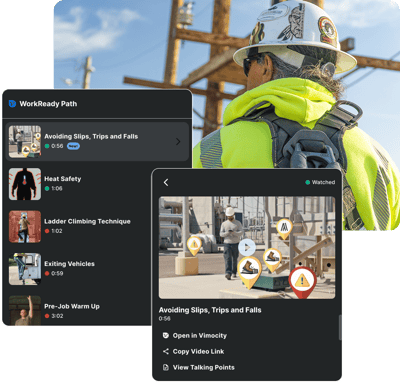
And once my mind opened back up, I started having ideas. I saw, I found hope. I saw the possibilities for myself. I saw all these different futures that I could have, and that's when I was able to start thinking about, "All right, well, now what can I do?" With Vimocity, utility leaders are cutting injuries by up to 50%, keeping crews safer and powering stronger operational readiness.
Teams stay engaged, your safety impact scales across every work group, and you gain the insights to prevent serious injuries before they happen. Vimocity delivers expert content, seamless deployment tools, and real-time risk data in one workforce readiness platform. Learn more at vimocity.com.
Now you're married, two kids you have a career. And the people listening to this episode, I mean, they m- may have a family. They're working a job that is f- definitely stressful, demanding, and maybe there are financial pressures that are mounting. What would you say to the person who is in a moment of despair and they, they just need to understand that there is something on the other side?
How, how do you coach people to get through those tough times? What is a, an analogy of putting your legs on in, in that situation? Yeah, I think part of it is first recognize that there is going to be... If you work together with the people in your life, if you work with your family, your friends, all these different people that you have in your life, there is likely to be some sort of pathway forward.
The number one thing I recommend to everybody is just figure out what do the people in my life that are most important to me, what do they need? What do they need and how can I supply what they need? And then that is what gives you the strength to keep moving forward when things are difficult, when you're not sure what to do.
What do the people around me need and how can I do it? And that is kind of... That's gonna be what keeps you moving forward too when th- one one thing that you try doesn't necessarily work out. So you try the one thing, and a lot of the times if you don't have a powerful purpose, you just, well, you just quit.
But since there's all these people that you care about that are relying on you to be successful, you try that one thing and maybe it doesn't work, well, now I still feel the very powerful need and reason to, to keep moving forward, so I just try something else. Um, so that's, I think that's what it would be.
And then the part... And then the third part of it would be sometimes you gotta get some support, and there's nothing wrong with getting support. And in fact, one of the things that I have learned is that the people in your life want to help you. I, I like-- I love helping my friends. I love helping people I care about.
I love helping my wife, my kids. I love helping people. I love helping my friends. So when somebody asks me for help it makes me feel good. And so I think what I recognized was that other people probably feel the same way when if I ask them for help. Now, you don't wanna be asking somebody for help just all willy-nilly, but if you really need support and you go to somebody, they're probably going to want to help you, and you're probably going-- they're probably gonna feel good when they do.
And it's the, it's the fear of being a burden, the fear of upsetting another person that is the most common thing that prevents us from asking for support. Sometimes you need the support, and putting your legs on is just doing what you have to do, put your ego aside and do what you have to do. And, and sometimes that means asking for help
And you dedicated this book to your wife. Uh, obviously she's been a big part of that support system. Um, you're part of the military community, so you have that brotherhood. Why-- Maybe expand on that you know, having that support network being so critical and if s- you know, isolation is one of the, the biggest drivers of mental health and depression in today's society, but w-what can people do to start building community or having people that they can talk to so that they don't have to go at it alone?
Yeah, I mean, one of the most fundamental needs of human beings is to be a part of a tribe, be a part of a group of people. That is a primal instinct that goes all the way back to, you know, the caveman people. And the reason for that is because being out there all by yourself, you couldn't survive in, in, you know, times when we didn't have houses and cars and computer and, and all this stuff.
We just had, you know, teepees and tools made from buffalo parts and stuff like that thing. You needed other people to, in order to survive. Um, and so if you were by yourself, you were not likely to survive. That's why it's so powerful in us that we have to be a part of a group of people. And just because we're, you know, tens of thousands of years down the road and we live in houses now and we drive cars around, that doesn't mean that that's changed.
We haven't, we haven't evolved away from that. Uh, technology has evolved away from that, but our psychology hasn't evolved away from that. So that's why we need to be a part of a tribe, which means that we have to make sure we're always trying to build stronger and stronger relationships with the people that are in our lives, so that when we do need support or when somebody else needs support from us, we feel comfortable and able and willing to provide that support 'cause nobody does anything alone.
You don't... Even in, even in good times, you don't do anything alone. And for some reason we feel like we have to struggle alone, and it's just not true And I, I love that you tie that back to not just thinking about yourself and starting with serving other people as the foundation for that. And as you start to serve other people, you start to build your community, and then it, the spotlight is off of you, and it's, it's giving rather than getting is being the main motivation there.
Is that kind of what you're saying? It gives you strength. Yeah, I mean, it gives you strength. When you look outwardly towards how you can help other people, that gives you strength and it gives you meaning and it gives you purpose. And in a situation where you're not feeling good about your life, that's what, that's what all people need.
They need meaning and purpose, and helping other people, especially the people that you care about the most, that is what gives people... That's what gives you purpose. That's the po- most powerful purpose you can have. And a lot of the times when you just start helping people and you find purpose, that's gonna build this, this is gonna create, you know, a snowball effect that's gonna start rolling down the hill, and then you feel better, and then you start having other ideas and start thinking of other things, and eventually you've built an even better life just because you started by helping other people and just looking outwardly Well, one thing that I'm so excited about is we just filmed a leadership series with Rob for Vimocity, and the premise of this series is simple.
The principles that built the SEAL teams and rebuilt the US mil- military officer corps after a generation of war can be translated directly into a foreman's truck in a superintendent's huddle. So for someone listening to us who doesn't understand all the principles of Extreme Ownership, can you walk us through what those are?
So in order for the team to be successful, every leader on that team, which means every single person on that team, needs to take extreme ownership of the outcome and the success of the mission. That means they're not gonna make excuses when things go wrong or mistakes get made, and they're not gonna point the finger at anybody else.
And so way that looks on a job site is like, let's say something happens on a job site if everybody on that job site starts pointing the finger at everybody else about why the th- why something went wrong, then there's nobody working on the problem because we're spending all our time and all our energy just blaming everybody else.
Nobody's gonna work on the problem, then we're gonna go to the next job site. What's gonna happen? Same exact thing. Maybe something even worse. So that's why it's vital that every single person on the team takes extreme ownership, and what they also need to take extreme ownership of is the fact that everybody on that team needs to lead not only themselves, but other people on the team.
Because every team is com- is comprised of human beings, and leadership is all about influencing other people to take action in some way. And the way that we do that is by utilizing the four laws of combat. The first one we've-- I kind of just talked about, it's called cover and move. It's all about working together and supporting each other and supporting not only the people around us, but the whole team, not forgetting that we are a part of a much bigger team than just the people that are around us right now.
Uh, the second law of combat is simple, which essentially just means that everybody on the team, no matter how effective that team is, everybody on the team has to understand what the mission is. And in order for that to happen, considering that teams are made up of a bunch of different people, we have to make sure that the mission is simple enough so that everybody can understand it.
When that mission gets communicated, it's in a simple, clear and concise way so that we don't have miscommunications. So we all have to just make sure that we communicate in simple, clear and concise terms. We have to make sure that our mission is simple so that everybody understands what we're doing, so we can all work on the same mission.
The third one is called prioritize and execute. So if you've got a team, everybody understands what the mission is. Now things are gonna happen, problems are gonna arise, the situation's gonna change. Uh, so you have to be able to evaluate from a logical perspective all these different priorities that you have at the same time, and just focus on one of them.
Focus on the, the top priority for the team. Uh, focus on that, get that completed, and then move down to the next biggest priority. So in order for us to be able to see what the top priority is for the whole team, we have to use a tool that we call detachment, which means just taking a step back from your emotions and putting yourself in a position where you can see logically even though you're right in the middle of this very emotional situation So that's prioritize and execute.
And the fourth one is decentralized command, which means that everyone leads. I said earlier that everybody on the team is a leader, so what decentralized command is about is making sure we are facilitating that, making sure we are empowering everybody on the team, regardless of what their position is, what their title, anything like that.
Regardless of where they're from, they can lead on the things that they need to lead on from their position, and that's CEO of the organization all the way down to the front line. For example, front line linemen that's out there you know, repairing a power line. Rob, as I think about the laws of combat, it seems like communication is a critical component of each of those four steps.
For a team that maybe doesn't communicate well, how do y- how did, does the foreman or someone who's giving a pre-job brief and they look around and everybody seems disengaged. No one's talking, no one's talking about the risks, and you just, y- you don't have good communication there. What are some actionable steps that somebody could take today to try to improve the communication on their team so that these four laws of combat can work for them?
Yeah, I mean, the first thing I would do is if, if people are at the end of a meeting and they're looking disengaged and they're looking like they don't know what they're supposed to do, I would look at myself first and I would ask myself, "How am I not communicating effectively?" And I'd go back to the, what I said earlier, simple, clear and concise.
So what I would do is I would probably take a look at what I was about to tell everybody, and I would first ask myself, "Is this even simple, clear and concise? Is what I said simple, clear and concise?" Is it... And what that means is simple means containing only the necessary information. Did I, did I overload them with too much information so that they got completely confused?
Is it clear? Do they, are they actually able to understand it? Am I putting technical terms in here that they don't have the, the knowledge to understand? Am I using phrases that they're not gonna get? Is it clear to them? Um, and then concise just means containing the on- only the words I need to... Am I adding in a bunch of fluff?
Am I adding in words that just don't need to be there? And the more words I have, the more the more confusion I'm, I'm risking because I'm adding more things in there. So I, that's the first thing. I would look at myself and see, how am I not communicating effectively? I would also be asking myself, "Do I have a good relationship with all these people?
Have I showed them enough respect that they're willing to listen? Have I listened to them enough so that they're willing to listen to me?" Uh, I would also be utilizing a tool. One great way to check your communication, how effective your communication was, is something that we call a read back. So at the end of the brief, I would ask the team for a read back to make sure that we're all on the same page, to make sure that I communicated effectively.
Because if they give me a read back... And all a read back is, I should explain that. All a read back is, is just the person that was communicated with Uh, repeats back what they understood, and then the person that was communicating just confirms whether or not it's, it's the same thing that they wanted them to understand.
Um, and when you do that, you are checking how effective your communication was. So if I get a read back back that is not accurate to what I thought I was saying, then I need to correct the miscommunication, and I need to take ownership of the fact that I need to be able to communicate better. So I would take a note of what, you know, didn't get communicated n- well, and then next time I would try and make some alterations to figure out how can I im-improve my communication.
Um, so that's what I would do. I would make sure beforehand I'm being as simple, clear, and concise as I think I can be, and then I would check whether or not I was effective by getting the read back. And then afterwards, I would make improvements. It's so funny that you talk about read backs because I've actually started to implement that with my kids because- Mm-hmm
what I think in my head and what comes out of my mouth sometimes are two different things. And so I think that I'm clear in my instructions when it comes to like, "Hey, we're doing this project. These are part of your chores. This is what you know, what I'm asking you to do." And their interpretation versus my in my head what I think I told them is totally different.
So I've started to actually implement the read back even just when I'm, you know, working with my kids doing yard work, and it's, it's actually helped me from a communication perspective to be able to ensure that I'm communicating clearly what, what I wanna convey. It's easy to imagine that with our kids because they have...
you know, they don't have as, as much life experience, so they're not gonna know as, as many things and that kind of thing. But everybody understands things differently than other people, so it's our job as leaders to make sure that we are communicating in a way that the other person is able to understand.
It all comes back to extreme ownership, though. 'Cause if I hear a read back and it's different than what I intended to say, it's not that person's fault that they heard that and interpreted it a certain way. I wasn't clear enough in my instructions. Yeah. And so for me, that's, that's a lesson that, wow, I need to clean up and improve my communication.
Is it... Do, do you feel like that's part of the whole ecosystem of extreme ownership? Yeah, you're exactly right. I mean, if, if the other person didn't understand, then that is a fault of m- of my communication. I didn't, I didn't communicate in a way... I didn't, I wasn't simple, clear, and concise. And you have to figure out why, what had happened and...
But the, the first indicator of that is you ask for the read back, and it doesn't come back in the way you expected. And then the, probably the most important part of that is the improvement after the fact. Figure out why that happened, and then make sure you improve your communication for next time. Rob, I wanna go back to your book.
So how... what can leaders take away from Put Your Legs On that they can apply to their leadership with, with their teams? What are some of the, the concepts right away that they could apply in that situation? I think probably two things. I think it's probably a good example of just how extreme we mean when we're talking about extreme ownership, and we don't mean that, y- is there such a thing as taking it too far to the extreme?
There is, but that part of the s- that side of the scale is usually a lot further down than a lot of people will allow. And so for me, it the good example of this is when I first got wounded going back to the, the story about my mom. I... the, one of the first things I thought when I woke up in the hospital was, "How can I help?"
All right, the first thing I thought was, "My mom's gonna be absolutely devastated." And the first thing I asked was, "Well, how can I help her?" And what I came up with is maybe I should try and have a funny hat on for when I get back to the hospital in, in America. Um, and what I was doing there was, I was, even though I was in a hospital bed, I was, I had just lost my legs.
Uh, I just lost the future I had planned for myself. I didn't know what was gonna happen next. I didn't know what my future was gonna be like. And still, I t- I was able to find a way to take ownership of what I can in that situation, which is helping my mom feel a little bit, a tiny bit better, and I was able to take action on it.
Even though I was in a situation where there's literally nobody would ever expect a person in that situation to look around them and go, "How can I take ownership of making other pe- of thinking about other people?" And that's just how extreme we mean. Just n- uh, really no excuses. No excuses, take complete 100% absolute ownership of the mission in all circumstances, no matter what, and that's what it means.
And when you recognize that, then you can do stuff like help another person when that is devastated that you just suffered an injury. Um, that's how, that's how powerful, you know powerful it can be when you decide to take, that you're gonna take ownership of all the problems in your life Rob, I've read a lot of military memoirs and stories about special operations, and typically 95% of those books focus on the battle and the challenges that they experienced on the battlefield.
Chapter one ends your story about on the battlefield, and 95% of the book is about what came after that. Why is that so powerful, and why did you focus on that part? Um, I'll be... Uh, just to be perfectly honest with you, my deployments were pretty boilerplate. There's not... I didn't think that there was really anything particularly interesting about them.
And like you said, there's so many military memoirs that tell greater combat stories than, than I had. You know, my, my deployment to Iraq, there, there wasn't any combat. All I did was just find weapons caches the entire time, and there wasn't a whole lot of intense combat. There was, you know, a, a few weeks of firefights and stuff in my deployment to Afghanistan, but this just wasn't that much that, you know, there that I thought was really gonna be particularly interesting.
What was int- what I thought was gonna be interesting to people was, and a lot more useful and impactful to people, was what happened afterwards. And really, I mean, and just telling you about what I did in overseas in Iraq and Afghanistan it was just... If I got into too much more detail about that, it was just gonna be self-aggrandizement, and I just don't...
Uh, the, that's not gonna help anybody just for me to talk about all the cool stuff that I did. So I figured just get the ball rolling fast with something interesting and something that they're gonna wanna... That they don't, they probably haven't read a lot about I'd like to move to the next section of the interview, which is the myth-busting.
The first myth is leaders are born, not made. So it's true that people can be born with some of the intrinsic qualities of a good leader, like the ability to speak well, like the ability to keep moving forward no matter what. But if you don't work at it and you don't recognize that leadership is a skill that you can develop, you're still not gonna really be that great of a leader.
You have to practice it all the time, as often as you can, just like you would any other skill that you wanna be, that you wanna be good at. And really, it's something that you should be wanna-- you should want to be great at because it's gonna make such a h- a big impact in not only your life, but everybody that you interact with, all the people that you care about.
The better a leader you are, the better everybody's life is gonna be
And you know, the term leader I think is, can be an identity statement and it's a belief system. And so if somebody were on a job site or part of a team and they said to you, "I'm not a leader," what would your response be? Well, it's, it would be what we talked about earlier, where if you, if you interact with other people, then you are a leader because you can influence the, the way that other people think.
You can influence the way, the things that they do. And, and the things that you say, and the things that you think, and the things that you do, that can influence other people. And so one of the things that we not necessarily struggle with, but one of the things that we have to get past is this kinda stereotypical or classical view of what people think leaders are.
People tend to think that leaders are just people that get up in front of the room and tell everybody what to do and boss people around. And that is a style, that is a, a way that people can try to lead effectively, but it's just not the effective way to lead. And that's not all that it is. It is interacting with other human beings, and good leaders interact with people in a way that galvanizes them towards a common mission, and bad leaders do not So the next myth is extreme ownership means taking the blame for everything If so- if it was something that bad that happened, you want, you wanna make sure that it doesn't happen again.
And so what you need to do is take it upon yourself to do everything that you can to make sure that it doesn't happen again. And the way that you do that is by going back and going back over what happened and figuring out, analyzing it, and figuring out what you could've done better and what you're gonna do moving forward.
And so-- and when you do that, you're gonna find a bunch of things that are, were your fault, that you could've done better. It was your fault that you didn't do this, it was your fault that you did this wrong. That was your fault. It doesn't necessarily mean that the entire project going awry was completely on you, but you, there were things that you could've done better that affected the, the outcome of the mission.
Um, and so it's hard for us to get over that, that thought of "I'm at fault." Um, it, but it doesn't, it... Just because you're taking ownership of something, just recognize that there's things that you could've done better, and that's true of every single person. Doesn't mean that you're a bad person just because there's stuff that you could've done better.
Um, so don't worry about whether or not it was, don't worry about that word fault, just worry about what can I control, what can I do better moving forward. And Rob, final myth here is a great leader never doubts themselves Yeah, that is definitely a myth. Um, it's actually healthy to doubt yourself a little bit.
You don't wanna doubt yourself so much that you don't have the confidence to act. That's taking it too far. But you always wanna be in a state of thinking to yourself, "Maybe I'm wrong. Maybe this isn't the right path moving forward. Maybe this isn't the right action." Uh, having a little bit of what you would call imposter syndrome, all these things, 'cause it keeps you humble, it keeps your mind open, and it keeps you open to other possibilities.
It allows you to listen to other people. It allows you to let other people lead as well. And so there's nothing wrong with a little bit of, a little bit of doubt m- going into things. That being said, when it's time to take action, you need to be pretty confident in, in what you're doing. All right. Great.
Thank you. Let's talk about some rapid-fire questions. Explain the concept discipline equals freedom. So discipline means rigid and structured. Freedom means I do whatever I want. But basically, what it is, is just forcing yourself to do the thing that you know deep down to the core of your being is the right thing to do, and restricting yourself in certain ways so that you can have freedom in much more important ways.
So a good example that we always use is financial freedom. If you want financial freedom, then you have to have financial bi- uh, discipline, which means having a budget, not wasting money, not spending money on things you don't have to spend them on. A way... One of the ways that it applies to a team in the field would be st- you know, standard operating procedures, safety procedures, protocols, things like that.
Uh, staying disciplined in the way that we handle certain tasks and certain jobs, and the more disciplined we are in the way that we do that, the more freedom we have to operate, the more jobs we're gonna get, the faster we can do these jobs if we have standard operating procedures. If we're, if we're sharing, you know, a work truck with another person, if we're disciplined in the way that we treat that truck and the way that we set it up, the quicker the handover's gonna be, the more work we can get done, the more efficient we're gonna be, the less time we're, we're spending wasting, wasting time just setting up our truck and all these different things.
So by having discipline in your life, you will get freedom in your life. And how does that statement relate to putting your legs on? You have to have the discipline to put your legs on even when you don't want to, even when it's painful, even when it's not fair that you have to put your legs on.
And in doing so, you, you... your life will have more freedom in it because I have to have my legs, I have to put my legs on in order to go work out and get stronger, and the stronger I am, the more things I can do. The more time, more games I can play with my kids. The more ways I can look after them. Uh, the more I can carry them around when I need to.
I can pick my daughter up from the floor. I can do all these things just because I have the discipline to put my legs on and go get into the gym So if a foreman is listening to this conversation, what's one thing that they can take away and implement tomorrow morning with their team that will change the way that they lead?
Um, I would just ha- I would go back to extreme ownership. Just before you, before you think about, before you r-respond, before anything else, sit there and honestly ask yourself, "What could I have done better? What can I do better moving forward?" And you're almost guaranteed to find something that you could have done better.
Ask yourself that honestly, and honestly answer that, and then take responsibility, take ownership of that thing, and then correct it moving forward What advice would you give to someone who's maybe apprentice, they're brand new to a crew, they're 19 years old, everyone else is twice their age, they don't wanna talk.
What's one thing that they can do to build rapport with their team and start to gain influence and leadership within their crew? I would just say be willing to listen. Be willing to listen, be willing to learn, be willing to ask questions. And when you, when you listen to other people, that is going to show that you're humble.
That's going to show that you wanna be a part of the team. It's gonna show that you want to help the team improve, and it's gonna go a long way to building relationships with other people on the team, because one of the components of relationship is listening. And when you listen to other people, they're going to-- you're not only going to learn the things you need to learn, but over time, they are going to be a lot more likely to listen to you.
If I were to call Pam and ask her what has been the one thing that Rob does that has transformed y- your communication, what do you think it would be? That's transformed my communication with her? Yeah. Hmm. I would say we, we communicate pretty well. Um- Yeah, I mean, it, it probably would be the read back and making sure that we are on the same page.
'Cause we-- there's a lot of stuff that we're coordinating on our house, and there's a lot of things that she shares with me that I need to remember, and if I don't confirm that I you know, remembering the right thing or I'm, I'm understanding the right thing then miscommunications can abound coordination suffers, and our family suffers because of that.
So Rob, the person listening to this driving home, they've had a long day. If they remember three things from this conversation, what should they be?
Um, take extreme ownership. You have a responsibility to be a leader no matter what your position is, and always be thinking about how can I help the people around me I really enjoyed this conversation, Rob. And like I said, I wanna give one more plug for the leadership series that we put, just put together with you for VMosi.
What are some things that people will take away if they watch that series? They're gonna take away a lot, a lot of what we just talked about. They're gonna essentially learn the skills of leadership. So we d- hopefully, throughout this conversation, we've done a good job of helping everybody feel or convincing people that, A, they need to take ownership, and B, they have a responsibility to lead, and C, they can lead regardless of their position.
And what they're gonna learn in that series is just the skills of leadership, laws of combat, and a little bit more detail on each one of those that are gonna help them start to become better leaders. And where can people get your book, Rob? Uh, right now it's available on Amazon. So you just go over there, put your legs on.
Um, if you like it, give it a review so it bumps it up in the numbers. But yeah, that's the only place it's available right now. Awesome. And where can people follow you if they just wanna, you know, track your day-to-day? Are there some social media handles, other places that people can find you? I'm most active on Instagram, which is robjonesjourney, and then LinkedIn, I'm on there.
I think it's the same handle. I think it's robjonesjourney. But if you find me, Rob Jones on LinkedIn too. Rob, once again, this was such an awesome conversation. And for those of you who haven't listened to our first episode, it was actually episode number one of the Work Ready podcast. Oh, yeah. So so Rob, I'm super grateful for you being my- What do you want now?
Well this is l- I think like 34, 35, so we're, we've yeah- Nice ... we've chipped away at it a little bit. Cranking. But it was a really awesome conversation, and we go into great depth with your journey and some of the things that you've done, again, post-injury. And I, every time I talk to you, I just leave so inspired.
So thank you so much for all that you do, for your attitude, for living out the principles that you teach every day. And so for those who haven't subscribed, make sure to subscribe to the WorkReady podcast. We put out new episodes every Tuesday. It's just a way that you can make sure that you get the latest episode.
And until next time, take care of yourself, take care of your people, and stay work ready. Thanks so much.
Discover how Vimocity can help keep your crews WorkReady.
One comprehensive platform to help safety and operational leaders prevent more injuries and incidents.