
.png?width=20&height=24&name=Vector%20(15).png) For Leaders
For Leaders For Workers
.png?width=24&height=23&name=Vector%20(16).png) Partners
PartnersLongevity Is a Strategy
WorkReady Podcast Episode 40
-
Speakers
Stefan Underwood | Exos
Dr. Kevin Rindal | Vimocity -
View The Transcript
I always say the best strength coach that's ever lived was Chubbs from Happy Gilmore. There's a perception that grinding harder is progress. Intensity is king, but consistency rules. The goal isn't to have no stress. Stressors are what we adapt to, and that combination, work + rest, that's what gets us there.
One of the things I've heard you say is that performance is personal. Mindset, recovery, movement. The way you engage with those strategies has to be as unique as you are. Perfectionism to me is a fancy way of being fragile
Well, Stefan, a lot of our listeners are climbing poles, running equipment, or driving home right now after a 12-hour shift. So before we get into any of the science, tell them what are they gonna walk away from this conversation with that they do not already have?
I'd honestly say they're gonna walk away with a little bit of a, maybe a directionary user manual for the most expensive piece of equipment that they own, and it's themselves.Most guys that are out there right now climbing poles, driving home, are experts at maintaining their gear. You know, they know when a truck needs service. They know the load limit of a hoist. They wouldn't dream of running machine until it's seized up. But we've been conditioned to think that human performance is just about grit, right?
That if you're tired, you just push harder. What I want them to have by the end of this is the realization that longevity isn't an accident. It's a strategy. I want them to stop seeing recovery as something they do when they're broken and start seeing it as the preventative maintenance that ensures they're still capable, sharp, and most importantly, present for their families 20 years from now, right?
So we're moving from the idea of surviving to thriving. I love that. And Stefan, being with EXOS for, for two decades, I've, um, been in sports medicine for a long time, and EXOS is like the pinnacle when it comes to sports performance. But the- Thank you ... the cool part is that the principles that apply to the highest performing athletes in the world, special operations forces, they depl- uh, apply directly to the workforce as well.
How do you see that connection? Absolutely they do. The connection is 'cause we're all human, right? Like biology, foundational biology, psychology, like it's this realization that they're all people. So the strategies don't necessarily change. The context does. How we apply them does. The, the, the reasoning behind them might change, but we're all human.
That means the, the same concepts apply. There's a ton of overlap. And one of the things I've heard you say is that performance is personal. What does that mean? The idea of performance is personal for me means, like, honestly, at the top, no judgment. Um, when I say that, I, I think we're getting to this place, especially in, like, the social media world we live in, where there's a lot of, like, putting expectations on people, defining things for people.
This, this is what high performance is, and if you're not that, then you must be failing. And, and I just don't like that notion, right? So when I say performance is personal, I'm really talking about agency and fit. We're, we're gonna talk about a lot of strategies today: mindset, recovery, movement, right? And these principles are universal, like I just said, because we're all operating on that same human biology.
But the way you engage with those strategies has to be as unique as you are, right? So if, if I, as a coach, were to give, you know, the same roadmap to a guy with 3 kids and a night shift, um, if I gave the same roadmap then to him as I would to a single 22-year-old apprentice, like, I've already failed. Uh, so one of those individuals might need to focus on 10 minutes of breathwork to decompress after a storm call, while the other might have the capacity to overhaul his entire nutrition plan, right?
So performance is personal because there is no single roadmap. My goal isn't for anyone to leave this conversation feeling like they have a new list of chores, like, that, that they must do these things, and if they're not, they're failing. It's for them to listen to the menu that we're laying out and find one thing that resonates with their actual life right now that they wanna lean into, that they can own.
If it's not relatable and approachable to you, it's not the right strategy for you. That's what I mean by, you know, performance is personal. And I like that you brought up the social media piece because, you know, it's so easy to scroll through Instagram, and you do see the 22-year-old guy who's, like, absolutely ripped.
He's in the gym, and then you're talking to the 42-year-old dad with three kids who's working, you know, 12-plus hours a day, and they just-- life is different for them. And so it's easy to compare and feel like, "Man, I just am not keeping up." But why is it so important to think about maybe small wins and things that you can do that are moving you in the right direction in that season of your life, and that's still a win even though it's maybe not perfection or it's not what the 22-year-old is doing?
Yeah. I, I mean, I love to- this topic of perfection and perfectionism. Like one of my buddies that I worked with one time, fantastic strength coach and physical therapist that has been in the NBA for the last several years, you know, he sat our staff down one time, I, I distinctly remember it, and talked to us about why we should not be chasing perfection, and this is with the highest level of athletes in special operations individuals, and it's because perfection frankly doesn't really exist, right?
It's an unreasonable, unattainable goal. He said we can strive to be excellent, but we can't strive to be perfect, otherwise we'll never, ever achieve our goal. And, and that's always stuck with me, right? Like, perfection is the enemy of good enough, or perfection is the enemy of progress. And so again, this notion that it's an all or nothing typically leads to people working in s- you know, working toward goals in spurts.
Like they'll get all in, they'll grind through doing all of the things perfectly for three weeks, and then they'll fall off, and they'll just be back to their old habits. Where it's like, hang on, if we can be slower with our implementation, pick one thing at a time, be intentional, and also, frankly, be flexible, be willing to, to know that it's not gonna be perfect, um, and we're still taking steps forward, I just think that that's a more sustainable approach when you look at behavior.
And I like that you said that we oftentimes grind through that because sometimes I think there's a perception that grinding harder is progress, but there may be a season in life where it's recovery that is a higher priority than, you know, pushing harder. How have you seen that play out for athletes who maybe have that mindset, but then they hit that point where, you know, it's not sustainable to keep grinding, keep grinding without recovery?
Sports today are not the same as sports 30 years ago. Um, and, and so I think culturally it's now just accepted, but you really can't perform at your highest if you aren't prioritizing recovery. I'm a giant nerd. I go back to the science on it. But, like, we adapt. As humans, we adapt to the stimuli that we're under, right?
So if I'm in a squat rack and I squat, I'm not stronger while I'm squatting. That's the stimulus, and I adapt in recovery to the stimulus, right? And that's just one simple example, squatting, but it's the same in all things in life. If I go through a stressful moment, right, it's not like I'm growing and becoming more resilient immediately in the moment, but when I take time to thoughtfully reflect after, learn from it, have a growth mindset around it, that's where I'm adapting.
A-and, like, this repeated exposure to stress is, is honestly what we then adapt to. It's how we grow. So what's funny is for me, the conversation on recovery being a critical piece of performance is also the same conversation on reframing stress. The goal isn't to have no stress. Stressors are what we adapt to.
So if we wanna grow, we need stressors, but then we need adequate time and strategies to recover from the stressors, and that combination, work plus rest, that's what gets us there There's a principle in sport and exercise physiology, I mean, I'm speaking back 25 years, called the SAID principle- Yeah
Specific Adaptations to Imposed Demands, which basically means that to make a change, it has to be specific and it has to be consistent. And oftentimes, you know, we hit the gym and it's that hard squat workout, and then we don't do that again for two weeks, three weeks because we're busy. And so then you're not really making, you know, the, the changes in your body from that workout.
And so why is consistency so important than maybe intensity, uh, on a less frequent basis? Yeah, absolutely. I mean, to that point, I always say, you know, intensity is king, but consistency rules. Um, because we do need to have that continued adaptation. You don't go crush yourself one time and then all of a sudden you've got it.
And, and so having just a little bit of a consistent approach is, is frankly the way to go. We're worrying about all these fancy little hacks and it's like consistency. That's what wins the game. So let's make that practical for our audience. Uh, you know, you end up working a 8, 10, 12-hour shift. You come home and probably the last thing that you feel like doing is working out.
And- I know even I'm guilty of this. I feel like if I'm not working out for more than an hour, it's like, is it really worth even getting sweaty for that? But how can somebody think about, well, I've got twenty minutes, and I can be consistent with twenty minutes, you know, five, six days a week? It all comes down to what you're trying to achieve, right?
So, uh, you brought up, I love the SAID principle, specific adaptations to imposed demands. So it's all about what are the specific adaptations you're seeking, right? Everything isn't everything. What are the specific adaptations you're seeking? And therefore, what are the demands that you need to impose on your system?
And not everything takes a full hour. And so to that, I'd say, what's the one thing you can do or what are you trying to do and, and what's the minimum effective dose to do it? I'll give you an example, right? We know that for a lot of frontline workers, if we're talking like low back pain, shoulder pain, neck pain, things like that, well, the way you move or, or, or helping your body sort of readjust after, you know, time in a truck, things of that nature, you can call it prehab, you can call it corrective exercise.
We, we call it pillar prep at EXOS, right? Whatever language you wanna put on it, this idea of like stability and mobility, like just restoring the way you move, um, so that you get out of pain, ten minutes a day can be impactful on that, right? So now if I have a-- if I, if I recognize that my low back pain needs me to move a certain way, and I wanna improve my hip mobility, and I say, "I'm gonna impose specific demands of these hip mobility exercises consistently, daily for just ten to twenty minutes," then the adaptation I get is my hips move better, and my low back is out of pain, right?
So it's all about what you're trying to achieve. So if you're like, "I'm trying to be Mr. Olympia," then yeah, sorry, you can't do that in twenty minutes a day, right? Like, you, you gotta put a bit more time in the gym. But if your goal isn't to be Mr. Olympia, there's tons we can achieve with short, consistent, uh, sessions.
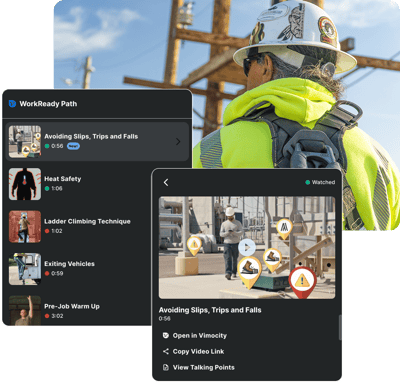
Absolutely. With Vimocity, utility leaders are cutting injuries by up to fifty percent, keeping crews safer, empowering stronger operational readiness. Teams stay engaged, your safety impact scales across every work group, and you gain the insights to prevent serious injuries before they happen. Vimocity delivers expert content, seamless deployment tools, and real-time risk data in one workforce readiness platform.
Learn more at vimocity.com.
And I love that you touched on the hips and how that relates to the lower back. Uh, I just did a big s- study with, uh, all of our customers with Vimocity, and back pain shows up as the number one thing that utility workers experience. I mean, it's like 80% of the workforce, uh, comments that backs-- uh, back is their number one area of, uh, problem area.
And when you look at injury data, what actually leads to an injury, consistently back is the highest. But I mean, you and I both know that it doesn't have to be that way. Back pain is not a life sentence if, if you do the right things on a consistent basis. Yeah, absolutely. And so to answer the specific question about how-- like, why am I talking about the hips if we're talking about back pain, right?
As you know, the, the whole body is one chain that is connected. So it, it really takes, uh, what one segment of the body is doing influences another segment, right? We are one chain. Uh, there's a famous strength coach out there, Mike Boyle, that used to talk about the joint by joint approach. And, like, just to give a super simplified idea, it's if you've looked through segments of the body almost alternating what is required in a region is do we need more mobility or do we need more stability, right?
And so if we look our low back, it actually has quite a bit of mobility, but we really need to be able to be stable there, right? But it's a series of joints that are built in one way, where our hips below it are ball and socket joints that are made to really have more mobility to allow me to stabilize that low back.
And if my hips get locked up, now my low back is no longer trying to be a low back, it's trying to be a hip. And your low back is a good low back, but it's a really terrible hip, right? Like, it's not made to be a hip. So if I go quite often, um, I mean, you wanna look at the whole chain, but again, if we're being really, like, just a, a simple approach, if you look a segment below and a segment above, if my low back hurts where I want that to be stable, if I make sure that my mid back, you said thoracic spine, moves freely, and then I get my hips to move freely when I squat, then all of a sudden my low back can do what it's meant to do, and that pain tends to resolve itself.
So quite often the pain or the site of pain is the symptom, not the root cause, and we can get at low back pain, the symptom, by looking at often what movement is lost in other parts of the body. That was such a great explanation, and I wanna double-click on that because, you know, you talked about squatting and m- moving at the hips.
Maybe talk a little bit more about, like, what a hip hinge is or, like, a deadlift motion, because really we should, you know, bend at the hips really well, but the lower back should be stable. But I oftentimes describe it like people with poor hip mobility, they tend to bend through their back, and it's kinda like a paper clip.
You can only bend it back and forth so many times before it gives way. And yet in our society, what we end up doing is we inject the lower back, we put patches on the lower back. We do, we do all these things at the area that the symptoms occur, but that's not where the problem is. Can you maybe describe a little bit more about things like hip hinge or, um, hip mobility a- as that relates to, again, lower back stability?
Yeah, no, for sure. And look, this-- So what's funny is I, I used to, I used to always say this to my athletes, and now I get, you know, uh, if I say this to an athlete, sometimes I get looks because it's starting to date myself, but I think for this audience they'll, they'll appreciate the reference. But I always say the best strength coach that's ever lived was Chubbs from Happy Gilmore.
It's all in here. Like, our hips are the most, you know, critical piece of ins- or one of the most critical piece of inf- infrastructure in our body, right? And so they are a ball and socket joint, meaning, like, a ball inside a socket, which gives immense mobility, which allows a high degree of freedom of movement, right?
And so it isn't just a hinge. Even though we say a hip hinge, we aren't talking like a hinge on a door that's just doing this. There's this rotational moment or articulation in the hip. And so as I hinge back in my hips, if I thought of-- if, if I was trying to touch my butt to the wall behind me or if I was trying to close a door with my ass, right?
As I drive back and I keep a neutral spine, I'm loading the tissue of my posterior chain. I'm letting the muscles of my, my glutes and my hamstrings and e- all this great muscl- musculature support me, right, and take the load. Versus to your point, creating this, like, moment around the low back and having all of, like, the erector muscles in your low back be what's carrying the load.
And so that hip hinge is how we properly load our posterior chain, the backside of our body, um, and it takes the ability for the hips to rotate. I know it doesn't seem like it, and you go, "Oh, that's just a hinge. I'm going back." But again, as my pelvis goes back, the way it moves, it actually rotates on the femur, which is the leg bone, right?
The thigh bone. And so one of the most important things we wanna hold onto through life is what's called internal rotation of the hip, right? So hip internal rotation is, uh, if you ever-- If you got young kids and they sit in that W sit, right, on the ground, or like, or like you look at a catcher in baseball, drops butt down to the ground, legs splay out, that-- where the femur's rotating, and that's internal rotation of the hip.
And it's so critical that we keep that mobility in our hips. But if we tested athletes walking around society right now, I, I don't even wanna guess what the percentage of people with adequate hip mobility would be, but it's pretty low. By the way, myself included. Like, I'm going to physio right now for some stuff because I'm trying to restore internal rotation in my hip.
So, so just as adults, it's an area we, we tend to lose a- and to maintain that, uh, that rotational ability is massive. And you can do it through structured exercises. You can also do it through constraining your environment. I was just reading a piece the other day. You look at other societies around the world, right?
You look in, like, Japan, and simply put, like, they just sit on the floor to eat dinner, right? And all of a sudden you've got, like, the highest degree of 100-year-olds in the world, right? The highest density of 100-year-olds in the world in Japan. And, like, part of it-- I mean, there's so much that goes into that, but part of it is this notion of, like, floor sitting versus us sitting in our comfy chairs in Western society.
Like, sitting on the floor forces you to maintain your mobility or get it back and, and being able to get up off the floor, believe it or not, is one of the-- in research, one of the, like, uh, thing that's heavily linked to, uh, all-cause morbidity, like all-cause death. Um, m- If you can't get up off the floor without using your hands, that's a red flag.
And so, and so all this ties into how our mobility, um, really supports how we move through life and keep moving in a pain-free way. One of, uh, my favorite quotes is from Gray Cook, who's a physical therapist, and he says, "Don't overload dysfunction." And the whole point there was that you've gotta fix mobility first so that you're moving properly before you add weight and resistance so that your, your muscles can get stronger in the right pattern.
Can you explain that concept a little bit further? Absolutely. Uh, through the years at EXOS, we've worked a lot with Gray and have huge respect for Gray Cook. He's done so much for the, for the industry. Uh, we take that-- We create a-- Like, we talk about a pyramid, and we talk about, you know, uh, it's, it's sort of like your three Ps, right?
So we talk about position, pattern, power. And so the base of pyramid is position. It's the shapes you're capable of making. It's the mobility you have. Then the middle of the pyramid is pattern, and that is the way you move from shape to shape. And then on top of that is power or performance. Now we're doing it under fatigue and under heavy load and all these things.
So if you take a person who cannot make the shape of a squat, cannot have an effective pattern of a squat, and then just load a heavy bar on their back and put performance or power on top of that and ask them to go squat, uh, it's a recipe for injury. It's a recipe for disaster, right? We've got to be able to own the shapes we can make.
We've got to be able to move efficiently through a full range of motion, just us and gravity, before we do it under external load. And so it just becomes like an, this concept of prioritization in, in programming. We've talked a lot about the physical body. Let's talk about the brain. Um- Yeah ... it plays such an important role in how we function.
So how does chronic stress impact us on the job site from a reaction time, judgment, emotional regulation, all those different components? Ah, it's such a good point. And, and, you know, like, it-- we talk like we're just these physical bodies, and we forget that there is this whole coconut up here that really plays into everything we do, everything.
Uh, when you're under chronic stress, your brain performs a little bit of a hostile takeover, we'll say. So you've got different regions of your brain, right? So you got the prefrontal cortex up here. That's the CEO or the foreman of your brain, right? It's the part of your brain that's responsible for logical decisions, for safety checks, for your emotional regulation, so you have effective relationships in your life, all of that.
And under chronic stress, you tend to see that area going a little more offline. You sort of lose your brakes, and what starts to take over a little bit more is this alarm part of our brain called the amygdala, right? There's actually something called the amygdala hijack, so it's literally hijacking our brain.
And it's reactive. It's the fight or flight center, right? So when that happens, right, um, you aren't doing whatever you're doing at work. You aren't climbing the pole with your best brain, right? You're climbing it with a brain that's literally wired to take shortcuts and react emotionally. So it shows up on the job site in a variety of ways, right?
It shows up in the job site in micro lapses, so you miss a safety step because your brain flickered off for a millisecond or emotional hair triggers, right? You snap at crew members. You, you break your communication chain. You, you have worse relationships around you. Uh, and judgment decay. You're at risk, um, or you take risks, I should say, that you'd never take on a Monday morning.
Um, but you're just doing it 'cause your brain is trying to find the shortest path to being finished, right? And through all that, that's cognitive load and under high stress. But what often is a part of the conversation that ties to stress, um, is sleep and fatigue, right? And so I know you and I have had this conversation before, but this idea of-- it's fun research, is looking at the relationship where the, the, the, the similarities between short sleep and alcohol consumption on your decision-making and reaction time specifically.
And what they found in, in research is when you get less than, uh, I think it's five hours a night of sleep in a sleep-restricted st- state for one night, it's like a blood alcohol content of, uh, 0.05. So, you know Getting toward you where you shouldn't drive a car, but eh. But when that's your consistent norm and you go 10 consecutive nights of sleep deprivation, they found a blood alcohol content of 0.1, legally drunk, with respect to your decision-making and your reaction time, those two specific variables.
So I know that when you're short sleep, it doesn't necessarily feel like you're drunk, but with respect to decision-making, reaction time, it's the same. So now we take that to the job site, right? Like heavy equipment operators. Would you ever want someone on your team, like a heavy equipment operator, operating that equipment with a blood alcohol level of 0.1, legally drunk, like drunk, like over the legal limit?
And of course, the answer is no. And yet we were seeing that kind of degradation to decision-making, reaction time all the time with people who are forced to operate in a short sleep environment You know, we've talked a lot about fatigue, and sometimes it's hard to recognize that, you know, especially when we're wired to just go, go, go.
Exactly. Uh, our vehicles have a dashboard that tells us the tire pressure, the oil pressure, the temperature of the engine. Uh, but in today's world, we actually have wearables that might give us some indications that maybe our nervous system is struggling to recover, and so that could be things like heart rate variability, resting heart rate, uh, sleep scores.
And they're not perfect, but it at least can give you some data to help you make decisions. So how have you seen the athletic world be able to use things like wearables to be able to make decisions on how hard I push today, how much I focus on recovery, so that they can avoid those burnout cycles if they didn't have the information?
Yeah. It's such a good point and absolutely true. At EXOS, we like to put our own language to things a lot, so just to define that language. We talk about performance capacity. That's what you're capable of. Those are all of your skills, your attributes. And then we talk about functional state, and your functional state is, like, how you're showing up right here today, which in a sense is how much of your performance capacity you can actually tap into, meaning Usain Bolt doesn't go out and run a world record 100-meter time every single time he went to go run.
It's about peaking for those moments, but there would be practices where he would go and, still trying as hard as he can, would not even break 10 seconds. His functional state was not primed for top performance. So in the sports world, we talk about what's called load management. We're trying to measure load and understand the cost of that load on your system, and that shows up internally in markers like you mentioned, like resting heart rate, heart rate variability, even their just perceived soreness.
Um, there's a lot of different things we can look at. And so all of that in the sports world is trying to make sense of an individual's current functional state to know what they're capable of today. Move away from the science. I used to work in college hockey, right? And I had a kid show up one day, and we had to squat, and me and my simple strength coach brain, we had a, you know, their-- his weight he was capable of and then a percentage of that, and we were going pretty heavy that day.
We were going up to, like, you know, getting into, like, 92, 95%. We were gonna push it for, like, heavy, heavy, heavy singles. And so I've got the weight for him. Well, he came home, uh, the night before, found his roommate with his girlfriend, got in a fight, managed that by drinking a pretty much whole bottle of Jack Daniels and then didn't wanna miss a session, so showed up on, like, two hours' sleep arguably still drunk, if not very hungover, and he's standing in front of me.
And while it's an extreme case, that's what, like, you look at that and you go, "Clearly, 95% of his max is about 170% of what he can manage today. Like, clearly I should not put a heavy bar on this kid's back." That's the extreme case that wouldn't shock anyone. I think everyone in the world would be like, "Yep, that dude should not lift heavy that day," right?
We gotta say what-- when it's not so extreme. The person shows up, what are the markers where you're like, they show up and they're like, "Yeah, yeah, I'll get it," but, but maybe it's 110% of what they can handle, right? So it's just using the data available to start trying to fine-tune a little bit what you want to expose a person to in a day to understand their functional state to know how they're showing up today, and it is factors like how many hours they slept the night before, what their resting heart rate is, what their heart rate variability is, things like that.
I, you talk a lot about the locus of control or controlling the things that you can control. And so there may be an, a situation where a worker, you know, has to work back-to-back, uh, shifts, uh, that are extra long because of a storm. And so they may not even have the capability of getting a full eight hours of sleep or, you know, preparing a good meal.
But what are some things that people can do, uh, to at least do their best in that situation given the, the limitations? I know that, uh, when I used to travel with athletic teams, I mean, one of the big things was traveling to different time zones, and it was-- it's hard on performance. But people tried to focus on what they could control in that environment when you are gonna have to, you know, go across multiple time zones.
Yeah. So y- you bring up two key points. What are the simple choices we can always make and this concept of locus of control? Let's dive in before locus of control. Let's dive into just what can I do, right? What do I have control of? It's gonna be different for everybody. But if I were to try and give you the most simplistic approach to performance, I'd say the first step we've gotta do is protect our foundational biology.
Protecting our foundational biology, there's the big three, right? There's how we move, how we fuel, right? How we move, how we fuel, and how we sleep. Those are the big three: eating, sleeping, and movement. So you need to look at what can I do to be better? Don't have to be perfect, but better in each of those three.
So if you gave me a scenario where there was a short sleep scenario, well, if we wanna stay focused on sleep, I would say there's the hours you're asleep, there's also the quality of sleep you get. Sleep is a skill you can improve. And so making simple decisions like making sure you've got a good sleep environment when possible.
It's nice and dark, it's nice and cool, it's nice and quiet. Having a good pre-bedtime routine or stress mitigation so you aren't staring at the ceiling or, like, ruminating over crap from the day, but you're able to sort of turn the brain off a little bit, and you practice some of those mindfulness techniques to help you get into sleep.
So maybe your thing is protecting your sleep, and even if it isn't the right number of hours, you aren't making it even shorter by saying, "Now I'm in bed for those hours, but I'm staying lying awake for three of them." Right? So you could lean into, "How do I protect what sleep I do get and accept that it's not perfect, but I'm getting the most of what I can?"
You may also say, foundational biology, how I fuel my body, right? Energy is also, like, literally the calories we've got, right? So you start saying, "Well, if sleep isn't ideal, that's sure not a time to also start skipping meals." So maybe the one thing I can focus on is getting my fueling right. And by the way, that doesn't have to look perfect in the way of, like, a whole 30-food diet or something like that.
I worked with a special operations guy once, a tier one operator, that in working with our dietician, one of the biggest changes he made while they were trying to not have any excess weight 'cause they already have so much extra load on their body that they're carrying, he had a ready-to-drink protein shake.
And when everything was said and done and the mission was over, like in that moment, everything's safe, what they've gone to go do, they've done, he'd like pull it out and he would chug this ready-to-drink shake and immediately start fueling again, right? So that worked for him. I'm not suggesting every special operations person should do that.
I'm saying that worked for him. That's what he took, and he wanted to do that. Um So that's a time to lean into your, uh, your nutrition, getting your foundational biology right. And the last one is movement, right? Like, okay, it's not a time to then also, even though you're tired, sit all day indoors in a truck.
Like a lot of frontline workers, movement is part of their job, so that's the easiest one. It's kicked in, right? But like if you are in a truck for a long duration, trying to get a break, get out, stretch your hips, not let your back seize up, walk around, get some natural light in your eyeballs, things like that.
So what you can always do when situation isn't perfect is turn around and say, "But what can I do? And what can I do to support my foundational biology and to support my sleep, my fueling, and my movement?" And we're gonna pause right there because what Stefan is about to share next is not something you wanna miss.
If this has already made you think differently about how you invest in the body that carries you through a long career, join us for part two next Tuesday. Until then, take care of yourself, take care of your people, and stay work ready
Discover how Vimocity can help keep your crews WorkReady.
One comprehensive platform to help safety and operational leaders prevent more injuries and incidents.