
.png?width=20&height=24&name=Vector%20(15).png) For Leaders
For Leaders For Workers
.png?width=24&height=23&name=Vector%20(16).png) Partners
Partners
Fuel Your Longevity: The Supplements That Keep You Working Strong
WorkReady Podcast Episode 24
-
Speakers
Dr. Rick Kreider | Texas A&M University
Dr. Kevin Rindal | Vimocity -
View The Transcript
Creatine, omega 3s, antioxidants. How do you know what's gonna give you the right performance edge? When we have individuals try to recover?
It's hydrate, carbs and protein, antioxidants, anti-inflammatory, and if you do those basic things and you're able to do more work the next few days without as much problem.
Dr. Rick Kreider, Director of the Exercise and Support Nutrition Lab at Texas A&M, has spent his career studying exactly what your body goes through during the toughest jobs. Today we talk about how what you choose to put in your body makes all the difference on the job and in the future.
We now know that you can load the muscle with Creatine, get more energy, don't hit the wall. So there's been a lot of studies that have looked at how providing Creatine can improve exercise, but also all these different types of health benefits.
This is the WorkReady podcast.
Today's conversation is with Dr. Rick Kreider. Dr. Kreider is a professor at Texas A&M University, director of the Exercise and Sport Nutrition Lab, and co-founder of the International Society of Sports Nutrition, an organization that has shaped how the world understands performance, nutrition, supplementation, and human health. He's also one of the world's leading researchers on creatine, which is a compound that frequently is misunderstood, often debated in increasingly relevant for anyone whose job demands physical output, resilience and recovery. How should people be thinking about, uh, just a overarching strategy from a nutrition standpoint?
Yeah, I, I think the first principle is to realize that you are a well-trained machine and athlete. Okay. We think of athletes as kids in high school and college and pros, but if your body is your, is your capability of, of your livelihood, depending on you being fit and agile and flexible and strong, then you gotta look at it as an instrument that I've got to take care of.
We have five principles, optimized health and performance. Uh, one is eat enough calories, so you've gotta have enough fuel to maintain body weight and effectively maintain muscle. Second is. Have enough macronutrients, which is carbohydrate, proteins, and fats, depending on how hard you are working. I mean, if you're a roofer or a pipe, my grandfather was a pipe, uh, line person.
Right? They're out there working hard all day long. Okay. I had a real good friend that was a. Um, landscaper and he'd go out there for 14 hours a day pushing wheeled panels and throwing stuff, and it's, it's more physically demanding than the Navy seals just about. Okay? And so, and if you're a roofer out in the hot and sun, you get all these environmental issues.
So what are the principles? Get enough carbs to be able to perform, fuel the muscle for the intensity. You break down a lot of carbohydrate if you're doing a lot of heavy work. Seconds to get enough protein so that you don't lose muscle mass. Um, and that's usually about 1.4 to two grams per kg per day.
Easy thing to remember is a gram per pound. You are something like that. You need a little more, probably less than that, but that's okay. Um, and then you need a central fats, uh, especially in your diet. Not a no fat diet, but enough fat in your diet to have those essential fats. They need for repair and hormone and cell membrane integrity, and if you fall down and have a concussion, all those type of things, it can help you.
So you have to have macronutrient. It's the second principle. Third principle is timing what you have before you work out during the intense activity all day long, and then after can facilitate recovery for the next day and the next week. And so I think teaching workers. Nutrient timing goals, like we cheat with athletes, a little bit of carbohydrate protein an hour or so before you start working hard.
Then feed the body throughout the day to make sure you're getting some carbs and protein throughout the day, and some make sure there's a lot of hydration. All those basic principles that we apply to athletes also are probably more important for the worker that's out there for 10 or 12 hours. Then the next principle is hydration.
There's a lot of people who do occupational jobs and demanding that really have a ch challenge with dehydration and cramping and all those type of issues. So there's some nutritional things you can do to try to hyperhydrate, add some glycerol to your drinks. Uh, make sure you cre the supplement and make sure the muscle can, uh, store a little bit more, uh, water, higher carbohydrate diets help with fluid.
If you get done in the day and you weigh yourself, the difference in weight, every pound loss is free. Cups of water you should have had during the day. So if you lose 10 pounds out on the roof one day, you need more fluids all day long. Okay? And then there's electrolytes and things you can actually do to enhance that to recover.
And then after you hydrate, uh, then we look at recovery. How do you recover? Reduce inflammation. Uh, improve, reduce oxidative stress, which is like fish oil, those type of things. Um, and then nootropics. Things that help you think more clearly are now a big aspect. So if we apply these principles of training of athletes to the occupational individual, whether a fire personally, where they're a tactical.
You know, a police officer out there, or whether they're a line, uh, worker, or whether they're, you know, a roofer or whatever, it's the same principles. The body has a lot of work to do, and you gotta feed the engine to help you recover and be able to perform the next day well. So well said. And I, it's such a good reminder that yeah, the, a lot of these industrial athletes, they're out there sometimes two to three times longer than an athlete would be out on the field every day practicing.
And then you have the environmental, environmental factors. And so you're in Texas. I mean, it's way hotter there than it is where I'm at here in Washington state. So how does temperature regulation, um, fit into this equation? Well, it affects hydration, it affects electrolyte status. Particularly so the more you sweat, the more electrolytes, salt, sodium, those type of things, you lose and you have to acclimatize.
Now, one of the challenges, if you're working, there's not time to acclimatize. It's either cold one day and it's real hot in Texas the next day. And so in the beginning of the year, uh, when it's starting to get hot and stay hot, it's usually when they're more challenges because your body's not as accustomed to it.
But you know, if you spend three or four days and get more and more exposure in the heat can help. Body adapt to that heat. And then lots of fluids. Uh, we actually, and some folks you sweat a lot and still have issues. Add a little bit more salt to a sports strength type of, uh, approach. There's a lot of, uh, uh, uh, products out there now with about a gram of salt per liter of fluid, and that's kind of the upper end for endurance and ultra endurance type people.
Well, the worker outside is that same thing. And so if it's real hot and you're sweating a lot, you gotta realize you have to hydrate, you have to get the electrolytes. And if you're not, that's gonna make it much more difficult to recover, make it more, uh, easier to have balance problems, which leads to falls, have more issues with, uh, cramping, um, even cognitive focus.
When you're fatigued, you don't think clearly. So the better shape you're in and the better you handle these things as part of the job process. Uh, you know, we tell athletes to consume fluids every 10 to 15 minutes during heavy exercise. Do we do that in workers? No, but we do, when I was working, you know, heavy outside work and construction and stuff, it's like, oh, you get your break after two and a half hours and you go down and drink it or whatever.
You eat when you can and you go back to work. You have to have fluids. And so there are things that can be done to help make it easier to perform well, and the more better you perform. What does it mean? It means you get done faster. It means you can turn the wrench or whatever you're doing quicker and be able to get the next, uh, project and the next, uh, uh, you know, the next funded, uh, issue that you're working on.
So all those things make a important factor. So if you're smart. Prepare yourself and are systematic in how your body and treating your body and your workers by providing fluids and things throughout the day and and gels and electrolytes, and make sure there's plenty of of breaks, you end up being more productive and go to the next job faster.
So all these things can make an impact. Now I wanna highlight two things that you mentioned because. Eating well, hydrating well and thermal regulation. Those are safety issues as well. And you, you said it, when, when you do those things well, your brain can function better, your balance is better, your coordination be is better.
And so it's a, it's actually a safety, um, component as well. Absolutely. I mean, think about, some of these jobs are very dangerous. I mean, you're a line person, you're up on top of a, you know, extended, you know, platform. Uh, if you're working beams and stuff in construction, I mean, these folks are walking down even if they have, you know, extra harnesses and stuff.
Falls happen, slips happen. If you're fatigued, you don't think clearly, you don't have as much balance and coordination. And then if you're cramping because you're not hydrated well, it makes it worse. So, uh, all those things can be, are for safety, but they're also for productivity. Absolutely. One of the questions I've been asked quite a bit recently is the food pyramid has kind of changed recently.
I mean basically 180 degrees. It got inverted and I think it's been something most of us in sports performance and nutrition have intuitively thought, you know, this isn't the traditional, uh, pyramid that we've had for the last 40 years isn't really the way that we've actually been recommending people eat, especially athletes.
What are your thoughts on the new food pyramid? I like it. One of my former PhD students, uh, he's major Nick Beringer, uh, he now has been out and he's now retired. He was actually at the ceremony and he was in influential and it looked like they took, uh, stuff outta my book and said, okay, here's how to optimize performance.
'cause we've known for a long time. You know, the original pyramid was high carb, moderate protein, kinda on the lower end and then low fat. We thought by going that approach, you'd be less fat, you'd be leaner, and you would have less obesity. But now we know with athletes, if you're an endurance and ultra endurance athlete or really working hard, you need a lot more carbs.
Okay? That's basic principle. However, most people who kind of have mixed, uh, activity levels or or power athletes are out there, you know, for eight or 10 hours doing a, a triathlon or something. They can get away with less carbohydrate, which means that they can up their protein. And we know for recovery, the protein's really important, uh, to help maintain muscle and help promote recovery and less soreness between exercise baths.
Simply changing the amount and quality of protein could impact on your recovery. We just published a paper that showed that. And so, uh, and then the other, there's other aspect is the health aspect. We don't need to treat the average person like an elite athlete that's 55 to 65% carbohydrate. Um, they don't need that much carbohydrate.
So I like the change. I like the emphasis on, uh, good quality carbohydrates, eat whole foods. That's the basic principle of sports nutrition foods first. And make sure you have enough carbos to fuel the intensity. Then make sure you have a high quality proteins in your diet. Recovery and then be smart about having fats that can be helpful, especially those essential fatty acids.
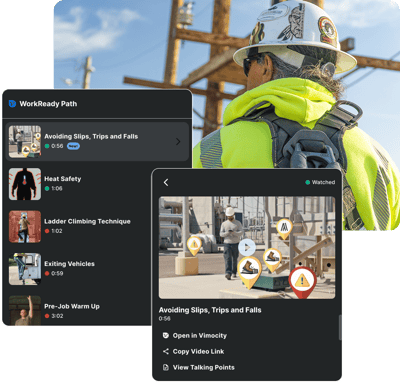
Uh, and that really is what we recommend for folks trying to lose weight, gain weight, and then we add more carbohydrate if the intensity is really, really high. So I, I kind of thought it was a, a very good type of change. As a safety leader, you have more risks to cover than ours in the day. That's where Vamos comes in.
We give you one platform to scale your impact, delivering expert curated safety campaigns on everything from slip trips and falls to heat, stress, and soft tissue. In your prevention, you'll reach every crew through the channels they already use while gaining data insights to guide smarter prevention.
With ity, you can boost awareness, prevent serious incidents. And keep your workforce ready for the job. Scan the QR code or visit ssi.com to learn how leading utilities are cutting injury by 50%.
For our audience, can you share, uh, some examples of essential fatty acids and how those are different than some of the other foods that we, or fats that we may get through our food? So I can give you a couple. So, uh, one for example is you get a lot of Omega-3 fatty acids may, uh, from things like fatty fish, the, you know, the skin, like from salmon, right?
Uh, that slimy portion on top of the meat well. That has a lot of very important, um, essential fats that will help with the brain and hormone and help maintain the integrity of your cells. And so that's the essential fat, very important. Avocado, my wife loves avocado, ideally wasn't too interested. Now it's like, man, there's a lot of essential fats, quality fats in avocado.
So I kind of throw that on my, uh, foods a lot now. Or don't mind it in my salads, it's like, okay, I'm getting some good fat. Um, it used to be no fat, no fat. Stay away from fat right now. It's like if it's good, fat, good. The other, a really interesting thing is if you look at dairy, whole fats versus lower fat fats and skin milk, uh, type of dairy, when you take out that extra fat, you save calories.
True. You also take out all those essential fats and there's some essential fats in dairy. For example, there's something called conjugated linoleic acid, CLA. It's actually a supplement. And what it does is help promote fat, uh, loss. And there have been studies, large epidemiological studies and people who have high dairy of whole dairy foods have less body fat.
Less risk to cancer and a number of other health factors. So we've known about these essential fats. Now the question is how can we get into a diet and not have all the extra calories maybe that you don't want, but those essential fats are very important to get that at least 25% of your fat, uh, in your diet.
Uh, we say never go under 20% in part 'cause you will. Limit those essential fatty acids. So there are foods that are great sources of these essential fats, mainly omega threes, CLA, and those type of content. And if you're gonna pick fat, those are the ones to pick. So consume, you know, your high quality protein and you're got enough carbohydrate, complex carbohydrate.
And then be selective on the fats you choose. That they have a little bit more central fats in them. That's great. And they're essential because we can only get 'em from food. Is that the concept there? Yes. So most people know what an essential amino acid is. Mm-hmm. You gotta get in your diet. You don't make it in your body.
Well, that's the same thing with, uh, essential fats. There are some fats a body can readily make, uh, store, but these essential fats, they are not effective, can't produce them. Uh, these type of fats. And if you don't have them, you can't put together like that. The membranes is effective. Um, your nerve conduction may not be as good, and there's things like the higher the Omega-3, the less risk of cardiovascular disease, and so there's a lot of benefits of these essential fats.
And so part of the pyramid was to take the dogma that fats were bad off and that some fats are good when selected wisely at whole food choices. I'm so excited about the changes and I know that you definitely had a big influence at on that through your work over the years, so thank you for that. Going back to like specific recommendations, and maybe you can give some examples, recovery is so important, especially after hard day work because you're setting yourself up for being able to work the next day and reduce soreness and build your body up so that it doesn't fall into that breakdown mode.
Are there some. Like really practical foods that people can, you know, target right after a hard day's work so that it sets their body up for, uh, the best recovery. So, so I think the first thing is rehydrate every pound loss three cups and make sure that it's got some electrolytes in them. So a lot of, uh, individuals are working a lot, losing auto body water will throw an electrolyte, you know, stick or something in their drinks and mix it.
Get, make sure they have those electrolytes hydrated. So the first thing is hydrate. Second thing though is if you eat, consume carbohydrate and protein right after exercise, within an hour or two, um, it speeds up recovery because you have more glycogen, more glucose from the food can be stored as muscle glycogen.
That's your energy and. By having those extra proteins, then your body, it's just gone through. Breakdown, has those essential amino acids circling the blood so it can repair. And the issue with amino acids is if I'm missing some, and I don't have those essential amino acids at enough, you just don't repair.
You don't recover, okay? And so you simply need to have some higher quality protein. Usually these, those, those are animal or animal proteins. Or if you wanna take plant proteins, realize you need about a third more, 30% or so, more plant protein powder to equal the same amount of, uh, animal powder, uh, gram pergram.
Okay? And so getting those, uh, proteins are there. Then what else do we do? We try to provide some antioxidants and anti-inflammatories. To help with the recovery process. So anti uh, antioxidants are things like, um, fish oil or vitamin E or vitamin C to some degree. And so there are some vitamins and things you can do after a workout.
And then the anti-inflammatory or things like tart cherry or uh, bright blueberry type of, uh, fruits and vegetables. Uh, green leafy vegetables or, uh, astaxanthin that we just did a study on, or things like curcumin, which are good, or turmeric, very good, uh, anti-inflammatories. Uh, and then we even just got done doing a study and published a paper on ginger, uh, that has much less inflammation.
So when we have individuals try to recover, it's hydrate carbs and protein, and then antioxidants. Anti-inflammatories, and if you do those basic things after recovery, you typically will be able to have less muscle soreness the day after or two days after when it's delayed and you're able to do more work the next few days without as much problem.
That's especially important as you age, because if you've noticed as you age, you work out hard, you do a lot of work outside or something, you do some weekend event and you're playing a game or whatever. It takes 2, 3, 4 days instead of just 24 hours. You're feeling good the next day, no problem. That's more like two, three days before you really feel like your recovery.
That's where it's really important to enhance that recovery process. An analogy that I sometimes give in, check me to make sure that this is totally an accurate way of saying this, but I oftentimes tell people that if the first thing you grab, uh, you know, after a hard day's work is a bunch of processed food.
Let's say you grab chips and Monster Energy drink and you're just pounding all this stuff that's high in sugar, that has low nutrient density, uh, it's kinda like. Remodeling your house because your body's going through a repair mode, but you're using cheap building materials to remodel your house. And those cheap, uh, building materials eventually are not gonna last as long.
They're gonna break down faster and they're not gonna be as durable. Is that kind of an analogy of like when you are repairing with poor building materials for your body through the nutrition that you're eating, it's, it's makes you more prone to inflammation. It makes you more susceptible to injury potentially in the future even.
Yes, to some degree. I mean, obviously you wanna have quality nutrient dense foods after your workout. So your body has all the vitamins, minerals, carbohydrate proteins, essential amino acids, all those things, essential fats needed for repair. Um, if you don't eat after a workout, it takes longer to recover.
It takes longer to replenish your glycogen, takes longer to replenish your, uh, repair your muscle protein. If you don't have any antioxidants or anti-inflammatories as opposed to workout, you're gonna be sore, right? You're gonna have more stress. And so if, the other thing also is if you go get just a bunch of fast food after workout that's got lots of fat and.
Maybe a little bit of protein, a little bit of carb, but it's not quality. It takes longer to digest those foods that are higher fat. Okay? And so all those things can slow the process. So while we, the timing is a little snack before your workout, make sure you're hydrated and getting some nutrients if you're out there a long day or a long, uh, period of time.
And once a practice or work is over, it should be quality fluids or electrolytes. Should be quality, carbohydrate, and protein. And then this were supplements with antioxidants. Some people drink, uh, you know, uh, tart cherry juice or uh, be root juice or things like that after recovery to try to get some of these naturally occurring phytonutrients that we know have these anti-inflammatory and antioxidant type effects.
And studies have shown now a number of studies of lots of different types. These type of plant, uh, uh, phytonutrients are very important for optimizing recovery, reducing soreness. And so if you're a worker and you wanna have a good hard week of work, you don't wanna be tired and fatigued and sore on Tuesday or Wednesday, you got three more days, you gotta knock it out.
If you're on a he heavy job, on a dead tight deadline, you're going six, maybe sometimes seven days in a row. If there's an emergency out there and the lines go down, they gotta be out there in terrible weather and you know, there's no stop. Okay? If you're in the military, they don't make a take a break, right?
They got a mission to do. And so that's the type of things you gotta do to make sure you're refueling and recovering. Take yourself like a nascar. You come in for a pit stop, you gotta have good fuel, right? You put cheap gas in there, it's not gonna go very far. It's the same, the same thing with. Uh, realizing your body is important, uh, and you can optimize its recovery if you feed it properly.
How does alcohol impact recovery? Great question. All right. Uh, athletes are not, uh, immune to drinking after a workout or a game or competition. We know that alcohol can actually impede recovery a bit. So we, we tell our athletes when you're going through heavy training. Uh, stay away from excessive alcohol because it actually can slow down protein synthesis and not even counting all the, you know, psychological, psychomotor type of effects.
But here's the other issue. If you are working a hard day, what's the habit? Work hard to hit the, you know, gotta get, get some, some brew skis and stuff afterwards, right? You gotta, you gotta get a six pack or a 12 pack or whatever. And that's the habit. That doesn't facilitate recovery. That's fluid, but there's not much electrolytes.
That's carbohydrate even. But it's, it's alcohol's not a good carbohydrate to store. Your body can't use it that effectively. And so a lot of times they're empty calories and it doesn't allow the body to recover that people may like, feel like it's hydration and all that, but it's not the type of thing you wanna refuel.
Uh. Than a normal, than Now there is some data on moderation. You know, red wines got reserver trial and those type of things in it. Uh, the data's kind of sometimes pro, sometimes against, but most of the studies showed more than two. Uh, alcohol drinks a day is not a good health outcome over time. How about nicotine?
I, I know that there's, uh, nicotine in tobacco. I know that there's some research that shows that it impacts, uh, spinal health and people who take, uh, or use tobacco may be at a higher risk for, uh, disc herniation. Yes. Uh, there's data that if you're a smoker, um, you have greater propensity for herniated discs and those type of issues.
So if you're a worker and you're picking things up, you know, it actually makes it harder 'cause you're not getting into nutrients since you're EDL disc as you should. So that's one issue. The other issue, um, it's kind of a stimulant and gets become a habit. Obviously it can be some lung issues. So if I'm a smoker, they don't have the same aerobic capacity or oxidative capacity As a person who is a non-smoker.
You can have somebody smoke and look at their exercise capacity before they smoke and after, and their exercise capacity is diminished. So, um, that's not something you want to do. And now I'm kind of worried about all the marijuana and stuff that's out there people are using and things. And then you gotta worry about, you know, being really focused and uh, those type of neurotropic issues as well.
And so smoking is usually not something you wanna do to, if you're trying to be optimally performant. Um, now there could be some skills, you know, that aren't really aerobic, capacity dependent, that maybe not hurt, but most workers out there, they're picking objects up and they're working hard. It's been a lot of calories.
Makes you have to breathe harder. Um, it, it just wouldn't be something that's optimal, um, for an individual. And then there's also interest in nicotine as it's, you know, like in a a a dip. In a chew where there's nootropic. Are some kind of cast effects that you might get that make you feel alert. Um, but again, there's some downsides of it as well.
You mentioned aerobic capacity and then you also mentioned earlier maintaining muscle masses to important factors for like longevity and, and health. And you know, for people who are working 10 to 12 hours a day, I mean, they're on their feet all day long and. You know, it's hard to get, feel motivated to exercise on top of that, but That's right.
Why, why is doing some additional specific exercise maybe important for longevity and, and overall health. Yeah. So you have to think to yourself, you need to kind of a balanced approach. And so how do you improve health, fitness, health related fitness? It's aerobic capacity. It's strength and endurance.
It's flexibility. It's optimal body composition. This is kind of the five standard points. Now, if I'm lifting heavy all the time, I'm getting some cardiovascular, I'm getting a lot of muscles stress. But if I am aerobic fit on top of that and I add some walking or some cycling or something, I'll recover faster between lifts or work tasks.
So I feel that I'm more fit and I can do more work. So there is some transfer. So if you are a very aerobic job occupation, it's more, you know, walking and not, maybe it's a, a mailman or, or a woman or something that's walking all day, well that's a lot aerobic, but you also need to have strengthening and flexibility to offset and to make sure it's a balanced health thing.
So I would look at the occupation, find out what most that you're doing. Used lifting heavy objects all the time. Probably don't need to do as much weight lifting, but the cardio would probably help. Vice versa. If you're the, the mail deliverer, uh, individual and you're getting a lot of walking or even UPS in and out of the, the truck or whatever it might be, you're getting a lot of, of, of movement, but you probably need more resistance activity on top of that to compliment it.
So that's what I would look for you. Everybody should be doing some resistance training, some some cardio, and maintaining flexibility as a agent. One of the really exciting things over the last maybe 20 years, and it actually extends beyond that, is just the amount of research that has gone into, um, validating the effectiveness of creatine.
And you've been someone who's really led that research. Uh, I just again attended another, uh, seminar and they talked about how there are about 3,200. Studies that have been performed on creatine, validating the effectiveness. Can you share with us, uh, a little bit about the history of creatine? Because I know when I was playing sports in the, the mid nineties, my mom was like, do not take creatine because it's, it's not good for you.
And you know, it's oftentimes associated with people who are trying to bulk up, but there are so many benefits for the general population. Love to hear more about that. So creth is a basic energy that's in the cell. It's used to replenish or to resynthesize the energy you break down. An at TP ATP is like the common source of energy, so the more phospho creatin you have in a muscle, the better you're able to maintain these at P levels.
So you can, you can do your daily activities, you can do an exercise and have plenty of energy. Okay? We now know that if you increase dietary availability, it creatine monohydrate, that you can load the muscle with creatine. Almost like loading the muscle with carbohydrate is before an endurance athlete.
So you eat more extra carbohydrate, you get more muscle glycogen, you get more energy, you don't hit the wall. Okay? What we call hitting the wall under another marathon, you get 18 miles into it and you gonna get more glycogen and all you guys fat, it feels like you hit the wall 'cause it's all, you got to fuel and you have to slow down.
And so creatine we know can increase the stores and muscle, but we also now can increase in the brain and the heart and other tissues. And so what we've found out is what we thought was once a supplement for athletes and power athletes in particular now has application from third trimester pregnancy all the way to the, uh, a very old individual.
And there had been, uh, hundreds and hundreds of clinical trials done. We just reviewed 680 of them. Wow. We're looking at safety, um, and in all populations from children or pregnant. Folks to children all the way to elderly. And they're now also, uh, NHANES database analysis of going back, looking at people who had more creat in their diet where they had more or less disease.
And we know that people who have higher creatine in their diet have much less chronic disease progression as they age. Their children are leaner or muscle mass, less bodies that. And as girls go through puberty, have less issues. And then as you become an adult, you have less, um, incidence of some chronic disease.
And then when you're older and you have a higher diet and creatine, you have better cognitive function. And so there's been a lot of studies that have looked at how providing creatine can improve exercise, but also all these different type of health benefits. We're now doing studies in 45 to 75-year-old individuals where we're loading them with creatine and maintaining 10 grams a day of creatine, um, throughout a 12 week period.
And looking at cognitive function, muscle mass, body composition. And we did this, uh, last study's in review. Now we actually put people on a diet. And usually when you go on a diet, you lose muscle, you lose some fat, but you lose muscle too. So we put people in a resistance training program, put 'em on a diet, gave 'em creatine or placebo, and the people who, um, took creatine had a much better percent body fat loss, got stronger, more muscle than just resistance training and exercise alone.
Then we said, well, what about people who don't wanna lift weights? I mean, or exercise? They also benefited and got some more muscle mass and more cognitive function. There's benefits as we age and probably create things more important as you get older. Even as, uh, we see in athletes and they're younger and you mentioned a dose of 10 grams.
Is that a pretty universal number for, for most people it's the emerging number. So usually what we've talked about was loading 20 grams a day. It's four doses of five grams a day for a week. Then you just need one teaspoon, three to five grams a day. It keeps your muscles full. Now know that creatine is stored in other tissues and for example, in the brain, it takes more creatine in the diet to increase the brain content.
And if you increase creatine in the brain, you get better cognitive function. And so, um, we've been now, and one of the mysteries is, well, maybe we haven't been giving enough in these studies, so we are actually giving. Two, five gram doses a day. Uh, and we've done it six week and 12 week, uh, interventions with and without training and showing that creatine can help with muscle as well as cognitive function.
And then we're even adding the precursor to creatine, which does get in the brain better. The precursors called ga a, a quantity acetic acid, and it seems getting the brain better. She only had about a gram. You give a gram of that with five grams of creatine, so you get your muscle and brain optimized.
And we're looking at that. We're just about done doing a study on that. We did see and already have a paper in it's in review showing six weeks of that had, uh, benefits of creatine and some additive benefits when you add a limited GA to it as well. So we're still exploring the 10 grams per day, but we think most of the great researchers feel that you probably need about 10 grams a day.
And one of the reasons for that is we know that if you were gonna go through sleep deprivation, for example, those studies are a high dose 20 or 30 grams, and after 36 hours of sleep deprivation, people on creatine tend to be able to boot, do cognitive motor skills better. And so there's even one study just came out, 30 grams in one drink, one shot.
36 hours later had better cognitive function. So we're learning more about the dosages for the brain. But I think that five to 10 grams is, I was kind of just for general health ten's probably what we recommend, uh, more so consistently now for the brain. Our body naturally produces creatine, um, and then we can also get it from foods.
Can you, uh, explain a little bit more about that and why it's important to maybe supplement with an additional five to 10 gram? Sure. So, um, your body produces about one to two grams of creatine itself per day. That's about half of the daily need. The more you exercise, the more muscle mass you have, the more need for creatine you have, and your body doesn't increase its synthesis rate to accommodate enough.
And so, uh, the next place you get the creatine is from food. And there's about two to three grams of creatine per, uh, pound of red meat and fish, for example, like salmon. Um, some, a little bit higher, some a little lower, but two grams a pound. So if I need two to four, recommend five, 10 grams a day. Do I want to have six pounds of fish per day?
It'll cost me probably 50, 60 bucks. Um, you know, or uh, that much meat per day. Or can I take a supplement and I get plenty of creatin and I don't have to have all those extra calories and all the extra fat coming with those sources of, of, in the diet. So we, we tell folks have a good healthy diet, high quality protein, and that will get most people about a gram extra a day of creatin.
And then add a little bit of creatin, uh, with a a teaspoon of creat monohydrate. That's the one that's been shown to be effective and all the studies. And, uh, then you get plenty of creation for the body. And if you just type in, uh, creatine monohydrate, when you're searching for, uh, what's available, you get on Amazon and there are about 50 different options that pop up.
What should people look for in terms of how it's sourced and what does I always recommend anything that is NSF certified. Can you explain why there may be some certifications that we would wanna pay attention to? Yeah, a couple things. One, um. I always recommend German creatine. That's the group from all chem.
They make Korea pure and Korea vitalis y. 95% of all studies that we've known about on creatine have been using those products. It's the pure source. It's the only one that's approved in Europe and a few other countries that could be sold to make claims about. There are a few other sources usually from China.
Sometimes their batches are good, sometimes they have more impurities. It's a little bit more iffy. So we suggest if you can take creatine, take the quality creatin. We know it works. Uh, so we always say Look for German creatine. Okay. Um, and then as far as NSF certification, um, that looks at third party testing and that's looking for drug, um, contents that things are banned.
Substances like an Olympic athlete or NCAA athlete. They get drug tests. They're looking for a lot of different metabolites and things that might suggest you're taking steroids or something that might mask steroids. And so by having a company do the NSF testing or similar compound, uh, quality, there's a few other ones out do the same thing.
Um, you know that the probability having a tainted supplement or some band supplement in there is very low, could happen, but it's much, much lower. So we always suggest quality supplement German creatine. And then if you're gonna take supplements in any supplements, make sure they're third party tested, because that means that they aren't gonna have anything in there that you don't want.
Absolutely. And you know, I was just at Costco the other day and they were handing out creatine gummies, uh, in the sample section, and that's a common form that you're seeing out there. But I've read some, uh, articles that suggest that maybe there's not quite as much creatine in those as maybe advertised.
Any, any thoughts on that? Yeah, so when you put creatine in fluid about a week after, so sit in your refrigerator or something. You'll lose about 10 to 20% of the creatine 'cause it naturally converts to its, um, um, conversion. It is called creatinine. This is something measuring the urine, uh, to see if it might have some kidney issues.
Um, if you make gummies, there's moisture involved. Okay? There's a heating process involved. The heat's usually not that much of a degradation, but the moisture over time can, so this is why we don't see creatine and beverages at this point. They haven't really figured out a way to keep it shelf stable for six months a year, um, and still have the same amount of creatine you wanted without a lot of creatinine.
What we're finding with gummies is that some of the brands are pretty good and some of the brands are just junk. The fact there've been some tests found no creatine in any of them. Um, probably the best out there from a brand perspective is create, it uses create German creatine. Um, but they have enough in there to allow for any loss to still meet, meet label claims.
So one of the things they do is if they want 1.5 grams per two or three gummies, whatever, it's, they'll put 1.8 or so to account for any loss to creatinine. So, you know, then the question, is it expensive? My wife loves those gumm. Um, but I'd say every time she takes it, it's like two bucks or three bucks, you know, a canister, it's about 40 bucks or something like that.
20 servings, you know, it's like $2, you know, take a teaspoon man, save a little bit and only 10 cents or so. So, um, you know, everybody loves the gummies. Now. There is one group that just became aware of, they make a, uh, a creatine chew. It's a company that, um, is a pharmaceutical company that does this for drugs.
It's called Catalyte. I just started working with them a little bit and talking about how they might be able do some more nutrition things with that, and they have two year life span data showing no breakdown at all. So I think we're gonna learn a lot about how can we provide creatine in a portable way other than a powder.
And I know that there's also some groups working on some fluids that appear to have a little bit of stability to 'em, so. Maybe you'll have something like, uh, you know, buy your milk and drink it. Best date buy or something like that. I could see something like that happening, uh, within the next year or two with some of these Korean and beverages.
They are, they're fair. There's one out there that after three to six months, it still has 70%. Now I don't know if I want to have 30% of my creatin. I think I'm paying for as creatinine, probably getted, probably not a big deal. Creatine levels may go up and your doctor might say, what's going on? Yeah. I'm assuming some junk creatine.
Um, so those are some of the considerations, but you know, there are a few out there that are pretty decent, and then there's some that are junk. A lot of times there's stuff on Instagram, I'd stay away from. I had someone reach out to me, uh, last weekend. They had two questions. They had a 16-year-old daughter who plays basketball, and they're asking me, is creatine safe, uh, for her, number one?
And then he had heard some concern about, uh, taking too much cre uh, creatine in that impacting your kidney function. Uh, what are the, your thoughts on, on those two questions? Um, both are false, um, anecdotes. So, uh, kids should be on creatine. They should have more creatine in their diet. Kids that don't have at least one gram of creatine per day as they're eight getting older, don't grow as fast, they're shorter.
They have less muscle, more body fat. And we know now with, uh, the changes in diet and things about what type of foods people want to eat or not, especially with there's environmental concerns. Uh, some of the kids are not eating as much meats and things, and so. They're dietary sources. You don't get any creatine from plant.
And so vegetarians we've known for a long time have to really depend on supplemental creatine or they just will not be able to have enough energy in the muscle for high intensity activity needing some health issues. So you gotta have enough creatin kids. Uh, we just published a paper, an opinion about you shouldn't be restricting free time from kids.
Um, it's a healthy thing to consume quality protein. It's a healthy thing to consume, uh, uh, creatine, especially if kids are maturing past puberty, trying to get muscle mass trying to build. My daughter played basketball up through into college. Uh, I coached girls women's basketball and, uh, creatine was absolutely something that we used to our advantage.
Um, and we've done studies in adolescent swimmers, for example. Average 16 and had performance benefits and all the data on safety shows that there's no problem even in kids. In fact, in kids, most of the high dose studies were done in kids that don't make their own creatine on their own. They're deficient, some enzymes, and so they're given like 20, 30 grams a day for their entire life, uh, because, and that slows down the, or improves their cognitive abilities.
Their psychomotor abilities and they have less negative effects of not having enough creatine in the body. Um, so kids with creatine not a problem as long as they're training well, eating right, doing all the first things they know If buy a quality supplement, their parents know and agree, uh, and if their parents have questions, go online and find, our physician stands about creatine.
Get the facts and you'll see that this is something good for for athletes. Yeah. Do you have a quick reference that you can recommend for where people can find that position statement? Um, well, our position statement is, international society is sports nutrition position, stand on creatine supplementation.
Uh, and in there it talks about kids that as long as they do those things, there's not a problem. And then our most recent paper we, uh, published on kids is basically kids. Uh, Corinthians should not be restricted from children and adolescents. That's, you put Crider in there and put down kids and adolescents for safety.
You'll hit all these, uh, papers that we published, all peer reviewed journals, and it gives you the 10 main reasons why they should be taking creatin and why we shouldn't have laws is try to restrict the ability of, of, uh, people under 18th from taking creatin and making their parents show ID to get CRE to their child.
It's just stupid. Okay? We don't do that when they go to Starbucks. Why in the world we not we're doing that when they wanna buy protein. Drink or a protein bar or something. What's better? 800 calorie, you know, high fructose, sugared drink and caffeine. Um, or a energy bar that's got some creatine in it.
Come on. So, uh, we, you can find that online. And then the other thing is that safety, we just published a huge safety study, 685 studies. 13,000 people on creatine, 13,000 people on placebos. The people who had were taking placebos had more side effects than people taking creatine. So a lot of the myth you hear are being perpetuated, uh, by people don't know anything about creatine.
Or a lot of times it's companies saying, take our new version of creatine, it won't cause this or that, or that. And nobody's found this or that, or that in any studies, but you still see this stuff out there. Now, unfortunately, uh, that's what people read. And so we have a website called creatine for health.com, all one word, creatine for health.com, and you can find out about and hear from the experts of how creatine's good for kids.
Uh, creatine is maybe helpful if you have diabetes, how it helps with elderly, how it helps with, uh, people who have, uh, brain and cognitive function issues. So, uh, you know, uh, orthopedic issues and rehabilitation and, and the uses of creatin go on and on. And so, find the facts, get information out, and, uh, then people make an informed decision.
Thank you so much. We're gonna put, uh, those links in the show notes and thank you for all the research that you've done. Done. I mean, you've been a huge, uh, voice in this, uh, this research, and so, yeah, thank you for that. I know that after reading some of your articles, like in preparation for this interview, I took 20 grams of creatine just so that I could be sharper and I, I can tell a difference just how I think.
I've had multiple concussions over the course of my life and even some of those symptoms that I. Yeah, that I've had symptoms like for the last 25 years. I've noticed that those have actually been noticeably improved by increasing my creatin intake. I would add that when we first started Creatin studies in the early nineties in athletes, we were the first group to do that in the United States.
And, um, we were given 20 and 25 grams a day of creatine for 15, 12, 15 weeks. We gave up to 10 grams a day of creatine in a safety study we did for almost three years. And so a lot of our initial studies were high dose. And then as they figured out, well, you know, you load the muscle can maintain, you pretty much keep it up with five grams.
A lot of the studies went to that, but we found some phenomenal results when you take that level of creatine every day. And we think it's because it has other effects like on cognition now. If you have a child basketball player, soccer player, high school, college that has a susceptibility to a concussion, or you're in the military and you have susceptibilities to blasts and uh, accidents that might cause brain and trauma and injury, we know that creatine can help prevent the damage that may occur after concussion in animals.
These are studies where they hit the animals on the head cause a concussion, cause ischemia cause a stroke. And when they feed these animals creatine, the size of the damage is one third, one half the size if they're on, uh, placebo. And we also know that if you give creatine to, uh, former NFL players, for example, have CTE, which causes a lot of, uh, degenerative effects, that they seem to also perform better at higher doses.
So there's a lot of truth of that. So one of the things we mentioned in our, uh, position stand is, uh, the performance effects is one thing, but preventing trauma and concussion is probably the most important thing you can do for an athlete or a military person. It's susceptible to that type of trauma. In fact, we've, uh, met and went to the US Congress and had a panel discussion about treating TBI and concussion.
Uh, the panel was Mike Lewis talked about fish oil and antioxidants. Uh, myself talked about creatine and another person talked about anti-inflammatories and everybody in the military should be taking creatine fish oil and some type of anti-inflammatory because you are susceptible to these type of issues.
And so we're trying to get legislation passed where they add res, add some of these nutrients to them. Or, uh, trying to get an appropriation, those reduced massive study, national study with concussion to try to see if normal care or creatin, fial and, uh, inflammatories would help reduce the time and severity of the concussion and get you back ready to play or ready to work or ready back to the, uh, operation faster.
So yeah, concussions is huge. That is really exciting and could be, I mean, very beneficial for so many people relating things back to the frontline worker. Uh, you mentioned something earlier related to, uh, people with like 36 hours of sleep deprivation, and there are a lot of people listening to this podcast who may be working a storm, so they're working 18 hours a day, you know.
Seven to 14 days in a row. And so the impacts of sleep deprivation over that amount of time can be pretty profound. And so it does seem like creatine. It may not be something that you would wanna rely on, uh, relay replacing sleep, but something that could really be impactful to help people maintain that cognition, uh, their awareness, uh, multiple things.
Uh, yeah, I think it, it's one of several things, you know, to help with cognition, but, you know, how do you improve brain health and function, increase energy. Creatine is energy in the brain. We know that ischemia conditions like stroke or concussion, there's injury. Um, that that extra creatine is an extra kind of battery for energy so that the cells that can become damaged, the cells around it are like lacking energy can survive and then you have less damage.
It's almost like the old heart attack, uh, situation where they, they gave streptokinase or something and it reduced the size of the myocardial infarction if they got it to 'em right away. They could reduce the size and therefore you didn't have as much damage. We know that people who have had creatine their diet have higher brain creatine to survive those conditions better.
So, uh, that makes a lot of sense. So if I know that my brain energy can be affected and I'm gonna have to go through, you know, maneuvers or I get caught up on a mission or you know, some type of weather event hits, and then you're gonna, you know, you're gonna be having to work for. Hours on end, day after day to save lives.
It makes sense not just to have a bunch of caffeine, but to have things that can increase your energy and brain power. And we now know that creatine in those short situations, high doses, seems to have some profound effect on your ability to think now. You couldn't ask somebody to do something more important to try to save lives in 36 hours.
I was thinking about what happened here in Texas with the, the river tragic. Those folks were running helicopters and working in boats and get, trying to save us mainland. If you can't think clearly after 24 hours or 18 hours your next shift, or you want to keep on going to try to do as what you can, you need to be thinking clearly.
And so those are those type of situations where if I know I'm getting ready, I get called up and throw out, throw down some creatine, make sure you can, uh, get some extra brain power. Absolutely. And I travel a lot. I carry little five gram packets. Uh, they're just the, you know, kinda like those electrolyte packets and so I can just easily throw a couple of those into water and it's right there.
It's a lot easier than carrying around a big tub of creatine. So it's not only for sleep deprivation, it seems to be also helpful for jet lag. Interesting. So, uh, Dr. Kda for example, he is one of the creat researchers from Canada, has done a lot of work in this area. He'll do 20 grams a day when he can, knows he's gonna go from, he's in the Western Canada all the way to Europe or something.
This huge time change and he just takes a lot of creatin. He can survive and handle that. That jet lag better without as much fog seems to have better recovery. So there haven't been as many studies on that, but it makes sense. It's the same type of the deep deprivation. So even long jet lag might have some benefit from.
And, you know, this weekend is, uh, daylight savings. Even a, a shift like that, it doesn't seem like much, but doesn't take much. But there is research that shows that one hour can actually make a difference in safety. So that may be one strategy to help, uh, your body just be able to accommodate that a little bit better.
Well, Dr. Kreer, uh, we've covered so many things. We've covered nutrition, muscle, uh, and fitness, and we've covered creatine. So for those that workforce athletes who are driving home, listening to this podcast, what are three things that you would like them to take away from this conversation? Um, I would say to realize that you are an athlete, you're a professional athlete.
The better condition you are, the better, uh, shape you're in. You'll be able to perform your job better. If you're an athlete, you have to recover effectively. You have to fuel your body effectively, and you have to do things to help, uh, manage inflammation, fatigue so that you're able to perform at a longer career in what you're doing.
So realize that you have control to make some impact. And so the first thing, you are an athlete. The next thing is. Nutrition does matter and exercise matters on improving your capability, uh, to perform your job throughout your, your career. Then I'd say is there's life beyond your career. And the point is, is that if you stay active, you lift weights, you do some walking, your cardio have a good quality diet.
That's, you know, food first, quality protein. Enough carbohydrate to meet your needs and essential fats. And then you look at maybe a few nutrients that create then other things that can help with long-term health. Um, then you're gonna have a very productive and happy retirement as well. So think of yourself, your machine, put the right fuel in it, recover well.
Very well said. Our, our bodies are kind like a 401k plan. You get what you put into it over the course of your life. And so having that long-term, uh, vision is, is so important. Dr. Kreer, thank you so much. Your workforce is something we come back to on the Work Ready Podcast all the time, and that's a performance, recovery and health are not luxuries, they're systems.
And when those systems break down, people get hurt, they burn out or they leave the workforce early. So thank you for helping us translate decades of rigorous science into principles that don't just help people perform better but last longer and live a life, uh, you know, they can retire strong and actually, uh, leave that legacy.
This conversation challenged how you think about nutrition recovery, or what it really takes to sustain a physically demanding career. The best way to support the show is to follow our, subscribe to the Work Ready podcast on YouTube, apple Podcasts or Spotify. Ensure this episode is someone responsible for keeping people safe and capable on the job.
We're so grateful for you joining us today, Dr. Kreider. And until next time, make sure take care of yourself. Take care of your people and stay at work ready. Thanks so much.
Discover how Vimocity can help keep your crews WorkReady.
One comprehensive platform to help safety and operational leaders prevent more injuries and incidents.